
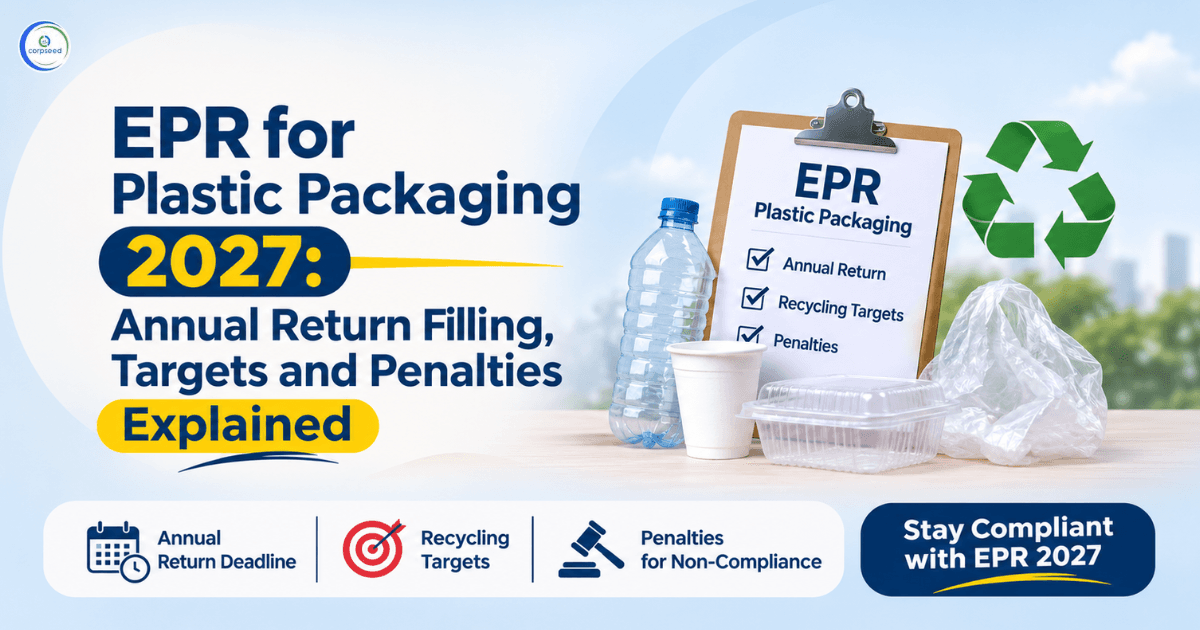
EPR for Plastic Packaging in 2027: Annual Return Filing, Targets and Penalties Explained
If your products reach customers in plastic packaging, whether it is a shampoo bottle, a food pouch, a blister pack or even the bubble wrap around a courier box, your business may be legally responsible for managing the waste generated after its use. This responsibility is known as Extended Producer Responsibility (EPR).
Schedule a Call Back
4,500+ plastic EPR assignments since 2018
Clients include Brenntag Ingredients India, Reliant Packaging Films, Taurus Packaging, Axel Polymers, Lintec India, Kumar Organic Products, HP Adhesives, DDP Speciality Products India, Colt Technology Services India, Emerson Automation Solutions Intelligent Platforms, Intangles Lab, Shindengen India (12 of 1,700+ served since 2018).
A few more clients we've served in this industryHide the list
- Chemicals and materials
- Brenntag Ingredients India · Reliant Packaging Films · Taurus Packaging · Axel Polymers · Lintec India · Kumar Organic Products · HP Adhesives · DDP Speciality Products India
- Electronics and technology
- Colt Technology Services India · Emerson Automation Solutions Intelligent Platforms · Intangles Lab · Shindengen India · Emerson Process Management (India) · Lianchuang Electronic India · Emerson Process Management Chennai · Hayakawa Electronics India
- Pharma and healthcare
- Beryl Drugs · Ascent Meditech · Eli Lilly and Company (India) · Q-Line Biotech · Rajasthan Antibiotics · G D Pharmaceuticals · Micro Labs · ADK Health Care
- Engineering and manufacturing
- Essel Mining & Industries · Juki India · Hilti India · Bundy India · Hilti Manufacturing India · KJS Cement (I) · Mangalam Cement · Birla Precision Technologies
- Food and consumer goods
- Onest · AVT McCormick Ingredients · Akay Natural Ingredients · Ugraya Foods and Feeds · AVT Natural Products · Jalpaiguri Food Industries · Param Dairy · Esther Parfumerie
- Logistics and trade
- Siddhartha Logistics · Siddhartha Logistics Ftwz · Honda Trading Corporation India · Dksh India · MOL Logistics (India) · Fibs Logistics India · Zenexpress Logistics
- More clients
- Nilkamal
For many businesses, EPR becomes a priority only when a marketplace asks for a registration number, an importer faces a regulatory issue, or a notice arrives from the pollution control board. By then, incomplete packaging records and outstanding targets can make compliance more expensive.
In 2027, businesses must consider more than just EPR registration for plastic waste. They also need to plan for higher recycling targets, mandatory recycled plastic content, packaging reuse and annual reporting requirements.
This guide explains who needs EPR for plastic packaging, the targets applicable in 2027, certificate requirements, annual return filing and the consequences of non-compliance.
Key Takeaways
- EPR applies to eligible producers, importers, brand owners and other regulated entities involved in plastic packaging.
- Plastic packaging is classified into five categories under India's EPR framework.
- From 1 April 2027 minimum recycling targets increase to 80% for Category I and 60% for Categories II and III.
- The standard annual return filing deadline for PIBOs for FY 2026-27 is 30 June 2027.
- Registration and annual compliance are managed through the CPCB Common EPR Portal.
- Missing EPR targets or filing deadlines may attract Environmental Compensation.
What Is EPR for Plastic Packaging?
EPR for plastic packaging is a regulatory framework that makes eligible businesses responsible for the environmentally sound management of plastic packaging waste associated with their commercial activities.
In India, Extended Producer Responsibility is governed by the Plastic Waste Management Rules, 2016, Schedule II and subsequent amendments notified by the Ministry of Environment, Forest and Climate Change (MoEFCC). Businesses do not necessarily have to collect their own packaging directly from customers. They can fulfil specified waste management obligations through registered plastic waste processors, and eligible EPR certificates.
Obtaining registration and purchasing certificates are not enough to meet annual compliance requirements. Businesses must also fulfil recycled content and reuse targets, maintain proper records and submit annual returns.
Who Needs Plastic EPR Registration in India in 2027?
Businesses manufacturing, importing, marketing or processing covered plastic packaging and commodities may require registration under the plastic EPR framework.
| Business Category | Applicability |
|---|---|
| Producers | Manufacturers of plastic packaging and covered intermediate packaging materials |
| Importers | Businesses importing plastic packaging or products packed in plastic |
| Brand Owners | Businesses selling products under their own brand in plastic packaging, subject to statutory exclusions |
| Plastic Waste Processors (PWPs) | Recyclers, industrial composting facilities and eligible end-of-life waste processors |
| Plastic Raw Material Manufacturers and Importers | Manufacturers and importers of resins, pellets and other covered raw materials |
| Compostable and Biodegradable Plastic Manufacturers | Manufacturers of covered packaging and commodities made from these materials |
Producers, importers and brand owners are collectively known as PIBOs. PIBO registration is managed through the centralised portal under CPCB or the concerned State Pollution Control Board (SPCB) or Pollution Control Committee (PCC), depending on geographical operations.
Businesses processing plastic waste must obtain the applicable plastic waste processor registration before generating eligible waste processing certificates.
Is Plastic EPR Registration Mandatory for MSMEs?
MSME status does not provide a complete exemption from EPR.
Micro and small producers must register and declare their packaging categories. Their specified waste management obligations are fulfilled by the manufacturers or importers supplying plastic raw materials, subject to prescribed conditions. However, recycled plastic content obligations remain with the producers.
Schedule II exempts micro and small brand owners from certain EPR obligations. However, businesses that also import packaged products must check whether those activities create separate compliance requirements.
EPR Applicability for Importers, Manufacturers and E-commerce Sellers
Certain business models often create confusion about EPR responsibilities:
- Contract manufacturing: A D2C skincare brand outsourcing manufacturing may still have brand owner obligations.
- Imported finished goods: EPR registration for importers covers plastic packaging accompanying imported products, including protective films and bags.
- Packaging manufacturers: Businesses manufacturing bottles, containers, films or other plastic packaging must assess the requirements for EPR registration for producers.
- Private-label sellers: Businesses selling products under their own brand through online marketplaces may have brand owner obligations.
- Multiple business roles: A company manufacturing packaging and importing finished goods may have separate obligations as a producer and importer.
Five Categories of Plastic Packaging Under EPR
Correct packaging classification determines the applicable recycling targets and certificate requirements.
| Category | Type of Plastic Packaging | Common Examples |
|---|---|---|
| Category I | Rigid plastic packaging | Bottles, jars, caps and containers |
| Category II | Flexible packaging consisting of one or more plastic layers | Plastic pouches, carry bags, stretch films and bubble wrap |
| Category III | Multilayered packaging containing plastic and non-plastic layers | Plastic-aluminium laminate pouches |
| Category IV | Covered compostable plastic packaging and commodities | Certified compostable carry bags and packaging |
| Category V | Covered biodegradable plastic packaging and commodities | Certified biodegradable bags and packaging |
A single product may involve multiple packaging categories. For example, a cosmetics brand may use a rigid plastic bottle, a flexible plastic seal and a plastic courier bag. Each component must be classified according to its material and construction.
Category V has a separate compliance mechanism involving EPR certificates generated by local authorities for qualifying biodegradable plastic waste management under Schedule II.
Important: Packaging marketed as biodegradable, compostable or eco-friendly is not automatically exempt from EPR.
Schedule a Call Back
Plastic EPR Targets Applicable in 2027
Businesses preparing for plastic EPR compliance in 2027 must distinguish between two financial years:
- FY 2026-27: Obligations ending on 31 March 2027, followed by annual return filing.
- FY 2027-28: Higher targets applicable from 1 April 2027.
Under the standard PIBO framework, the overall EPR target is 100% of the prescribed eligible packaging quantity. Minimum recycling, recycled content and reuse requirements have separate calculation bases.
Minimum Plastic Waste Recycling Targets
| Plastic Packaging Category | FY 2026-27 | FY 2027-28 |
|---|---|---|
| Category I | 70% | 80% |
| Category II | 50% | 60% |
| Category III | 50% | 60% |
| Category IV | 70% | 80% |
These percentages represent minimum recycling requirements against the calculated EPR target. For Category IV, the prescribed processing involves industrial composting.
Category V is governed by separate provisions. Only eligible non-recyclable plastic waste may be sent for permitted end-of-life disposal.
Mandatory Recycled Plastic Content Targets
Recycling plastic waste and using recycled plastic in new packaging are different obligations.
| Plastic Packaging Category | FY 2026-27 | FY 2027-28 |
|---|---|---|
| Category I | 40% | 50% |
| Category II | 10% | 20% |
| Category III | 5% | 10% |
These targets are calculated against the packaging manufactured, imported or used during the relevant financial year, depending on the business role. For Category III, only the weight of the plastic layers is considered.
Recycled plastic already present in imported material does not count towards an importer's recycled content obligation. Importers must meet this requirement through the prescribed certificate exchange mechanism, wherever applicable.
Exemptions may apply where a law, regulation or mandatory Indian Standard prohibits recycled plastic use. The relevant statutory provision must be submitted with the annual return.
Rigid Plastic Packaging Reuse Targets
Brand owners using specified Category I rigid plastic packaging must also fulfil minimum reuse requirements.
| Category I Packaging Type | FY 2026-27 | FY 2027-28 |
|---|---|---|
| 0.9 litre or kg to below 4.9 litres or kg | 15% | 20% |
| 4.9 litres or kg and above, used for drinking water | 75% | 80% |
| 4.9 litres or kg and above, used for other products | 10% | 15% |
These targets apply to the relevant rigid plastic packaging used in products sold annually. Exemptions are available where reuse is prohibited under applicable statutory requirements.
Businesses carrying eligible FY 2025-26 shortfalls relating to food-contact recycled content, or rigid packaging reuse must also account for the prescribed three-year carry-forward period fulfilling at least one-third of the outstanding quantity each year in addition to regular targets.
Not sure which EPR targets apply to your business in 2027? Get your category-wise obligations assessed by Corpseed experts.
How Are Plastic EPR Targets Calculated?
EPR targets are calculated using the business's role, historical packaging quantities, pre-consumer waste and permitted adjustments.
| Business Role | Standard Calculation Basis |
|---|---|
| Producer | Average packaging sold over the preceding two financial years, plus average pre-consumer packaging waste, minus permitted supplies to eligible brand owners |
| Importer | Average imported packaging and packaging of imported products sold over the preceding two financial years, plus average pre-consumer packaging waste, minus permitted supplies to eligible brand owners |
| Brand Owner | Average virgin plastic packaging purchased and introduced into the market over the preceding two financial years, plus average pre-consumer packaging waste |
Separate adjustments may apply depending on business commencement, reuse, enterprise classification and other prescribed conditions.
Example of Plastic EPR Target Calculation
Suppose an eligible packaging producer has the following Category I records:
| Particulars | Quantity |
|---|---|
| Average packaging sold over the preceding two financial years | 110 MT |
| Average pre-consumer packaging waste | 5 MT |
| Permitted supplies to eligible brand owners in the previous financial year | 15 MT |
| Overall EPR obligation | 100 MT |
| Minimum recycling requirement for FY 2027-28 | 80 MT |
| Remaining waste management obligation | 20 MT |
The remaining obligation may be fulfilled through additional recycling or eligible end-of-life disposal of non-recyclable plastic waste.
Recycled content and reuse targets must be calculated separately. This example is illustrative and assumes that all quantities qualify under Schedule II.
How to Register on the CPCB Common EPR Portal in 2027
Plastic EPR registration is completed through the CPCB Common EPR Portal.
The earlier plastic-specific portal was discontinued for operational compliance activities on 28 June 2026. Existing businesses should verify their migrated registration details, historical records and certificate balances before proceeding.
The general registration process includes:
- Create or access the business account on the Common EPR Portal.
- Select the applicable registration role.
- Enter business details and category-wise packaging information.
- Upload supporting documents and complete the declarations.
- Pay the prescribed government fee and submit the application.
- Respond to regulatory queries and obtain the registration certificate after approval.
Documents Required for Plastic EPR Registration
The documents depend on the applicant's business activities. Common requirements include:
- PAN, GST and business registration documents.
- Authorised signatory details and supporting authorisation.
- Udyam Registration Certificate, where applicable.
- Import Export Code (IEC) for importers.
- Category-wise plastic packaging records.
- Manufacturing facility details and pollution control consents, wherever required.
Businesses changing their registered name, address or packaging categories may also require an amendment in the EPR plastic certificate.
Plastic EPR Registration Fees and Cost
The cost of plastic EPR registration depends on the business category, packaging quantities, applicable government fees and professional assistance required.
Businesses should also budget for annual return filing, certificate procurement and recurring compliance activities. Government fees must be confirmed through the applicable official fee schedule, or CPCB portal before payment.
How Do EPR Certificates for Plastic Packaging Work?
EPR certificates provide evidence of eligible waste processing or other prescribed compliance achievements.
| Certificate Type | Purpose |
|---|---|
| EPR Registration Certificate | Confirms registration under the EPR framework |
| Plastic Waste Processing Certificate | Supports fulfilment of eligible waste management obligations |
| Recycled Content Certificate | Supports specified recycled content obligations through the prescribed exchange mechanism |
Before purchasing certificates, businesses should verify the packaging category, outstanding target, certificate validity and registration status of the supplying entity. Transactions must be recorded through the prescribed regulatory mechanism.
What Is the Cost of an EPR Certificate for Plastic Waste?
EPR certificate prices depend on the packaging category, required quantity, certificate type, availability and applicable CPCB pricing provisions.
Under Schedule II, paragraph 8.8, CPCB must determine the minimum and maximum EPR certificate prices at 30% and 100% of the applicable Environmental Compensation, respectively. These statutory pricing limits should not be confused with a fixed market quotation. Businesses requiring EPR certificate procurement should calculate their outstanding obligations and verify prevailing prices before purchasing certificates.
How to File the Plastic EPR Annual Return in 2027
The plastic EPR annual return is a statutory submission containing packaging data, certificate transactions, target achievements and other compliance information for the previous financial year.
Plastic EPR Annual Return Filing Due Date in 2027
| Registered Entity | Standard Deadline for FY 2026-27 |
|---|---|
| Producers, Importers and Brand Owners (PIBOs) | 30 June 2027 |
| Plastic Waste Processors (PWPs) | 30 April 2027 |
| Plastic Raw Material Manufacturers and Importers | 30 June 2027 |
| Covered Compostable and Biodegradable Plastic Manufacturers | 30 June 2027 |
| Covered Plastic Raw Material and Intermediate Material Sellers | 30 June 2027 |
Plastic raw material manufacturers and importers also have prescribed quarterly reporting obligations.
Important: These are standard statutory deadlines. Businesses should verify any subsequent extensions or revised filing instructions issued by CPCB or MoEFCC.
Information Required for Annual Return Filing
Before submitting the EPR annual return, businesses should prepare:
- Category-wise packaging purchase, manufacturing, import and sales records.
- Calculated EPR targets and previous-year shortfalls.
- EPR certificate transactions and utilisation records.
- Recycled content, reuse and waste processing details.
- Supporting invoices and statutory exemption documents, where applicable.
Step-by-Step Plastic EPR Annual Return Filing Process
Step 1: Access the EPR Portal
Log in to the CPCB Common EPR Portal and verify the registered business information.
Step 2: Select the Financial Year
Access the annual return filing facility for FY 2026-27.
Step 3: Reconcile Packaging Data
Match category-wise packaging quantities against purchase, manufacturing, sales, and import records.
Step 4: Verify EPR Target Fulfilment
Review recycling, recycled content, reuse and previous-year shortfalls separately.
Step 5: Check EPR Certificates
Ensure eligible certificate transactions are correctly reflected against the relevant obligations.
Step 6: Submit the Annual Return
Complete the prescribed declarations, supporting information, and applicable fee payments.
Step 7: Retain Filing Records
Maintain the submission acknowledgement, invoices and certificate records for future regulatory verification.
Businesses facing discrepancies in packaging quantities or certificate balances can seek professional plastic EPR compliance services before filing their annual returns.
Penalties for Non-Compliance with Plastic EPR in 2027
Failure to meet plastic EPR obligations may attract Environmental Compensation (EC), regulatory notices and other enforcement action.
| Type of Non-Compliance | Potential Consequence |
|---|---|
| Operating without mandatory registration | Environmental Compensation and regulatory action |
| Failure to meet EPR targets | Compensation based on the applicable shortfall |
| Delayed or non-filing of annual returns | Separate compensation and notices |
| False declarations or invalid certificates | Verification and enforcement proceedings |
| Violation of registration conditions | Suspension or cancellation, where prescribed |
Environmental Compensation for EPR Target Shortfalls
Environmental Compensation is imposed on the basis of the polluter pays principle. The amount depends on the packaging category, shortfall quantity, type of violation and history of non-compliance.
Repeated defaults may attract higher compensation. The amount must be assessed using the prevailing CPCB guidelines rather than an estimated or standard penalty figure.
Penalty for Late Filing of Plastic EPR Annual Return
Delayed annual return filing is a separate violation, even when recycling targets have been fulfilled.
CPCB guidelines provide for notices, compensation and further action where returns remain unfiled beyond prescribed timelines. Businesses experiencing portal issues should document the problem and report it through the appropriate regulatory channel.
Does Paying Environmental Compensation Remove EPR Obligations?
No. Payment of Environmental Compensation does not cancel the original EPR obligation. Outstanding targets may be carried forward for the prescribed period.
| Period for Addressing the Shortfall | Prescribed Return of Environmental Compensation |
|---|---|
| Within one year of EC levy | 75% |
| Within two years | 60% |
| Within three years | 40% |
| After three years | Nil |
These provisions apply to qualifying EPR target shortfalls and should not be treated as automatic refunds of every penalty.
Plastic EPR Compliance Calendar for 2027
| Period | Recommended Compliance Activity |
|---|---|
| January to March | Review outstanding targets, packaging data and certificates |
| 31 March | Close FY 2026-27 compliance records |
| April | Review FY 2027-28 targets and complete applicable PWP reporting |
| May to June | Reconcile records and submit PIBO annual returns |
| July to September | Monitor new targets and applicable quarterly reports |
| October to December | Review certificate balances, recycled content and reuse obligations |
Businesses should also review applicable plastic packaging marking and labelling requirements under Rule 11, including IS 14534:2023 for recycled plastic packaging and relevant FSSAI requirements for food-contact applications.
Common Plastic EPR Compliance Mistakes to Avoid
- Calculating EPR targets using total product weight instead of packaging weight.
- Ignoring secondary and tertiary plastic packaging.
- Assuming MSME status provides a complete exemption.
- Purchasing certificates that do not match the required packaging category.
- Confusing recycling targets with recycled content and reuse obligations.
- Waiting until the annual return deadline to reconcile packaging records.
Maintaining accurate records throughout the year is easier than correcting an entire year's compliance just before the filing deadline.
How Can Corpseed Help with Plastic EPR Compliance?
Looking for a reliable plastic EPR registration consultant in India? Corpseed helps manufacturers, importers, brand owners and e-commerce businesses manage their EPR obligations, from initial registration to annual return filing.
Our plastic EPR compliance services include:
- Plastic EPR Registration Services: Assessing applicability, preparing documents and assisting with CPCB portal registration.
- EPR Target Calculation: Calculating category-wise recycling, recycled plastic content and packaging reuse obligations.
- EPR Certificate Procurement Services: Assisting with eligible certificate sourcing, verification and transactions.
- Plastic EPR Annual Return Filing Services: Reconciling packaging records, reviewing target fulfilment and preparing annual returns.
- Environmental Compensation Assistance: Reviewing regulatory notices and identifying permissible corrective measures.
Whether you need a new EPR registration or assistance with outstanding compliance obligations, Corpseed can help you identify the requirements applicable to your business and avoid unnecessary certificate purchases.
Book a consultation with an EPR expert at Corpseed.
Conclusion
EPR for plastic packaging in 2027 requires businesses to focus on more than registration. With higher recycling, recycled content and reuse targets applicable from April 2027, accurate packaging records and timely annual reporting are essential.
Reviewing EPR targets early, procuring eligible certificates and completing annual returns within the prescribed timelines can help businesses prevent avoidable compliance costs and regulatory difficulties.
Regulatory Note: This guide is based on notified rules and regulatory information available as of 25 November 2026. Businesses should verify subsequent amendments, filing extensions, portal instructions and applicable fees before undertaking compliance activities in 2027.
Frequently Asked Questions
Quick answers to common questions on this topic.
Who needs EPR registration for plastic packaging in India?
Businesses which manufacture plastic packaging, companies which import packaged products, companies which market their branded products through plastic packaging, and companies which process plastic waste should get EPR registration. However, the actual requirement varies according to different factors.
Is plastic EPR registration mandatory for MSMEs?
Yes, micro and small producers must obtain plastic EPR registration, although their raw material suppliers fulfil certain waste management obligations on their behalf. Micro and small brand owners have specific exemptions. However, importers should not assume that MSME status automatically exempts them from EPR compliance.
Do importers of finished goods need plastic EPR registration?
Yes. Even if you do not directly import plastic products, you may still need EPR registration for the plastic packaging that comes with your imported goods. This includes protective films, plastic bags, bubble wrap, and plastic containers used to pack or protect products during transportation.
What are the plastic EPR recycling targets for 2027-28?
The minimum recycling targets for FY 2027-28 are 80% for Category I and 60% each for Categories II and III. Category IV has an 80% minimum processing requirement through industrial composting.
What is the last date for plastic EPR annual return filing in 2027?
The standard deadline for PIBOs to file their FY 2026-27 annual return is 30 June 2027. Plastic waste processors generally have a 30 April 2027 deadline. These dates are subject to subsequent official extensions.
How much does an EPR certificate for plastic waste cost?
EPR certificate costs depend on the packaging category, required quantity, certificate type, market availability and applicable CPCB pricing provisions. Businesses should obtain a category-wise assessment before purchasing certificates.
What is the penalty for not meeting plastic EPR targets?
Non-compliance with plastic EPR targets may attract Environmental Compensation based on the specific shortfall and existing guidelines of the CPCB. Repeated defaults may attract higher compensation. Paying the compensation does not remove the outstanding EPR obligation.
About the Author

Parul Bohral
Legal Content WriterParul Bohral, a BALLB graduate and experienced legal researcher and content writer with expertise in various legal areas, including corporate law and intellectual property. I have gained valuable experience in esteemed legal environments, where I have strengthened my research skills, allowing me to approach legal writing with precision and depth.
As a legal content writer, I am committed to delivering work that not only informs but also engages readers. By staying informed about the latest trends in content marketing and regulatory developments, I ensure that my writing remains sophisticated and meets industry standards. My dedication to thorough research enables me to craft content that is both insightful and impactful.
Related articles
CPCB SOP 2026 for CTE and CTO Approvals - Timelines, Inspections and Key Directions
2026-10-30
E-Waste EPR for Electronics Brands: Registration, Targets & Annual Compliance
2026-10-26
Battery EPR Registration: Who Needs It Under the Battery Waste Management Rules?
2026-10-26
Detailed Project Report for CTE and CTO: Requirements, Format, Documents and Approval Process
2026-10-22
EPR Registration in India: Who Needs It and Which EPR Category Applies to Your Business?
2026-10-21
CPCB Guidelines on Levy of Fees Under the Solid Waste Management Rules, 2026
2026-10-07