
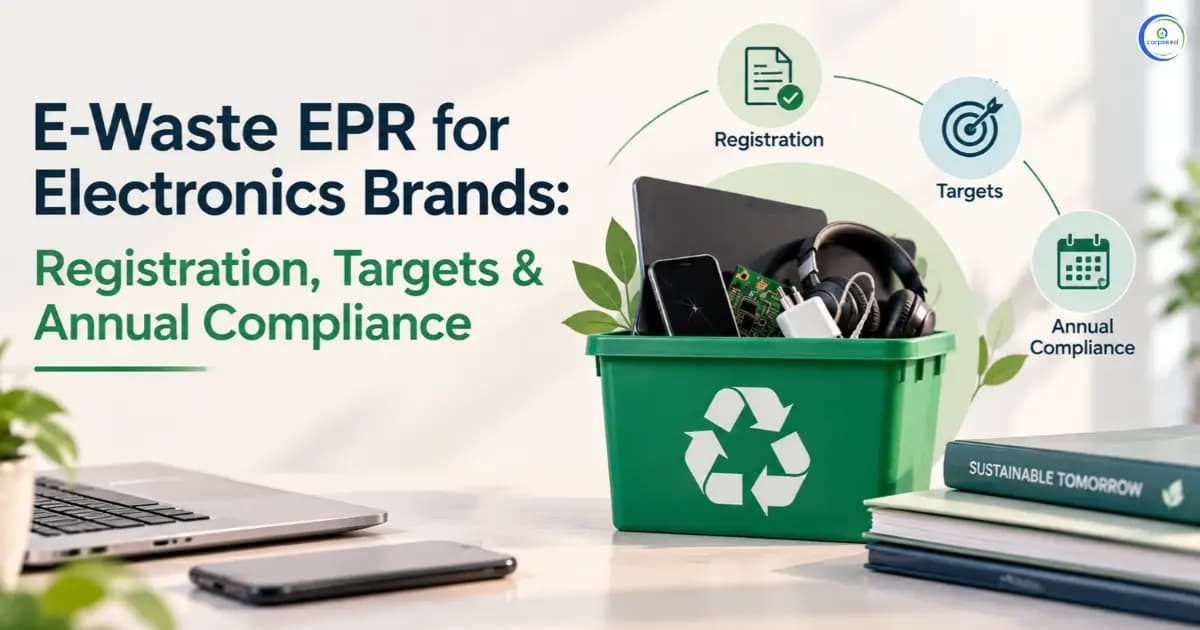
E-Waste EPR for Electronics Brands: Registration, Targets & Annual Compliance
EPR registration is only the first step. Electronics brands must also meet annual recycling targets, obtain eligible EPR recycling certificates and submit the required compliance returns.
Schedule a Call Back
2,000+ e-waste EPR assignments since 2018
Clients include Intangles Lab, Emerson Automation Solutions Intelligent Platforms, Deki Electronics, Amzetta Technologies, Alogic Electronics India, KWW Electricals & Electronics, Emerson Process Management (India), Lianchuang Electronic India, Q-Line Biotech, Genes 2ME, Sanrad Medical Systems, Agfa Healthcare India (12 of 850+ served since 2018).
A few more clients we've served in this industryHide the list
- Electronics and technology
- Intangles Lab · Emerson Automation Solutions Intelligent Platforms · Deki Electronics · Amzetta Technologies · Alogic Electronics India · KWW Electricals & Electronics · Emerson Process Management (India) · Lianchuang Electronic India
- Pharma and healthcare
- Q-Line Biotech · Genes 2ME · Sanrad Medical Systems · Agfa Healthcare India · Dental Tree Supply Company · Vital Sign Medidevices · Trivitron Healthcare · Radimage Healthcare India
- Engineering and manufacturing
- Juki India · Hilti India · Migatronic India · Bauer Equipment India · Aptiv Components India · Wacker Neuson Equipment · Franklin EV India
- Logistics and trade
- Siddhartha Logistics · Zenexpress Logistics · MOL Logistics (India) · Fibs Logistics India
- Food and consumer goods
- Milano Ice Cream · Milano22 Foods · Milano21 Foods
- Energy and power
- Eirmon Solar System · Spear Solar System · Bitek Solar · Nash Energy (I)
- More clients
- Cambro Nilkamal · M.C. Dean Systems India · Haesi GHL · Meditronix Corporation · Nash Industries (I) · Nilkamal · Franke Faber India · Alten India · Parswa Exports · Indicate Exim · Truetech Services · BitVoice Solutions · Heidelco Medicore · Trans Health Care India
Introduction
If your company manufactures, imports or sells electronic products under its own brand in India, you may need to comply with the Extended Producer Responsibility (EPR) requirements. Under the E-Waste (Management) Rules, 2022, covered electronics producers must obtain CPCB EPR registration and fulfil their applicable recycling obligations.
EPR registration is only the first step. Electronics brands must also meet annual recycling targets, obtain eligible EPR recycling certificates and submit the required compliance returns.
For manufacturers, importers and brand owners, understanding these requirements is important before introducing new electronic products or expanding operations in India. This blog explains E-Waste EPR registration, required documents, recycling targets, fees and annual compliance in simple terms.
What Is E-Waste EPR and Who Needs Registration?
Extended Producer Responsibility (EPR) is a regulatory framework that holds producers responsible for meeting prescribed recycling obligations for the electrical and electronic equipment they place on the market.
The E-Waste (Management) Rules, 2022, effective from 1 April 2023, require covered producers to register with the Central Pollution Control Board (CPCB).
EPR registration may apply to electronics brand owners, manufacturers selling covered products under their own brands, importers offering covered electronic equipment for sale in India and private-label electronics companies.
Products covered under Schedule I include various categories of computers, laptops, mobile phones, televisions, refrigerators, air conditioners and other specified electrical and electronic equipment.
Applicability, however, depends on the nature of the firm's operations and the item's classification under the regulations. Merely selling electronic items produced by another registered producer does not necessarily classify one as a producer.
Electronics businesses should therefore check their product categories before applying for an EPR Certificate for E-Waste.
Schedule a Call Back
Documents Required for EPR Registration
Commonly required information includes
- Company incorporation details,
- PAN and GST information,
- Authorised signatory details,
- Product classifications,
- Historical sales data,
- Product weights and Import information where applicable.
Exact document requirements depend on the applicant category and current CPCB portal instructions. Businesses seeking EPR Registration Services should ensure their product and sales records are accurate, as these details can affect future recycling obligations.
E-Waste EPR Registration Process and Required Documents
Electronics brands can apply for CPCB EPR Registration through the prescribed online portal. Before applying, the company should identify its covered products and prepare accurate business and sales information.
The registration process generally involves the following steps:
1. Application eligibility: Determine which products fall under Schedule I and ensure the appropriate registration is completed.
2. Document preparation: Obtain business registration details, PAN, GST information, product details, and previous sales information.
3. Create an account: Register on the official CPCB E-Waste EPR portal under the appropriate category.
4. Submit product details: Enter the relevant electronic equipment codes, quantities and other required information.
5. Upload documents and pay fees: Submit the required supporting documents and pay the prescribed registration fee.
6. Obtain registration: Respond to any CPCB queries and obtain registration after successful scrutiny.
E-Waste EPR Recycling Targets for Electronics Brands
After registration, electronics brands must fulfil the recycling targets applicable to their products.
Under Schedule III of the E-Waste (Management) Rules, 2022, the standard recycling targets increase progressively.
| Financial Year | EPR Recycling Target |
| 2023-24 | 60% |
| 2024-25 | 60% |
| 2025-26 | 70% |
| 2026-27 | 70% |
| 2027-28 onwards | 80% |
These percentages apply to the e-waste generation quantity calculated under the applicable rules, not automatically to current-year product sales.
Separate target provisions under Schedule IV may apply to producers whose sales operations have not yet reached the prescribed average life of their products.
How Do Electronics Brands Meet Their EPR Targets?
Registered producers fulfil their recycling obligations by obtaining eligible EPR recycling certificates from registered recyclers through the CPCB system.
For example, if an electronics producer has a calculated e-waste generation quantity of 100 metric tonnes for FY 2026-27 under Schedule III, its recycling obligation would be 70 metric tonnes.
The producer must fulfil this obligation using the applicable EPR certificate mechanism, including the prescribed material-category requirements.
This makes accurate sales records, proper product classification and regular compliance monitoring important for electronics brands.
E-Waste EPR Annual Compliance, Fees and Penalties
Obtaining an EPR registration certificate does not mean that an electronics company has completed all its responsibilities. Registered producers must also comply with ongoing recycling and reporting requirements.
Annual EPR Compliance Requirements
Electronics producers are required to fulfil their applicable recycling obligations and file quarterly and annual returns through the prescribed CPCB system.
Their regular compliance activities include:
- Calculating and reviewing annual recycling obligations.
- Purchasing eligible EPR recycling certificates.
- Maintaining product, sales and relevant transaction records.
- Filing quarterly and annual EPR returns.
- Updating registration details where required.
The general rules prescribe filing deadlines linked to the end of the relevant reporting period, subject to applicable extensions. For example, CPCB extended the FY 2025–26 annual return deadline to 30 September 2026.
EPR Registration Fees and Other Costs
The cost of E-Waste EPR compliance depends on the company's applicable recycling target, registration category and other requirements.
Overall costs may include CPCB registration processing fees, prescribed maintenance or amendment charges, EPR recycling certificate purchases and professional compliance assistance.
EPR recycling certificate costs are separate from government registration fees and should not be treated as a fixed statutory charge.
Penalties for Non-Compliance
Failure to obtain required registration, meet recycling obligations or comply with reporting requirements can lead to regulatory action under the E-Waste (Management) Rules, 2022.
Environmental compensation may apply in specified cases. However, payment of environmental compensation does not automatically remove an outstanding EPR recycling obligation.
Companies should review their compliance status regularly rather than leaving certificate purchases and reporting until the end of the financial year.
How Can Corpseed Help?
Electronics brands looking for E-Waste EPR Registration and Compliance Services can seek assistance from Corpseed with determining registration applicability, preparing documents, understanding recycling targets and managing relevant application and reporting requirements.
Companies planning to import or sell covered electronic products can also review their EPR obligations before entering the Indian market.
Conclusion
Compliance with E-Waste EPR regulations is a significant legal obligation for electronic brand manufacturers covered under the E-Waste (Management) Rules, 2022. Each requirement is an ongoing obligation for producers.
Electronics manufacturers, importers and brand owners should identify their covered products, maintain accurate sales records and fulfil their recycling obligations within the applicable reporting periods.
With proper planning and support for EPR Registration for E-Waste, electronics brands can manage their regulatory requirements and reduce the risk of compliance gaps
About the Author

Anshika Jindal
Content WriterAnshika Jindal, a Legal Content Writer with strong expertise in legal research and a solid academic background in BA LLB and LLM (Criminal Law). I specialize in researching statutes, case laws, and legal developments and presenting them in clear, accurate, and engaging written content. With strong analytical skills and attention to detail, I create reliable, well-structured legal content while maintaining professional and ethical standards.
I specialize in conducting in-depth legal research using credible sources and presenting legal information in a structured, reader-friendly manner while maintaining precision and authenticity. My work focuses on simplifying legal language without compromising its meaning, making legal content accessible to a wider audience.
Related articles
CPCB SOP 2026 for CTE and CTO Approvals - Timelines, Inspections and Key Directions
2026-10-30
Battery EPR Registration: Who Needs It Under the Battery Waste Management Rules?
2026-10-26
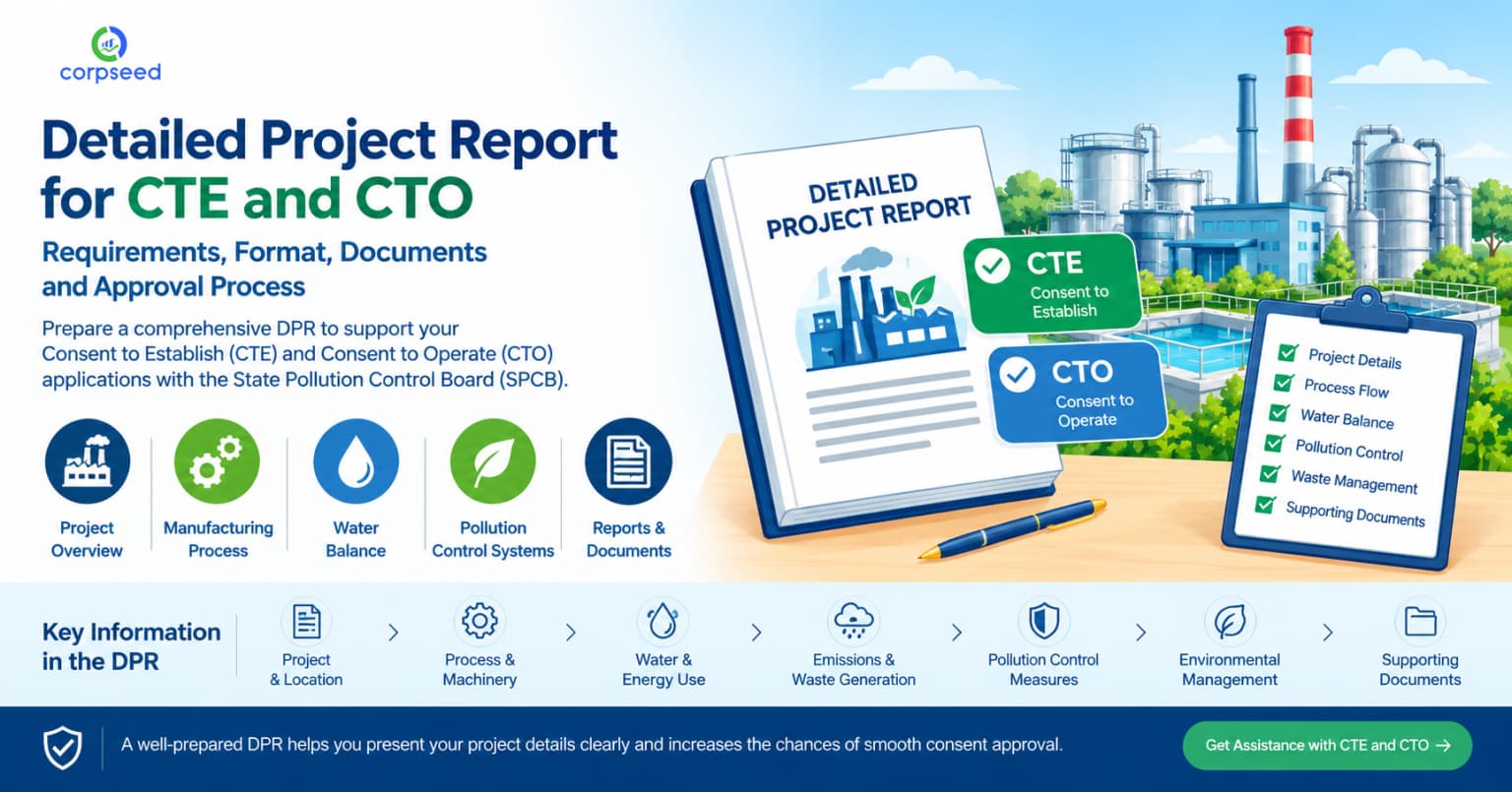
Detailed Project Report for CTE and CTO: Requirements, Format, Documents and Approval Process
2026-10-22
EPR Registration in India: Who Needs It and Which EPR Category Applies to Your Business?
2026-10-21
CPCB Guidelines on Levy of Fees Under the Solid Waste Management Rules, 2026
2026-10-07
Used Oil EPR in India: GST E-Invoicing & Hazardous Waste Rules Compliance Guide 2026
2026-10-06