
Event-Based Liquor License in India: Fees, Documents and Application Process
An event-based liquor license is permission to serve alcohol for a particular function, normally at an approved venue and during specified hours. It is different from a regular bar or restaurant licence, which covers ongoing operations under its own conditions.
Schedule a Call Back
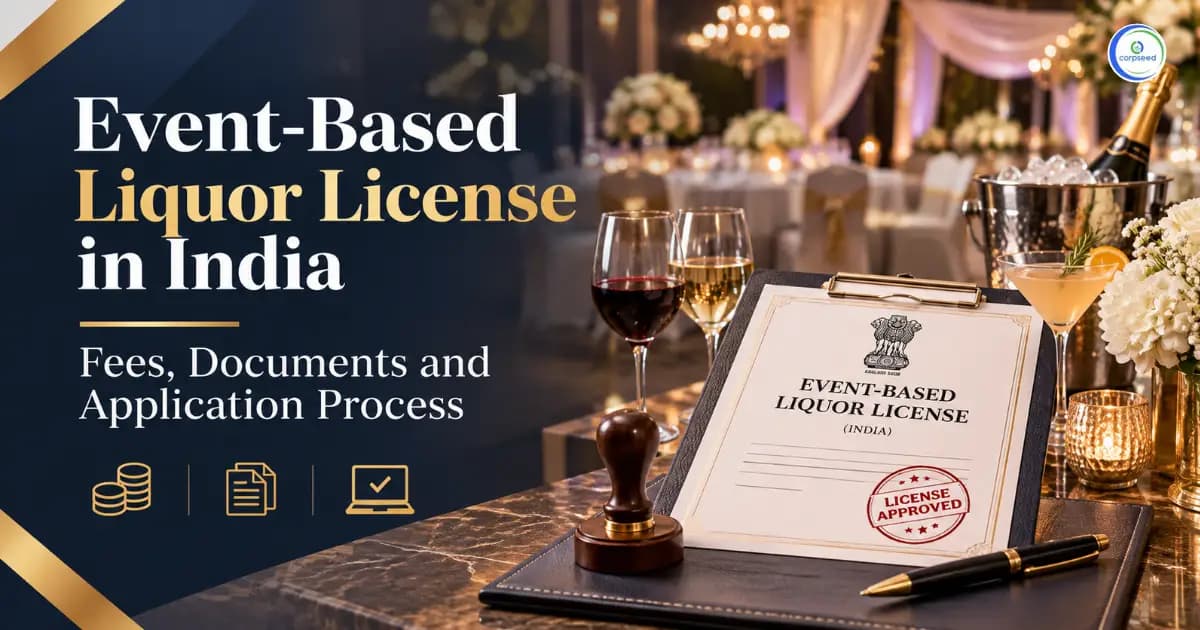
A wedding venue may be booked months in advance, but liquor permission often becomes a question only days before the celebration. The same happens with corporate parties, farmhouse gatherings and ticketed events. Having a venue booking or a catering agreement does not automatically mean alcohol can be served there.
An event-based liquor license is a temporary permission granted under the applicable state excise rules. Whether you need one depends on the location, venue, type of event and manner in which alcohol will be served. There is no single permit valid across India.
This guide covers the main requirements, government fees in selected states, documents and application steps for an event liquor licence.
Schedule a Call Back
What Is an Event-Based Liquor License?
An event-based liquor license is permission to serve alcohol for a particular function, normally at an approved venue and during specified hours. It is different from a regular bar or restaurant licence, which covers ongoing operations under its own conditions.
People often search for the same permission using different terms: one-day liquor license, temporary liquor licence, occasional liquor license, party liquor license or wedding liquor license. These are commonly used descriptions, not necessarily official licence names. The actual category must be selected under the rules of the state where the event takes place.
For example, Delhi has a P-10 permit for specified events, while Uttar Pradesh uses FL-11 event bar licence categories. A licence issued for one event should not be assumed to cover another date, venue or commercial activity.
When Do You Need a Temporary Liquor License?
An event liquor licence is commonly relevant when alcohol will be served outside premises that already have suitable liquor permissions. Typical examples include:
Weddings and receptions: Cocktail functions at banquet halls, farmhouses, lawns and marriage venues may need event-specific approval.
Private celebrations: Birthdays, anniversaries and engagement parties at hired venues may require a permit even when guests are not paying for drinks.
Corporate functions: Office celebrations, annual parties, product launches and client events may need permission depending on the premises and service arrangements.
Public or ticketed events: Concerts, exhibitions and paid entertainment events may require a different commercial licence category.
Multiple event spaces: A permit for one hall may not cover another bar counter or adjoining function area.
What if the Venue Already Has a Bar Licence?
A licensed hotel or restaurant may be able to serve liquor under its existing permission, provided the event area and proposed service are covered by that licence. Do not assume this without checking. Bringing outside liquor, using a separate banquet area or hiring an independent bar operator can change the requirements.
Ask the venue for written confirmation of the permission that will cover your event. If a temporary permit is required, clarify who will apply and who will keep the approved copy available during the function.
Is a Liquor License Necessary for a House Party?
Not always. Some states distinguish a private gathering at a residence from an event at a commercial or rented venue. Rules on possession limits, sourcing and alcohol service still apply. Delhi, for example, provides for certain private residential serving arrangements within the permissible possession limit. That treatment cannot be assumed for a farmhouse or for another state.
Who Can Apply for an Event Liquor License?
The eligible applicant depends on the permit category. It may be an individual host, a company, an authorised organiser or a venue operator. Event managers and caterers may assist with paperwork, but that does not mean their existing business registrations automatically authorise alcohol service.
For a private function, the host should confirm who is legally responsible for the application. For a corporate event, an authorised representative may need to provide company details and authorisation. Venue owners should also check their own obligations.
In Delhi, a public notice dated 22 October 2026 requires banquet halls and farmhouses serving liquor to obtain a P-10 permit for each event. It also requires a separate permit for every hall or space where alcohol is proposed to be served. Venue operators must ensure the valid permit and purchase records are maintained.
State-Wise Event Liquor License Rules in India
Alcohol licensing is primarily regulated by state governments, so application forms, fees and service conditions differ. The following comparison is useful when planning a function, but the current rules must be checked for your exact location.
| State | Relevant permission | What organisers should know |
|---|---|---|
| Delhi | P-10; P-10A for specified commercial ticketed events | The event type and venue determine the category; banquet halls and farmhouses have event-wise requirements. |
| Uttar Pradesh | FL-11 event bar licence | Categories cover private residences, residential associations, venues and certain paid events. |
| Maharashtra | F.L.IV.A one-day function licence | Different fees apply to social or family functions and commercial events. |
| Other states | Applicable state excise permit | Check local licence categories, venue conditions, fees and restrictions before applying. |
What about prohibition states? Places such as Gujarat and Bihar have significant alcohol restrictions. Some jurisdictions provide limited exceptions or special permits, but they should not be treated as ordinary party liquor licences. Verify local law before planning alcohol service at a destination event.
Event-Based Liquor License Fees in India
There is no fixed all-India one-day liquor license fee. Charges vary with the permit, premises, event type and sometimes the number of counters. The examples below are drawn from published state excise information.
| State and category | Published licence fee |
|---|---|
| Delhi P-10, general eligible category | Rs. 7,500 |
| Delhi P-10, qualifying banquet hall/farmhouse premises | Rs. 15,000 per event |
| Delhi P-10A, specified commercial ticketed event during most of the year | Rs. 1,00,000 |
| Uttar Pradesh FL-11, qualifying event at a banquet hall, resort or similar venue | Rs. 11,000 per counter for 12 hours or part thereof |
| Maharashtra F.L.IV.A, social or family function | Rs. 3,000 to Rs. 10,000, based on the applicable population category |
| Maharashtra F.L.IV.A, commercial event | Rs. 20,000 |
Delhi lists a higher P-10A fee for specified commercial ticketed events from 24 to 31 December. Maharashtra separately lists a Rs. 100 application fee and Rs. 5 court-fee stamp.
Uttar Pradesh fee caution: Its published 2026-27 excise policy lists revised charges for certain non-commercial residence and gated-RWA events, while the public online licence page still displays older amounts. Confirm the payable fee on the live application system or with the Excise Department rather than relying on an outdated chart.
Professional assistance charges, liquor purchases and venue expenses are separate from government licence fees. For a useful cost estimate, first identify the correct category and the number of permitted service areas.
Documents Required for an Event-Based Liquor License
The documents required for a one-day liquor license depend on the state and type of event. Applicants commonly need some of the following:
| Document | Why it may be required |
|---|---|
| Application form and applicant ID | To identify the applicant and proposed permission |
| Event invitation or event details | To confirm date, purpose, timings and nature of the function |
| Venue booking or premises details | To identify the location where alcohol will be served |
| Venue owner's consent or NOC | To confirm approval to use the premises, where required |
| Company authorisation | For applications made on behalf of a business |
| Additional NOCs or undertakings | Where the state rules or event arrangements require them |
| Fee payment receipt | To support processing and approval |
Some states may also seek details of guest numbers, bar counters or other permissions. Check the prescribed checklist instead of submitting the same generic document set for every state.
Common issue: A mismatch between the venue address, booking record and application can lead to queries. Check spellings, dates and premises details before filing.
How to Apply for an Event Liquor License Online
The temporary liquor license application process varies by state, but most applications follow these steps:
Step 1: Check the Licence Category
Confirm the event state and venue, whether drinks will be served free or sold, and whether an existing venue licence already covers the activity. Private and commercial events may require different permissions.
Step 2: Confirm Venue Eligibility
Ask the owner or manager whether alcohol service is permitted in the relevant function area. Determine who is authorised to apply and whether separate counters or halls need individual approval.
Step 3: Collect the Documents
Prepare the identity proof, event details, venue documents, any required NOC and applicant authorisation. Ensure the date, address and nature of the gathering are consistent throughout.
Step 4: Submit the Application
Apply through the relevant excise portal or prescribed office. Delhi accepts eligible P-10 applications through its E-Abkari system. Uttar Pradesh provides FL-11 event bar application categories, while Maharashtra provides an online process for F.L.IV.A.
Step 5: Pay the Prescribed Fee
Pay the amount applicable to your category using the authorised method. Keep the receipt, but remember that payment or submission alone is not permission to begin serving liquor.
Step 6: Obtain Approval and Check the Conditions
The department may review documents, request clarification or conduct verification as required. Once approved, check the permit's venue, date, hours, applicant and permitted activity. Keep the approved document available at the event.
How Long Does Approval Take, and How Long Is It Valid?
There is no guaranteed nationwide processing time for a temporary liquor licence. Some eligible online applications may be processed quickly; others may need additional checks. A safe planning approach is to start the process one to two weeks before the event, or earlier for large functions. This is a recommendation, not an official deadline or assurance of approval.
A one-day liquor license is valid only according to the period and conditions stated in the actual permit. If the event date, venue or service arrangement changes, ask the authority whether a fresh application or amendment is needed. Never assume that permission automatically transfers to another location.
Rules to Follow After Receiving the Licence
Approval comes with responsibilities. Organisers, venue operators and bar service providers should make sure the event operates within the approved conditions.
Buy liquor from authorised sources. Delhi's P-10 conditions require purchase from authorised sellers in Delhi and retention of original bills. Other states have their own sourcing rules.
Respect the legal drinking age. It varies between jurisdictions; Delhi's published P-10 conditions restrict serving liquor to adults above 25.
Follow approved hours and spaces. Do not extend service beyond the permit or move the bar into an uncovered area.
Check dry-day restrictions. Confirm whether the proposed date is affected by a notification or special restriction.
Keep records ready. Maintain the approved permit, relevant invoices and other records required by the authority.
Check other event approvals. Police, fire safety or food-service requirements may apply separately. An excise permit does not replace them.
Can You Sell Alcohol with a Party Liquor License?
Do not assume that a permit for a private celebration authorises alcohol sales. Charging for drinks, selling event tickets that include drinks or running a public entertainment event may place the function in a commercial category.
For instance, Delhi has P-10A provisions for specified commercial ticketed events. Confirm the permitted activity before setting ticket prices or asking guests to pay for liquor. The wording on the approval matters more than the informal name given to the licence.
Common Mistakes and Penalties to Avoid
The most avoidable problem is assuming the venue or caterer has already taken care of the licence. Other mistakes include applying too late, selecting the wrong category, leaving out a service counter and using an application acknowledgement as though it were an approved permit.
Buying liquor from outside the permitted supply chain can also create problems. A licence may restrict where liquor can be purchased, not just where it can be served.
Serving or selling alcohol without the necessary permission can result in fines, seizure of stock, action against the venue or prosecution under the applicable state excise law. The precise consequences vary by state and offence.
Before the event, check three things with the venue: Who holds the permit? Which space does it cover? Is the approved copy available? These questions can prevent last-minute confusion.
How Can Corpseed Help with an Event Liquor License?
If you are arranging a wedding, company function or private event, Corpseed can assist with understanding the relevant temporary liquor licence requirements and preparing an application for the appropriate excise authority.
Our assistance may include identifying the licence category, reviewing the documents, coordinating venue-related information, supporting application submission and helping respond to departmental queries. Requirements and approval remain subject to the relevant authority and applicable rules.
Need an event liquor license for an upcoming function? Share your event date, state, venue type, number of bar counters and whether alcohol will be served free or sold. Corpseed can help you understand the next steps and applicable charges.
Conclusion
An event-based liquor license should be checked as soon as the venue and event format are decided, not after the drinks have been ordered. The correct permission depends on the state, whether the function is private or commercial, and exactly where liquor will be served.
A quick review of the licence category, government fee, venue documents and service conditions can make the application smoother and reduce compliance risks on the event day. For help with a temporary liquor license application, Corpseed can guide you through the requirements relevant to your event.
Regulatory note: Information reviewed on 19 November 2026. State excise fees and procedures may change. Confirm current requirements with the relevant Excise Department before applying.
About the Author

Mahek Sancheti
Content WriterMahek Sancheti, BAJMC graduate with a deep passion for writing. As a content writer, video content creator, creative content creator, and scriptwriter, I bring stories to life through words and visuals. I honed my skills by working with a prominent news agency, where I excelled in crafting compelling narratives and engaging content. Coming from a journalism and mass communication background I have skills to craft engaging narratives that captivate audiences. With a keen interest in writing and creativity, I aim to deliver impactful and meaningful content that resonates with diverse audiences.
https://www.linkedin.com/in/mahek-sancheti-837196212
Related articles
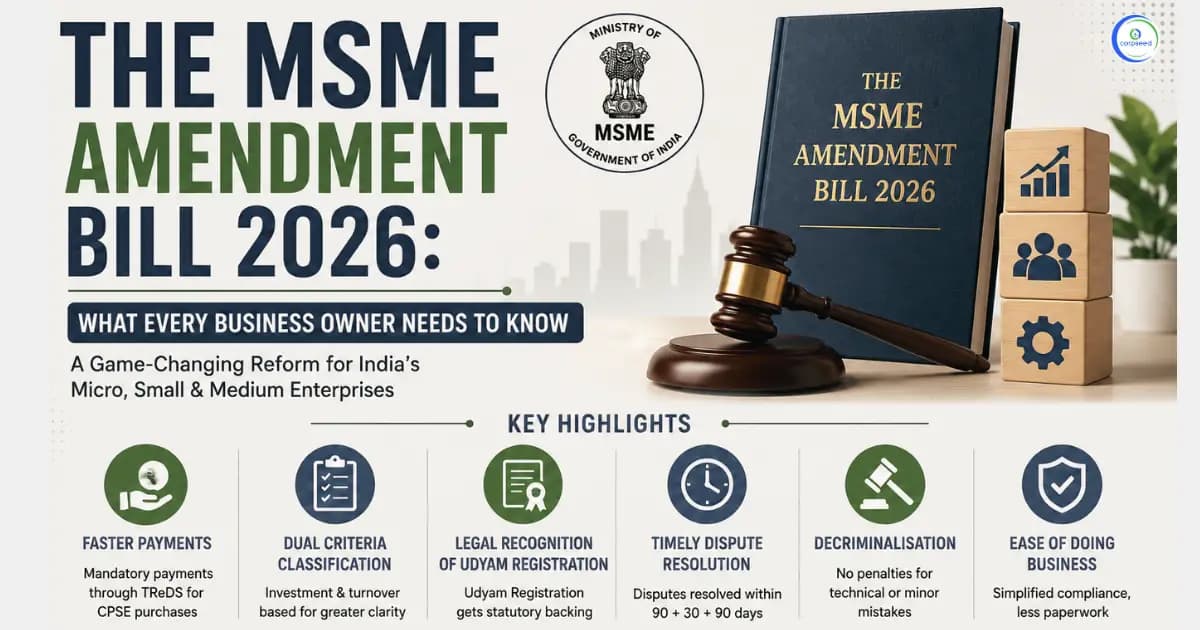
The MSME Amendment Bill 2026: What Every Business Owner Needs to Know
2026-08-11

SVEP: Building a Grassroots Start-up Ecosystem Across Rural India
2026-07-29
Corporate Mitra Scheme 2026: Complete Guidelines
2026-07-29

How To Register A Startup Under Startup India?
2025-12-31
How to Register on the GeM Portal?
2025-12-26
How to Find the Right NIC Code for Udyam Registration (Step-by-Step Guide)
2025-12-16