
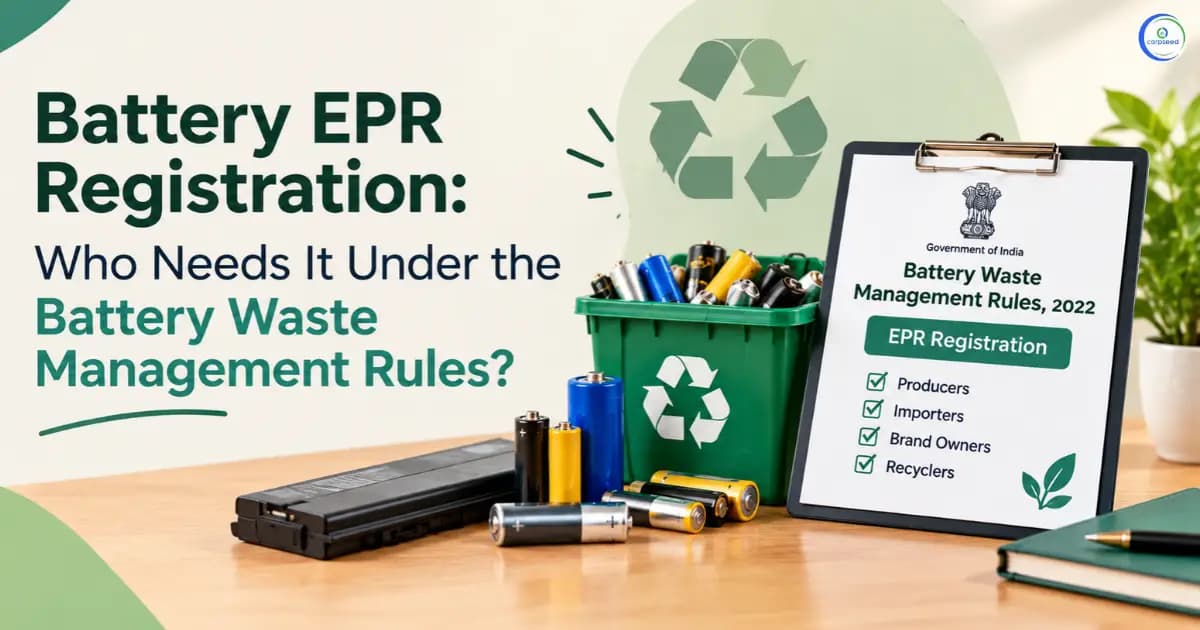
Battery EPR Registration: Who Needs It Under the Battery Waste Management Rules?
The growing electric vehicle, electronics, and energy storage sectors in India have driven demand for sustainable battery waste management. The Indian Government also enacted the Battery Waste Management Rules, 2022, which established an Extended Producer Responsibility regime for batteries sold in the country.
Schedule a Call Back
250+ battery EPR assignments since 2018
Clients include Emerson Automation Solutions Intelligent Platforms, Colt Technology Services India, Intangles Lab, Emerson Process Management (India), Watthut Electronics, KWW Electricals & Electronics, El Sewedy Electrometer India, Smiths Detection Systems, Om Electronic Corporation, Stmd Semiconductor, Techjockey Infotech, NI Systems (India) (12 of 150+ served since 2018).
A few more clients we've served in this industryHide the list
- Electronics and technology
- Emerson Automation Solutions Intelligent Platforms · Colt Technology Services India · Intangles Lab · Emerson Process Management (India) · Watthut Electronics · KWW Electricals & Electronics · El Sewedy Electrometer India · Smiths Detection Systems · Om Electronic Corporation · Stmd Semiconductor · Techjockey Infotech · NI Systems (India)
- Pharma and healthcare
- Endolite India · Starkey Laboratories India · Radimage Healthcare India · Agfa Healthcare India · Sonova Hearing India · Ossur India · Antara Assisted Care Services · Dental Tree Supply Company · Sanrai MED India
- Engineering and manufacturing
- Hilti India · Wacker Neuson Equipment · Denso India · Aptiv Components India · Franklin EV India · Technotorc Tools · JMS Mining · L&T-Mhi Power Turbine Generators · Tresa Motors
- Energy and power
- Bitek Solar · Nash Energy (I) · Rocky Batteries
- More clients
- Nilkamal · Meditronix Corporation · M.C. Dean Systems India · Galeno Metallics · BTL India · Esskay Compuservices · Picotech Energy · Anmay Solutions · Cart 2 India Online Retail · Tomra Sorting India · NTH Iconic Party Solutions · Amo Mobility Solutions · SDI Business Services India · GHV Medical Anchor · Ample Digital
Introduction
The growing electric vehicle, electronics, and energy storage sectors in India have driven demand for sustainable battery waste management. The Indian Government also enacted the Battery Waste Management Rules, 2022, which established an Extended Producer Responsibility regime for batteries sold in the country.
Under this framework, applicable producers must obtain registration and fulfil their prescribed obligations for the environmentally sound management of waste batteries. Manufacturers, importers, recyclers and refurbishers must understand the requirements relevant to their activities to avoid compliance gaps.
Businesses planning to manufacture or import batteries should therefore assess their registration requirements before introducing products into the market. Corpseed can help businesses understand their applicable EPR obligations, prepare documentation and navigate the CPCB registration process.
What Is EPR Battery Registration?
EPR Battery Registration is the registration process under the Battery Waste Management Rules, 2022, through which applicable businesses establish their regulatory status for battery waste management.
Extended Producer Responsibility makes producers responsible for managing the waste generated by the batteries they introduce into the market. This includes fulfilling prescribed recycling or refurbishment obligations, maintaining relevant records and completing applicable reporting requirements.
The Central Pollution Control Board (CPCB) operates the official Portal, where producers, recyclers and refurbishers apply for registration under the applicable provisions. Recyclers and refurbishers must also comply with the relevant requirements of their concerned State Pollution Control Board (SPCB) or Pollution Control Committee (PCC).
The framework covers batteries regardless of their chemistry, shape, volume, weight, material composition or use.
Who Needs EPR Battery Registration in India?
EPR registration depends on the business activity and the entity's role under the Battery Waste Management Rules.
1. Battery Manufacturers
Producers who manufacture batteries regulated by the Rules may be required to register themselves as producers and fulfill the EPR responsibilities accordingly. This covers manufacturers of lithium-ion batteries, lead-acid batteries, and other regulated batteries.
For example, a company manufacturing batteries for electric vehicles, inverters, laptops or industrial equipment should assess its registration and reporting requirements.
2. Battery Importers
Importers introducing covered batteries into the Indian market may fall within the definition of a Producer under the Rules. This can include businesses importing standalone batteries, battery packs and certain products containing batteries, depending on the applicable regulatory provisions and the nature of the import.
Importers should verify whether their products and business activities require producer registration before commencing or continuing relevant operations.
3. Battery Assemblers
Businesses assembling battery packs should assess whether their activities fall within the applicable definitions and registration requirements.
For example, an enterprise assembling lithium-ion battery packs for electric two-wheelers, UPS systems or industrial applications should evaluate its role in manufacturing and placing batteries on the market.
Assembly activity alone does not automatically establish the same obligations for every business the applicable facts and regulatory definitions must be considered.
4. Brand Owners and Sellers
A company that sells battery-powered products does not necessarily qualify as a Producer just because it owns a brand or distributes products.
It depends on what role it performs under the Rules in relation to the covered batteries or equipment that uses batteries. Companies that sell products manufactured by others must identify which party should fulfill the obligations.
5. Battery Recyclers and Refurbishers
Businesses that recycle or refurbish waste batteries must assess the registration requirements that apply to their activities.
Recyclers process waste batteries to recover materials, while refurbishers undertake qualifying activities to restore batteries for further use. Both categories must comply with the applicable registration, reporting and operational requirements.
Schedule a Call Back
Types of Batteries Covered Under the Battery Waste Management Rules
The Battery Waste Management Rules, 2022, cover a broad range of batteries used across consumer, automotive and industrial applications.
| Battery category | Common examples |
| Portable batteries | Mobile phones, laptops, cameras and other portable electronics |
| Automotive batteries | Batteries used in cars and motorcycles |
| Industrial batteries | Batteries used in industrial equipment and power systems |
| Electric vehicle batteries | Batteries used in electric two-wheelers, three-wheelers and four-wheelers |
Businesses should identify the correct battery category before calculating their EPR obligations. Targets and compliance requirements may differ by battery category, regulatory schedule and relevant compliance year.
Why Is EPR Battery Registration Important?
EPR Battery Registration establishes the required regulatory framework for applicable businesses and supports the traceable management of battery waste.
Registration alone does not complete a producer's compliance obligations. Producers must also monitor the batteries they introduce into the market, fulfil applicable EPR targets, obtain eligible EPR certificates where required and submit prescribed returns.
Key reasons for obtaining and maintaining compliance include:
- Regulatory compliance: Helps businesses meet applicable requirements under the Battery Waste Management Rules.
- EPR target fulfilment: Establishes the framework for meeting prescribed recycling or refurbishment obligations.
- Traceability: Supports monitoring of batteries introduced into the market and their subsequent waste management.
- Environmental protection: Encourages the appropriate handling and processing of waste batteries.
- Business continuity: Helps reduce the risk of regulatory action arising from non-compliance.
Documents Required for EPR Battery Registration
The documents required for battery EPR registration depend on whether the applicant is a Producer, Recycler or Refurbisher. The following checklist provides a starting point for preparing an application.
- PAN and business identification details
- Certificate of Incorporation or applicable constitution documents
- GST registration details, where applicable or requested
- Registered office and contact details
- Authorized signatory details and authorization
- Import Export Code (IEC)
- Battery category and chemistry
- Product and technical specifications
- Manufacturing or import information
- Applicable sales and quantity data
- Recycling or refurbishment facility details
- Previous registration and compliance information, where applicable
- Other declarations and supporting documents requested by CPCB
Important: This is an indicative checklist, not a universal mandatory-document list. Applicants should follow the current CPCB portal instructions and the registration procedure applicable to their category. Information submitted should be consistent with official business records, product details and sales data.
Incomplete applications or inconsistencies may trigger clarification requests and delay processing.
How to Apply for EPR Battery Registration Through CPCB
The applications are filed through the CPCB Battery Waste EPR portal. The process and required details depend on the applicant type and the portal's specific requirements.
Step 1: Determining the Relevant Registration Category
Identify whether your business requires registration as a Producer, Recycler or Refurbisher. If you import or your business involves batteries in equipment, determine whether you need to register as a Producer.
Step 2: Access the CPCB Battery EPR portal
Access the portal and complete the relevant registration and sign-up process. You will also be guided on how to register depending on your category.
Step 3: Provide Business Details
Provide the necessary details, including the business name, registered office address, contact details and authorized person details, as required by the portal.
Step 4: Provide Battery or Facility Details
Producers should provide the applicable battery category, product information, material details and other required particulars. Recyclers and refurbishers must provide the information relevant to their facilities and operations.
Step 5: Submit Sales and Other Applicable Data
Producers may need to submit sales, quantity and related information required for registration and EPR calculations. Accurate data is important because it can affect the assessment of applicable obligations.
Step 6: Attach Supporting Documents
Attach the mandatory documents, declaration, and other supporting material as per the guidelines given on the portal.
Step 7: Payment of Fee (if any)
Pay the applicable fee as per CPCB guidelines.
Step 8: Answer Queries of CPCB (if any)
Your application will be examined for its completeness and compliance with rules. If further documents, clarifications, or corrections are needed, respond as per the guidelines.
Step 9: Get Your Registration Done
Upon completion of your application and acceptance, the relevant CPCB portal will provide you with the registration particulars.
Businesses need to keep their registration documents ready and comply with all future compliance norms. Registration does not mean that one can overlook EPR targets and returns.
What Are EPR Targets for Battery Waste?
The EPR target determines producers' responsibilities under the Battery Waste Management Regulations. Such responsibilities are provided in the regulatory framework and schedule.
It is not recommended for producers to rely on the fact that there is only one recycling rate applicable to all batteries. Several factors are involved, such as battery type, market volume and compliance period.
How Do Producers Fulfil EPR Obligations?
Under the framework, producers must fulfil the applicable obligations through the permitted mechanisms under the Rules.
The process generally involves tracking the relevant batteries placed on the market, calculating the prescribed obligations, working with eligible waste management channels and obtaining and using valid EPR certificates where required.
Recyclers that register to recycle waste batteries should issue EPR certificates using the prescribed procedure. Producers should make use of certificates that are valid for meeting their goals.
Producers should regularly reconcile their sales information, target calculations and certificate records rather than waiting until the end of the compliance year.
Battery Waste Management Amendment Rules, 2025: EPR Labelling Update
The Battery Waste Management (Amendment) Rules, 2025, notified on 24 February 2025, introduced an additional option for displaying EPR registration information.
Under the amendment, producers may, subject to the prescribed conditions and written information to CPCB, use a barcode or QR code containing the EPR registration number on specified batteries, battery packs, equipment containing batteries, relevant packaging or bulk packaging not intended for retail sale. The amendment also allows printing the EPR registration number on the product information brochure.
The amendment includes an exception concerning packaging covered under Rule 26 of the Legal Metrology (Packaged Commodities) Rules, 2011, as specified in the notification.
Businesses should read the 2025 Amendment Rules alongside the existing labelling provisions before changing product labels or packaging. The barcode or QR code option should not be treated as an unconditional replacement for every applicable marking requirement.
EPR Battery Annual Compliance and Reporting
Registration is just the start of a company’s compliance requirements. Companies must track which requirements apply to their registration and retain the required documentation for reporting.
Compliance measures include the following, depending on the category of the entity and corresponding provisions:
- Maintain accurate documentation of sales and battery quantities.
- Tracking EPR objectives and the compliance period.
- Obtaining and reconciling eligible EPR certificates.
- Working with appropriately registered recycling or refurbishment channels.
- Filing prescribed annual returns and other required information.
- Following applicable labelling and safe-handling requirements.
- Responding to regulatory communications and maintaining supporting documents.
Under the main Rules, producers must file annual returns in Form 3, as amended, directed, or extended by the authorities. Enterprises need to check the latest filing deadline rather than relying on the old one.
Recyclers and refurbishers must follow the rules for their specific registration.
Recyclers and refurbishers must separately comply with the reporting and operational requirements applicable to their registration category.
Benefits of EPR Battery Registration
1. Formal Regulatory Compliance
Registration also enables qualified organizations to establish a regulatory compliance system under the Battery Waste Management Regulations and manage their responsibilities.
2. Efficient Battery Waste Management
The EPR system ensures that the waste batteries reach recycling and refurbishing channels and are not improperly disposed of.
3. Material Recovery
Battery recycling enables material recovery and efficient resource use.
4. Enhanced Credibility of the Business
Compliance with relevant environmental regulations will improve the business's credibility with customers, suppliers and other business partners.
5. Support for the Circular Economy
Appropriate battery waste management supports resource recovery and India's broader efforts to improve material efficiency and reduce environmental harm.
Common Mistakes to Avoid During Battery EPR Compliance
Businesses can face avoidable compliance issues when they treat registration as a one-time formality.
- Incorrect entity classification: A business may overlook its obligations by failing to assess whether it is a Producer, Recycler or Refurbisher.
- Incomplete product information: Missing or inconsistent battery category, chemistry or sales data can complicate application review and target calculations.
- Incorrect EPR calculations: Applying a generic target across different battery categories may result in an inaccurate compliance assessment.
- Unverified recycling arrangements: Producers should confirm that the relevant recycling channels and EPR certificates meet the applicable requirements.
- Outdated labelling: Packaging and product markings should be checked against the current rules, including the 2025 amendment.
- Missed reporting deadlines: Businesses should maintain a compliance calendar and monitor current CPCB notices for filing extensions or other directions.
How Corpseed Can Help with EPR Battery Registration
Battery waste compliance can involve multiple requirements, including identifying the correct registration category, preparing business and product information, understanding EPR obligations and maintaining compliance records.
Corpseed can help businesses understand the applicable requirements and prepare for registration. Support may include:
- Assessing whether the Battery Waste Management Rules likely apply to the business.
- Identifying the relevant registration category.
- Preparing an indicative document checklist.
- Assisting with application preparation and portal-related requirements.
- Helping businesses understand EPR targets and reporting obligations.
- Reviewing compliance requirements relating to registration records and labelling.
The scope of assistance depends on the business activity, application category and applicable regulatory requirements. The competent authority may review registration approval.
Planning to manufacture or import batteries into India? Contact Corpseed to discuss your business activity and determine the registration and compliance requirements that may apply.
Conclusion
EPR battery registration is one of the most critical aspects of regulatory compliance for businesses that fall under India's Battery Waste Management Rules, 2022. Applicable manufacturers must understand their EPR registration obligations, compliance objectives, and record-keeping requirements.
For businesses that manufacture or import batteries, early compliance planning can help prevent documentation gaps, reporting issues and avoidable delays. Contact Corpseed to assess your battery EPR requirements and plan the next steps towards regulatory compliance.
About the Author

Anshika Jindal
Content WriterAnshika Jindal, a Legal Content Writer with strong expertise in legal research and a solid academic background in BA LLB and LLM (Criminal Law). I specialize in researching statutes, case laws, and legal developments and presenting them in clear, accurate, and engaging written content. With strong analytical skills and attention to detail, I create reliable, well-structured legal content while maintaining professional and ethical standards.
I specialize in conducting in-depth legal research using credible sources and presenting legal information in a structured, reader-friendly manner while maintaining precision and authenticity. My work focuses on simplifying legal language without compromising its meaning, making legal content accessible to a wider audience.
Related articles

CPCB SOP 2026 for CTE and CTO Approvals - Timelines, Inspections and Key Directions
2026-10-30
E-Waste EPR for Electronics Brands: Registration, Targets & Annual Compliance
2026-10-26
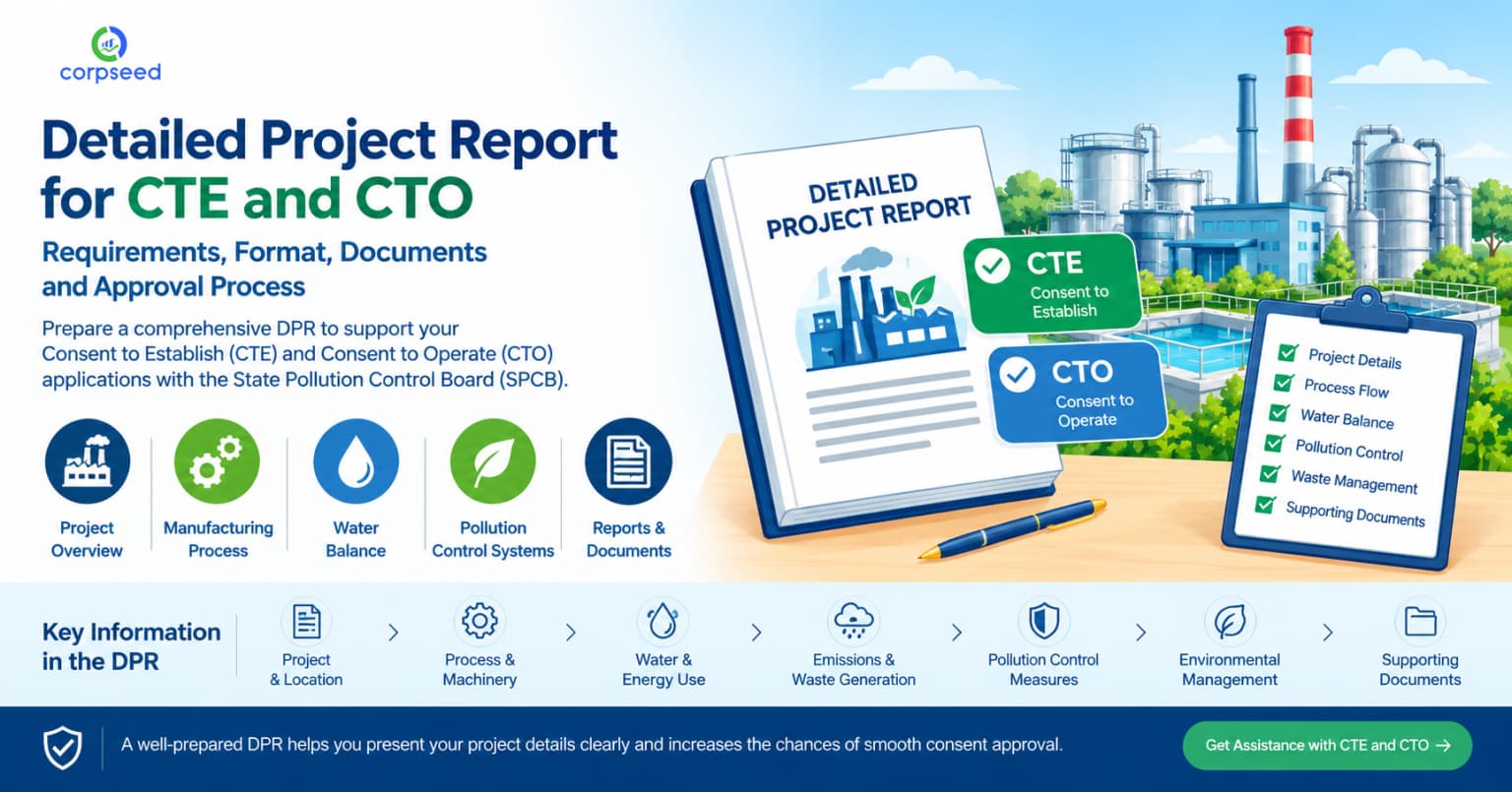
Detailed Project Report for CTE and CTO: Requirements, Format, Documents and Approval Process
2026-10-22
EPR Registration in India: Who Needs It and Which EPR Category Applies to Your Business?
2026-10-21
CPCB Guidelines on Levy of Fees Under the Solid Waste Management Rules, 2026
2026-10-07
Used Oil EPR in India: GST E-Invoicing & Hazardous Waste Rules Compliance Guide 2026
2026-10-06