
DPCC Directs Delhi Dairy Farms and Gaushalas to Apply for Pollution Clearances Within 15 Days
DPCC directs Delhi dairy farms and gaushalas to apply for CTE and CTO within 15 days. Check pollution categories, compliance requirements and penalties.
Schedule a Call Back
1,800+ CTE/CTO and plant setup assignments since 2018
Clients include Magnum Aluminium, Enershell Alloys and Steel, Ganesh Foundry & Cast, Inland Speciality Metals, JK Cement, Sskbp India Alloy, Denso India, Neometrix Defence, PMS Waste Management, Daebak India Recycler, Ganix Rubber Recycling, Pashidaa E Waste Copper Battery Recycling PLT Company (12 of 1,100+ served since 2018).
A few more clients we've served in this industryHide the list
- Engineering and manufacturing
- Magnum Aluminium · Enershell Alloys and Steel · Ganesh Foundry & Cast · Inland Speciality Metals · JK Cement · Sskbp India Alloy · Denso India · Neometrix Defence
- Recycling and waste management
- PMS Waste Management · Daebak India Recycler · Ganix Rubber Recycling · Pashidaa E Waste Copper Battery Recycling PLT Company · Upcycle Debris Management · Ficusa Ewaste Recyclers · Shuchaye Recyclers · Quantara Battery Recycling
- Logistics and trade
- 20Cube Logistics Solutions · Airsurge Logistics · Green Space Logistics · Saap Logistics
- Food and consumer goods
- Bake Wish · Kokora Spices · Babi Beverages · Indraj Beverages and Distilleries · Adheshwar Agro Dairy Products · Venco Research and Breeding Farm · Explore Food · IFF India Frozen Foods
- Energy and power
- Servotech Renewable Power System · Saurya Urja Company of Rajasthan · Sun Mobility · Sun Max Solar · Maxvolt Energy Industries · Rays Power Infra
- Chemicals and materials
- Venkateshwara Roto Pack · Lami Tube · M C Bauchemie I · Pro Flexi Packaging · Rustchem Corrosols · SVN Polymers · Kairaa Polypack · Sanctum Chemicals
- More clients
- Intangles Lab · Alten India · Adit Buildwell · Ecowise Trading · GS E-Commerce · Beaucience India
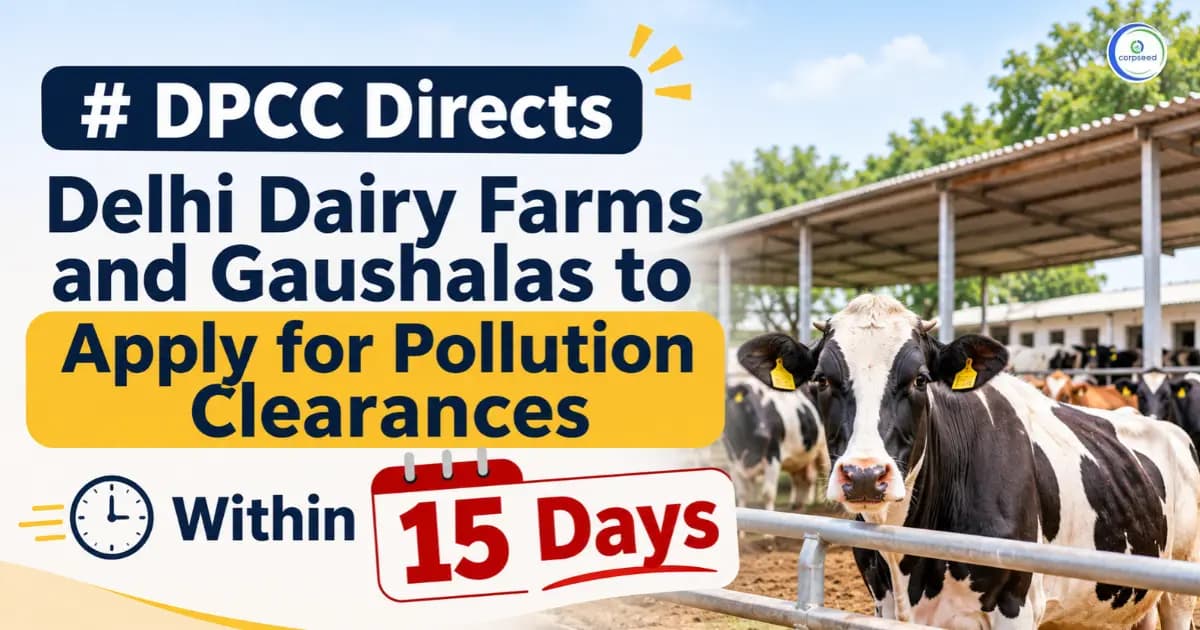
Establishments failing to comply may face regulatory action under the applicable environmental laws.
The direction follows the National Green Tribunal (NGT) order dated 20 May 2020 and the environmental management guidelines issued by the Central Pollution Control Board (CPCB). Owners, operators and occupiers must obtain Consent to Establish (CTE) and Consent to Operate (CTO), wherever applicable, under the Water Act, 1974, and the Air Act, 1981.
The notice also highlights the pollution-based classification of dairy farms and gaushalas into Green, Orange and Red categories. Establishments must assess their applicable consent requirements, review waste management arrangements and submit the necessary applications within the prescribed period.
DPCC Public Notice at a Glance
| Particulars | Details |
|---|---|
| Issuing Authority | Delhi Pollution Control Committee (DPCC) |
| Regulatory Development | Mandatory pollution control consent applications |
| Jurisdiction | National Capital Territory of Delhi |
| News Reporting Date | 24 November 2026 |
| Applicable Establishments | Dairy farms and gaushalas |
| Compliance Timeline | Within 15 days from issuance of the public notice |
| Required Approvals | Consent to Establish (CTE) and Consent to Operate (CTO), as applicable |
| Governing Legislation | Water Act, 1974, and Air Act, 1981 |
| Relevant NGT Order | 20 May 2020 |
| CPCB Classification Direction | 10 July 2020 |
| Pollution Categories | Green, Orange and Red |
| Consequences of Non-Compliance | Regulatory action under applicable environmental laws |
Background of the DPCC Directions for Dairy Farms and Gaushalas
Dairy farms and gaushalas generate considerable quantities of cattle dung, urine, wastewater and other organic waste during their daily operations. Improper handling of these waste streams can contaminate water bodies, block drainage systems, generate unpleasant odours and affect surrounding residential areas.
Following the National Green Tribunal's order dated 20 May 2020, CPCB issued environmental management guidelines addressing solid waste disposal, wastewater treatment, air pollution control and regulatory compliance at dairy farms and gaushalas. These guidelines were subsequently revised in July 2021.
The latest DPCC direction seeks to strengthen the implementation of these existing environmental requirements across Delhi. It does not introduce a new pollution licence but requires establishments to comply with the applicable consent framework within the stipulated period.
Key Directions Issued by DPCC
Under the public notice, owners, operators and occupiers of dairy farms and gaushalas are required to assess their environmental obligations and apply for the necessary consents.
The major compliance directions include:
- Submit applications for applicable Consent to Establish and Consent to Operate within 15 days of the issuance of the public notice.
- Comply with the Water (Prevention and Control of Pollution) Act, 1974.
- Comply with the Air (Prevention and Control of Pollution) Act, 1981.
- Follow CPCB guidelines for the environmental management of dairy farms and gaushalas.
- Maintain appropriate arrangements for managing solid waste, wastewater and other pollution sources.
- Comply with the consent requirements applicable to the establishment's pollution category.
Important: The 15-day deadline relates to the submission of applications for the requisite consents. It does not guarantee that DPCC will issue the approvals within the same period.
With the 15-day compliance window in place, dairy farm and gaushala operators should prioritise their pollution consent applications. Corpseed provides end-to-end support for DPCC CTE and CTO approval, from documentation to application submission.
Connect with our environmental compliance experts to get started with your DPCC consent application.
Pollution Classification of Dairy Farms and Gaushalas
CPCB issued directions on 10 July 2020 under Section 18(1)(b) of the Water Act, 1974, and the Air Act, 1981, concerning the pollution-based classification of dairy farms and gaushalas.
According to the classification cited in the latest DPCC notice, establishments are categorised based on their nature of operations, animal population and potential environmental impact.
| Type of Establishment | Number of Animals | Pollution Category | Pollution Index |
|---|---|---|---|
| Gaushalas | As classified under the notice | Green | 41.5 |
| Dairy Farms | 15 to 100 | Orange | 73 |
| Dairy Farms | 101 to 500 | Orange | 77.5 |
| Dairy Farms | More than 500 | Red | 82 |
The Pollution Index represents the potential of an establishment to cause environmental pollution. A higher score indicates greater pollution potential and may influence applicable regulatory requirements and pollution control measures.
Dairy farms housing fewer than 15 animals should independently verify their consent applicability with DPCC, as the classification cited in the reported notice does not expressly address this group. Similarly, classification under the Green category should not be treated as an automatic exemption from pollution control requirements.
Mandatory Pollution Control Approvals for Dairy Farms and Gaushalas
Dairy farms and gaushalas must obtain the applicable DPCC Pollution NOC in accordance with their operational status, pollution classification and environmental impact.
The two principal consents are:
Consent to Establish (CTE)
Consent to Establish is generally required before setting up a new establishment or undertaking expansion or modification that attracts consent requirements. It allows the regulatory authority to assess the proposed activities, location, capacity and pollution control arrangements before establishment.
Consent to Operate (CTO)
Consent to Operate is required, wherever applicable, before commencing operations. It establishes the environmental conditions under which the facility is permitted to operate, including requirements relating to waste disposal, wastewater treatment and pollution prevention.
Existing dairy farms and gaushalas operating without the requisite approvals should assess their consent status and determine the appropriate application route with DPCC.
Environmental Compliance Requirements Under CPCB Guidelines
Obtaining pollution control consent is only one part of environmental compliance. Dairy farm and gaushala operators must also maintain appropriate waste management practices throughout their operations.
| Compliance Area | Key Environmental Requirements |
|---|---|
| Cattle Dung Management | Ensure proper collection, storage and environmentally sound utilisation or disposal of dung. |
| Wastewater Management | Prevent untreated wastewater from entering drains, rivers and surrounding water bodies. |
| Water Conservation | Minimise unnecessary water consumption during cattle washing and premises cleaning. |
| Solid Waste Management | Collect and manage organic and other waste generated during daily operations. |
| Odour and Air Pollution Control | Maintain cleanliness, adequate ventilation and measures to minimise unpleasant odours. |
| Waste Recovery and Utilisation | Explore composting, vermicomposting, biogas generation and other suitable dung utilisation methods. |
| Siting Requirements | Comply with applicable location and siting criteria, particularly for new establishments. |
| Regulatory Compliance | Maintain applicable consents, operational information and supporting compliance records. |
The pollution control infrastructure required at an individual establishment will depend on its animal population, wastewater generation, waste management practices and applicable consent conditions.
Documents Required for DPCC Consent Applications
Dairy farm and gaushala operators should keep the necessary business, premises and environmental records ready before submitting their applications.
The indicative documentation includes:
- Applicant identity and establishment registration documents, wherever applicable.
- Land ownership documents, lease agreement or proof of lawful occupation.
- Site layout and details of the establishment.
- Animal population and operational capacity details.
- Water consumption and wastewater generation information.
- Cattle dung collection, storage and disposal arrangements.
- Details of installed pollution control and waste treatment facilities.
- Existing environmental consents and municipal permissions, if available.
The final documentation requirements may vary according to the pollution category, type of consent and operational status of the establishment. DPCC may request additional information during application scrutiny.
How to Apply for DPCC Pollution Clearance Within 15 Days?
Owners and operators should initiate the consent application process without waiting until the end of the prescribed compliance period.
- Identify the Pollution Category: Determine the applicable classification based on the nature of the establishment and animal population.
- Assess Consent Requirements: Identify whether CTE, CTO or other applicable consent-related action is required.
- Review Pollution Control Arrangements: Examine existing wastewater, dung disposal and solid waste management practices.
- Prepare Documentation: Compile the required establishment and environmental compliance records.
- Submit the Online Application: Apply through CPCB's Unified Consent and Authorization Management System (UCAMS) portal and pay the applicable government fees.
- Respond to Regulatory Queries: Address any deficiencies, additional documentation requirements or inspection-related observations raised by DPCC.
Applicants should retain their application acknowledgement and supporting documents as evidence of timely submission. Filing an application does not, by itself, amount to obtaining consent or authorisation to continue operations.
Consequences of Non-Compliance with the DPCC Notice
DPCC has warned that establishments failing to submit the requisite consent applications within the prescribed period may face action under the Water Act, 1974, and the Air Act, 1981.
Depending on the nature of the violation and applicable statutory provisions, regulatory action may include:
- Issuance of show-cause notices and compliance directions.
- Environmental compensation for applicable pollution-related violations.
- Restrictions on operations or closure directions, where legally permitted.
- Statutory penalties for violations of environmental laws.
- Additional inspections and monitoring by the concerned authorities.
The reported public notice does not specify a uniform monetary penalty for missing the 15-day application deadline. The nature and extent of enforcement will depend on the circumstances of non-compliance and applicable legal provisions.
How Can Corpseed Help?
With a limited compliance window, dairy farm and gaushala operators need to identify the correct pollution category, prepare the required documents and address existing environmental compliance gaps.
Corpseed assists establishments with DPCC CTE and CTO approval, regulatory documentation and pollution control compliance requirements.
The areas of assistance include:
- Pollution category and consent applicability assessment.
- Preparation and submission of DPCC consent applications.
- Review of waste management and pollution control arrangements.
- Assistance with regulatory queries and documentation deficiencies.
- Consent renewal and ongoing environmental compliance support.
Dairy farm owners and gaushala operators seeking pollution control compliance services can connect with Corpseed to assess their approval requirements and prepare their applications within the prescribed timeline.
Key Takeaways
- Dairy farms and gaushalas in Delhi must apply for applicable pollution control consents within 15 days of the public notice.
- The direction follows the NGT order dated 20 May 2020 and CPCB environmental management guidelines.
- Gaushalas are classified under the Green category, while the reported dairy farm classifications fall under Orange and Red categories.
- Establishments must obtain CTE and CTO, wherever applicable, and maintain appropriate waste management arrangements.
- Failure to comply may attract regulatory action under applicable environmental laws.
- Owners and operators should prioritise application submission and address existing environmental compliance gaps.
About the Author

Parul Bohral
Legal Content WriterParul Bohral, a BALLB graduate and experienced legal researcher and content writer with expertise in various legal areas, including corporate law and intellectual property. I have gained valuable experience in esteemed legal environments, where I have strengthened my research skills, allowing me to approach legal writing with precision and depth.
As a legal content writer, I am committed to delivering work that not only informs but also engages readers. By staying informed about the latest trends in content marketing and regulatory developments, I ensure that my writing remains sophisticated and meets industry standards. My dedication to thorough research enables me to craft content that is both insightful and impactful.