For businesses entering the battery market, understanding EPR requirements before placing an import order can help prevent documentation issues, unexpected compliance costs and operational delays.
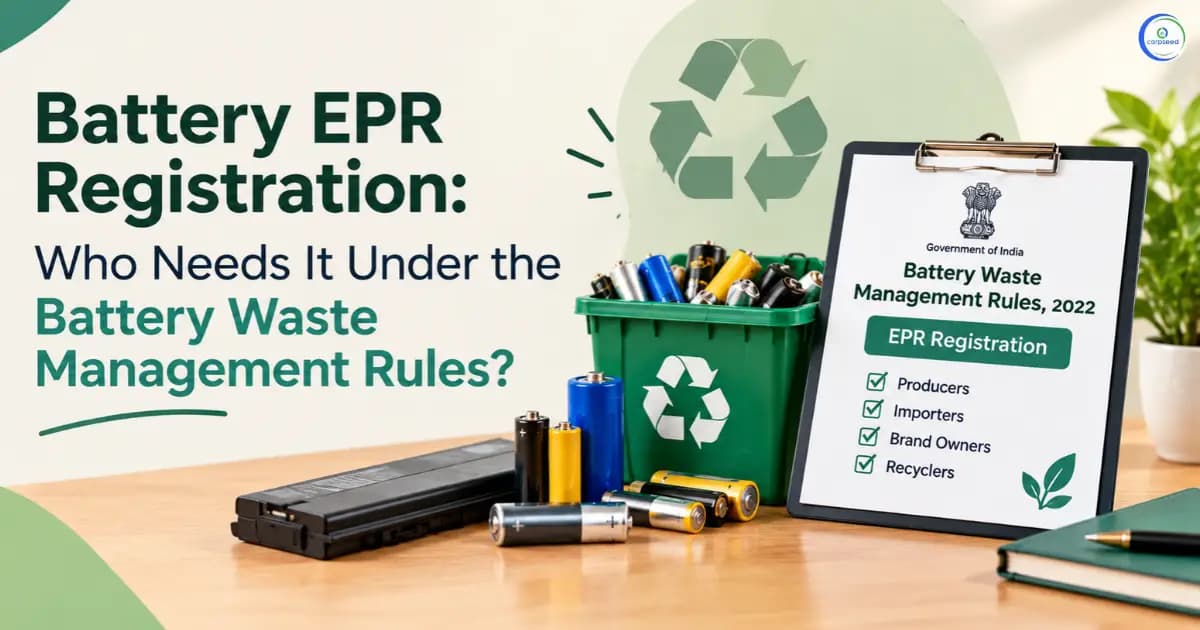
The Battery Waste Management Rules, 2022 make producers, including importers, responsible for managing waste batteries associated with the products they introduce into the Indian market.
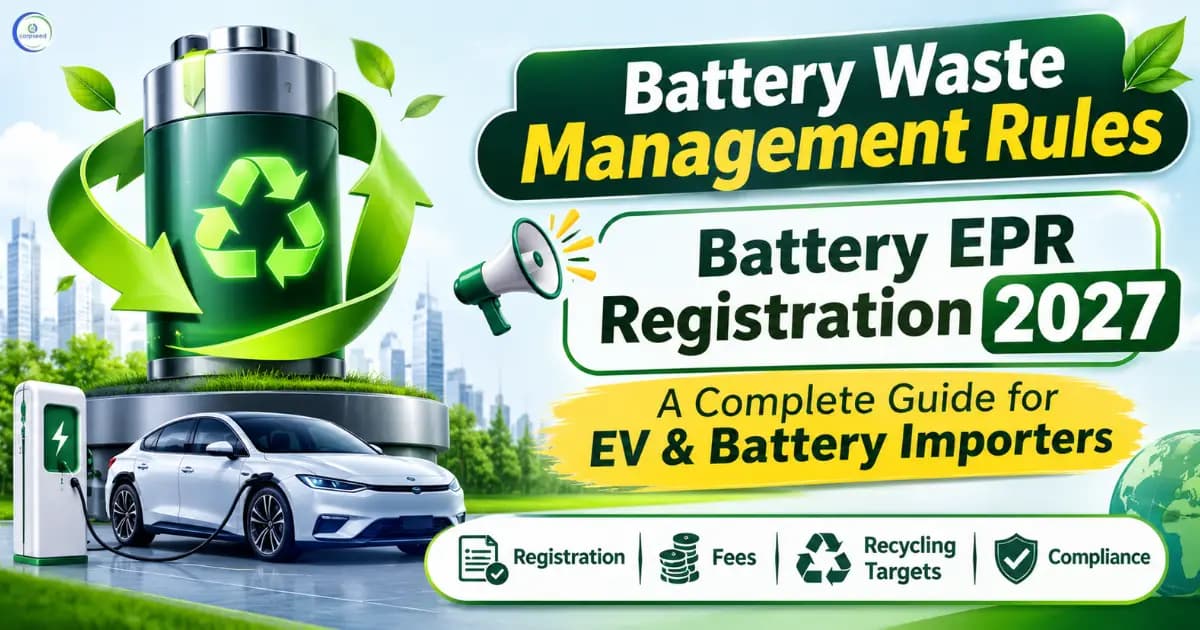
This guide explains who needs battery EPR registration, the online application process, government fees, documents, recycling targets, certificate procurement, recycled material requirements and penalties for non-compliance in 2027.
What Are the Battery Waste Management Rules, 2022?
The Ministry of Environment, Forest and Climate Change (MoEFCC) notified the Battery Waste Management Rules, 2022 on 24 August 2022, replacing the Batteries (Management and Handling) Rules, 2001.
The rules establish an Extended Producer Responsibility (EPR) framework for batteries in India, making producers accountable for the collection, recycling or refurbishment of waste batteries associated with their market activities.
Unlike the earlier framework, which primarily addressed lead-acid batteries, these rules cover batteries across different chemistries, sizes, weights and applications.
The framework aims to:
- Reduce the environmental impact of discarded batteries.
- Promote EV battery recycling in India.
- Recover valuable materials from waste batteries.
- Encourage the use of recycled content in batteries.
- Establish accountability among producers, recyclers and refurbishers.
Waste batteries covered under the rules must not be disposed of through landfilling or incineration. Businesses should read the original rules together with subsequent amendments.
Who Needs Battery EPR Registration in India?
CPCB EPR registration for batteries is mandatory for businesses falling within the applicable definition of a producer under the Battery Waste Management Rules.
| Business activity | Registration requirement |
|---|---|
| Manufacturing and selling batteries under an own brand | Required |
| Selling third-party manufactured batteries under an own brand | Required |
| Importing lithium-ion cells and batteries | Required where covered |
| Importing electric vehicles containing batteries | Required where covered |
| Importing equipment containing batteries | Generally required |
| Selling refurbished batteries under an own brand | Required where covered |
| Recycling waste batteries | Separate recycler registration |
| Refurbishing waste batteries | Separate refurbisher registration |
The requirement for battery producer registration depends on your actual business activities, not simply whether your company identifies itself as a battery manufacturer.
EPR for EV Batteries: Registration for EV Manufacturers and Importers in India
If you manufacture or import electric cars, electric scooters, e-rickshaws or other electric vehicles containing traction batteries, the battery component also falls within the applicable battery waste management framework.
EPR registration for EV manufacturers in India must be assessed based on their role as producers and the batteries they introduce into the market.
An existing vehicle type approval or product safety certificate does not replace battery importer EPR registration.
EPR Registration for Lithium-Ion Battery Importers and Pack Assemblers
Businesses importing lithium-ion cells and assembling battery packs in India must assess their producer obligations under the lithium-ion battery EPR framework.
Accurate reporting becomes particularly important when imported cells are subsequently incorporated into battery packs. Incorrect declarations may result in double counting, inaccurate targets or discrepancies during CPCB scrutiny.
Battery OEMs and pack assemblers should establish clear reporting arrangements based on their manufacturing, importing and branding activities.
EPR Registration for Products Containing Built-In Batteries
You do not necessarily have to sell batteries separately to attract EPR obligations.
Importers of laptops, mobile phones, power banks, UPS systems, medical equipment, cordless tools and solar storage systems may also require battery EPR registration.
Where the equipment is covered under the E-Waste (Management) Rules, separate e-waste EPR obligations may arise.
EPR Requirements for Second-Life Batteries
Businesses repurposing used EV batteries for stationary energy storage or selling refurbished batteries must assess their activities against applicable producer and refurbisher registration requirements.
Importing EVs, lithium-ion cells or battery-powered products? Get a compliance assessment before placing your next import order to understand your registration requirements, applicable EPR targets and estimated compliance expenses.
Four Battery Categories Under the Battery Waste Management Rules
Correct battery classification is important because EPR targets and reporting requirements vary according to the battery category and application.
| Battery category | Description | Examples |
|---|---|---|
| Portable battery | Sealed battery weighing below 5 kg, not designed for industrial, automotive or EV applications | Mobile phone batteries, AA cells, laptop batteries |
| Automotive battery | Battery used for vehicle starting, lighting or ignition | Car and motorcycle starter batteries |
| Industrial battery | Battery designed for industrial applications or otherwise falling within the statutory industrial category | Industrial UPS, telecom and energy storage batteries |
| Electric vehicle battery | Battery designed to provide traction power to electric vehicles | Electric scooter, electric car and e-bus battery packs |
Battery chemistry alone does not determine its category. A lithium-ion battery may fall under the portable, industrial or EV category depending on its design and intended application.
Incorrect classification can affect EPR target calculations, annual return filing and subsequent certificate procurement.
Battery EPR Targets and Compliance Obligations for 2027
Obtaining a battery EPR registration certificate is only the first stage of regulatory compliance. Producers must continue fulfilling their environmental responsibilities after registration.
| Compliance obligation | What businesses must do |
|---|---|
| Battery waste collection targets | Fulfil applicable category-specific targets under Schedule II |
| Recycling or refurbishment | Ensure prescribed quantities of waste batteries are processed |
| EPR certificate procurement | Obtain and adjust eligible certificates against applicable obligations |
| Material recovery | Work with registered facilities complying with prescribed recovery requirements |
| Recycled material usage | Meet applicable minimum recycled material requirements from FY 2027-28 |
| Battery labelling | Follow prescribed labelling and marking requirements |
| Annual return filing | Report applicable battery quantities and EPR fulfilment |
| Consumer awareness | Communicate appropriate battery disposal and collection practices |
There is no single EPR recycling percentage that applies to every battery. Targets depend on the application, historical quantities introduced into the market and applicable compliance cycle.
EPR target calculation for battery importers should therefore be based on the relevant Schedule II provisions, actual battery quantities and material composition rather than estimated figures.
Recycled Content in Batteries: New Compliance Requirements for 2027-28
Under the Battery Waste Management (Second Amendment) Rules, 2024, minimum recycled material requirements are scheduled to commence from FY 2027-28.
The following percentages are calculated against the total dry weight of the battery.
| Battery category | 2027-28 | 2028-29 | 2029-30 | 2030-31 onwards |
|---|---|---|---|---|
| Portable battery | 5% | 10% | 15% | 20% |
| Electric vehicle battery | 5% | 10% | 15% | 20% |
| Automotive battery | 35% | 35% | 40% | 40% |
| Industrial battery | 35% | 35% | 40% | 40% |
For imported batteries, Rule 4(14) provides for meeting the applicable recycled material obligation through utilisation of the required quantity of recycled materials by other businesses or through export of such materials.
Importers should begin reviewing their sourcing arrangements, battery composition records and applicable compliance mechanisms before FY 2027-28.
How to Apply for Battery EPR Registration Online on the CPCB Portal
The CPCB battery EPR registration process is conducted through the centralised CPCB battery EPR portal.
Businesses looking to apply for a battery EPR certificate can follow the steps below.
Step 1: Identify Your Business Role
Determine whether your business operates as a battery manufacturer, importer, brand owner or another regulated entity. Identify the registration requirements applicable to your business activities.
Step 2: Classify Your Batteries
Identify the battery categories, chemistry, intended applications, constituent materials and model-wise weights. Accurate classification helps determine subsequent EPR obligations.
Step 3: Prepare the Required Documents
Collect business registration documents, tax records, product specifications and relevant import or manufacturing information.
Step 4: Create an Account on the CPCB Portal
Register on the centralised portal using the business details, official email address and authorised representative's contact information.
Step 5: Complete the Producer Registration Application
Enter the relevant battery categories, historical sales information, battery composition and supporting documentation in the prescribed application form.
Step 6: Pay the Application Fee
Pay the applicable battery EPR registration fees online and respond to any clarification or document deficiency raised by CPCB.
Step 7: Obtain the Battery EPR Registration Certificate
Following successful scrutiny and approval, CPCB issues the producer registration certificate through its portal. Businesses must subsequently comply with applicable EPR targets and reporting requirements.
Documents Required for Battery EPR Registration
Preparing accurate documentation before applying can reduce avoidable delays and repeated clarification requests.
- PAN, GST registration and applicable incorporation documents
- Import Export Code (IEC) and relevant import records
- Identity proof and authorisation letter
- Battery chemistry, category, composition, weight and model details
- Applicable turnover records, financial statements or GST returns
- Historical sales and category-wise market quantities
- Brand details and supporting authorisations, where applicable
- Applicable BIS certificates and technical records
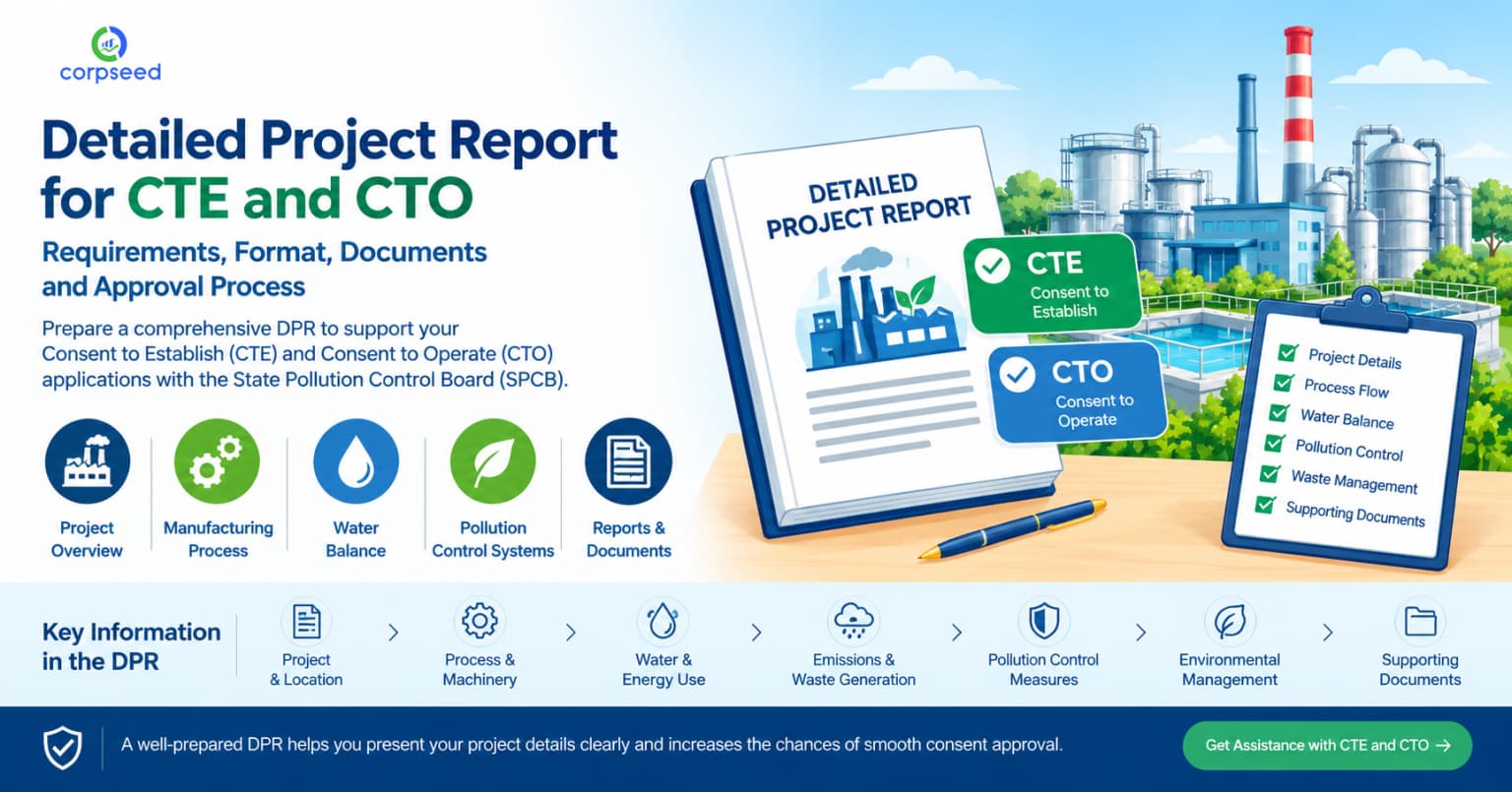
- Consent to Establish and Consent to Operate, where applicable
The final document checklist depends on the applicant's business category, operational activities and current CPCB portal requirements.
Practical tip: Ask your overseas supplier for battery-specific weight and material composition data rather than relying on the gross weight of the imported equipment. This can help prevent discrepancies during registration and subsequent EPR target calculations.
Battery EPR Registration Cost and Government Fees in India 2027
Battery EPR registration cost depends on the annual turnover of the applicant, business activities, product categories and scope of compliance support.
As per the published CPCB producer registration SOP, the government application fee is structured as follows.
| Annual turnover or revenue | CPCB application fee |
|---|---|
| Below ₹5 crore | Rs10,000 |
| ₹5 crore to ₹50 crore | Rs20,000 |
| Above ₹50 crore | Rs40,000 |
The application fee excludes applicable transaction charges. As per the published SOP, the renewal fee is the same as the registration fee.
Additional Battery EPR Compliance Costs
Apart from government registration fees, businesses may need to budget for professional services and ongoing regulatory obligations.
| Cost component | What it covers |
|---|---|
| Government registration fee | CPCB producer registration application |
| Professional consultancy fees | Documentation, application preparation and regulatory assistance |
| EPR certificate procurement | Fulfilment of applicable EPR targets |
| Annual return filing | Periodic reporting and compliance documentation |
| Registration amendment | Changes to registered business or product details, where applicable |
| Registration renewal | Continuation of registration after its validity period |
If you are comparing battery EPR registration services in India, check whether the quotation covers only initial registration or ongoing compliance as well.
EPR registration fees for battery importers should not be confused with the cost of procuring certificates to fulfil annual targets.
Planning your compliance budget for 2027? Request a customised battery EPR registration cost estimate based on your annual turnover, battery categories and import quantities.
How Long Does Battery EPR Registration Take?
The published CPCB producer registration SOP specifies a processing period of 15 working days for registration applications.
However, incomplete documentation, inaccurate battery weight declarations, incorrect classification and clarification requests may extend the overall application timeline.
Businesses planning imports should initiate their registration process sufficiently in advance rather than waiting for the shipment to arrive.
Battery EPR Certificate Validity and Registration Renewal
According to the published CPCB SOP, fresh producer registration is valid for five years from the date of approval.
Businesses must apply for battery EPR registration renewal at least 60 days before the registration expires, along with the prescribed documentation and applicable renewal fee.
Maintaining valid registration is important for continuing regulated business activities and fulfilling ongoing environmental compliance obligations.
eprbattery.cpcb.gov.in
Battery EPR Certificates: Requirements, Procurement and Pricing
A battery EPR registration certificate and a battery EPR certificate used for target fulfilment serve different purposes.
Understanding this distinction is particularly important for businesses searching for an EPR certificate for battery importers.
| Particulars | EPR registration certificate | EPR certificate for target fulfilment |
|---|---|---|
| Purpose | Establishes registration under the applicable framework | Helps fulfil prescribed EPR obligations |
| Issuance or generation | CPCB registration approval | Generated through the regulated mechanism based on eligible processing |
| Requirement | Applicable registration compliance | Ongoing target compliance |
| Cost | Prescribed registration fee | Depends on eligible certificate transactions |
Businesses searching for an EPR licence for battery importers generally require CPCB producer registration. Purchasing recycling certificates alone does not replace this registration requirement.
How Does Battery EPR Certificate Procurement Work?
Producers can acquire eligible EPR certificates associated with registered recyclers or refurbishers through the prescribed mechanism.
Before purchasing certificates, businesses should:
- Verify the registration status of the recycler or refurbisher.
- Confirm certificate availability and eligibility.
- Check applicable material categories and outstanding EPR targets.
- Ensure successful certificate transfer through the CPCB portal.
- Maintain transaction records, invoices and supporting documentation.
Certificates that are not properly accounted for under the prescribed portal mechanism may not be recognised towards target fulfilment.
What Is the Battery EPR Certificate Price in India?
The battery EPR certificate price is not necessarily the same for every producer. Certificate procurement costs depend on applicable battery materials, outstanding targets, certificate availability and prevailing regulatory pricing provisions.
The Battery Waste Management (Amendment) Rules, 2024 establish the following pricing framework.
| Price limit | Regulatory provision |
|---|---|
| Floor price | 30% of applicable Environmental Compensation |
| Ceiling price | 100% of applicable Environmental Compensation |
Certificate transactions must remain within the applicable pricing limits determined under the regulatory framework.
Businesses should obtain a target-wise assessment before purchasing certificates rather than relying on a standard per-kilogram quotation.
Battery Labelling Rules for Manufacturers and Importers
Battery producers must comply with applicable labelling and marking requirements before introducing their products into the Indian market.
These requirements include the crossed-out wheeled bin symbol, prescribed chemical symbols where relevant thresholds are exceeded and applicable EPR registration identification requirements.
The Battery Waste Management Amendment Rules, 2025 introduced additional permitted methods for displaying EPR registration information, including specified QR code and barcode arrangements, subject to prescribed conditions.
Certain packaging covered under Rule 26 of the Legal Metrology (Packaged Commodities) Rules, 2011 also receives a specific exemption from the relevant labelling provision.
Importers should review product labels and packaging artwork with their overseas suppliers before shipment. Correcting labels after goods arrive in India can increase operational expenses and delay product distribution.
Battery EPR Annual Return Filing and Record-Keeping
Registered producers must submit applicable annual returns through the CPCB battery EPR portal.
The prescribed annual return deadline is generally 30 June following the relevant financial year, subject to official extensions or revised directions.
Businesses should maintain records relating to:
- Battery quantities introduced into the Indian market.
- Import invoices, bills of entry and sales records.
- Battery category and material composition.
- Applicable recycling targets and outstanding obligations.
- EPR certificate transactions and supporting invoices.
- Recycled material compliance, where applicable.
Businesses with multiple battery categories or frequent import transactions may benefit from professional battery EPR annual return filing services to maintain consistent reporting and identify compliance gaps.
CPCB periodically publishes revised filing timelines on its official portal. Businesses should check these notices rather than assuming that previous extensions apply to subsequent years.
What Is the Penalty for Not Meeting Battery EPR Targets?
Failure to obtain registration or fulfil applicable battery waste management obligations may attract Environmental Compensation (EC) and other regulatory action.
The consequences of battery EPR non-compliance may include:
- Environmental Compensation for unfulfilled EPR targets.
- Carry-forward of outstanding obligations.
- Suspension or cancellation of registration in applicable cases.
- Regulatory proceedings for false declarations.
- Potential import clearance complications.
- Commercial difficulties with buyers and marketplaces.
Payment of Environmental Compensation does not automatically extinguish outstanding EPR obligations.
For businesses importing batteries regularly, proactive target management can help prevent accumulated compliance liabilities from affecting future operations.
Other Approvals Required for EV and Battery Importers in India
Battery EPR certification in India does not replace product safety certification, import documentation or other environmental approvals.
Depending on your product and business model, the following requirements may also apply.
| Approval | Applicability |
|---|---|
| BIS CRS registration | Notified lithium-ion cells, batteries and electronic products |
| AIS-156 | Applicable electric vehicles and rechargeable electrical energy storage systems in the relevant L-category |
| AIS-038 (Rev. 2) | Applicable electric vehicles in relevant M and N categories |
| Import Export Code (IEC) | Businesses undertaking imports or exports, subject to applicable exemptions |
| LMPC registration for importers | Applicable imported pre-packaged commodities |
| E-waste EPR registration | Producers and importers of notified electrical and electronic equipment |
| Plastic EPR registration | Covered businesses introducing plastic packaging into the market |
| Pollution Control Board consent | Applicable battery manufacturing and recycling facilities |
For businesses searching for BIS CRS lithium-ion battery certification, it is important to assess the notified product scope separately from environmental registration requirements.
A combined review of battery EPR, BIS CRS and LMPC registration requirements can help businesses identify compliance gaps before committing to commercial shipments.
Common Battery EPR Compliance Mistakes to Avoid
Many battery importers face avoidable compliance difficulties because they focus on obtaining the registration certificate without planning for subsequent obligations.
Some common mistakes include:
- Assuming that imported electric vehicles are exempt from battery EPR registration.
- Declaring the total equipment weight instead of the relevant battery weight.
- Selecting the wrong battery category during registration.
- Treating battery EPR and e-waste EPR as the same registration.
- Purchasing EPR certificates without verifying their eligibility.
- Overlooking battery labelling requirements before shipment.
- Missing annual return deadlines and recycled material obligations.
- Failing to update registration details when business activities or product categories change.
Businesses introducing additional battery categories or changing their registered business information should assess whether an amendment in the EPR battery certificate is required.
Reviewing these requirements before placing an import order can help businesses avoid documentation corrections, unexpected expenditure and regulatory complications.
How Can Corpseed Help with Battery EPR Registration and Compliance Services?
Whether you are importing your first consignment of lithium-ion batteries, expanding your EV manufacturing business or managing outstanding EPR targets, your compliance requirements extend beyond obtaining a registration number.
Corpseed provides battery waste management compliance services for manufacturers, importers, brand owners, OEMs and battery pack assemblers.
Businesses can seek professional assistance in the following areas:
- Battery EPR Registration: Assistance with CPCB registration, documentation, battery classification and online application submission.
- EPR Target Calculation: Assessment of applicable waste battery collection, recycling and material recovery requirements.
- Battery EPR Certificate Procurement: Assistance with identifying eligible certificates and completing prescribed transactions.
- Battery EPR Compliance Services: Support with annual return filing, ongoing compliance and management of outstanding EPR obligations.
- Battery EPR Registration Renewal and Amendment: Assistance with renewal applications and changes to registered business or product details.
- Battery Labelling Compliance: Review of applicable labelling and marking requirements for imported and domestically manufactured batteries.
- Import Compliance Support: Assistance with applicable BIS CRS registration, IEC and LMPC requirements.
Why Choose Corpseed for Battery EPR Compliance?
Corpseed has handled over 250 battery EPR assignments, according to its published service portfolio, supporting businesses across the electronics, automotive, engineering, energy and other industrial sectors.
Businesses receive professional guidance on registration requirements, documentation, applicable EPR targets and ongoing compliance based on their specific business activities.
Planning your first battery shipment or facing difficulties with an existing CPCB registration? Connect with a battery EPR consultant in India to understand your obligations, estimated compliance costs and registration requirements.
Book a free consultation with our EPR experts.
Conclusion
Battery EPR registration is an important compliance requirement for businesses manufacturing, importing or selling batteries and battery-powered products in India. With recycled material requirements scheduled to begin in FY 2027-28, businesses must look beyond initial registration and prepare for ongoing environmental obligations.
Accurate battery classification, timely registration, eligible certificate procurement and proper annual return filing can help businesses manage compliance costs and avoid unnecessary operational disruptions.
Importers should also assess related requirements, including EPR for plastic packaging, e-waste EPR registration and applicable product safety approvals. If you are planning to import batteries or electric vehicles in 2027, connect with Corpseed to understand your CPCB registration requirements, estimated compliance costs and ongoing EPR obligations before your products enter the Indian market.