
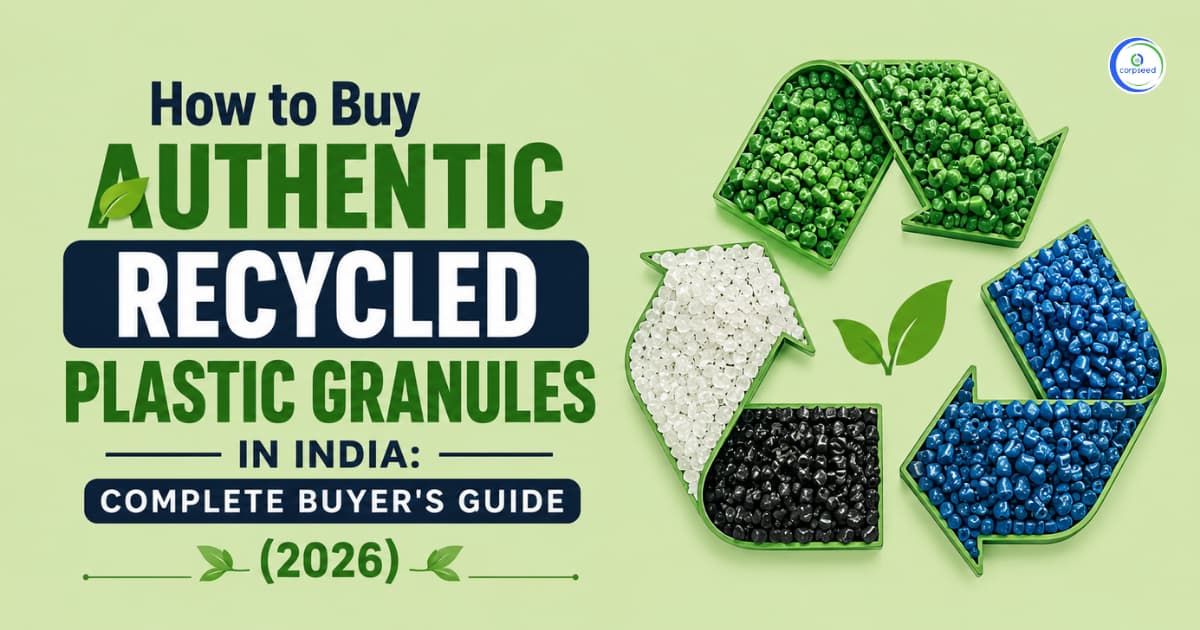
How to Buy Authentic Recycled Plastic Granules in India: Complete Buyer's Guide (2026)
With India's Extended Producer Responsibility (EPR) framework and mandatory recycled-content requirements becoming increasingly important, purchasing authentic recycled plastic granules is now both a compliance and procurement priority. Buyers should begin by identifying the correct polymer grade, such as rPP, rHDPE, rLDPE, rABS, or rPET, based on the intended application.
Schedule a Call Back
4,500+ plastic EPR assignments since 2018
Clients include Brenntag Ingredients India, Reliant Packaging Films, Taurus Packaging, Axel Polymers, Lintec India, Kumar Organic Products, HP Adhesives, DDP Speciality Products India, Colt Technology Services India, Emerson Automation Solutions Intelligent Platforms, Intangles Lab, Shindengen India (12 of 1,700+ served since 2018).
A few more clients we've served in this industryHide the list
- Chemicals and materials
- Brenntag Ingredients India · Reliant Packaging Films · Taurus Packaging · Axel Polymers · Lintec India · Kumar Organic Products · HP Adhesives · DDP Speciality Products India
- Electronics and technology
- Colt Technology Services India · Emerson Automation Solutions Intelligent Platforms · Intangles Lab · Shindengen India · Emerson Process Management (India) · Lianchuang Electronic India · Emerson Process Management Chennai · Hayakawa Electronics India
- Pharma and healthcare
- Beryl Drugs · Ascent Meditech · Eli Lilly and Company (India) · Q-Line Biotech · Rajasthan Antibiotics · G D Pharmaceuticals · Micro Labs · ADK Health Care
- Engineering and manufacturing
- Essel Mining & Industries · Juki India · Hilti India · Bundy India · Hilti Manufacturing India · KJS Cement (I) · Mangalam Cement · Birla Precision Technologies
- Food and consumer goods
- Onest · AVT McCormick Ingredients · Akay Natural Ingredients · Ugraya Foods and Feeds · AVT Natural Products · Jalpaiguri Food Industries · Param Dairy · Esther Parfumerie
- Logistics and trade
- Siddhartha Logistics · Siddhartha Logistics Ftwz · Honda Trading Corporation India · Dksh India · MOL Logistics (India) · Fibs Logistics India · Zenexpress Logistics
- More clients
- Nilkamal
Introduction
Authentic recycled plastic granules in India are the priority for every packaging, manufacturing, and brand-owner company trying to cut input costs, hit EPR obligations, and actually deliver on circular economy promises, not just talk about them. The pressure is ultimate & EPR recycled-content mandates are now legally binding, FSSAI has opened a regulated route for food-grade recycled PET, and brand owners are being asked to prove their sustainability claims with paperwork, not press releases. The problem is that the supply side hasn't caught up. Alongside genuine, verified recycled plastic granules suppliers holding proper CPCB/SPCB authorisation, BIS certification, and FSSAI approval, there's a sizeable informal market pushing unverified regrind, material with no traceable PCR/PIR ratio and no lab-backed Certificate of Analysis to back it up.
Schedule a Call Back
What are Recycled Plastic Granules?
Recycled plastic granules (also called recyclate, reprocessed granules, or recycled resin) are pellets made from post-consumer or post-industrial plastic waste that has been collected, cleaned, processed, and pelletised for reuse. Whether you're sourcing rPET, rHDPE, or rPP granules, the goal is always the same: source authentic recyclate you can actually trust.
The use of recycled granules is very common in India for:
- Plastic Packaging (Bottles, Containers, Films, Laminates)
- Industrial goods (Crates, Pallets, Buckets, Injection Mouldings)
- Textiles and Strapping (rPET Fibers and Straps)
By purchasing genuine recycled plastic granules in India from an authorized recycled plastic granules supplier, you will have the guarantee of:
Product quality and performance
Conformance to BIS/ISI specifications, FSSAI food contact specifications, and Plastic Waste Management & Extended Producer Responsibility norms
Step 1: Define your requirement clearly
Before you search for suppliers or recyclers, answer these questions. They directly impact which granules and which recycler you should choose, and how you evaluate recycled plastic granules price per kg across quotes.
1. End-use application
- Rigid packaging: bottles, jars, caps, drums, buckets (Category 1 - Rigid Plastic).
- Flexible packaging: Films, carry bags, multi-layer pouches.
- Industrial/household products: Crates, furniture, auto parts, Pipes.
- Textiles & strapping: rPET fibres, straps, non-woven fabric.
2. Food-grade or non-food-grade?
This is the most important filter:
- Food / pharma / drinking water / edible oil / cosmetics packaging: very strict rules. Must follow FSSAI-approved food-grade rPET regulations and relevant BIS standards for food-contact plastics (e.g., IS 10146 food-contact plastic for virgin PE, new standards for rPET).
- Non-food packaging or products: more flexibility. Still need consistent quality and an IS 14534:2023 compliance certificate for recycling and marking of recycled content.
3. Performance & processing parameters
- Polymer family: rPET, rHDPE, rLDPE, rLLDPE, rPP, rHIPS, rABS, etc.
- Melt Flow Index (MFI) or Intrinsic Viscosity (IV) for PET
- Mechanical properties: impact strength, tensile strength, stiffness
- Colour: natural/transparent, white, coloured, or black
- Processing methods: injection moulding, blow moulding, film extrusion, sheet extrusion, thermoforming, etc.
Once this is defined, you can write a technical spec that you share with recyclers as part of your recycled plastic procurement workflow.
Step 2: Understand plastic types & Indian standards (BIS/ISI)
Common recycled plastic types in India
- rPET (recycled Polyethylene Terephthalate): From used PET bottles, containers, fibres. If you're evaluating an rPET granules manufacturer in India, this is used in fibres, straps, films and, under strict conditions, food and beverage packaging (FG rPET).
- rHDPE / rLDPE / rLLDPE (recycled Polyethylene): Used for containers, caps, films, liners, bags. Many buyers of rHDPE granules for bulk procurement use these grades for non-food packaging lines.
- rPP (recycled Polypropylene): Used for caps, tubs, buckets, furniture, automotive parts. Compare rPP granules price India before committing to bulk orders.
- Others: rPVC, rPS, rABS, rHIPS for speciality applications.
Key Indian standards & guidelines
IS 14534:1998 & IS 14534:2023: Recovery and recycling of plastic waste (Guidelines). Core guideline for recovery, recycling, selection, segregation & processing of plastic waste. The 2023 revision strengthens marking and traceability requirements, including the declaration of recycled content on products. Always ask for the IS 14534:2023 compliance certificate.
- IS 10146:1982: Polyethene for its safe use in contact with foodstuffs. Specifies requirements for virgin PE in food-contact use.
- IS 7328:2020: Polyethene materials for moulding and extrusion. LDPE/LLDPE/HDPE resins must comply with this standard and carry BIS certification (CM/L) for many applications, ask for IS 7328:2020 certification specifically.
Draft BIS standards for rPET for food contact, setting requirements on rPET quality, contamination limits, and decontamination processes for food-grade rPET.
Knowing these standards helps you ask the right questions and demand proper documents from a CPCB-registered plastic recycler.
Step 3: Food-grade vs non-food-grade recycled granules
Buying food-grade recycled plastic (especially rPET)
If you want recycled plastic in food packaging, focus mostly on FG rPET (Food-Grade rPET):
- Check that FSSAI approves the recycler to supply recycled PET for food-contact applications, this is the core of any FSSAI-approved food-grade rPET claim.
- Ask for evidence that the process meets draft or final BIS standards for rPET (decontamination, contamination <30 ppm, validated process, etc.).
- Ask for a Food-Contact Declaration (compliance with FSSAI regulations and relevant IS standards), plus challenge test and migration test reports from accredited labs.
India remains conservative in terms of its use in food contact applications - usually, virgin food-grade PE/PP is utilized for direct food contact layers. At the same time, recycling can be done in other layers or secondary packaging. Always verify with the food safety people and the latest FSSAI guidelines before considering any recycling of PE/PP in food contact applications.
Purchasing recycled plastics for non-food applications
For all the non-food applications (detergent, paint, lubricants, industrial parts, etc.), you may purchase post-consumer and post-industrial recycled materials. Consider:
- Mechanical Properties & MFI / IV
- Contamination level (dust, metals, PVC, black specks)
- Odour (important for consumer products)
Step 4: How recycled content helps EPR & circular economy
Under India's Plastic Waste Management Rules and EPR Guidelines, 2022, PIBOs must achieve minimum recycling targets for their plastic packaging and use a minimum percentage of recycled plastic content in certain packaging categories over time. For example, rigid plastic packaging (Category I) is labelled as highly recyclable and has rising minimum recycling and recycled-content use targets.
In order to comply with these EPR requirements for plastic packaging, you will need to purchase recyclable granules that have been authorized by an appropriate recycler with proper documentation.
Here's how the circular economy works:
Post-consumer waste to Collection to Processed by an authorized recycler, sold as granules, to Used as packaging material, to Recorded as recycled content through EPR.
Step 5: How to Choose the Right Recycler in India
Use this practical checklist to evaluate recyclers and find a verified recycled plastic granules supplier.
1. Authorisations & certifications
- Valid SPCB/CPCB authorisation for plastic waste recycling (check registration number & validity). This is what makes a recycler a genuine CPCB-registered plastic recycler.
- For food-grade rPET, presence in FSSAI's list of approved recyclers and evidence of an approved recycling process.
- BIS licence (CM/L) for relevant resin standards (e.g., IS 7328:2020 certification for PE) if the recycler is selling resin that claims BIS compliance.
- Optional but positive: ISO 9001/14001/45001 QMS/EHS certificates.
2. Technical capability & quality control
Ask each recycler for:
- Technical Data Sheet (TDS) for the grade: MFI/IV, density, tensile/impact properties, ash and moisture content.
- Recycled feedstock: Proportion of post-consumer versus post-industrial material, source(s) of feedstock (EPR, municipal waste, industrial scrap).
- Process details: Sorting, washing, hot wash, metal detection, melt filtration and pelletization, decontamination process for fiber-grade rPET.
- Test certificates: Laboratory test reports backing the TDS, along with a Certificate of Analysis (COA) for recycled granules for each lot.
3. Traceability & documentation (crucial for EPR)
Insist on:
- Invoice details clearly showing polymer (rPET, rHDPE, rPP, etc.), grade, and colour.
- % recycled content and whether it is PCR (post-consumer) or PIR (post-industrial)
- Declaration of Recycled Content and compliance with IS 14534:2023 (marking, traceability, and recycled content labelling)
- For EPR: Verification on whether the product is associated with EPR collected waste and if there is documentation to prove it when required
4. Sustainability practices
- Involvement in an official EPR program using PROs or PIBOs
- Effective systems for managing rejects and non-recyclable components responsibly (no burning or dumping)
- Environmental practices (energy, water, emissions)
Step 6: Step-by-step buying process
Step 1 - Create your recycled granule specification
Include: application & end use; polymer type (rPET, rHDPE, rPP, etc.); MFI/IV range and key mechanical properties; colour and packaging form; food vs non-food contact; minimum % recycled content you want (for branding/EPR).
Step 2 - Selecting 3-5 possible recyclers
Identify the recyclers from the list of authorized recyclers through CPCB/SPCB, EPR partner companies, or industry sources and references. For Food Grade rPET, verify their FSSAI approvals as well. This is the key to any reliable recycled plastics purchase process.
Step 3 - Ask for all the technical and compliance papers
Request authorization letters from selected recyclers, where applicable, BIS/FSSAI certification and the latest TDS with COA and independent lab test reports, and request the declaration of recycled material as per IS 14534:2023.
Step 4 - Order trial lots and test
Make a trial purchase (e.g., 500 kg-2 MT). Test in-house: Processability, cycle times, scrap rate, finished product appearance, mechanical testing. Migration testing - conducted in an NABL accredited laboratory for food applications.
Step 5 - Approve vendors and sign supply agreements
Qualify 1-2 recyclers for each application you will use them for. Have a basic quality and compliance agreement that covers at least the minimum quality requirements, the frequency of testing, and notification of any process/feedstock changes.
Step 6 - Integrate with your EPR and ESG reporting
Record all purchases of recycled granules against EPR recycling & recycled-content targets by category, and ESG/BRSR sustainability metrics for recycled material and circular use.
Why does Sourcing Authentic Recycled Plastic Granules Matter?
EPR (recycled content targets) now demand that PIBOs use recycled resin in an identifiable way, not simply by funding recycled resin elsewhere. FSSAI's food-grade rPET rules are changing and evolving, and brand sustainability initiatives are now supported by verifiable documentation. When you purchase the genuine and traceable granules, you get three things:
- Stable product quality: consistent machine output and fewer machine stoppages due to product quality fluctuations.
- A verified recycled plastic granules supplier is ready for compliance IS 14534:2023 labelling and FSSAI approvals.
- Real circularity: rather than greenwashing - a Certificate of Analysis (COA) and traceable PCR/PIR ratios that withstand the pressure of ESG/BRSR.
Conclusion
Sourcing authentic recycled plastic granules in India is a compliance discipline. The rPET rules by FSSAI are still in the early stages of development, while EPR targets are rising, and the divide between those buyers who are verifying and those who are assuming will continue to grow. Those suppliers that are able to generate the CPCB/SPCB authorisation, BIS CM/L licence (where applicable), and FSSAI approval (where applicable), and can provide a Certificate of Analysis on demand, are worth a relationship those who can't are a liability bearing a sustainability label. Regularly use the checklist and the 6-step process outlined above, and recycled plastic granules are an assured, traceable, real circular input for your supply chain.
About the Author

Mahek Sancheti
Content WriterMahek Sancheti, BAJMC graduate with a deep passion for writing. As a content writer, video content creator, creative content creator, and scriptwriter, I bring stories to life through words and visuals. I honed my skills by working with a prominent news agency, where I excelled in crafting compelling narratives and engaging content. Coming from a journalism and mass communication background I have skills to craft engaging narratives that captivate audiences. With a keen interest in writing and creativity, I aim to deliver impactful and meaningful content that resonates with diverse audiences.
https://www.linkedin.com/in/mahek-sancheti-837196212
Related articles
Fertilizer Testing in India: FCO 1985 Mandatory Quality Compliance Guide 2026
2026-09-02
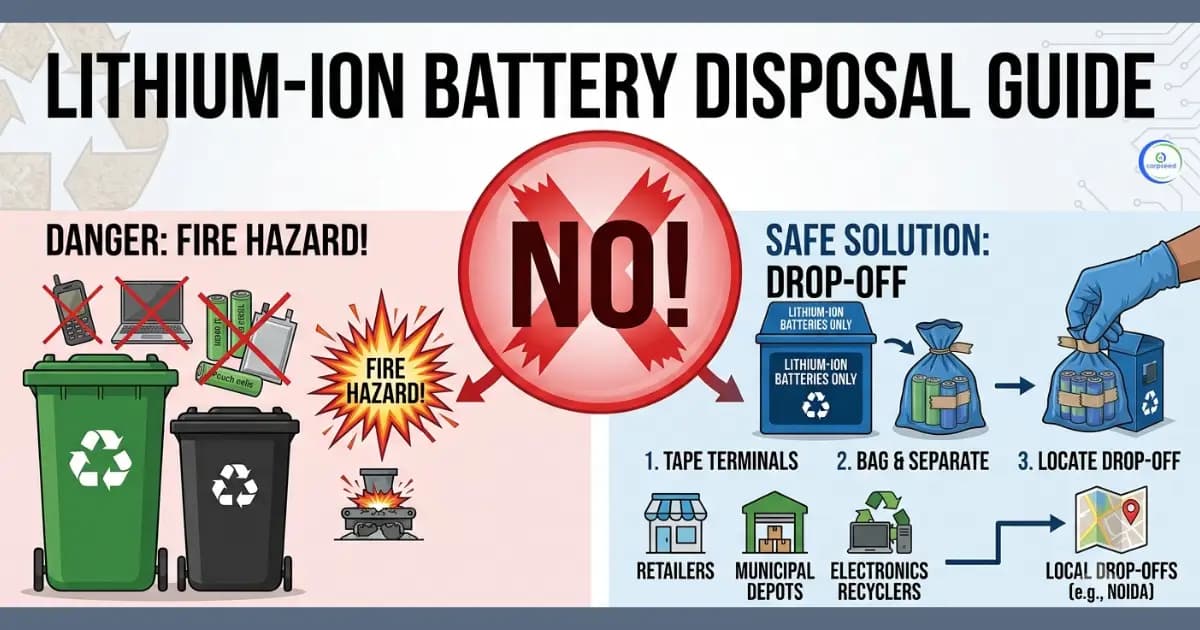
Can Lithium-Ion Batteries Go in the Recycling Bin?
2026-08-27
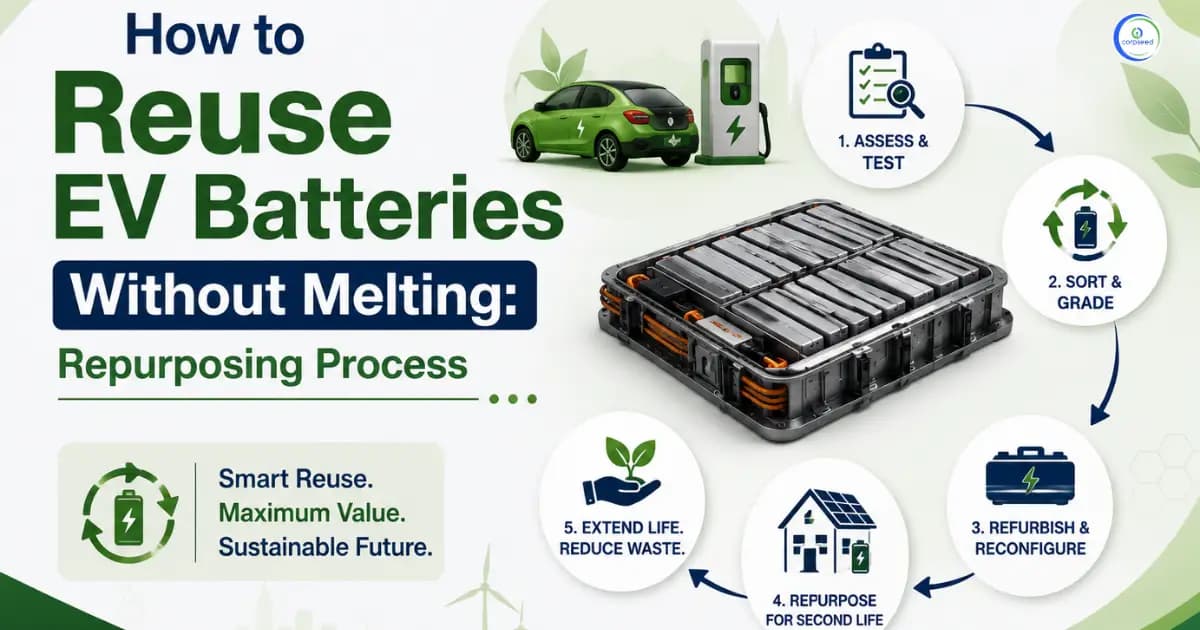
Can a Dead Electric Vehicle Battery Ever Be Used Again Without Melting It?
2026-08-18
India’s Tyre Recycling Opportunity: What HSN, GST and EPR Changes Could Mean
2026-08-13
CPCB Guidelines for Recycling of Waste Batteries (Lead Acid & Lithium-ion): Complete Compliance Guide 2026
2026-07-24
How to Start a Lithium-Ion Battery Recycling Plant in India (2026): Complete Business & Compliance Guide
2026-07-16