
What Certifications Are Required to Import Electronic Products in India? BIS, WPC, TEC, EPR & LMPC Explained
Importing electronics into India isn't just about finding a supplier, setting the price and arranging shipment. Before the goods reach the Indian market, an importer may need to check several product compliance requirements. Depending on the product, these may include BIS certification, WPC ETA, TEC certification, E-Waste EPR registration and LMPC registration.
Schedule a Call Back
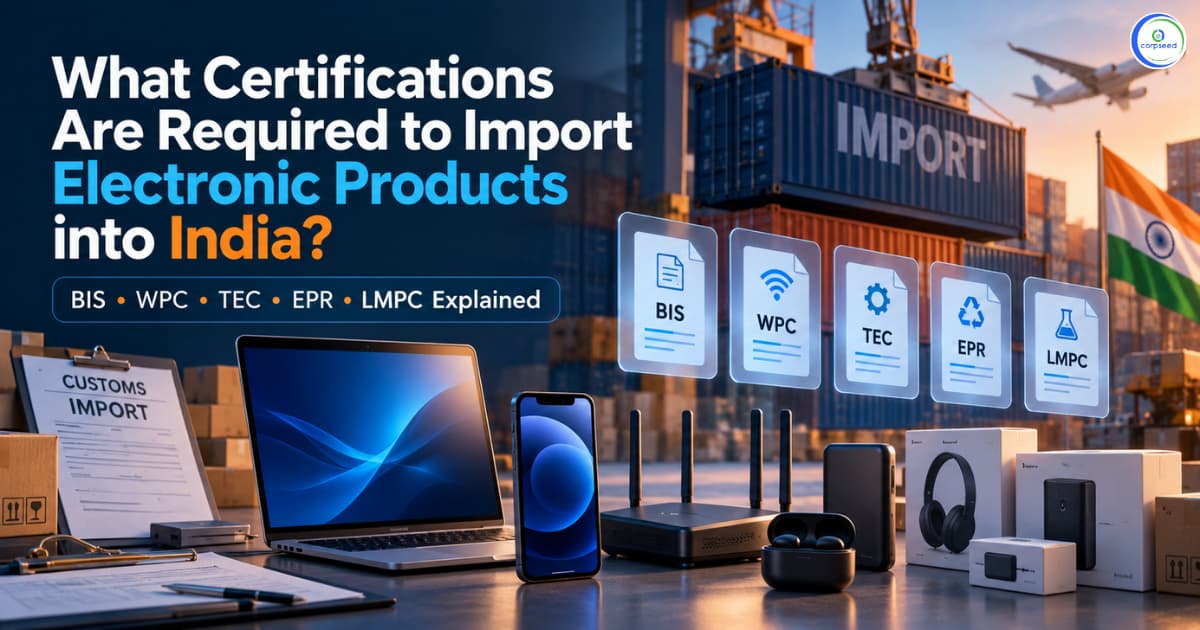
Importing electronics into India isn't just about finding a supplier, setting the price and arranging shipment. Before the goods reach the Indian market, an importer may need to check several product compliance requirements.
Depending on the product, these may include BIS certification, WPC ETA, TEC certification, E-Waste EPR registration and LMPC registration.
That does not mean every electronic product needs all five approvals. A Bluetooth speaker, Wi-Fi router, laptop charger and telecom device can have very different compliance requirements even though all of them are electronic products.
The right approach is first to identify the product, its technical features and how it will be imported and sold in India.
Schedule a Call Back
What Certifications Are Required to Import Electronic Products into India?
No single certification applies to every electronic product imported into India. Requirements depend on the product category, applicable Indian Standard, wireless capability, telecom function, environmental coverage and packaging.
| Requirement | Main Purpose | When It May Apply | Authority |
| BIS | Product safety and conformity | Products covered under compulsory BIS requirements | Bureau of Indian Standards |
| WPC ETA | Wireless/RF compliance | Applicable wireless products operating in licence-exempt bands | WPC Wing, DoT |
| TEC/MTCTE | Telecom equipment conformity | Telecom equipment notified under MTCTE | TEC, DoT |
| EPR | E-waste management | Covered electrical and electronic equipment where the entity falls within the applicable producer framework | CPCB |
| LMPC | Packaged commodity compliance | Applicable pre-packaged products imported for sale | Legal Metrology authorities |
Does Every Electronic Product Need BIS, WPC, TEC, EPR and LMPC?
No. Compliance has to be checked product by product.
A device with Bluetooth or Wi-Fi may require a WPC check, while telecom equipment may also fall under TEC/MTCTE. A product included under compulsory BIS requirements will need the applicable BIS compliance. EPR and Legal Metrology requirements depend on their respective regulatory scope.
This is why importers should complete a regulatory applicability check before placing a commercial shipment.
Which Electronic Products Require BIS Certification?
BIS compliance applies when an electronic or IT product falls under a compulsory certification requirement.
Under BIS Scheme II, the Compulsory Registration Scheme covers specified electronics and IT goods notified by the Ministry of Electronics and Information Technology. The current BIS list includes categories such as laptops, notebooks, tablets and several other notified electronic products.
Check the exact requirement against the latest product category, applicable Indian Standard and notification, rather than assuming all electronics fall under the same BIS scheme.
When Is BIS Registration Mandatory for Imported Electronics?
If a product falls under a notified compulsory registration category, it must meet the applicable BIS requirements before entering the Indian market.
Businesses seeking BIS Certification for Electronic Products should confirm the model, manufacturer, applicable standard and testing requirements before starting the registration process.
Do Wi-Fi and Bluetooth Products Need WPC Approval?
Wireless products need a separate compliance check because they transmit or receive radio frequencies.
The WPC Wing of the Department of Telecommunications issues Equipment Type Approval (ETA) for applicable wireless equipment operating in licence-exempt frequency bands. The DoT portal identifies products such as smartphones, laptops, smartwatches, speakers, headphones, printers, scanners and cameras among the commercial finished products that may use the ETA self-declaration route when they operate in permitted licence-exempt bands.
When Is WPC ETA Required for Imported Electronics?
WPC applicability is generally checked using:
- the wireless technology used,
- operating frequency,
- RF specifications,
- type of equipment, and
- applicable licence-exempt frequency rules.
The current DoT service page also lists an RF test report, technical literature and, for an Indian representative, manufacturer authorisation among the ETA documents.
Importers should therefore confirm WPC applicability before assuming that the presence of Bluetooth or Wi-Fi alone determines the entire approval route.
When Is TEC Certification Required for Electronic Imports?
TEC requirements relate specifically to telecom equipment covered under the Mandatory Testing and Certification of Telecommunication Equipment (MTCTE) framework.
The current MTCTE portal states that telecom equipment notified under MTCTE cannot be sold, deployed in a telecom network, or otherwise used in India unless it has a valid Certificate of Conformity Assessment against the prescribed Essential Requirements.
This means TEC certification should not be treated as a general certification for every electronic product.
What Is the Difference Between TEC and WPC Certification?
The easiest way to separate them is by purpose.
WPC ETA mainly deals with wireless spectrum and radio-frequency requirements for applicable wireless equipment.
TEC/MTCTE certification deals with notified telecom equipment and its conformity with prescribed Essential Requirements.
Some products can require checks under both frameworks because a telecom device may also contain wireless functionality.
Do Electronics Importers Need EPR Registration?
Importers of electrical and electronic equipment should also check the E-Waste (Management) Rules, 2022.
These rules apply to electrical and electronic equipment listed in Schedule I, including relevant components, consumables, parts and spares that make the product operational. CPCB's official FAQ states that manufacturers, producers, refurbishers and recyclers must register on the E-Waste EPR Portal.
Who Needs E-Waste EPR Registration?
For an importer, the key question is whether the business falls within the applicable definition of a producer and whether the equipment being placed on the Indian market falls within the covered categories.
Therefore, EPR Registration for Electronics should be assessed based on the actual product and business model, rather than treating every electronics importer the same way.
Is LMPC Registration Mandatory for Imported Electronics?
Legal Metrology applies when electronic products are imported as pre-packaged commodities for sale in India. The Department of Consumer Affairs requires manufacturers, packers and importers to register under Rule 27 of the Legal Metrology (Packaged Commodities) Rules, 2011.
What Labelling Requirements Apply to Imported Electronic Products?
For covered retail packages, required declarations may include matters such as:
- name and address of the manufacturer, packer or importer,
- country of origin for imported goods,
- common or generic name,
- net quantity where applicable,
- retail sale price,
- unit sale price where applicable, and
- consumer-care details.
Check the exact declaration requirements and available exemptions against the current Packaged Commodities Rules before finalising labels.
BIS vs WPC vs TEC vs EPR vs LMPC - What Is the Difference?
| Compliance | What It Regulates | Typical Trigger |
| BIS | Product safety/conformity | Product falls under a notified compulsory category |
| WPC | Wireless and RF use | Applicable RF equipment uses permitted licence-exempt bands |
| TEC/MTCTE | Telecom conformity | Product is notified telecom equipment |
| EPR | E-waste responsibility | Covered EEE and applicable producer responsibility |
| LMPC | Package declarations | Applicable pre-packaged commodity imported for sale |
The important point is that these registrations regulate different parts of the same import transaction. One approval does not automatically replace another.
Can One Electronic Product Require Multiple Certifications?
Yes. A single electronic device can fall within more than one regulatory framework.
Take a Wi-Fi router as an example. Depending on its specifications, classification, manufacturer, radio-frequency characteristics and market packaging, the importer may need to check BIS, WPC, TEC/MTCTE, EPR and Legal Metrology requirements.
That does not mean all five will always apply.
Why Product-Wise Compliance Checking Matters
Two products that look similar can have different requirements because of differences in:
- frequency bands,
- technical specifications,
- telecom features,
- product classification,
- notified standards,
- intended use, or
- packaging.
This is why certification should be mapped to the exact model rather than only to a general product name.
How Can You Check Which Certification Your Electronic Product Needs?
Step 1 - Identify the Product and HS Code
Start with the exact product description, model, intended use, manufacturer and likely HS classification.
The HS code helps with import classification, but it shouldn't be the only factor in deciding product certification.
Step 2 - Check BIS, WPC and TEC Applicability
Verify whether:
- the product appears under a compulsory BIS category,
- it contains Wi-Fi, Bluetooth or another RF feature,
- its operating frequency falls within the relevant WPC framework, and
- it is covered as notified telecom equipment under MTCTE.
Step 3 - Check EPR and LMPC Requirements
Next, check whether the product falls under the E-Waste Rules and whether your business fits within the applicable producer framework.
For retail-packaged products, also review Legal Metrology registration and labelling requirements.
Businesses handling several of these approvals may use electronic product import compliance services to map the applicable requirements before shipment.
What Happens If You Import Electronics Without Required Certification?
Missing an applicable approval can create problems at different stages of import and sale.
Depending on the product and relevant law, businesses may face:
- customs clearance queries or delays,
- additional documentation requirements,
- delayed certification or testing,
- restrictions on placing a product in the market,
- relabelling or corrective compliance, or
- regulatory action where provided under the applicable law.
The practical risk is higher when compliance is checked only after the shipment has already arrived.
Conclusion
Importing electronic products into India requires more than checking customs documentation. The exact compliance route depends on the product, how it works and how it will be sold. BIS may apply to notified electronic products, WPC to relevant wireless equipment, TEC/MTCTE to notified telecom equipment, EPR to covered electrical and electronic equipment under the producer framework, and LMPC to applicable pre-packaged goods.
Since one product can fall under several rules, importers should complete a product-wise compliance check before placing a commercial order or shipping goods. Proper electronic product import compliance services can help identify the required approvals early and reduce avoidable certification, labelling and clearance issues.
About the Author

Mahek Sancheti
Content WriterMahek Sancheti, BAJMC graduate with a deep passion for writing. As a content writer, video content creator, creative content creator, and scriptwriter, I bring stories to life through words and visuals. I honed my skills by working with a prominent news agency, where I excelled in crafting compelling narratives and engaging content. Coming from a journalism and mass communication background I have skills to craft engaging narratives that captivate audiences. With a keen interest in writing and creativity, I aim to deliver impactful and meaningful content that resonates with diverse audiences.
https://www.linkedin.com/in/mahek-sancheti-837196212
Related articles
BIS Hallmarking Centre Setup Scheme 2026-31
2026-11-02
BIS Establishes Three New Indian Standards for Electric Cycles, Therapeutic Footwear and EV Charging Cables
2026-10-19
Importing Toys into India: BIS Toy Certification & Battery EPR Requirements
2026-10-19
BIS Notifies 33 New and Revised Indian Standards in October 2026: Compliance Guide
2026-10-16
BIS Certification for Electrical Appliances: 2026 Guide for Manufacturers & Importers
2026-10-14
BIS Solar PV Module Model Number Update: New MNRE SOP and Registration Requirements
2026-10-09