
Can a Dead Electric Vehicle Battery Ever Be Used Again Without Melting It?
A dead electric vehicle battery does not always need to go directly to a recycling furnace. If the battery still has usable cells or modules but no longer meets the performance requirements of an EV, it can potentially be repaired, refurbished or repurposed for second-life applications such as stationary energy storage.
Schedule a Call Back
Introduction
Is there any possibility of reusing a dead battery of an electric vehicle without melting, and how to deal with EV Battery Recycling and Repurposing Registration in India?
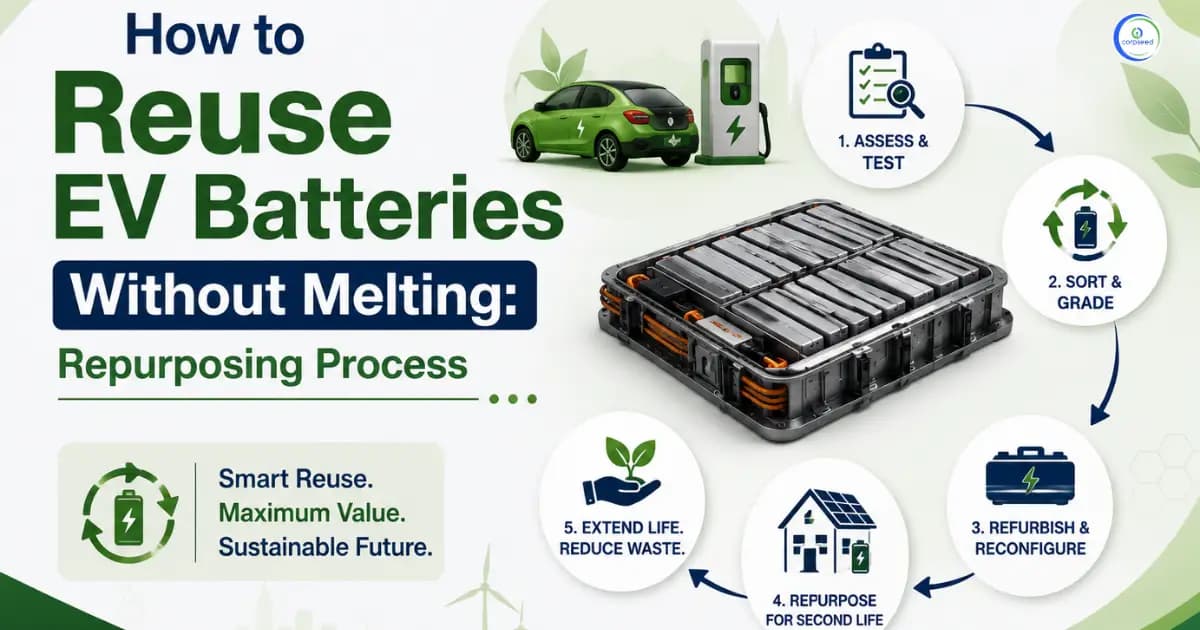
Yes, it is absolutely possible to reuse the battery of an electric vehicle without thermal melting. The battery of an electric vehicle is considered dead when its energy falls by 70%-80%. Even though the battery is dead for automotive purposes, it has huge energy density. It does not have to be subjected to pyrometallurgy melting at high temperatures, which burns all organic materials and produces waste, emits carbon dioxide, and consumes a lot of energy. Modern technology allows you to dismantle, test, and repurpose these batteries into stationary solar storage systems, telecom backup systems, and low-speed electric vehicles. After reaching the end of life of the battery, direct mechanical shredding and room-temperature hydrometallurgy leaching allow extraction of up to 95% of critical raw materials (lithium, nickel, cobalt, manganese) in chemical form, without thermal melting.
However, if your business is engaged in second-life batteries of electric vehicles or you plan to start recycling plants in India, it will have to obtain statutory registration under the Battery Waste Management Rules, 2022. Operating without proper authorization of CPCB and SPCBs may result in heavy compensation and other penalties.
Schedule a Call Back
What is EV Battery Recycling and Repurposing Registration?
EV Battery Recycling and Repurposing Registration is the mandatory statutory authorization issued by the Central Pollution Control Board (CPCB) and State Pollution Control Boards (SPCBs) under the Battery Waste Management Rules, 2022. It legally permits enterprises to collect, transport, refurbish, re-engineer, or hydro-metallurgically recycle waste electric vehicle batteries and black mass using environmentally sound technologies.
Understanding how retired batteries are processed without melting involves two main industrial pathways:
Repurposing (Second-Life Cascade Utilization): Modules from retired EV batteries are tested for State-of-Health (SOH), re-sorted, and assembled into stationary Energy Storage Systems (ESS), solar microgrids, or UPS backup power units. No thermal melting or chemical alteration takes place.
Non-Thermal Hydrometallurgical Recycling: Once the cells can no longer hold their charge safely, they undergo mechanical shredding in an inert gas to create "black mass," a powder comprising lithium, nickel, cobalt, and manganese. The use of acid leaching at mild temperatures produces chemical salts required for batteries.
Registration on the CPCB EPR portal ensures every stage of this cascade lifecycle is logged, audited, and aligned with national recycling targets.
Why is EV Battery Recycling and Repurposing Registration Important?
- Statutory Compliance in Terms of EPR Obligations: Automotive OEMs and battery importers are required by law to recycle and collect a set amount of waste batteries on an annual basis.
- Domestic Mineral Security: The recycling process allows for an immediate reduction in mineral requirements since hydrometallurgy helps recover lithium, cobalt, and nickel in India.
- Environmental Safety & Fire Hazard Mitigation: Unregulated handling of lithium-ion batteries can trigger thermal runaway fires, toxic fluorine gas releases, and heavy metal contamination.
- Monetization through EPR Credit Trading: Authorized refurbishers and recyclers generate digital EPR Certificates on the CPCB portal. These certificates can be sold to battery producers and OEMs to help them meet statutory compliance goals, creating a high-margin revenue stream.
Who Needs EV Battery Recycling and Repurposing Registration?
Any business functioning in the life cycle of lithium-ion batteries in India needs to register under the specific categories on the national CPCB portal:
- EV OEMs & Vehicle Manufacturers: Companies that offer battery electric 2Ws, 3Ws, 4Ws, and commercial vehicles in the Indian market.
- Battery Pack Assembler & Cell Importer: Business that imports lithium-ion cells or manufacture customized battery packs used in vehicles and industries.
- Second Life Battery Reconditioner: Organizations that buy back retired EV batteries and repair, recondition, or reengineer them into stationary ESS for solar energy.
- Battery Recycler: Plants having a mechanical shredding plant, black mass separation plant, or hydrometallurgical chemical extraction facility.
- Aggregators & Logistics Providers: Operators handling bulk collection, hazardous material transport, and storage of waste battery chemistry.
Legal Framework for EV Battery Recycling and Repurposing Registration
The legal framework for non-thermal reuse and recycling of batteries and minerals in India consists of:
- Battery Waste Management Rules, 2022: Enforced under the Environment (Protection) Act, 1986, replacing the earlier 2001 regulations. Provides mandatory EPR targets, eco-design criteria, recycled content criteria, and portal registration for refurbishers and recyclers.
- Environment (Protection) Act, 1986: Grants powers to federal authorities for enforcing waste regulations, issuing closure notices, and imposing Environmental Compensation.
- Water Act (1974) & Air Act (1981): Mandates that all processing units obtain Consent to Establish (CTE) and Consent to Operate (CTO) from State Pollution Control Boards.
- Hazardous and Other Wastes Rules, 2016: Regulates the safe storage, handling, packaging, and inter-state movement of hazardous battery waste and black mass.
- Governing Authorities for EV Battery Recycling and Repurposing Registration
- Ministry of Environment, Forest and Climate Change (MoEFCC): Apex body formulating environmental policies, EPR targets, and waste rules.
- Central Pollution Control Board (CPCB): Administers the centralized online EPR portal, verifies registration applications, issues national authorization certificates, and audits credit transactions.
- State Pollution Control Boards (SPCBs) / Pollution Control Committees (PCCs): Grant state-level CTE/CTO licenses, perform on-site factory audits, and monitor industrial pollution control systems.
- DGFT & Customs Authorities: Oversee import and export regulations regarding raw cells, second-life batteries, and black mass.
Key Benefits of EV Battery Recycling and Repurposing Registration
- Authorized Access to B2B OEM Supply Chains: Allows entities to legally bid for and purchase end-of-life battery packs directly from major automobile OEMs, telecom companies, and government auctions.
- Monetize via EPR Credit Sales: Authorized refurbishers and the recyclers generate digital EPR certificates based on extended battery life or recovered metal tonnage, which can be traded on the CPCB portal for revenue.
- ESG & Circular Economy Leadership: Demonstrates commitment to zero-landfill goals, sustainable sourcing, and strong environmental governance.
- Immunity from Prosecution & Fines: Protects the business from costly shutdown orders and environmental compensation penalties.
Documents Required for EV Battery Recycling and Repurposing Registration
Specific Required Documents
- Certificate of Incorporation / LLP Agreement, PAN Card, GST Certificate
- Board Resolution / Authorization Letter, Aadhaar & PAN of Authorized Director
- Land Ownership Document / Registered Lease Deed, Factory License, Site Layout
- Copy of valid CTE and CTO from State Pollution Control Board
- Equipment list (SOH analyzers, cell cyclers, shredders, leaching tanks, air scrubber
- Details of Effluent Treatment Plant (ETP) and Air Pollution Control Devices (APCD)
- Installed processing capacity calculations, fire NOC, and chemical mass balance flowsheet
Step-by-Step Process for EV Battery Recycling and Repurposing Registration
Step 1: Industrial Site Setup & SPCB Approvals
- Secure an industrial site within an approved industrial park.
- File an application for Consent to Establish (CTE) with the State Pollution Control Board (SPCB).
- Install diagnostic testers for repurposing or enclosed shredders and leaching tanks for recycling.
- Obtain Consent to Operate (CTO) and Hazardous Waste Authorization from the SPCB.
Step 2: CPCB Portal Profile Creation
- Access the official Central Pollution Control Board Battery Waste Management Portal.
- Register the enterprise profile under the relevant category: Producer, Refurbisher, or Recycler.
- Upload corporate identification documents, PAN, GST, and board authorization.
Step 3: Application Data Filing
- Input detailed operational data, including annual handling capacity in metric tonnes or MWh.
- Upload factory site plans, equipment lists, and technical flowcharts for second-life testing or hydrometallurgical recovery.
- Attach valid copies of CTE, CTO, fire safety NOC, and hazardous waste permissions.
Step 4: Technical Scrutiny by CPCB
- CPCB technical officers evaluate the uploaded documentation and mass-balance calculations.
- If discrepancies arise, a clarification notice is issued. The response must be submitted within 15 days.
Step 5: On-Site Audit (When Triggered)
- Joint inspection teams from CPCB/SPCB may conduct an on-site audit of the plant.
- Officials verify safety protocols, fire suppression readiness, worker PPE, and pollution control machinery.
Step 6: Certificate Issuance & EPR Credit Portal Access
- Upon successful verification, CPCB issues the official Registration Certificate for EV Battery Recycling/Repurposing.
- The facility gains full portal access to log battery intake data, submit annual returns, and generate or sell EPR Credit Certificates.
Timeline for EV Battery Recycling and Repurposing Registration
| Regulatory Milestone | Estimated Duration | Key Dependency |
| SPCB CTE Clearances | 30 to 45 Days | Land zoning approval and layout plan compliance |
| SPCB CTO & Hazardous Clearance | 30 to 60 Days | Machinery installation, ETP operationalization, and Fire NOC |
| CPCB Portal Filing Preparation | 7 to 10 Days | Documentation audit and chemical mass-balance drafting |
| CPCB Processing & Certificate Grant | 30 to 45 Days | Government technical scrutiny and inspection response |
| Total Turnaround Time | 90 to 120 Days | Streamlined with Corpseed professional management |
Operational Challenges in EV Battery Recycling and Repurposing Registration
- Mass Balance Accounting Complexity: CPCB mandates the accurate balancing between the tons of waste battery received and the production parameters achieved (black mass produced, salts obtained, secondary ESS packs). Mistakes result in return of shipment.
- Differing SPCB Timeframes: Approval processing times for CTE and CTOs differ from one pollution control board to another. Therefore, proper project time management becomes necessary.
- Fire Hazards from Thermal Runaway: Degraded lithium-ion batteries pose fire hazards when stored. Compliance with fire NOC regulations entails special investment needs.
- EPR Portal Data Reconciliation: Inconsistencies between producer reports and recycler/refurbishers credit generation can trigger automated account flags and audits.
Common Mistakes to Avoid in EV Battery Recycling and Repurposing Registration
- Using Pyrometallurgical Smelting Without Specialized Air Clearances: Operating thermal furnaces without advanced toxic gas scrubbers causes immediate plant sealing by SPCB authorities.
- Treating Repurposing as General Electronics Repair: Second-life EV battery re-engineering requires official CPCB authorization as a "Refurbishers" and cannot be run under basic commercial workshop licenses.
- Missed Deadlines for Annual Return Filings: Non-filing of statutory annual return filings of batteries on the CPCB portal before June 30th results in automatic imposition of monetary fines.
- Incorrect Estimation of Chemical Yields: Reporting an impractical rate of chemical recovery leads to an audit by the CPCB.
Latest Regulatory Updates (2025–2026) for EV Battery Recycling and Repurposing Registration
- Mandatory Minimum Recycled Content Thresholds: CPCB guidelines mandate that the new EV batteries sold in India must contain progressive minimum percentages of domestically recovered lithium, nickel, and cobalt.
- Digital Battery Passport Integration: Introduction of QR-coded Digital Battery Passports to track battery packs through manufacturing, automotive use, second-life repurposing, and final hydrometallurgical recycling.
- Real-Time EPR Credit Exchange: Enhanced digital credit exchange features on the CPCB portal, allowing real-time credit trading between authorized processors and vehicle manufacturers.
Conclusion
Can a dead electric vehicle battery ever be used again without melting it, and how can your enterprise capitalize on this opportunity legally?
Yes. Second-life repurposing extends retired EV batteries by 5 to 10 years in stationary solar storage and backup power systems without thermal melting. When cells reach absolute end-of-life, hydrometallurgical recycling extracts up to 95% of pure battery-grade metals cleanly at low temperatures.
Operating a repurposing or recycling business in India requires strict adherence to the Battery Waste Management Rules, 2022, including SPCB site clearances (CTE/CTO) and CPCB EPR registration. Non-compliance risks severe financial penalties, plant closure, and legal prosecution.
Partner with Corpseed to streamline your compliance. From technical mass-balance filings to CPCB EPR portal registration and annual returns, our experts handle every detail to get your business operational, certified, and profitable fast. Contact Corpseed today to schedule your compliance consultation.
About the Author

Anshika Jindal
Content WriterAnshika Jindal, a Legal Content Writer with strong expertise in legal research and a solid academic background in BA LLB and LLM (Criminal Law). I specialize in researching statutes, case laws, and legal developments and presenting them in clear, accurate, and engaging written content. With strong analytical skills and attention to detail, I create reliable, well-structured legal content while maintaining professional and ethical standards.
I specialize in conducting in-depth legal research using credible sources and presenting legal information in a structured, reader-friendly manner while maintaining precision and authenticity. My work focuses on simplifying legal language without compromising its meaning, making legal content accessible to a wider audience.
Related articles
India Bans Lithium-Ion Battery Black Mass Exports in 2026: What It Means for Businesses
2026-11-12

Fertilizer Testing in India: FCO 1985 Mandatory Quality Compliance Guide 2026
2026-09-02
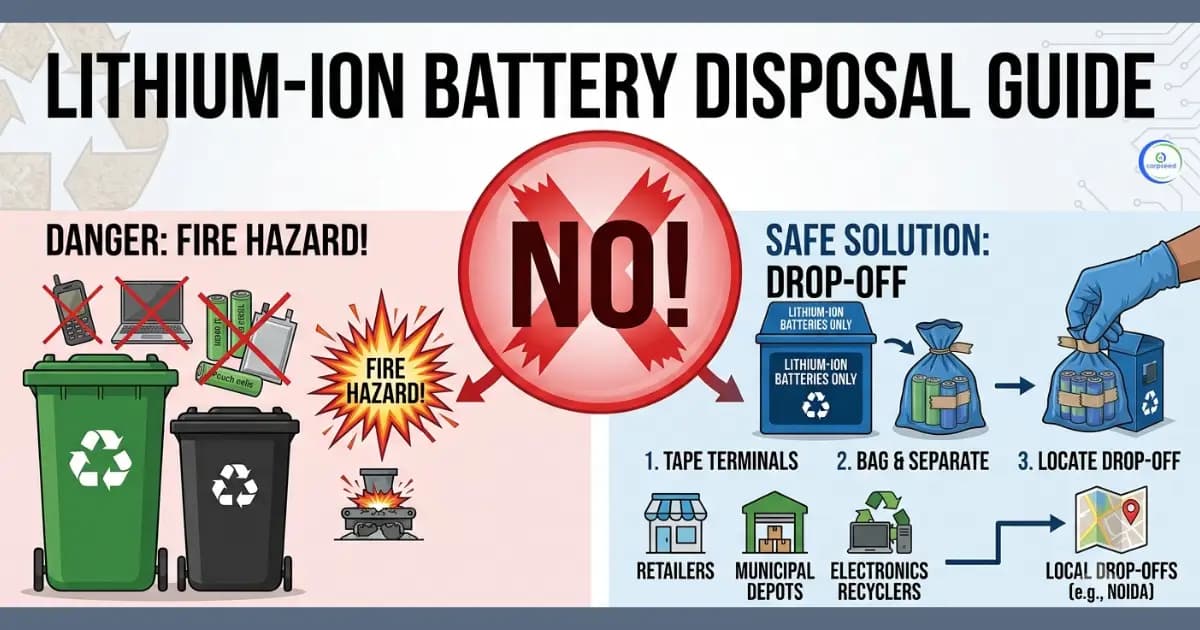
Can Lithium-Ion Batteries Go in the Recycling Bin?
2026-08-27
India’s Tyre Recycling Opportunity: What HSN, GST and EPR Changes Could Mean
2026-08-13
CPCB Guidelines for Recycling of Waste Batteries (Lead Acid & Lithium-ion): Complete Compliance Guide 2026
2026-07-24
How to Start a Lithium-Ion Battery Recycling Plant in India (2026): Complete Business & Compliance Guide
2026-07-16