
How to Apply for EPR Registration in India (2026 Guide)
EPR Registration in India is now a legal requirement for many businesses. By 2026, the law will be implemented more stringently, requiring organizations to understand the registration procedure.
Schedule a Call Back
8,300+ EPR assignments since 2018
Clients include Emerson Automation Solutions Intelligent Platforms, Intangles Lab, Colt Technology Services India, Deki Electronics, Amzetta Technologies, Shindengen India, Emerson Process Management (India), Lianchuang Electronic India, Beryl Drugs, Q-Line Biotech, Ascent Meditech, Eli Lilly and Company (India) (12 of 2,300+ served since 2018).
A few more clients we've served in this industryHide the list
- Electronics and technology
- Emerson Automation Solutions Intelligent Platforms · Intangles Lab · Colt Technology Services India · Deki Electronics · Amzetta Technologies · Shindengen India · Emerson Process Management (India) · Lianchuang Electronic India
- Pharma and healthcare
- Beryl Drugs · Q-Line Biotech · Ascent Meditech · Eli Lilly and Company (India) · Endolite India · Rajasthan Antibiotics · G D Pharmaceuticals · Micro Labs
- Engineering and manufacturing
- Juki India · Hilti India · Essel Mining & Industries · Bundy India · Hilti Manufacturing India · KJS Cement (I) · Mangalam Cement · Birla Precision Technologies
- Chemicals and materials
- Brenntag Ingredients India · Reliant Packaging Films · Taurus Packaging · Axel Polymers · Lintec India · Kumar Organic Products · DDP Speciality Products India · HP Adhesives
- Food and consumer goods
- Onest · AVT McCormick Ingredients · Akay Natural Ingredients · AVT Natural Products · Ugraya Foods and Feeds · Jalpaiguri Food Industries · Milano Ice Cream · Milano22 Foods
- Logistics and trade
- Siddhartha Logistics · Siddhartha Logistics Ftwz · Honda Trading Corporation India · Zenexpress Logistics · MOL Logistics (India) · Dksh India · Fibs Logistics India
- More clients
- Nilkamal
India generates millions of tonnes of plastic, electronic, battery, and tyre waste every year. Managing this waste responsibly is a growing challenge for businesses and regulators alike.
To address this, the Indian government introduced Extended Producer Responsibility (EPR), a policy that holds producers, importers, and brand owners accountable for the waste generated by their products.
EPR Registration in India is now a legal requirement for many businesses. By 2026, the law will be implemented more stringently, requiring organizations to understand the registration procedure.
Schedule a Call Back
What is EPR Registration in India?
Extended Producer Responsibility (EPR) is a policy that makes businesses responsible for managing the end-of-life disposal of their products.
In simple terms, if a company produces, imports, or sells goods that generate waste, such as plastic packaging, electronics, or batteries, it must take steps to collect and recycle that waste.
EPR Registration in India involves registering a company with either the CPCB or the SPCB to comply with their duties under Indian environmental legislation.
Registration is mandatory under the Plastic Waste Management Rules, E-Waste Management Rules, Battery Waste Management Rules, and Tyre Waste Management Rules.
Who is Required to Apply for EPR Registration in India?
The EPR registration process applies to a diverse array of businesses that handle different types of waste. Some of the firms that must register include:
- Producers: Companies that produce goods with packaging or parts that generate waste. Such products may include plastic packaging, electronic devices, batteries, or tires.
- Importers: Firms importing products in India under regulated categories of waste, such as packed goods, electronic goods, and batteries.
- Brand Owners: Enterprises owning brand names of products that are sold through packages, even if the enterprise does not manufacture the products.
- Manufacturers: Companies producing goods that generate regulated waste.
- E-commerce sellers: Online business enterprises selling goods, leading to the generation of package waste as per EPR regulations.
List of Documents Required for EPR Registration Online in India
Document preparation is crucial to saving time during the approval process. The following is the list of important documents necessary:
- PAN Card
- GST Certificate
- CIN (Company Identification Number)
- Product & Waste Categories
- Details of Authorised Signatory
- Pollution NOC
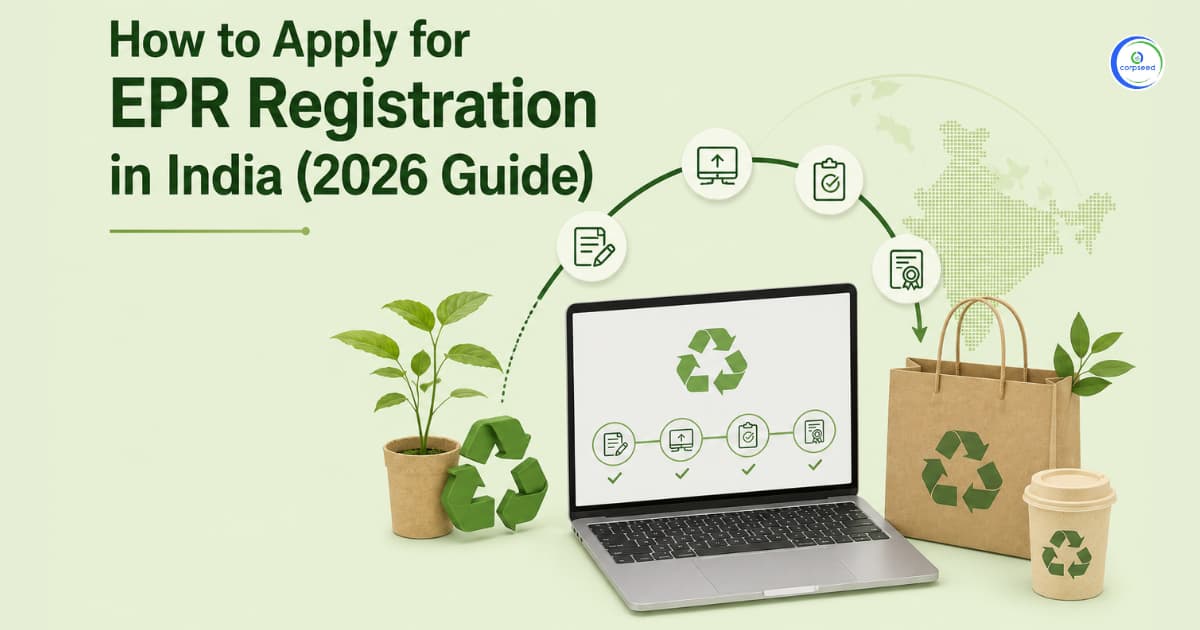
Step-by-Step Process to Apply for EPR Registration in India (2026 Updated Procedure)
The CPCB has streamlined EPR Registration in India through an online portal. Follow these steps carefully to complete the application:
- Visit the CPCB EPR Portal
- Select the Correct Waste Category
- Create a Login Account
- Fill the Application Form
- Upload Required Documents
- Pay the Registration Fee
- Submit and Await CPCB Approval
Note: Keep all uploaded documents correct & proper as demanded. Blurry or incomplete documents are one of the most common reasons for delays in EPR authorization in India.
Post-Registration Compliance Under EPR in India
Obtaining the EPR certificate does not mark the end of the procedure. There is a need for compliance beyond just registration. These include:
- Meeting EPR Targets: Every company that registers has to fulfill certain targets of either recycling or collecting waste. These targets are set by the CPCB.
- Filing Quarterly and Annual Returns: These have to be done regularly, depicting the quantity of the waste produced, collected, and recycled. The penalty may apply.
- Record Maintenance: This is about keeping proper records of waste management activities. Recycling certificates and disposal documents should be readily available.
- Working with Approved Recyclers or PROs: The registered companies should work in collaboration with CPCB-approved recyclers or Producer Responsibility Organizations (PROs).
Validity and Renewal of EPR Registration
The EPR Registration Certificate in India is valid for one year from the date of approval. Once the registration expires, renewal must be initiated.
However, Plastic Waste importers are an exception. CPCB has amended the Plastic Waste Management Rules and has officially classified their EPR Registration Certificates as One-Time Registration Certificates. Even if the certificate shows a one-year validity, no renewal is required. The registration remains valid on an ongoing basis.
The one-year validity and renewal process remains applicable for all other categories. It is best to begin the renewal process at least 60 days before expiry to avoid penalties and operational disruptions.
Best Practices for EPR Compliance in 2026
Complying with EPR in India is not limited to registering. Below are some tips that can help one remain compliant:
- Stay Updated with CPCB Notifications: Guidelines related to EPR may change, monitoring CPCB circulars would enable the company to stay up-to-date with the standards.
- Maintain Proper Documentation: All relevant documents should be kept well-organized. This includes recycling certificates, PRO contracts, waste manifests, and returns.
- Use Tracking and Reporting Systems: In cases where companies produce considerable amounts of waste, software used for tracking and reporting will facilitate accuracy.
- Collaborate with PROs or Environmental Consultants: Collaboration with PROs or environmental consultants makes it easier to comply with EPR guidelines in India while minimizing mistakes.
- Train Internal Teams: Employees handling compliance, procurement, or waste management must understand their EPR responsibilities and should be educated and trained well to avoid errors and penalties.
Conclusion
EPR Registration in India is mandatory for PIBOs(producers, importers, brand owners) and manufacturers involved in work related to waste. For the year 2026, the regulatory framework is more robust than ever before.
CPCB EPR registration in India is easy and efficient if one has the right documentation and information ready to hand. Once registered, target setting, filing returns, and dealing with authorized recyclers become equally essential.
With India’s journey towards a circular economy well underway, EPR will gain increasing importance. Those businesses that adopt a proactive approach towards EPR registration, renewal, and compliance will be well ahead of the game.
About the Author

Mahek Sancheti
Content WriterMahek Sancheti, BAJMC graduate with a deep passion for writing. As a content writer, video content creator, creative content creator, and scriptwriter, I bring stories to life through words and visuals. I honed my skills by working with a prominent news agency, where I excelled in crafting compelling narratives and engaging content. Coming from a journalism and mass communication background I have skills to craft engaging narratives that captivate audiences. With a keen interest in writing and creativity, I aim to deliver impactful and meaningful content that resonates with diverse audiences.
https://www.linkedin.com/in/mahek-sancheti-837196212
Related articles
CPCB SOP 2026 for CTE and CTO Approvals - Timelines, Inspections and Key Directions
2026-10-30
E-Waste EPR for Electronics Brands: Registration, Targets & Annual Compliance
2026-10-26
Battery EPR Registration: Who Needs It Under the Battery Waste Management Rules?
2026-10-26
Detailed Project Report for CTE and CTO: Requirements, Format, Documents and Approval Process
2026-10-22
EPR Registration in India: Who Needs It and Which EPR Category Applies to Your Business?
2026-10-21
CPCB Guidelines on Levy of Fees Under the Solid Waste Management Rules, 2026
2026-10-07