
MOEFFC Released New Draft for End-of-Life Vehicles Amendment Rules 2026
The Ministry of Environment, Forest, and Climate Change published a draft amendment to the End of Life Vehicles Rules 2025. This new set of rules carries the name Environment Protection (End-of-Life Vehicles) Amendment Rules, 2026.
Schedule a Call Back

The changing mindset of India is actually cleaning up old and worn-out vehicles. The Ministry of Environment, Forest, and Climate Change published a draft amendment to the End of Life Vehicles Rules 2025. This new set of rules carries the name Environment Protection (End-of-Life Vehicles) Amendment Rules, 2026.
End-of-Life Vehicles, also called ELV, are cars, trucks, motorcycles, and other vehicles that have reached the end of their useful life. These vehicles carry a large amount of steel, plastic, rubber, oil, batteries, and electronic parts. If someone dumps or mishandles these materials, they cause serious harm to the soil, water, and air.
The government wants to stop that. The new rules push vehicle makers (called producers) to take responsibility for what happens to their vehicles after they stop being used. This system is called Extended Producer Responsibility or EPR. The government also brings insurance companies into this responsibility circle for the very first time.
Schedule a Call Back
Key Highlights of End-of-Life Vehicles Amendment Rules 2026, India
The 2026 amendment introduces several powerful changes to the original ELV Rules 2025. Here is a quick look at what changes:
- A New Definition for Waste Management Rules: The amendment legally changes the meaning of "waste management rules" within the ELV framework. This definition now connects all waste-related laws under the Environment (Protection) Act, 1986, into one unified system.
- New Responsibilities for Producers (Vehicle Manufacturers): Vehicle makers must now declare past sales data going back to the FY 2005-06. They must also meet targets for using recycled steel in new vehicles and must manage multiple types of waste, not just steel scrap, from old vehicles.
- Insurance Companies Enter the ELV System: For the first time, insurance companies and insurers who insure vehicles must register on a central online portal. They must also send End of Life Vehicles to registered scrapping centres or collection centres. The Insurance Regulatory and Development Authority of India (IRDAI) must support this through its own regulations.
- Updated EPR Targets for Non-Transport and Transport Vehicles: The schedule attached to the rules now carries revised EPR targets for both types of vehicles. Non-transport vehicle targets run up to 2055-56 and beyond. Transport vehicle targets run up to 2050-51 and beyond.
- New Forms: The amended rules have replaced the old Form-1, and the new one is a little more detailed. A brand-new Form 9 has also been added. Producers must use these forms to report their compliance and historical sales data.
- Minimum Use of Recycled Steel in New Vehicles: A new Rule 9A makes it mandatory for all vehicle producers to use at least 10% recycled steel by weight in every new vehicle sold in India, starting from the FY 2026-27.
New Definition of Waste Management Rules under ELV Framework
The original ELV Rules 2025 did not define "waste management rules" clearly. This created confusion when producers tried to figure out which waste rules they must follow for different types of waste, like used oil, waste tyres, e-waste, or plastic.
The new clause states: “Waste management rules” means Extended Producer Responsibility rules for environmentally sound management of wastes notified under the Environment (Protection) Act, 1986.
This single definition now covers all EPR rules for different types of waste, whether the rules deal with plastic, batteries, tyres, oil, or electronic waste. The definition links all these waste categories back to the parent law, the Environment (Protection) Act, 1986.
This clarity helps producers know exactly which rules apply to each type of waste that comes out of an old vehicle. It also makes enforcement simpler for the Central Pollution Control Board (CPCB) and State Pollution Control Boards.
Extended Producer Responsibility for Automobile Manufacturers in India
Extended Producer Responsibility (EPR) means the vehicle maker does not just take responsibility for building a vehicle. The maker also takes responsibility for what happens to that vehicle when it becomes old and cannot be used anymore. This includes collecting the old vehicle, making sure a registered scrapping facility dismantles it safely, and ensuring that the materials, steel, plastic, tyres, oil, batteries, and electronics go through proper recycling channels.
What Producers Must Declare
The amendment substitutes an improved version for the older Clause (viii). The producers will be required to report information about all the vehicles that have been manufactured between FY 2005-06 to 2024-25. This reporting is to be made on the EPR portal before 30th June 2026 through Form 9.
The declaration must include the quantity (in weight) of steel, tyres, oil, electrical and electronic products, batteries, and plastic used in those vehicles. This gives the government and producers a complete picture of the total waste load that will arise from old vehicles.
New Obligation: Minimum Recycled Steel Use (Clause xii)
A new Clause (xii) gets added to Rule 4(1). There is a requirement on the producers regarding the minimum amount of recycled steel required in new cars. This requirement is in direct correlation with Rule 9A.
New Sub-Rules 8, 9, and 10 under Rule 4
- Sub-Rule 8: Vehicle manufacturers should take charge of EPR for all types of waste. Even though manufacturers may allocate particular wastes, such as tires and batteries, to specialized producers, they would still be solely liable for steel scrap recycling.
- Sub-Rule 9: Manufacturers should exhibit total transparency by filling out Form 1. It contains information about the parties accountable for managing each type of waste from their end-of-life vehicles.
- Sub-Rule 10: Producers are required to submit an official compliance report detailing their progress toward recycling targets. Using the Form 1 format, companies must prove they have met the required recovery and recycling volumes for all ELV-generated materials.
New Rule 9A: Use of Recycled Steel in New Vehicles
This is a historical clause. According to rule 9A, all vehicle manufacturers have to employ a certain proportion of recycled steel in each new vehicle manufactured. The targets are:
| Period | Minimum Recycled Steel Use |
| 2026-27 to 2028-29 (3 years) | 10% of the total steel weight |
| 2029-30 to 2031-32 (3 years) | 10% of the total steel weight |
| 2032-33 to 2034-35 (3 years) | 10% of the total steel weight |
| 2035-36 and onwards | 10% of the total steel weight |
The percentage applies to the total weight of steel in the vehicle, excluding the weight of fuel. If a producer sources steel-containing auto parts from other manufacturers, those auto parts manufacturers must give certificates confirming the use of recycled steel content.
Environmental Responsibilities of Insurance Companies under ELV Rules
This is one of the most exciting and new parts of the 2026 amendment. Before this, insurance companies played no formal role in the ELV system. The amendment adds two new rules, Rule 8A and Rule 8B, that change this completely.
Rule 8A: What Insurance Companies Must Do
- Registration on the Central Online Portal: Every insurance company or insurer that provides vehicle insurance must get itself registered on the centralized online portal through the State Pollution Control Board. This is mandatory, not optional.
- Environmentally Sound Handling of End-of-Life Vehicles: When an insured vehicle reaches its end of life, for example, after a total loss accident, the insurance company must handle it in an environmentally sound manner. The vehicle must go to a Registered Vehicle Scrapping Facility (RVSF) or a designated collection centre. Dumping it anywhere or selling it informally is not allowed.
- Uploading Data on the Portal: Insurance companies must share the details of all End of Life Vehicles they deposit at RVSFs or collection centers with the Central Board or State Board. They must also upload this data to the centralized online portal.
This move makes insurance companies an active player in India's vehicle recycling ecosystem.
Role of IRDAI in ELV Compliance
Rule 8B places a responsibility on IRDAI (Insurance Regulatory and Development Authority of India). IRDAI must:
- Prescribe the responsibilities of insurance companies and insurers in their own regulations.
- Enforce these responsibilities
- Ensure that End of Life Vehicles handled by insurance companies reach Registered Vehicle Scrapping Facilities for proper scrapping.
IRDAI acts as the regulator for all insurance companies in India. By bringing IRDAI into the picture, the government makes sure that ELV obligations for insurance companies get backed by the full weight of insurance regulation. Non-compliant insurance companies could face action from IRDAI under its own powers.
This creates a two-layer enforcement mechanism, the environment ministry's ELV rules on one side and IRDAI's insurance regulations on the other. Both work together to ensure that insured vehicles that reach their end of life get handled responsibly.
EPR Targets for Non-Transport and Transport Vehicles in India
The Schedule to the ELV Rules 2025 carries EPR targets for vehicle producers. The amended targets in 2026 use new tables based on two categories, namely non-transport and transport. The targets inform producers of the amount of steel that needs to be recovered and recycled annually from obsolete vehicles.
Understanding How the Targets Work
The targets work on a 20-year lag for non-transport vehicles and a 15-year lag for transport vehicles. This means that for a given financial year, the target is based on how much steel went into vehicles sold 20 or 15 years ago (because those are the vehicles likely reaching the end of their life now).
EPR Targets for Non-Transport Vehicles
| Financial Year | EPR Target (Steel Recovery) |
| 2025-26 | Minimum 8% of steel used in FY 2005-06 vehicles |
| 2026-27 | Minimum 8% of steel used in FY 2006-07 vehicles |
| 2027-28 | Minimum 8% of steel used in FY 2007-08 vehicles |
| 2028-29 | Minimum 8% of steel used in FY 2008-09 vehicles |
| 2029-30 | Minimum 8% of steel used in FY 2009-10 vehicles |
| 2030-31 to 2034-35 | Minimum 13% (rising phase) |
| 2035-36 to 2044-45 | Minimum 18% |
| 2045-46 to 2049-50 | Minimum 50% |
| 2050-51 to 2054-55 | Minimum 60% |
| 2055-56 and onwards | Minimum 70% (based on steel used 20 years ago) |
EPR Targets for Transport Vehicles
Transport vehicles (commercial vehicles, trucks, buses, etc.) have a shorter product life, typically 15 years. Therefore, the targets jump sooner and higher compared to non-transport vehicles.
| Financial Year | EPR Target (Steel Recovery) |
| 2025-26 | Minimum 8% of steel used in FY 2010-11 vehicles |
| 2026-27 | Minimum 8% of steel used in FY 2011-12 vehicles |
| 2029-30 to 2034-35 | Minimum 8% to 13% (rising phase) |
| 2035-36 to 2039-40 | Minimum 18% |
| 2040-41 to 2044-45 | Minimum 55% |
| 2045-46 to 2049-50 | Minimum 65% |
| 2050-51 and onwards | Minimum 75% (based on steel used 15 years ago) |
Carry Forward Provision
A helpful flexibility exists in both tables. Producers can carry forward up to 30% of any year's EPR target to the next four financial years. This helps producers manage situations where scrapping capacity or market conditions create short-term challenges.
Form 1 and Form 9 Reporting under ELV Rules 2026
Under the 2026 amendments, new reporting forms have been developed to improve transparency and detail in the reporting process. These forms include Form 1 (amended) and Form 9 (new).
Form 1: Annual Return by the Producer
The old Form 1 gets replaced with a new, more comprehensive version. Form 1 acts as the annual return that every vehicle producer must file under the ELV Rules 2025.
This form captures the basic producer information. The form starts with the producer's name, registered address, website, contact details, GST number, TIN, and the compliance year for which the return is filed.
Form 9: Declaration by the Producer
Form 9 is a new form added to the ELV rules. Producers have to submit this declaration by 30th June 2026, covering vehicle sales data from FY 2005-06 to FY 2025-26, a period of 20 years of historical data.
This form also captures the basic producer information as Form 1, name, address, GST, TIN, and authorized person details.
EPR Certificate Generation for Recycled Waste Categories
The 2026 amendment adds a new Sub-Rule 2(A) to Rule 9 that deals specifically with how EPR certificates get generated for non-steel waste categories.
The Old Problem
Under the ELV Rules 2025, the EPR certificate mechanism focused mainly on steel scrap. Other waste types, such as used oil, waste tyres, battery waste, e-waste, and plastic waste, did not have a clear certificate generation pathway under the ELV framework.
The New Solution
The new sub-rule states: EPR certificates for used oil, tyre waste, battery waste, e-waste, and the concerned recyclers on the centralised online portal developed and implemented by the Central Pollution Control Board (CPCB) must generate plastic waste from End of Life Vehicles (other than steel scrap).
However, this applies only when such certificates are not already generated under the relevant EPR regulations or waste management rules notified under the Environment (Protection) Act, 1986. This means:
If waste tyre recyclers already generate EPR certificates under the Hazardous and Other Wastes Rules or the Solid Waste Management Rules, those certificates remain valid under the ELV framework too.
If they do not, the recycler must generate the certificate on the centralized ELV portal.
Conclusion
The Environment Protection (End-of-Life Vehicles) Amendment Rules 2026 mark a radical move in India's waste management scenario. The producers will be responsible from end to end for their products, which include monitoring the sales made in the last two decades and incorporating recycled steel content of 10% in their current productions. The insurance firms will take responsibility for sending the total loss vehicles to the RVSF (Registered Vehicle Scrapping Facilities), whereas the recyclers will issue a digital EPR certificate for recycled materials. These measures will significantly reduce the release of any harmful substances to the soil and water bodies since batteries, oil, and plastic will be disposed of with ease.
About the Author

Mahek Sancheti
Content WriterMahek Sancheti, BAJMC graduate with a deep passion for writing. As a content writer, video content creator, creative content creator, and scriptwriter, I bring stories to life through words and visuals. I honed my skills by working with a prominent news agency, where I excelled in crafting compelling narratives and engaging content. Coming from a journalism and mass communication background I have skills to craft engaging narratives that captivate audiences. With a keen interest in writing and creativity, I aim to deliver impactful and meaningful content that resonates with diverse audiences.
https://www.linkedin.com/in/mahek-sancheti-837196212
Related articles
CPCB SOP 2026 for CTE and CTO Approvals - Timelines, Inspections and Key Directions
2026-10-30
E-Waste EPR for Electronics Brands: Registration, Targets & Annual Compliance
2026-10-26
Battery EPR Registration: Who Needs It Under the Battery Waste Management Rules?
2026-10-26
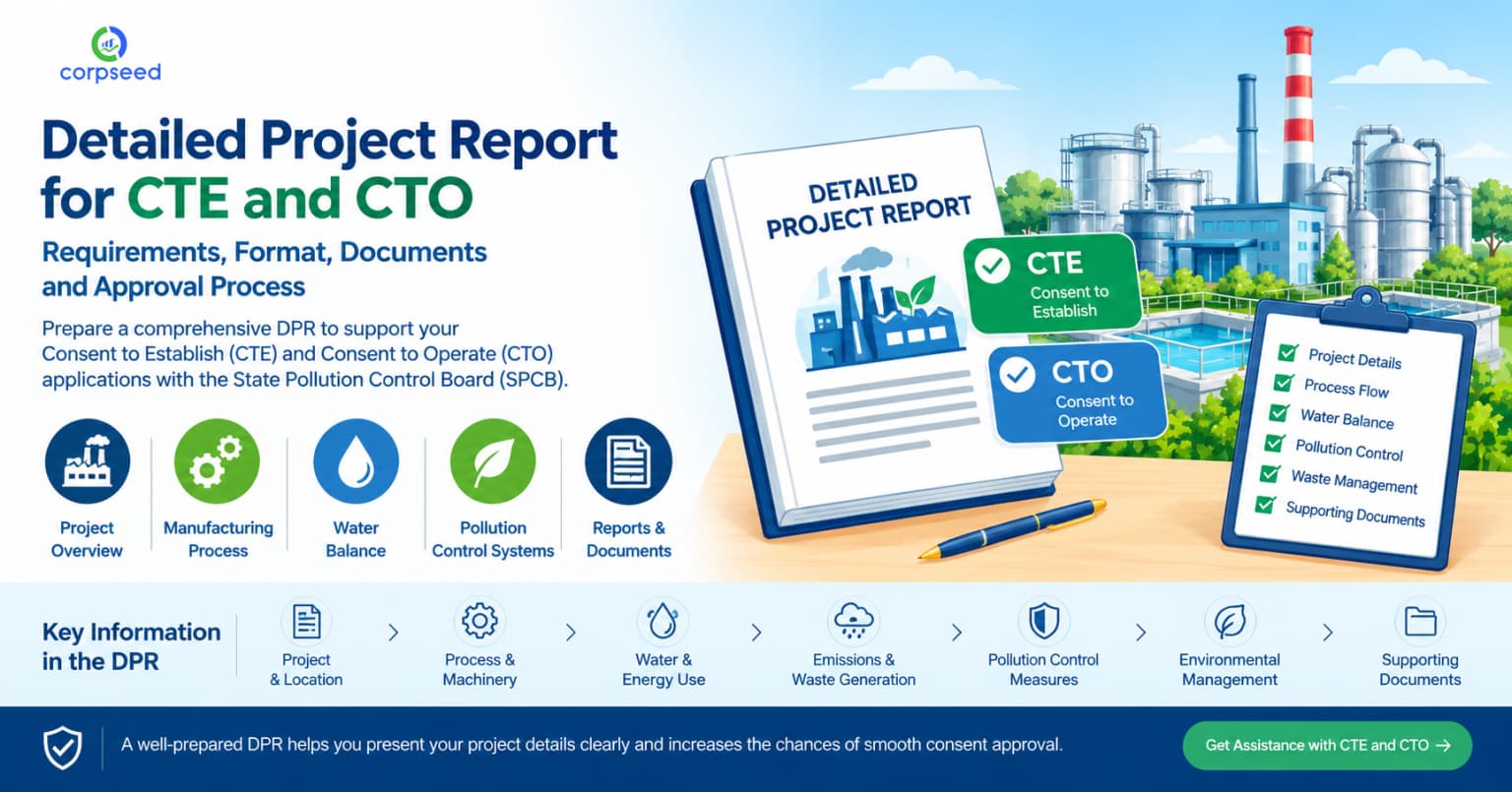
Detailed Project Report for CTE and CTO: Requirements, Format, Documents and Approval Process
2026-10-22
EPR Registration in India: Who Needs It and Which EPR Category Applies to Your Business?
2026-10-21
CPCB Guidelines on Levy of Fees Under the Solid Waste Management Rules, 2026
2026-10-07