
EPR Registration Online in India: Complete Guide to Process, Documents, Fees & Compliance
EPR Registration Online in India is an important environmental compliance requirement for eligible producers, manufacturers, importers, and brand owners. This blog explains everything businesses need to know about EPR Registration, including its meaning, applicability, registration process, required documents, fees, different EPR categories, ongoing compliance, and common challenges. It also covers Plastic EPR, E-Waste EPR, Battery EPR, and Waste Tyre EPR.
Schedule a Call Back
8,300+ EPR assignments since 2018
Clients include Emerson Automation Solutions Intelligent Platforms, Intangles Lab, Colt Technology Services India, Deki Electronics, Amzetta Technologies, Shindengen India, Emerson Process Management (India), Lianchuang Electronic India, Beryl Drugs, Q-Line Biotech, Ascent Meditech, Eli Lilly and Company (India) (12 of 2,300+ served since 2018).
A few more clients we've served in this industryHide the list
- Electronics and technology
- Emerson Automation Solutions Intelligent Platforms · Intangles Lab · Colt Technology Services India · Deki Electronics · Amzetta Technologies · Shindengen India · Emerson Process Management (India) · Lianchuang Electronic India
- Pharma and healthcare
- Beryl Drugs · Q-Line Biotech · Ascent Meditech · Eli Lilly and Company (India) · Endolite India · Rajasthan Antibiotics · G D Pharmaceuticals · Micro Labs
- Engineering and manufacturing
- Juki India · Hilti India · Essel Mining & Industries · Bundy India · Hilti Manufacturing India · KJS Cement (I) · Mangalam Cement · Birla Precision Technologies
- Chemicals and materials
- Brenntag Ingredients India · Reliant Packaging Films · Taurus Packaging · Axel Polymers · Lintec India · Kumar Organic Products · DDP Speciality Products India · HP Adhesives
- Food and consumer goods
- Onest · AVT McCormick Ingredients · Akay Natural Ingredients · AVT Natural Products · Ugraya Foods and Feeds · Jalpaiguri Food Industries · Milano Ice Cream · Milano22 Foods
- Logistics and trade
- Siddhartha Logistics · Siddhartha Logistics Ftwz · Honda Trading Corporation India · Zenexpress Logistics · MOL Logistics (India) · Dksh India · Fibs Logistics India
- More clients
- Nilkamal
EPR Registration Online in India: Complete Guide
Businesses that manufacture, import, sell, or introduce certain products and packaging into the Indian market may have responsibilities for managing the waste generated from those products.
Extended Producer Responsibility (EPR) is an important environmental compliance framework that places responsibility on eligible businesses for the collection, recycling, recovery, processing, or environmentally sound management of applicable waste.
For businesses covered under the relevant EPR framework, EPR Registration Online in India can be an important step toward meeting applicable environmental and regulatory obligations.
EPR requirements can vary depending on the type of product, waste category, and role of the business. Commonly regulated categories include plastic packaging, e-waste, waste batteries, and waste tyres.
This guide explains EPR Registration, who may need it, the registration process, documents, fees, different EPR categories, ongoing compliance requirements, common application issues, and frequently asked questions.
Schedule a Call Back
What is EPR Registration?
Extended Producer Responsibility (EPR) is an environmental management approach under which producers and other covered entities are responsible for managing the environmental impact of products after they become waste.
The objective of EPR is to encourage businesses to take responsibility for the waste associated with products they manufacture, import, sell, or place in the market.
Depending on the applicable waste category, EPR responsibilities may involve:
- Collection of applicable waste
- Recycling or processing
- Recovery of materials
- Environmentally sound waste management
- Meeting applicable targets
- Maintaining records
- Filing applicable returns
- Managing EPR certificates or credits, where applicable
EPR Registration refers to the registration process applicable to entities covered under the relevant EPR framework.
It is important to understand that registration is only one part of the overall compliance process. Businesses may have continuing responsibilities after obtaining registration.
Who Needs EPR Registration in India?
EPR applicability depends on the type of product, the waste category, and the business's role in the supply chain.
Entities that may fall under applicable EPR requirements can include:
- Producers
- Manufacturers
- Importers
- Brand owners
- Businesses placing covered products or packaging on the Indian market
- Other entities covered under the relevant waste-management framework
For example, an importer of electronic products may have applicable e-waste responsibilities, while a business placing covered plastic packaging in the market may have plastic EPR obligations.
Therefore, businesses should first determine which EPR category applies to their activities and products before beginning the registration process.
Why is EPR Registration Important?
EPR Registration can help covered businesses structure and manage their environmental compliance responsibilities.
1. Regulatory Compliance
Registration helps eligible businesses meet applicable requirements under relevant waste-management regulations.
2. Responsible Waste Management
EPR encourages businesses to participate in the collection, recycling, recovery, processing, and responsible management of waste.
3. Reduced Compliance Risk
Failure to meet applicable EPR requirements can result in regulatory issues, notices, environmental compensation, or other consequences under the relevant framework.
4. Better Environmental Practices
A structured EPR system encourages businesses to consider the environmental impact of products throughout their lifecycle.
5. Better Compliance Management
Registration, record-keeping, reporting, and target management can help businesses organise their ongoing EPR responsibilities more effectively.
Types of EPR Registration in India
EPR requirements can differ according to the waste category. Businesses should identify the applicable framework instead of assuming that one EPR registration covers every type of waste.
Businesses dealing with covered plastic packaging may need to comply with the applicable plastic waste-management and EPR requirements.
Plastic EPR may be relevant to:
- Producers
- Importers
- Brand owners
- Businesses introducing covered plastic packaging into the market
Depending on applicability, obligations can include registration, reporting, recycling or processing responsibilities, and fulfilment of applicable targets.
Electrical and electronic products can generate e-waste after their useful life. Businesses covered under the applicable e-waste framework may therefore have EPR responsibilities.
E-Waste EPR may apply to eligible:
- Producers
- Manufacturers
- Importers
- Brand owners
Applicable obligations may include registration, product information, recycling or processing responsibilities, record maintenance, reporting, and fulfilment of applicable targets.
Batteries require appropriate collection, recycling, and waste management because of their environmental impact.
Businesses covered under the applicable battery waste-management framework may have EPR responsibilities relating to registration, collection, recycling, reporting, and target fulfilment.
Potentially affected businesses can include manufacturers, producers, and importers, depending on the applicable requirements.
Waste tyres are another category for which specific EPR requirements may apply.
Eligible tyre producers and importers may have responsibilities related to registration, recycling, reporting, and maintaining relevant records.
Businesses dealing with tyres should assess the requirements applicable to their specific activities.
EPR Registration Process in India
The exact EPR Registration Process can vary according to the applicable waste category and regulatory framework. However, businesses can generally approach the process through the following steps.
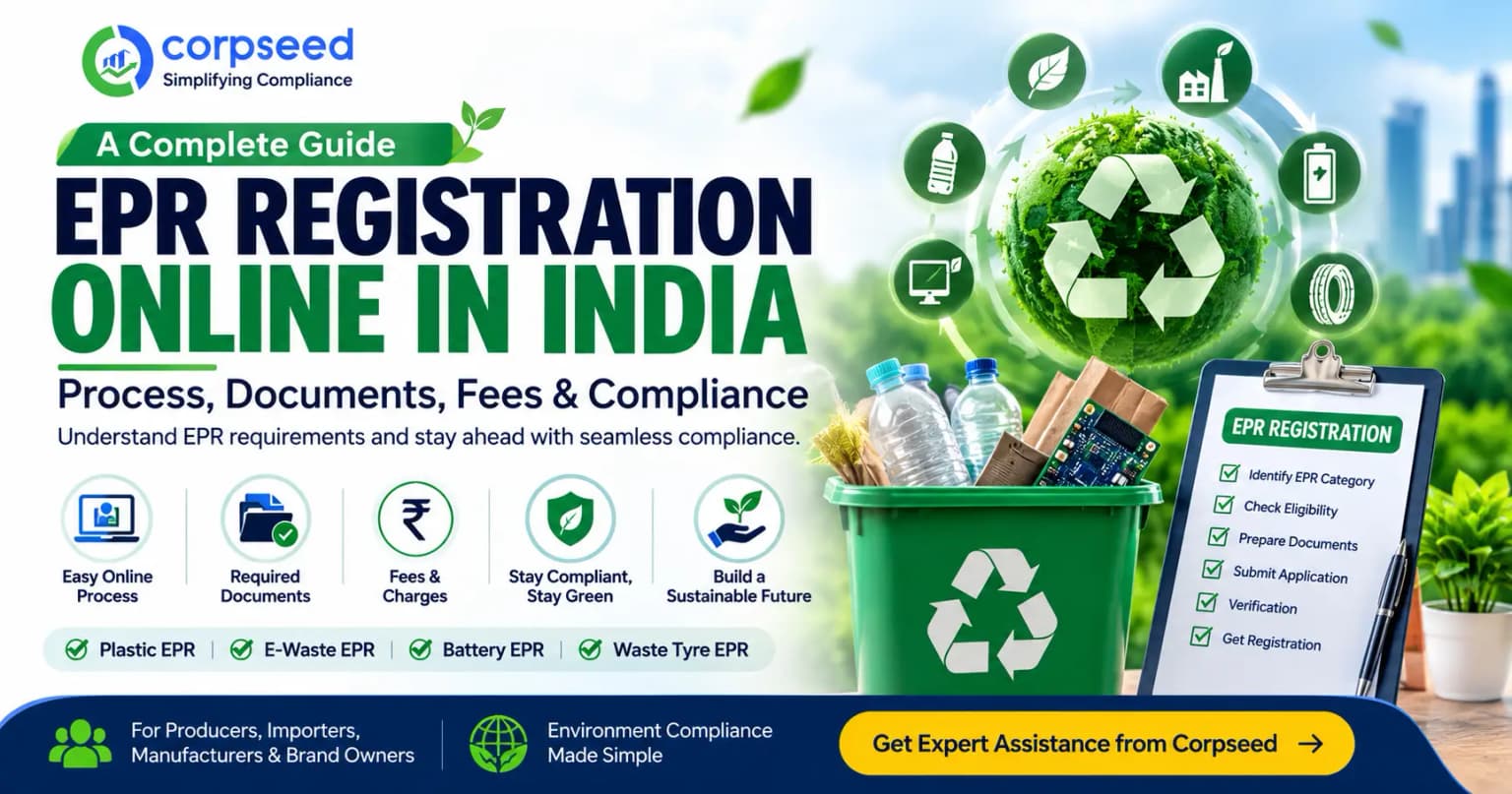
Step 1: Identify the Applicable EPR Category
First, determine which EPR framework applies to your business.
For example:
- Plastic packaging → Plastic EPR
- Electronic products → E-Waste EPR
- Batteries → Battery EPR
- Waste tyres → Waste Tyre EPR
Correct categorisation is important because registration requirements and ongoing obligations can differ.
Step 2: Determine Your Business Role
Identify whether your business operates as a:
- Producer
- Manufacturer
- Importer
- Brand owner
- Other applicable entity
Your role can affect the nature of your EPR responsibilities.
Step 3: Check Eligibility
Review your:
- Products
- Packaging
- Manufacturing activities
- Import activities
- Brands
- Business operations
- Role in the supply chain
This helps determine whether EPR registration is applicable.
Step 4: Prepare the Required Documents
Collect the business, product, brand, manufacturing, import, and waste-management information required for your applicable EPR category.
The exact EPR Registration Documents can vary by category.
Step 5: Register on the Applicable Online Portal
Businesses generally need to create an account on the relevant regulatory or government portal applicable to their EPR category.
Applicants should ensure that the information entered in the application is accurate and consistent with their supporting documents.
Step 6: Complete and Submit the Application
Enter the required business and product details, upload the supporting documents, and submit the application.
Before submission, verify:
- Legal business name
- Registered address
- PAN/GST details, where applicable
- Authorized person’s details
- Product information
- Brand information
- Applicable quantities and other required data
Step 7: Verification by the Authority
The submitted information may be reviewed by the relevant authority.
If additional information or clarification is required, the applicant may need to respond accordingly.
Step 8: Obtain EPR Registration
Once the application is approved, the business receives its applicable EPR registration or approval details.
However, obtaining registration does not necessarily complete all EPR responsibilities. Businesses may still need to fulfil applicable targets, maintain records, file returns, and complete other compliance requirements.
Documents Required for EPR Registration
The exact documents required depend on the EPR category and nature of the business.
Commonly required information may include:
Business Documents
- Certificate of Incorporation or business registration documents
- PAN details
- GST registration details, where applicable
- Address proof
- Contact details
- Authorized person’s details
Product and Brand Information
- Product details
- Product categories
- Brand details
- Product quantities
- Packaging information, where applicable
- Import details, where applicable
- Manufacturing details, where applicable
Waste-Management Information
Depending on the applicable framework, businesses may also need information regarding:
- Waste quantities
- Recycling or processing arrangements
- Applicable recyclers or processing entities
- Collection arrangements
- EPR targets
- Previous registration or compliance information
Businesses should verify the category-specific document requirements before submitting an application.
EPR Registration Fees in India
The EPR Registration Fees in India can vary depending on the applicable EPR category, regulatory requirements, business circumstances, application type, and professional assistance involved.
Businesses should consider different components of the overall cost.
Government or Portal Charges
Applicable regulatory or portal charges, where prescribed.
Professional Consultancy Charges
Businesses that engage an EPR consultant may incur professional fees for:
- Application preparation
- Documentation
- Registration support
- Query resolution
- Compliance assistance
Ongoing Compliance Costs
Businesses may also need to consider costs associated with:
- Recycling or processing obligations
- EPR certificates or credits, where applicable
- Return filing
- Record maintenance
- Compliance management
- Professional support
Therefore, businesses should evaluate the overall cost of EPR compliance, rather than focusing only on the initial registration fee.
EPR Registration vs EPR Compliance
EPR Registration and EPR Compliance are related but different concepts.
| EPR Registration | EPR Compliance |
| Initial registration process | Ongoing compliance responsibilities |
| Establishes the entity under the applicable framework | Ensures applicable obligations are fulfilled |
| Requires application and supporting information | May require reporting and target fulfilment |
| Results in applicable registration or approval | Continues throughout the applicable compliance period |
A business can obtain EPR registration and still have additional compliance obligations afterwards.
These may include:
- Meeting applicable targets
- Maintaining records
- Working with eligible recyclers or processors
- Filing returns
- Reporting relevant data
- Maintaining supporting documentation
What is an EPR Certificate?
An EPR Certificate or applicable EPR credit mechanism may be associated with the fulfilment of EPR obligations under the relevant waste-management framework.
Depending on the applicable category, businesses may need to demonstrate fulfilment of prescribed obligations through applicable recycling, processing, collection, or other mechanisms.
The exact certificate or credit requirements can differ between EPR categories.
EPR Targets and Ongoing Compliance
Obtaining EPR Registration is generally not the end of the compliance process.
Depending on the applicable framework, businesses may have continuing responsibilities such as:
Meeting Applicable Targets
Businesses may need to fulfil prescribed recycling, collection, recovery, or processing targets.
Maintaining Records
Businesses should maintain relevant records concerning products, quantities, waste management, recycling, and compliance activities.
Filing Returns
Certain EPR frameworks require periodic or annual reporting.
Working With Eligible Entities
Where applicable, businesses may need to work with eligible recyclers, processors, collection partners, or other authorised entities.
Tracking Compliance Deadlines
Businesses should monitor applicable filing and reporting deadlines to avoid missing important compliance requirements.
Common Reasons for EPR Registration Delays
Businesses may experience delays in registration because of:
- Incorrect information
- Incomplete documentation
- Product-category mismatch
- Incorrect business details
- Missing supporting documents
- Data inconsistencies
- Incorrect product information
- Failure to respond to clarification requests
Before submitting an application, businesses should carefully review all information and supporting documents.
How Long Does EPR Registration Take?
The processing time for EPR Registration can vary depending on:
- EPR category
- Completeness of the application
- Accuracy of submitted information
- Regulatory verification
- Queries or clarification requirements
- Portal processing
Therefore, businesses should avoid relying on a universal processing timeline.
Submitting accurate and complete information from the beginning can help reduce avoidable delays.
Benefits of Professional EPR Assistance
EPR regulations and compliance requirements can be difficult to manage, especially for businesses dealing with multiple products, brands, packaging types, or waste categories.
An experienced EPR consultant can assist with:
- Identifying the applicable EPR category
- Checking applicability
- Preparing documents
- Application filing
- Resolving application queries
- Understanding compliance obligations
- Managing applicable returns and reporting
- Maintaining compliance records
Professional assistance can help make the registration and compliance process more structured.
EPR Registration Checklist
Before applying for EPR Registration Online in India, businesses should check the following:
☑ Identify the applicable EPR category
☑ Confirm whether EPR registration applies
☑ Identify your business role
☑ Collect business documents
☑ Prepare PAN/GST details
☑ Prepare product information
☑ Prepare brand information
☑ Prepare packaging information, where applicable
☑ Verify manufacturer/importer details
☑ Prepare applicable waste-related information
☑ Register on the relevant portal
☑ Submit accurate information
☑ Respond to authority queries, if any
☑ Obtain EPR registration
☑ Track ongoing EPR obligations
☑ Maintain records
☑ Complete applicable filings and returns
EPR Registration for Different Businesses
EPR Registration for Importers
Importers bringing applicable products, packaging, electronics, batteries, tyres, or other regulated items into India may have EPR responsibilities.
The exact requirements depend on the product and applicable waste category.
EPR Registration for Manufacturers
Manufacturers operating in regulated product categories should assess whether their activities fall under an applicable EPR framework.
Depending on the category, responsibilities may include registration, target fulfilment, reporting, and waste-management obligations.
EPR Registration for Brand Owners
Brand owners introducing covered products or packaging into the Indian market may also have EPR responsibilities.
Businesses should evaluate their products, packaging, brands, and supply-chain activities to determine applicability.
Why Businesses Should Start EPR Compliance Early
Businesses should not wait until a compliance deadline, application issue, or regulatory notice to understand their EPR responsibilities.
Starting early allows businesses to:
- Determine applicability
- Identify the correct EPR category
- Prepare required documents
- Understand applicable targets
- Plan recycling or processing arrangements
- Establish record-keeping systems
- Avoid last-minute application issues
- Track ongoing compliance requirements
For businesses introducing regulated products or packaging into the Indian market, EPR should be considered part of the broader environmental compliance strategy.
Get EPR Registration Assistance From Corpseed
Understanding EPR applicability, selecting the correct category, preparing documents, submitting the application, and managing ongoing compliance can be challenging for businesses.
Corpseed can help businesses navigate the EPR registration and compliance process with professional assistance.
Our assistance can cover:
- EPR applicability assessment
- EPR category identification
- Document preparation
- Online application support
- Registration assistance
- Application query support
- EPR compliance guidance
- Return and reporting assistance
- Ongoing compliance support
Whether you are a producer, manufacturer, importer, or brand owner, getting the right guidance can help make your EPR compliance process more organised.
Ready to Complete Your EPR Registration?
Get professional assistance from Corpseed for your EPR Registration Online in India and applicable compliance requirements.
CTA: Get Started With EPR Registration Today →
Conclusion
EPR Registration Online in India is an important compliance step for businesses covered under India’s Extended Producer Responsibility frameworks.
Whether you are a producer, manufacturer, importer, or brand owner, it is important to understand which EPR category applies to your business and what responsibilities follow after registration.
The general process involves identifying the applicable EPR category, checking eligibility, preparing the required documents, submitting an online application, responding to regulatory queries, obtaining registration, and fulfilling ongoing compliance requirements.
EPR compliance does not necessarily end after obtaining registration. Businesses may also need to manage applicable targets, records, returns, reporting, recycling or processing obligations, and other requirements.
If you are unsure whether EPR Registration applies to your business or need assistance with registration and compliance, professional guidance can help you navigate the process more efficiently.
Need help with EPR Registration? Contact Corpseed today.
About the Author

Shamshad Alam
Head - Digital MarketingExperienced Digital Marketer with a demonstrated history of working in the Internet industry. He likes to write about the latest technology trends, Skilled in Digital Marketing likes. Search Engine Optimization, SMO, SEM, PPC, Content Writing, and, Designing, etc.
Related articles
CPCB SOP 2026 for CTE and CTO Approvals - Timelines, Inspections and Key Directions
2026-10-30
E-Waste EPR for Electronics Brands: Registration, Targets & Annual Compliance
2026-10-26
Battery EPR Registration: Who Needs It Under the Battery Waste Management Rules?
2026-10-26
Detailed Project Report for CTE and CTO: Requirements, Format, Documents and Approval Process
2026-10-22
EPR Registration in India: Who Needs It and Which EPR Category Applies to Your Business?
2026-10-21
CPCB Guidelines on Levy of Fees Under the Solid Waste Management Rules, 2026
2026-10-07