
CPCB Vigilance Complaint Handling Mechanism: Guidelines, Complaint Process & Whistle Blower Rules
To address corruption, abuse of power, and unethical behaviour by CPCB officers, the CPCB has established a Vigilance Complaint Handling Mechanism. This mechanism ensures that the board's functioning remains transparent and impartial at all levels.
Schedule a Call Back

To address corruption, abuse of power, and unethical behaviour by CPCB officers, the CPCB has established a Vigilance Complaint Handling Mechanism. This mechanism ensures that the board's functioning remains transparent and impartial at all levels. According to CPCB guidelines, the following types of complaints regarding misuse of position, negligence, bribery, and other offenses can be lodged against CPCB officials.
The complainant must provide factual information, evidence, and all their contact information. Furthermore, CPCB also has special guidelines for whistleblowers and anonymous complaints, in line with the Central Vigilance Commission (CVC) guidelines.
Schedule a Call Back
What is the CPCB Vigilance Mechanism?
The CPCB Vigilance Cell investigates complaints against CPCB officials involving corruption or abuse of authority. The disciplinary authority at CPCB is responsible for this process. It takes both punitive and preventive action.
As per CPCB guidelines, a complaint is only accepted if it has a vigilance angle. This includes:
- Misuse of official position for personal gain
- Demand or acceptance of illegal gratification (bribery)
- Misappropriation, forgery, or cheating involving official resources
- Gross and willful negligence in official duties
- Blatant violation of laid-down systems and procedures
- Reckless exercise of discretion causing undue advantage
- Unjustified delay in disposing of official cases
Key Guidelines for Filing a Vigilance Complaint in CPCB
Before filing, every complainant must understand the basic rules. Not following them leads to outright rejection.
- The complaint must be against a CPCB official only.
- It must relate to the official duties of that employee.
- It must contain a clear vigilance angle, personal grievances are not accepted.
- It must include specific, verifiable facts backed by evidence.
- It must not involve a matter under court litigation (sub judice).
- The complainant must not send repeated complaints on the same subject.
In practice, complaints with vague allegations, generalizations, or absurd claims are dismissed without any enquiry.
Types of Complaints Accepted by CPCB Vigilance Cell
The CPCB Vigilance Cell accepts only complaints with a vigilance angle.
Complaints Usually Accepted
- Corruption by officials
- Demand for bribes
- Abuse of authority
- Misuse of official position
- Financial irregularities
- Improper use of power
- Intentional delay in processing files
- Forgery or cheating in official matters
Complaints are usually not accepted
- Personal differences
- Complaints about the services provided
- Complaints regarding court matters
- Unsubstantiated claims
- Anonymous complaints
According to compliance experts, it is advisable to make complaints based on facts and supporting documentation.
CPCB Rules for Anonymous and Whistleblower Complaints
As per CPCB's vigilance guidelines, anonymous and pseudonymous complaints will not be entertained in general.
Guidelines for Anonymous Complaints
- Complaints not bearing adequate information about the complainant will not be entertained.
- Anonymous complaints filed by e-mail without an address will be considered invalid.
- CPCB adheres to CVC's guidelines about anonymous complaints.
Whistle Blower Complaints Under PIDPI
The Public Interest Disclosure and Protection of Informer Resolution (PIDPI) allows confidential whistleblower complaints.
Important Points
- The identity of the complainant can remain confidential.
- Complaints can be filed with the designated authority.
- The Chief Vigilance Officer (CVO) of MoEF&CC acts as the designated authority for CPCB whistleblower complaints.
- The complaint should follow proper PIDPI procedures.
- In practice, whistleblower complaints with strong evidence receive greater attention during review.
How to Submit a Vigilance Complaint to CPCB?
CPCB provides both offline and email-based methods for complaint submission.
Step-by-Step Complaint Procedure
- Make a statement that is precise and factual.
- Provide any necessary documentation.
- Include all contact information.
- Send the complaint
- Label the envelope as "confidential."
- Mail the complaint through post or official mail.
Key Points:
- Use clear and precise language.
- Do not make personal attacks or accusations.
- Include dates and people's names.
- Avoid repeated complaints on the same matter.
Common Reasons for Rejection of CPCB Vigilance Complaints
Many complaints are rejected because they do not comply with CPCB vigilance guidelines.
Common Rejection Reasons
- Anonymous complaints
- Missing contact details
- No supporting evidence
- Personal grievance matters
- False or vague allegations
- Complaints unrelated to CPCB officials
- Complaints are already under court proceedings
- Repeated complaints on the same issue
As per CPCB guidelines, complaints should contain verifiable and factual information.
Risks of Filing Incorrect or Unsupported Complaints
Compliance experts suggest understanding these risks clearly before proceeding with any vigilance complaint.
- Outright rejection without enquiry: Complaints that are anonymous, vague, or not properly filed are rejected outright. No action is taken.
- Delay in valid investigations: Properly filed complaints that are wrongly filed delay the process. Clarity is needed.
- Legal consequences for false allegations: Filing a malicious complaint against a public servant may result in penalties under Indian law. False complaints will be taken into consideration.
- Identity exposure risk: Standard vigilance complaints do not carry confidentiality protections. Complainants requiring identity protection must use the PIDPIR route, they remain exposed.
- Non-consideration of sub-judice matters: Filing a complaint about a case already in court creates procedural conflict and serves no legal purpose.
Conclusion
The CPCB Vigilance Complaint Handling Mechanism is an important step toward maintaining transparency, honesty, and accountability in environmental governance. It helps authorities take action against corruption, misuse of power, negligence, and unethical practices involving CPCB officials.
As per CPCB guidelines, complaints should always be clear, factual, and supported with proper evidence for effective review and investigation. Anonymous or incomplete complaints are not under focus.
Understanding the correct complaint process, whistleblower rules, and submission guidelines can help avoid rejection and unnecessary delays. In practical cases, proper documentation and accurate information improve the chances of successful complaint handling.
About the Author

Mahek Sancheti
Content WriterMahek Sancheti, BAJMC graduate with a deep passion for writing. As a content writer, video content creator, creative content creator, and scriptwriter, I bring stories to life through words and visuals. I honed my skills by working with a prominent news agency, where I excelled in crafting compelling narratives and engaging content. Coming from a journalism and mass communication background I have skills to craft engaging narratives that captivate audiences. With a keen interest in writing and creativity, I aim to deliver impactful and meaningful content that resonates with diverse audiences.
https://www.linkedin.com/in/mahek-sancheti-837196212
Related articles
CPCB SOP 2026 for CTE and CTO Approvals - Timelines, Inspections and Key Directions
2026-10-30

E-Waste EPR for Electronics Brands: Registration, Targets & Annual Compliance
2026-10-26
Battery EPR Registration: Who Needs It Under the Battery Waste Management Rules?
2026-10-26
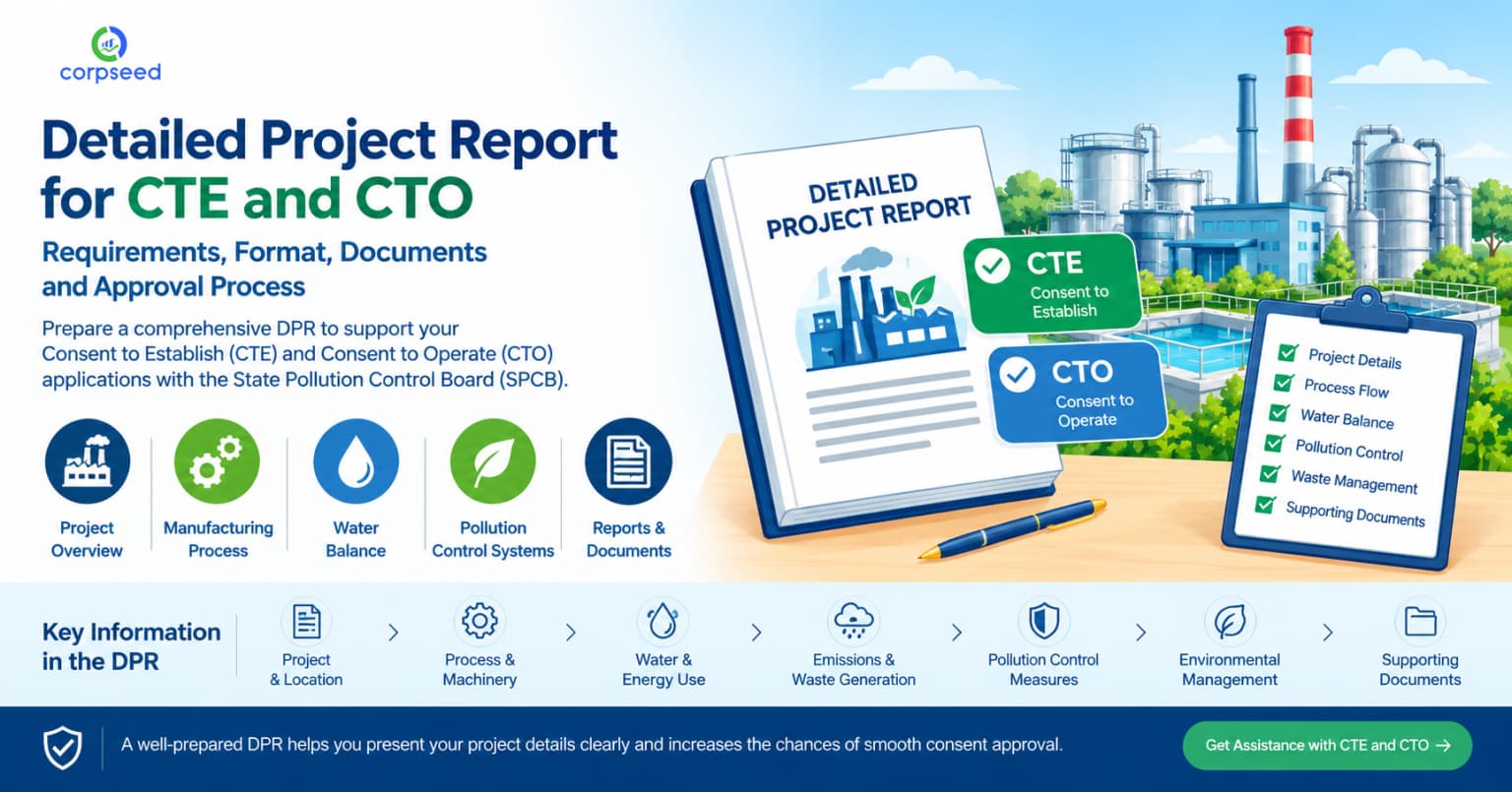
Detailed Project Report for CTE and CTO: Requirements, Format, Documents and Approval Process
2026-10-22

EPR Registration in India: Who Needs It and Which EPR Category Applies to Your Business?
2026-10-21
CPCB Guidelines on Levy of Fees Under the Solid Waste Management Rules, 2026
2026-10-07