
Central Motor Vehicles (Sixth Amendment) Rules, 2026: Key Changes in Vehicle Fitness Testing & Compliance
The Ministry of Road Transport and Highways has officially notified the Central Motor Vehicles (Sixth Amendment) Rules, 2026. The new amendment brings many important changes to vehicle fitness testing, certification, and compliance across India.
Schedule a Call Back

The Ministry of Road Transport and Highways has officially notified the Central Motor Vehicles (Sixth Amendment) Rules, 2026. The new amendment brings many important changes to vehicle fitness testing, certification, and compliance across India.
The new amendments are applicable not only to transport but also to non-transport vehicles. Some of the important changes include automatic fitness testing, mandatory geo-tagged video recording, checks for the validity of HSRP and VLT devices, and a stringent 180-day rule for unfit vehicles.
It doesn't matter whether you are operating a private vehicle or managing a commercial fleet. Knowing about these new rules beforehand will definitely come in handy for keeping your vehicle up to date and legal.
Schedule a Call Back
Key Amendments under CMV Sixth Amendment Rules 2026
The following are some key amendments under the new rules notified recently:
| Area of Change | Key Update |
| Fitness Certificate Validity | 15 years for new non-transport vehicles |
| Renewal Period | 5 years for non-transport vehicle fitness renewal |
| Testing Method | ATS is mandatory for LMVs where operational |
| Video Evidence | Minimum 10-second geo-tagged video required |
| New Inspection Items | Speed governor, VLT device, HSRP, reflective tapes, seat belts |
| ELV Classification | 180-day limit to become 'fit' or face ELV status |
| Form Change | Form 38 now applies to both transport and non-transport vehicles. |
| Re-testing Fee | Fee payment required before re-testing under Rule 81 |
This will have a huge impact on millions of vehicle owners, transport operators, and companies in India.
New Vehicle Fitness Certificate Rules for Non-Transport Vehicles
Earlier, fitness certificates were mainly required for transport vehicles. Recent amendments introduce a major shift, the rules now apply to all motor vehicles, including non-transport (private) vehicles.
Here is what vehicle owners need to know:
- New non-transport vehicles sold as fully built vehicles are deemed fit for 15 years from the date of registration.
- No fitness certificate is required at the time of registration for such vehicles.
- After 15 years, the vehicle must go through the standard fitness renewal process.
- The fitness certificate for non-transport vehicles is valid for 5 years per renewal cycle.
This is a significant shift. Private car owners will now face formal fitness testing after 15 years, something that was not previously clearly mandated.
Form 38 will now serve as the standard fitness certificate for both transport and non-transport vehicles. The earlier Form 38A has been abolished.
Mandatory Geo-Tagged Video Upload During Vehicle Fitness Test
The government has added a new digital verification step to the fitness testing process. This is one of the most operationally significant changes in the amendment.
What is required?
- At the time of fitness testing, the inspecting officer or ATS operator must:
- Capture a minimum 10-second geo-tagged video of the vehicle.
- Upload it through a mobile application developed by the Central Government.
- The video must show the vehicle from four angles: front, rear, right, and left.
- The registration number plate, chassis number, and vehicle features must be clearly visible in the video.
This requirement applies to both transport and non-transport vehicles during fitness renewal.
Why this matters?
- It prevents fraud and fake fitness certifications.
- It creates a digital audit trail for each vehicle.
- Any mismatch between the registered vehicle and the actual vehicle will be detected.
Automated Testing Stations (ATS) Rules and Requirements
As per the latest notification, Automated Testing Stations (ATS) now play a central role in vehicle fitness certification.
Key ATS provisions under the amendment
- Where an ATS registered under Rule 175 is operational in a registering authority's jurisdiction, fitness of Light Motor Vehicles (LMVs) must be done only through that ATS.
- This is effective from the date of commencement of the Sixth Amendment Rules.
- Service stations and vehicle repair businesses cannot own or operate an ATS in the same district where they conduct repair operations. This rule prevents conflicts of interest.
Slot Booking Requirements at ATS
When booking a fitness test slot at an ATS, the following information must now be provided:
- Registration number of the vehicle
- Mobile number of the registered owner or authorised signatory
- Insurance validity
- Permit validity (where applicable)
- Pollution Under Control (PUC) Certificate validity
This means your PUC, insurance, and permit must all be valid before you even book a slot.
Data Captured at ATS
- Geo-tagged photographs and at least a 10-second geo-tagged video
- The vehicle's presence at the ATS must be visible in the video
- All test data, photos, and videos must be preserved for at least 6 months for audit and assessment.
New Compliance Requirements for HSRP, VLT Devices & Seat Belts
The amendment adds five new inspection items on the fitness testing checklist. They are now mandatory inspections during the vehicle fitness renewal process.
Speed Governor (Item 21)
- Must be securely fitted and sealed.
- Electrical wiring of the speed governor must not be disconnected.
- Applies as per Rule 118.
Vehicle Location Tracking (VLT) Device (Item 22)
- The VLT device check is now both visual and functional:
- The Device must be installed in the vehicle.
- The emergency alarm button must be working.
- The VLT device must be active in the VAHAN database in accordance with AIS-140 standards.
- The e-SIM must have a validity period up to the date of the next fitness test.
- During the fitness test, the vehicle's location must be validated through the VLT device.
High Security Registration Plate, HSRP (Item 23)
- HSRP must be installed on both the front and rear of the vehicle.
- The third registration mark on the windshield must also be present.
- The plates must be securely fixed.
- Applies as per Rule 50.
Retro-Reflectors and Reflective Tapes (Item 24)
- Reflectors must be clean, undamaged, and securely fitted.
- Color must comply with Rule 104: red at the rear, white at the front.
- Reflective tapes must be securely pasted, undamaged, and correctly sized and coloured as per Rule 104.
- Markings must be clearly legible and indelible.
Safety Belts / Seat Belts (Item 25)
- All mandatory seat belts must be available and securely fitted.
- Seat belts must not be damaged.
- Seat belt anchorage must not be loose.
- If a seatbelt reminder system is available, it must be functioning.
- The G-lock of the seatbelt must be in working condition.
End-of-Life Vehicle (ELV) Rules Under CMV Amendment 2026
The amendment introduces a clear, strict rule for vehicles that fail fitness inspections.
The 180-Day Rule
- If a vehicle is declared 'unfit' and is not declared 'fit' within 180 days (excluding the day of test) from either:
- The date it was first declared 'unfit', or
- The date of expiry of its fitness certificate, whichever is later
- The vehicle will be categorised as an End-of-Life Vehicle (ELV) and flagged in the VAHAN database as 'ELV'.
Exception: The registering authority of the State or Union Territory may allow an extension beyond 180 days in exceptional circumstances.
What happens when a vehicle is marked ELV?
- The vehicle permanently loses its fitness status.
- It can no longer legally operate on public roads.
- The ELV flag in VAHAN makes the vehicle visible to enforcement agencies.
- The owner must follow the ELV policy's scrapping process.
- This rule is a major shift. Previously, vehicles could continue retesting without a hard deadline. Now, 180 days is the firm limit.
Documents and Details Required for Vehicle Fitness Testing
To avoid rejection or delays, ensure the following are ready before the vehicle's fitness test:
Documents to Carry
- Valid Registration Certificate (RC)
- Valid Insurance Certificate
- Valid Pollution Under Control (PUC) Certificate
- Permit (for commercial/transport vehicles, wherever applicable)
- Chassis number access point (clean and visible)
Vehicle Conditions to Check Before the Test
- HSRP is installed at the front and rear, including the windshield mark
- VLT device active and e-SIM valid beyond next test date
- Speed governor sealed and wiring intact
- All seat belts are functioning, with the G-lock working
- Reflective tapes and retro-reflectors are clean and undamaged
- The number plate is clean and readable from all four angles
At ATS Slot Booking
- Provide vehicle registration number
- Provide the registered owner's mobile number
- Confirm insurance, PUC, and permit validity dates
5 Common Reasons for Fitness Test Rejection
The reasons are:
- Damaged or missing HSRP, Plates not installed at the front and rear, or a windshield mark missing.
- Non-working seat belt reminder system, G-lock failure, or belt damage.
- Invalid PUC or insurance, Expired certificates result in automatic rejection at the slot booking stage itself.
- Inactive AIS-140 compliant VLT device, Device not active in the VAHAN database, or e-SIM expired.
- Damaged reflective tapes or speed governor issues, missing tapes, wrong color placement, or disconnected speed governor wiring.
Conclusion
The Central Motor Vehicles (Sixth Amendment) Rules, 2026, is an important milestone on the journey to digital transparency and accountability in vehicle fitness testing in India. The combination of geo-tagged video requirements, ATS testing of light motor vehicles, HSRP verification, validation of the VLT device, and the 180-day ELV classification rule creates an even stricter compliance regime.
Both private and fleet owners of commercial vehicles need proactivity. Verification of the HSRP, activation of the VLT, validation of the PUC, insurance, and seat belts must be completed much prior to the fitness test date.
Non-compliance will prove extremely expensive, from failing the test to the vehicle being permanently tagged as an ELV in the VAHAN system. This can be avoided through proper documentation and proactive action.
About the Author

Mahek Sancheti
Content WriterMahek Sancheti, BAJMC graduate with a deep passion for writing. As a content writer, video content creator, creative content creator, and scriptwriter, I bring stories to life through words and visuals. I honed my skills by working with a prominent news agency, where I excelled in crafting compelling narratives and engaging content. Coming from a journalism and mass communication background I have skills to craft engaging narratives that captivate audiences. With a keen interest in writing and creativity, I aim to deliver impactful and meaningful content that resonates with diverse audiences.
https://www.linkedin.com/in/mahek-sancheti-837196212
Related articles

India Bans Lithium-Ion Battery Black Mass Exports in 2026: What It Means for Businesses
2026-11-12

Fertilizer Testing in India: FCO 1985 Mandatory Quality Compliance Guide 2026
2026-09-02
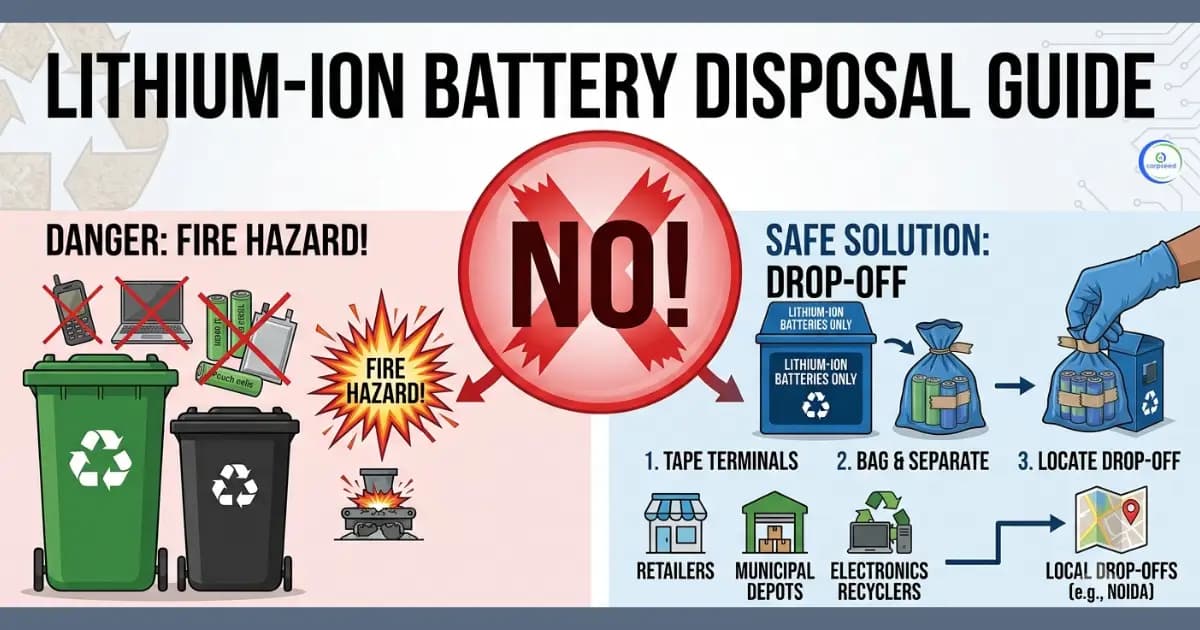
Can Lithium-Ion Batteries Go in the Recycling Bin?
2026-08-27

Can a Dead Electric Vehicle Battery Ever Be Used Again Without Melting It?
2026-08-18
India’s Tyre Recycling Opportunity: What HSN, GST and EPR Changes Could Mean
2026-08-13
CPCB Guidelines for Recycling of Waste Batteries (Lead Acid & Lithium-ion): Complete Compliance Guide 2026
2026-07-24