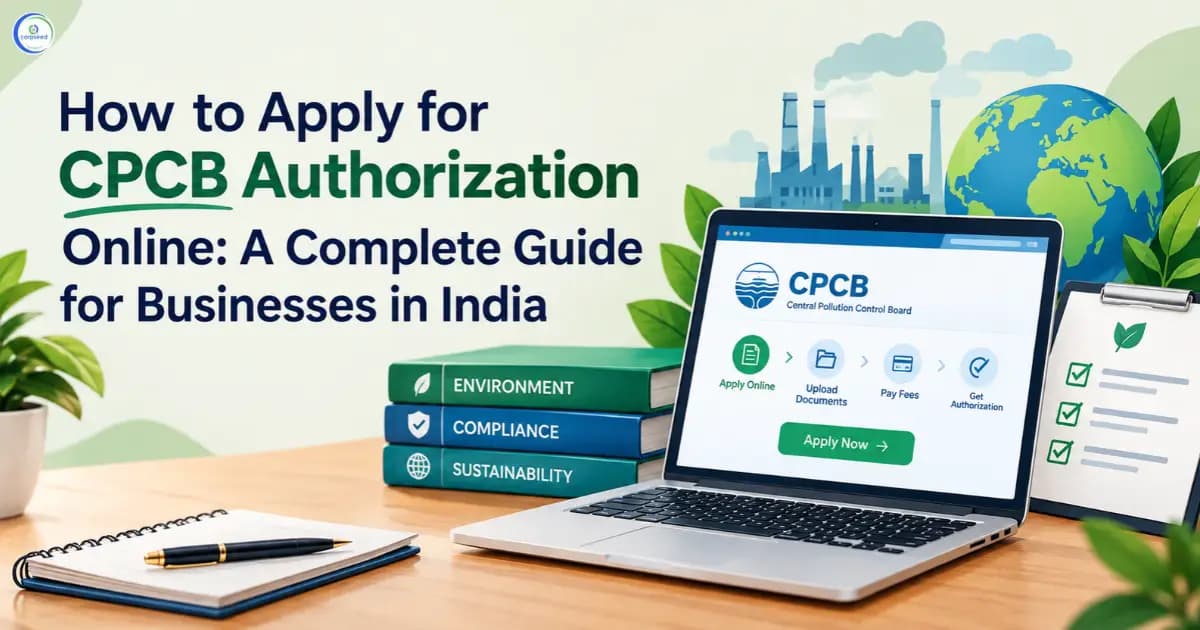
Environmental compliance is no longer optional for businesses operating in India. As regulatory pressure mounts and people grow more conscious of environmental issues, environmental responsibility has emerged as a fundamental prerequisite to sustainable operations.
Table of Contents
Environment Protection License assists in making sure that the industrial, commercial and service activities do not damage the natural resources or affect the public health. It serves as a legal protection, directing the businesses to adhere to pollution control standards, handle the waste in a responsible manner, and work within the established environmental boundaries, while maintaining regulatory credibility.
What is Environment Protection License?
An Environmental Protection License is an official permit issued by environmental bodies to control activities that can affect the air, water, land, or the ecosystem. It enables a business to operate legally while ensuring that environmental standards as provided by the relevant laws are followed. This license sets terms concerning the emissions, waste management, use of resources, and monitoring requirements depending on the nature of the activity.
Practically, the license acts as a compliance framework and not a permission. It puts the burden on the businesses to evaluate the environmental risks, implement preventive actions, and be responsible for their environmental footprint. By obtaining this license, an organization is able to show its dedication to legal operations, environmental management, and long-term sustainability.
Benefits of Environmental Protection License
Obtaining an Environmental Protection License has both short-term and long-term benefits for businesses operating in regulated sectors. In addition to compliance, it promotes responsible development, operational stability, and regulatory confidence.
- Legal Compliance and Risk Reduction: The license will guarantee compliance with environmental regulations and stipulated limits, which will greatly minimize the chances of fines, closure of operations, legal challenges, and enforcement measures by the government.
- Operational Credibility: Businesses having a valid license are more likely to be trusted by regulators, investors, and stakeholders because they show transparent processes, accountability, and a true desire to be responsible in their environmental practices.
- Environmental Risk Control: It assists companies in recognizing pollution risk at a young age, taking preventive actions, and avoiding environmental destruction, corrective liability, and compliance difficulties in the long term.
- Business Continuity Support: Having valid environmental approvals minimizes operational disruptions by inspections, audits, or compliance reviews, and therefore, businesses can operate without being interrupted by regulatory authorities.
- Market and Financial Access: Environmentally compliant organizations have an easier to accessing institutional funding, corporate contracts, and alliances as compliance continues to play a larger role in commercial and financial decision-making.
- Sustainability Alignment: The license promotes efficient use of resources, cleaner technologies, and responsible waste management, which aligns business operations with national environmental objectives and long-term sustainability priorities.
--------------Blog Contact Form-------------
Types of Environmental Protection Licenses
Environmental regulations acknowledge that various activities create different levels of environmental impact. To solve this, the authorities grant certain environmental protection licenses depending on the type of operations, pollution potential, and waste production. Every license establishes different obligations and compliance requirements.
- Consent to Establish (CTE): This is a consent that is needed before the establishment of a project or unit, and it assesses the site suitability, proposed processes, pollution control plans, and environmental protection before construction or installation commences.
- Consent to Operate (CTO): The CTO is granted before commercial operation, and this license ensures that the approved pollution control systems are installed and capable of meeting the required emission and discharge standards.
- Hazardous Waste Authorization: This authorization is applicable to units that produce or treat hazardous waste and requires safe storage, transportation, treatment, and disposal of hazardous waste to avoid environmental contamination and health hazards.
- Biomedical Waste Authorization: This is mandatory for healthcare facilities and regulates the segregation, treatment, and disposal of medical waste to guarantee safe handling and avoid infection, pollution, and public health risks.
- E-Waste Authorization: This license applies to producers, recyclers, and dismantlers of electronic waste, which guarantees the environmentally friendly recycling of e-waste and proper disposal of electronic parts.
Sectors Requiring Environmental Protection Licence
The environmental protection license is mandatory in several sectors that may affect air, water, land, and public health. These include:
- Manufacturing and Industrial Units: Factories involved in production processes that generate emissions, effluents, or industrial waste.
- Infrastructure and Construction Projects: Roads, buildings, real estate, and large infrastructure development projects that impact land use and natural resources.
- Mining and Mineral Processing: Operations that entail mining, processing, or transportation of minerals that have a major environmental impact.
- Power Generation Units: Thermal, renewable, and captive power plants that generate emissions or waste by-products.
- Chemical and Pharmaceutical Industries: Plants handling chemicals, formulations, or hazardous substances requiring strict pollution control.
- Food Processing and Agro-Based Industries: Facilities generating wastewater, organic waste, or regulated emissions.
- Healthcare Establishments: Hospitals, clinics, laboratories, and diagnostic centers managing biomedical waste.
- Waste Treatment and Recycling Facilities: Industries handling solid, hazardous, plastic, biomedical, or electronic waste treatment and recycling facilities.
Who Needs an Environmental Protection License
Any organization engaged in operations that can have an impact on the environment must acquire an Environmental Protection License. This includes:
- New Businesses or Projects: Organizations planning to start operations that may have environmental effects.
- Existing Operational Units: Businesses that are already operational and need to ensure continuous compliance with the environment.
- Expansion or Modification Projects: Units that are expanding, altering processes, or adding product lines.
- Service Providers: Entities handling regulated waste, emissions, or effluents as part of their services.
- Small, Medium, and Large Enterprises: All scales of operations under environmental regulations, regardless of any size and turnover.
Conclusion
The Environment Protection License is important in balancing the economic activity and environmental responsibility. It is not only a regulatory necessity but a systematic way of making sure that development is not achieved at the expense of environmental degradation or public health risks. By setting clear conditions and accountability measures, the license enables businesses to operate in responsible manner, while remaining compliant with the law.
For businesses, obtaining the right environmental license is a proactive step toward sustainable operations, reduced legal exposure, and long-term credibility. When properly applied, it helps in cleaner practices, regulatory assurance, and responsible expansion in an ever compliance-driven business climate.
This portion of the site is for informational purposes only. The content is not legal advice. The statements and opinions are the expression of author, not corpseed, and have not been evaluated by corpseed for accuracy, completeness, or changes in the law.
BOOK A FREE CONSULTATION
Get help from an experienced legal adviser. Schedule your consultation at a time that works for you and it's absolutely FREE.