Have you ever opened a text message that looked exactly like a real bank alert? It might say your account is locked or that you have a "special gift" waiting. All you have to do is click a tiny link. But wait, is that link safe, or is it a trap set by a scammer? Why does it feel like these fake messages are getting harder to spot? How can these bad actors send thousands of texts that look so official?
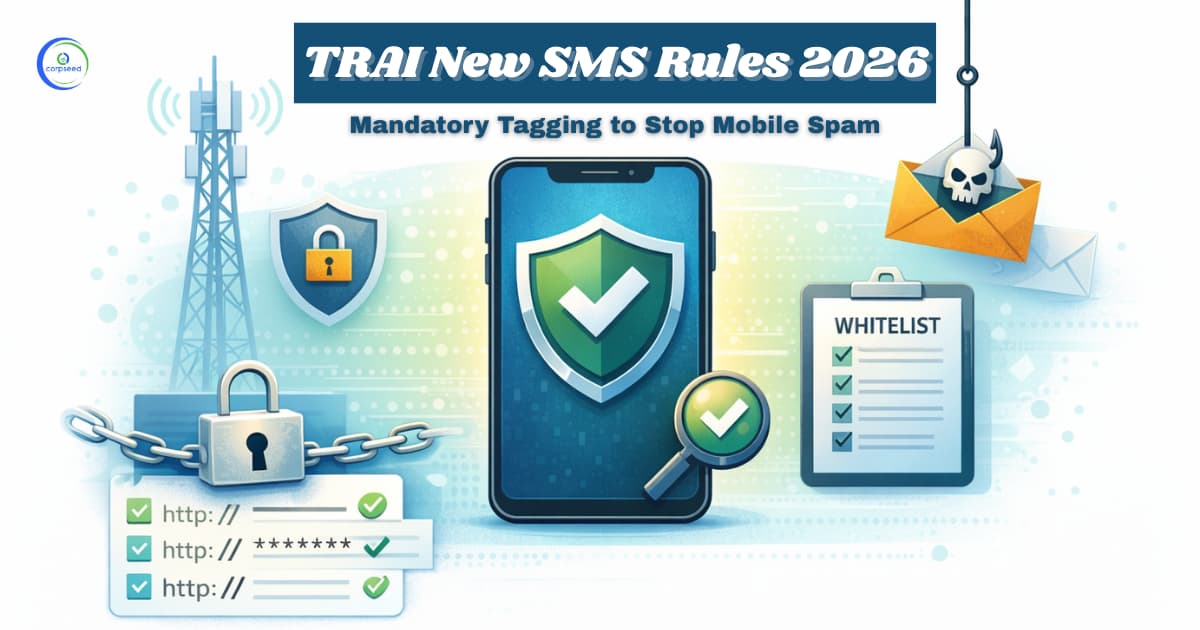
The Telecom Regulatory Authority of India (TRAI) is the "watchdog" for all phone services in India. They just released a powerful new set of rules to keep your inbox safe. By using a clever system called pre-tagging, TRAI is making it almost impossible for scammers to hide dangerous links inside normal-looking texts. This is a huge step in the fight against mobile fraud and changes how every business in India talks to its customers.
Table of Contents
--------------Blog Contact Form-------------
The New TRAI Update for 2026
TRAI issued a major Direction under Section 13 of the TRAI Act, 1997. This new update specifically targets the misuse of Headers and Content Templates. In the past, the Authority noticed that scammers were exploiting the "blank spaces" in message templates. Even though TRAI gave directions in early 2023 to limit variables, those rules were not fully followed.
Now, in 2026, the rules are much stricter. This update follows the Telecom Commercial Communications Customer Preference Regulations, 2018 (TCCCPR). Following meetings with the Cellular Operators Association of India (COAI) and major providers such as BSNL, the Authority has set a final deadline. From now on, phone companies (Access Providers) must strictly check every part of a message before it reaches you.
What is Variable Pre-Tagging?
When a company like a bank sends an SMS, it uses a Content Template. Think of it like a pre-written letter with empty spots called variables.
Example: "Dear Customer, your OTP is {#var#}. Do not share it."
The {#var#} part is the variable. In the past, scammers registered safe-looking templates but then filled those blanks with dangerous website links or fake phone numbers. Because the system didn't know what was supposed to go in the blank, the bad messages slipped through.
Under the 2026 rules, generic variables are no longer allowed. Every blank must have a "tag" that defines its purpose. If a spot is tagged for a number, the system will block the message if someone tries to put a website link there. This Content Template Registration Function (CTRF) makes every message traceable and much harder to fake.
The Official Tagging Guide for Businesses
TRAI has created a list of specific tags that every business must use when they register a message. These tags tell the system exactly what kind of data is allowed in the message.
| Tag Name | Purpose of the Tag | Rules for Validation |
| #number# | For OTPs, amounts, or digits. | Only digits allowed. No letters or symbols. |
| #url# | For standard web links. | Must match a pre-registered, whitelisted URL. |
| #urlott# | For App Store or OTT links. | Must be validated against approved APK links. |
| #cbn# | For Call-Back Numbers. | Must be a verified Mobile or Toll-Free number. |
| #email# | For email addresses. | Must follow the correct email format (regex). |
| #alphanumeric# | For IDs like Ticket or Booking IDs. | Max 40 characters, strict length validation. |
Whitelisting Safe Links and Numbers
A major part of the new rule is Whitelisting. This means companies must tell the telecom providers which websites and phone numbers they use. TRAI is making it mandatory to check variables against a "pre-whitelist" of URLs, APK links, and callback numbers.
If a company tries to send a link not on its approved list, the system will catch it. This stops "phishing," where scammers send you to fake websites that look like your bank or social media login page. By whitelisting, TRAI ensures that only trusted links can reach your phone.
The Strict Compliance Timeline
TRAI is rolling out these rules in stages to give companies time to update their systems. However, the deadlines are very firm.
- New Templates (10 Days): Any new SMS template registered 10 days after the Direction must follow the tagging rules immediately. No tag means no approval.
- Whitelisting Start (30 Days): Within 30 days, providers must begin checking variables against the safe whitelists.
- The 60-Day Grace Period: For the first 60 days, the system will work in "Logger Mode." Messages with errors will still be delivered, but the system will record the faults and warn the company.
- The Final Block: Once the 60-day period ends, any message that fails the tag check will be rejected outright. It will never reach your phone.
Phone companies must also submit progress reports to TRAI every 15 days to demonstrate compliance with the rules.
How does this protect your Mobile Privacy?
This is a huge victory for all of us in India. With this update, TRAI is removing the scammer's favourite trick: surprise.
The Access Providers will now have to identify which businesses (Principal Entities) are sending "faulty" messages. They will have to warn these businesses about the consequences of violating the rules. If a business continues to send faulty messages, it will be completely blocked. This will ensure the SMS channel is clean for critical services, including banking, government notifications, and other essential services.
Conclusion
TRAI’s new Direction for the year 2026 is a historic step towards putting an end to the era of SMS scams. By relying on Section 13 of the TRAI Act and the TCCCPR 2018 regulatory framework, the TRAI Authority is filling the loopholes that scammers exploited. The combination of pre-tagging, whitelisting, and tough scrubbing ensures that all the messages you receive are secure and transparent. The "Logger Mode" has been replaced by "Full Block," so the "blank space" scams will be a thing of the past.
This portion of the site is for informational purposes only. The content is not legal advice. The statements and opinions are the expression of author, not corpseed, and have not been evaluated by corpseed for accuracy, completeness, or changes in the law.
BOOK A FREE CONSULTATION
Get help from an experienced legal adviser. Schedule your consultation at a time that works for you and it's absolutely FREE.