
IS 18879 (Part 3): 2024 ISO 8536-3: 2009 + AMD 1: 2022 Infusion Equipment for Medical Use (Part 3) Aluminium Caps for Infusion Bottles
Infusion equipment plays an important role in medical treatment, especially in delivering fluids, drugs, and nutrients directly into the bloodstream. To ensure the safe and effective use of infusion equipment, it is important to maintain high standards for materials, design, and functionality. IS 18879 (Part 3): 2024 ISO 8536-3: 2009 + AMD 1: 2022 is an important standard that specifically focuses on aluminium caps used for infusion bottles.
Schedule a Call Back
200+ BIS ISI certification assignments since 2018
Clients include Kito India, Hirotec India, N Steels, Agromach Engineering, Annapurna Agronics Machinery, Rajco Metal Industries, Vedas Cement, Sreechem Resins, Appl GOR Plastics India, Global Colours and Chemicals, Deki Electronics, Emerson Process Management (India) (12 of 150+ served since 2018).
A few more clients we've served in this industryHide the list
- Engineering and manufacturing
- Kito India · Hirotec India · N Steels · Agromach Engineering · Annapurna Agronics Machinery · Rajco Metal Industries · Vedas Cement
- Chemicals and materials
- Sreechem Resins · Appl GOR Plastics India · Global Colours and Chemicals
- Electronics and technology
- Deki Electronics · Emerson Process Management (India) · Martelx Electronics
- More clients
- Geepas India · Tegamen Safety Products · TNY Services (India) · Zeal Medical · Trans Health Care India · Agfa Healthcare India · BDS Services · AS Building Solutions · Bhimraj Industries · Indraj Beverages and Distilleries · Knotty Ventures · T Commercialization Global · Bagichi Builder Constructions · Balaji Engineering · Deshi Udyog Corporation · Finnmark India · Nexgen Brands Distributors (I) · Om Construction Company · Provevo Design · SEI Thai Electric Conductor · Amankit Pipes Manufacturing · Essem Srinisons Systems · Ganpat Udyog · IW Software Solutions
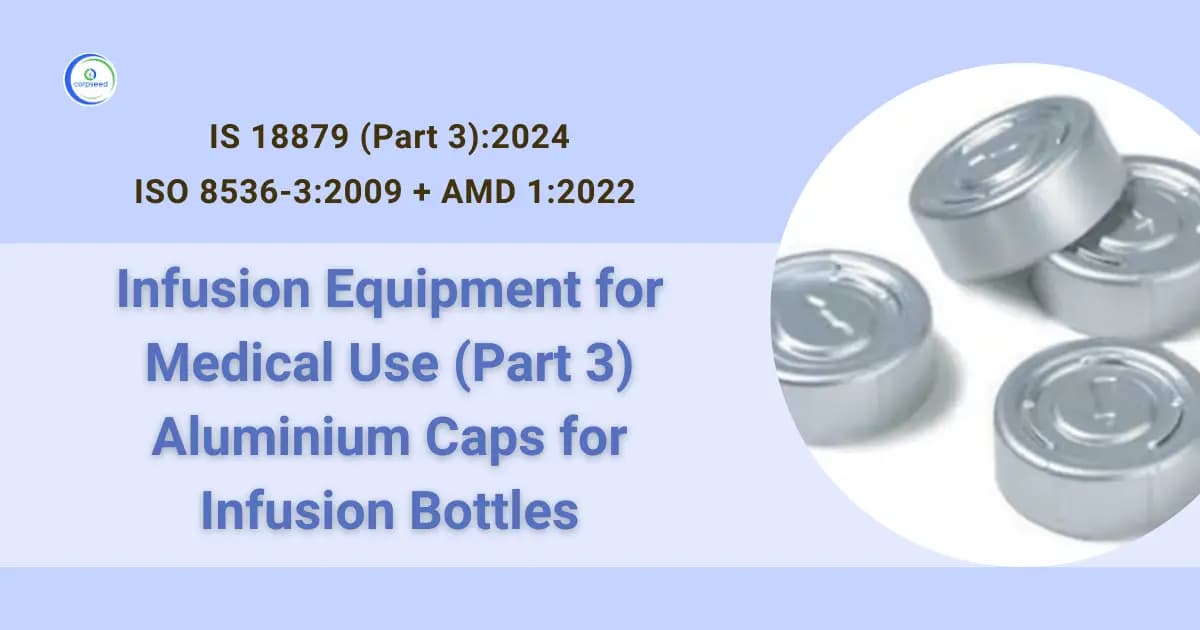
Infusion equipment plays an important role in medical treatment, especially in delivering fluids, drugs, and nutrients directly into the bloodstream. To ensure the safe and effective use of infusion equipment, it is important to maintain high standards for materials, design, and functionality. IS 18879 (Part 3): 2024 ISO 8536-3: 2009 + AMD 1: 2022 is an important standard that specifically focuses on aluminium caps used for infusion bottles. These caps, while not in direct contact with the infusion solution, are critical to the overall safety and integrity of the packaging and delivery system. This standard is critical because it directly affects the functionality and reliability of infusion sets used in hospitals, clinics, and healthcare centers.
What is IS 18879 (Part 3):2024 ISO 8536-3:2009 + AMD 1: 2022 Infusion Equipment for Medical Use Part 3 Aluminium Caps for Infusion Bottles?
IS 18879 (Part 3): 2024 Indian Standard which is identical to ISO 8536-3: 2009 ‘Infusion equipment for medical use - Part 3: Aluminium caps for infusion bottles’ issued by the International Organization for Standardization (ISO), was adopted by the Bureau of Indian Standards on the recommendation of the Hospital Equipment and Surgical Disposable Products Sectional Committee and after approval of the Medical Equipment and Hospital Planning Division Council. This standard provides clear guidelines on the design, dimensions, and performance characteristics of aluminium caps to ensure that they function effectively under normal conditions of use and handling.
Adoption of this standard helps ensure that materials used in infusion systems, including caps, are manufactured to precise specifications, reducing the risks associated with infusion errors, contamination, and leakage. The standard also highlights materials and testing methods to confirm that caps meet safety and reliability requirements. The BIS certification for products that comply with this standard ensures that aluminium caps are manufactured according to set guidelines, providing assurance to manufacturers, suppliers, and healthcare providers about the quality of the products.
Schedule a Call Back
Significance of IS 18879 (Part 3): 2024
The Bureau of Indian Standards (BIS) has been instrumental in adopting this international standard for aluminium caps used in medical infusion devices. It ensures that the manufacture, distribution and use of such ingredients within the country is standardized and regulated. BIS certification of these caps assures that the product meets strict safety and quality guidelines, thereby reducing the risk of contamination or malfunction during medical procedures. Given that these caps are used in medical settings where accuracy and safety are paramount, their standardization under IS 18879 (Part 3): 2024 helps protect both patients and healthcare providers.
For manufacturers, this standard provides a clear and consistent framework for the design and production of aluminium caps. This enables Indian manufacturers to compete globally, as compliance with international standards is a key factor in global trade. For healthcare professionals, using certified products that meet these standards ensures the safety and reliability of the medical devices they depend on, ultimately improving patient care outcomes.
Scope of IS 18879 (Part 3): 2024
The scope of IS 18879 (Part 3): 2024 specifically focuses on aluminium caps for infusion bottles. These caps are used as protective closures for infusion glass bottles, which are commonly used to deliver fluids or medications intravenously. This standard applies to aluminium caps designed for use with infusion bottles, ensuring that the caps meet strict specifications for durability, safety and ease of use. This standard does not cover other components of the infusion system, such as the infusion set or the glass bottles themselves.
It also does not consider aluminium caps in direct contact with the infusion solution as primary packaging material. The standard outlines various design, dimensional, and tolerance specifications that aluminium caps must adhere to, to ensure their suitability for use in medical applications. It also specifies performance requirements, such as the force required to remove the tab on tear-off caps, to ensure that the cap's integrity is maintained during its use.
Key Components of IS 18879 (Part 3): 2024
The IS 18879 (Part 3): 2024 standard outlines several important components that are essential for the design and performance of aluminium caps used in infusion bottles. Each component plays an integral role in ensuring the cap's effectiveness in maintaining the safety and integrity of the infusion bottle. Dimensions and tolerances for each component are carefully specified to ensure they meet the required safety standards. These ingredients include:
- Aluminium cap with centre hole (Type A): This cap features a central hole, typically used for sealing the bottle after infusion fluids have been added. It ensures a secure fit and protection against leakage.
- Protective aluminium cap with complete tear-off tab (Type F): This cap provides an extra layer of protection. The tear-off tab is designed to be easily removed before the cap is used, ensuring that the bottle is properly sealed until it is ready to be opened.
- Protective disc (Type E): In the case of a three-piece tear-off cap, a protective disc is included to further secure the cap in place. It helps to protect the contents of the bottle from contamination and leakage.
- Three-bridge tab (Type C): This type of cap uses a bridge system to secure the cap. It provides a level of resistance against pressure and is designed to be removed with a certain amount of force.
Benefits of IS 18879 (Part 3): 2024
Implementing the IS 18879 (Part 3): 2024 standard in the manufacture and use of aluminium caps for infusion bottles has numerous advantages. These benefits include:
- Safety and reliability: The main benefit of adhering to this standard is that it ensures the safety and reliability of aluminium caps used in infusion equipment. Correct dimensions, materials, and testing methods help reduce the risk of defective caps, which could result in leakage, contamination, or other safety hazards during medical procedures.
- Quality assurance: With BIS registration, manufacturers assure consumers and healthcare professionals that the aluminium caps they produce meet international and national standards. This level of certification ensures that the caps undergo rigorous testing and quality control procedures, giving end users peace of mind.
- Consistency in manufacturing: By following the detailed specifications outlined in the standard, manufacturers can ensure that every aluminium cap produced is consistent in quality and performance. This eliminates product variability, ensuring that healthcare providers can rely on caps for every clinical use.
- Compliance with regulatory standards: Adoption of this standard ensures that manufacturers comply with both national and international regulations. This is particularly important in industries such as medical device manufacturing, where compliance with safety regulations is critical to public health.
Impacts on Stakeholders
The implementation of IS 18879 (Part 3): 2024 has a significant impact on all stakeholders involved in the healthcare and medical device manufacturing industry. Affected stakeholders include:
- Manufacturers: The clear guidelines provided in the standard enable manufacturers to produce aluminium caps that are not only compliant with regulations but also of high quality. This helps build trust with healthcare providers and patients, increasing the manufacturer's reputation and marketability.
- Healthcare providers: Medical professionals who use infusion bottles can rely on the consistent quality and safety of aluminium caps that meet these standards. This ensures that the infusion process is performed without errors, reducing the risks of complications associated with faulty equipment.
- Patients: Ultimately, patients benefit from safe, reliable, and well-designed infusion equipment. By using certified products, patients can be assured that infusion bottles are properly sealed, reducing the risk of contamination or leakage during administration of medications or fluids.
Other Important Considerations
When it comes to aluminium caps for infusion bottles, other important considerations include proper storage, handling and disposal. It is very important to ensure that the caps are stored in a clean, dry environment to avoid contamination. Handling should be done carefully to avoid damaging the cap or compromising its integrity. Additionally, since aluminium caps are made of metal, they must be disposed of properly to prevent environmental damage.
Conclusion
IS 18879 (Part 3):2024 ISO 8536-3:2009 + AMD 1: 2022 is an important standard to ensure safety, reliability and consistency of aluminium caps used in infusion bottles. By adhering to this standard, manufacturers can produce high-quality products that meet national and international requirements, reducing risks such as contamination or leakage. This certification provides healthcare professionals and patients with the assurance that the devices are reliable and safe for use in medical treatment. Standardization benefits all stakeholders, from manufacturers to healthcare providers, and ultimately improves patient care outcomes. Proper storage, handling and disposal of these caps are also important issues to maintain safety and environmental responsibility.
About the Author

Mahek Sancheti
Content WriterMahek Sancheti, BAJMC graduate with a deep passion for writing. As a content writer, video content creator, creative content creator, and scriptwriter, I bring stories to life through words and visuals. I honed my skills by working with a prominent news agency, where I excelled in crafting compelling narratives and engaging content. Coming from a journalism and mass communication background I have skills to craft engaging narratives that captivate audiences. With a keen interest in writing and creativity, I aim to deliver impactful and meaningful content that resonates with diverse audiences.
https://www.linkedin.com/in/mahek-sancheti-837196212
Related articles
ISO 13485 Certification for Medical Devices in India: Complete Process, Cost, Requirements & Benefits
2026-06-05

BIS Certification 2026: Step-by-Step Process
2026-05-02

TRAI New SMS Rules 2026: Mandatory Tagging to Stop Mobile Spam
2026-02-18

Allocation and Activation of TRAI-Compliant 1600 Series Numbers
2026-12-30
Understanding the Power of ISO 9001: 2015 Certification
2025-04-22
IS 19060 (Part 1): 2024 Cryogenic Vessels - Large Transportable Vacuum-Insulated Vessels Part 1 Design, Fabrication, Inspection and Testing (ISO 20421-1: 2019, MOD)
2025-03-18