
Rubber Board Financial Assistance 2026 for Rainguarding and Spraying: Complete Guide
The Rubber Board has invited applications from Rubber Producers’ Societies (RPSs) for rubber rainguarding financial assistance for rainguarding and spraying carried out in rubber plantations during 2026.
Schedule a Call Back
70+ Rubber Board licence assignments since 2018
Clients include Tegamen Safety Products, P P Bafna Ventures, Cartel Healthcare, Hindustan Tapes, Munish Forge, Niva Rubber, Polychemora (7 of 50+ served since 2018).
See our Rubber Board licence service →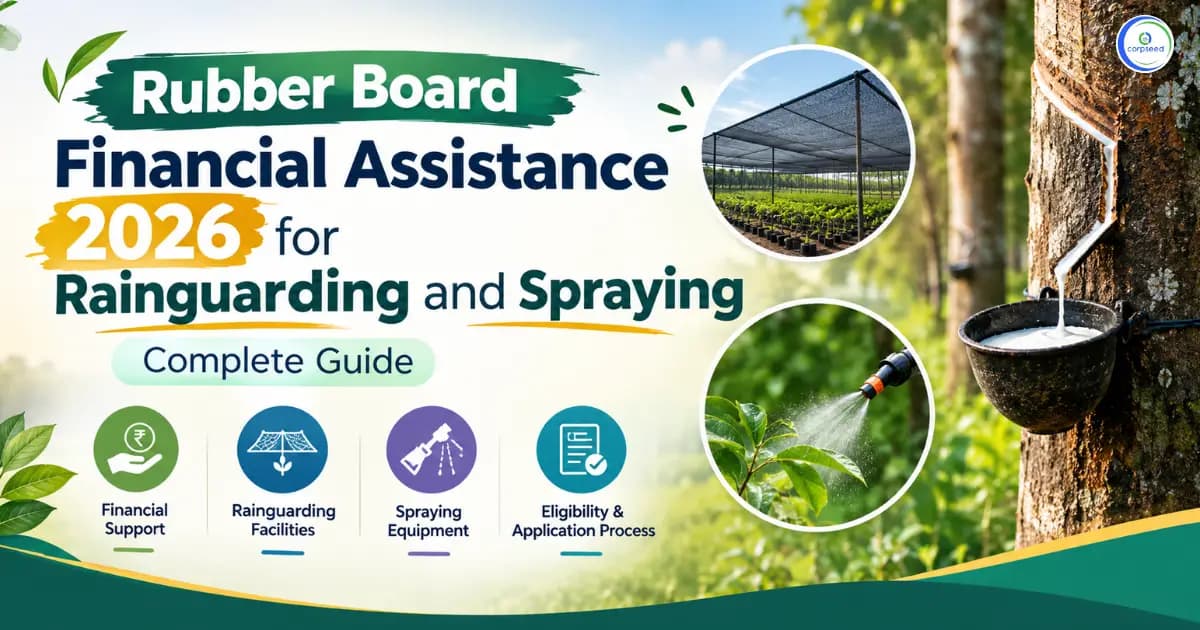
Introduction
The announced assistance is Rs 4,000 per hectare. Applications must be submitted online through the ServicePlus web portal, which can be accessed through the Rubber Board website, on or before 15 October 2026. For spraying, the assistance is applicable only to traditional and non-traditional regions. RPSs must also upload the necessary documents along with their applications.
For an RPS, the main challenge is not only knowing that assistance is available. The application also needs to be prepared correctly, the plantation area needs to be entered carefully, the applicable regional condition needs to be checked for spraying, and the required documents need to be uploaded before submission.
Rubber Board Financial Assistance for Rainguarding and Spraying 2026
The Rubber Board's announcement dated 18 September 2026 provides financial assistance for two activities carried out in rubber plantations during 2026:
- Rainguarding
- Spraying
The announced assistance rate is Rs 4,000 per hectare.
Applications are to be submitted online through ServicePlus, using the portal accessed through the Rubber Board website. The applicant must also upload the necessary documents along with the application.
One point needs particular attention. Although rainguarding and spraying are both covered by the announcement, the Rubber Board has placed a specific regional condition on spraying. Financial assistance for spraying is available only in traditional and non-traditional regions.
An RPS should therefore consider the activity separately when preparing its application. If the application relates to rainguarding, the requirements applicable to that activity should be checked. If it relates to spraying, the regional condition should also be verified before submission.
For societies handling the application internally, a document and application review before filing can help identify missing information or inconsistencies at an early stage.
What Is the Rubber Board Financial Assistance Scheme?
The programme provides Rubber Producers’ Societies financial assistance for specified activities carried out in rubber plantations during 2026, including rainguarding, and spraying. The announced rate is Rs 4,000 per hectare.
The programme is relevant to RPSs that undertake these activities and need to complete the application process through the Rubber Board's online system.
Rainguarding Assistance
Rainguarding is a plantation practice used during rainy conditions to protect the tapping area from rain. It helps reduce the direct effect of rainfall on tapping operations and is particularly relevant during periods when rain can interfere with normal tapping.
Under the current announcement, financial assistance is available for rainguarding carried out during 2026.
The announced rate is Rs 4,000 per hectare.
An RPS seeking rubber rainguarding assistance should prepare its application based on the current ServicePlus requirements and provide the necessary supporting documents.
Before submission, the society should review the plantation area and other information entered in the application against its relevant records. This becomes particularly important where information has been collected from multiple plantation or society records.
Spraying Assistance
Spraying is the second activity covered by the announcement.
The important difference is the regional restriction. The Rubber Board has stated that financial assistance for spraying is applicable only to traditional and non-traditional regions.
Therefore, an RPS should not assume that spraying assistance is available irrespective of location. The applicable regional classification should be checked before the application is submitted.
This is also relevant for people searching for rubber spraying financial assistance 2026. The current announcement provides the assistance, but its spraying component has the specific regional limitation stated above.
Who Can Apply for Rubber Board Financial Assistance?
The present announcement specifically invites Rubber Producers’ Societies. An RPS planning to apply should check the activity, plantation area, regional applicability where spraying is involved, and the documents requested through the online application before submission.
The key points are:
- Applicant: Rubber Producers’ Societies (RPSs)
- Activities: Rainguarding and spraying carried out during 2026
- Assistance: Rs 4,000 per hectare
- Spraying Condition: Applicable only to traditional and non-traditional regions
- Application Method: Online through ServicePlus
- Documents: Necessary documents must be uploaded with the application
- Last Date: 15 October 2026
RPSs that are preparing an application can also seek professional support if they need help understanding the process, checking documents or reviewing the online application before submission.
How Much Financial Assistance Is Available for Rubber Plantations?
The Rubber Board has announced assistance at the rate of Rs 4,000 for each hectare.
The basic calculation is:
Eligible area × Rs 4,000 per hectare = assistance calculated at the announced rate
For example:
| Area | Rate | Calculated Amount |
| 1 hectare | Rs 4,000/hectare | Rs 4,000 |
| 2 hectare | Rs 4,000/hectare | Rs 8,000 |
| 5 hectare | Rs 4,000/hectare | Rs 20,000 |
| 8 hectare | Rs 4,000/hectare | Rs 32,000 |
| 10 hectare | Rs 4,000/hectare | Rs 40,000 |
These examples simply apply the rate announced by the Rubber Board. They should not be treated as confirmation that the full area in every case will qualify for payment.
The final amount should be understood according to the applicable requirements and the area accepted under the programme.
Why the Plantation Area Matters
Since the assistance is calculated on a per-hectare basis, the area entered into the application is an important part of the process.
An RPS should verify the area before filing and check that the information is consistent with its supporting records.
If there is a mismatch between the area mentioned in the application and the relevant documentation, the issue should be checked before submission.
Professional application review can be useful where an RPS wants an independent check of the information before filing.
Rubber Board Subsidy 2026: Understanding the Terminology
People searching online may use the term Rubber Board subsidy 2026 when looking for financial support for rubber plantation activities.
For the current announcement, the Rubber Board describes the support as financial assistance.
The 2026 announcement covers the following:
- Rainguarding
- Spraying
- Assistance of Rs 4,000 per hectare
- Applications from Rubber Producers’ Societies
- Online applications through ServicePlus
- Spraying assistance in traditional and non-traditional regions
- Application deadline of 15 October 2026
The term rubber rainguarding subsidy 2026 is also used when searching for this assistance. For rainguarding, the Rubber Board has announced financial assistance at the rate of Rs 4,000 per hectare.
Using the correct terminology is useful because the Rubber Board may have separate schemes and programmes with different conditions. Applicants should always identify the specific announcement applicable to their activity.
Financial Assistance for Rubber Growers: What Applicants Should Know
The broader search term financial assistance for rubber growers can cover different forms of support. Under the current announcement, however, applications are specifically invited from Rubber Producers’ Societies.
Individual growers should therefore not assume that they can directly apply under this particular announcement simply because the assistance relates to rubber plantations.
For an RPS, the important points remain:
- Confirm the applicant category.
- Identify the activity.
- Check the plantation area.
- Verify the spraying region where applicable.
- Prepare the necessary documents.
- Complete the ServicePlus application.
- Review the information before submission.
- Submit the application before 15 October 2026.
Where an RPS is unsure about the application process, obtaining professional guidance before submission can help clarify the procedural steps without replacing the official Rubber Board requirements.
Rubber Plantation Subsidy 2026: What the Current Notice Says
The term rubber plantation subsidy 2026 may be used by applicants searching for financial support relating to rubber plantations.
The current announcement specifically provides financial assistance for rainguarding and spraying carried out during 2026.
The announced rate is Rs 4,000 per hectare.
The notice does not state that every rubber plantation activity is covered. Therefore, applicants should keep their application within the activities specifically mentioned in the announcement.
This is particularly important when researching different Rubber Board programmes online. Older schemes may have different conditions, rates or application procedures.
The current announcement and the relevant ServicePlus application should be used when preparing a 2026 application.
Is Financial Assistance for Spraying Available in All Regions?
No. The current announcement specifically states that assistance for spraying is applicable only to traditional and non-traditional regions.
This condition should be checked before an RPS applies for the spraying component.
An RPS interested in both rainguarding and spraying should assess the two activities separately. The fact that both activities are covered by the same announcement does not remove the regional condition applicable to spraying.
What Should an RPS Check?
Before applying for spraying assistance, the RPS should:
- Identify the plantation location.
- Check the applicable regional classification.
- Refer to the current Rubber Board instructions, where clarification is required.
- Confirm that the activity was carried out during 2026.
- Prepare the documents requested for the application.
The phrase rubber spraying subsidy 2026 may also be used in online searches, but the current Rubber Board announcement uses the term financial assistance. Applicants should rely on the actual conditions of the announcement rather than assuming that every reference to “subsidy” represents a separate programme.
How to Apply for Rubber Board Financial Assistance Online?
The Rubber Board has provided an online application route through ServicePlus.
The portal can be accessed through the Rubber Board website. An RPS should use the current service and follow the instructions displayed there when preparing its application.
Step 1: Review the Current Announcement
Start by checking the current announcement and confirming that the application relates to the 2026 rainguarding or spraying assistance.
Check the applicant category, activity, regional condition and deadline before beginning the online filing.
Step 2: Access ServicePlus
Open the relevant ServicePlus service through the Rubber Board website.
Applicants should use the current online route rather than an old application link, or previous scheme procedure.
Step 3: Check the Application Requirements
Review the information and document fields shown on the portal before entering the final details.
This gives the RPS an opportunity to prepare missing information before proceeding with submission.
Step 4: Enter the Required Information
Enter the details requested by the portal.
Particular attention should be given to the RPS details, plantation information, activity and area.
Step 5: Upload Necessary Documents
The announcement requires necessary documents to be uploaded along with the application.
The files should be clear and should support the information entered in the application.
Step 6: Review the Application
Before clicking the final submission option, review:
- Applicant details
- Activity selected
- Plantation information
- Area
- Regional applicability for spraying
- Uploaded documents
- Other mandatory fields displayed by ServicePlus
Step 7: Submit the Application
After completing the review, submit the application through ServicePlus.
The RPS should retain the application acknowledgement, reference number or other submission record provided by the system.
Documents Required for the Rubber Board Assistance Application
The current announcement states that applicants should upload necessary documents along with the application.
The circular information does not provide a complete document-by-document checklist. Applicants should therefore check the live ServicePlus application for the specific documents requested.
This is important because using a document checklist from an older Rubber Board programme can lead to confusion.
Document Review Before Submission
An RPS should check whether:
- All documents requested on the portal are available.
- Scanned copies are readable.
- Names and other details are consistent.
- Area-related information matches the application.
- The correct document has been uploaded in each field.
- File size and format requirements are followed.
- No mandatory attachment has been missed.
A pre-submission document review can save time and reduce the possibility of having to revisit the application because of a simple documentation issue.
For RPSs managing several records, professional Rubber Board application assistance can also be considered for document organisation and application review.
Rubber Board Registration Online and Financial Assistance Application
The phrase Rubber board registration may refer to registration-related services associated with the Rubber Board. However, registration and the current financial assistance application should not automatically be treated as the same process.
The present announcement specifically directs RPSs to submit the financial assistance application through ServicePlus.
Where registration is required for accessing a particular online service, applicants should follow the registration instructions shown by the current Rubber Board or ServicePlus system.
Applicants planning for Rubber Board registration online should check the registration requirements for the specific service they intend to use. A registration requirement for one service should not be assumed to apply to another service.
Where registration-related help is needed, Rubber Board registration assistance can be useful for understanding the applicable online procedure and completing the relevant steps.
Important Points to Check Before Submitting the Application
A final review can make the application process more straightforward and help an RPS identify gaps before submission.
- Confirm the Applicant: The application should be submitted by the relevant Rubber Producers’ Society.
- Confirm the Activity: Check that the application relates to rainguarding or spraying carried out during 2026.
- Review the Plantation Area: Make sure the area entered in the application matches the relevant records.
- Check the Spraying Region: For spraying assistance, check whether the plantation falls within the applicable traditional or non-traditional region.
- Check the Documents: Review the current ServicePlus requirements and upload the necessary documents.
- Check All Entries: Look for spelling errors, incorrect figures, incomplete fields and inconsistencies between the application and supporting documents.
- Review Before Submission: Go through the application, and check the details, and documents before submitting it.
- Retain the Application Record: Keep a copy of the submitted application, and note the acknowledgement or reference number, if one is issued.
- Watch the Deadline: The final date stated in the announcement is 15 October 2026.
How Can Professional Application Support Help RPSs?
For an RPS, getting the application filed is only one part of the process. Understanding what information is required, preparing the supporting documents and checking the final submission can take additional time.
Professional support can be useful when an RPS:
- Is applying for the first time.
- Needs help understanding the online process.
- Has several documents to organise.
- Wants the application checked before submission.
- Needs assistance with ServicePlus.
- Is unsure about registration-related requirements.
- Wants help reviewing plantation and area information.
- Needs guidance on the procedural aspects of Rubber Board requirements.
The aim should be to make the application process easier to manage while keeping every submission based on the current official requirements.
Rubber Board Application Assistance
RPSs that want support with the 2026 application can seek assistance with the practical steps involved in preparing and submitting it.
Rubber Board application assistance may include:
- Reviewing the applicable application requirements
- Understanding the ServicePlus process
- Organising supporting information
- Reviewing documents
- Checking plantation and area details
- Identifying missing information
- Reviewing the completed application
- Supporting the online submission process
Where the relevant Rubber Board service involves registration, Rubber Board registration assistance can also help with the applicable registration process.
A professional review is particularly useful before final submission because small issues in documents or application entries can be easier to correct before the application is filed.
Rubber Board Compliance Consultant Support
An organisation that regularly deals with Rubber Board requirements may also consult a Rubber Board compliance consultant for guidance on applicable procedures and documentation.
Such support can be useful where an RPS needs help understanding the requirements applicable to its application, organising the filing process or reviewing documentation.
The support should be based on the current 2026 announcement and the instructions shown through the official application system.
How Can We Help with Application Support?
Corpseed can assist RPSs that need practical support with their Rubber Board application process.
The focus can be on understanding the applicable requirements, reviewing documents, preparing application information and supporting the online filing process.
Instead of relying on an old checklist or trying to interpret every online requirement independently, an RPS can have its application reviewed before submission.
This type of support is particularly relevant when the applicant wants to reduce avoidable errors and complete the application within the announced timeline.
Application Deadline for Rubber Board Financial Assistance 2026
The last date for submitting applications under the current announcement is 15, October 2026.
The announcement was issued on 18 September 2026, giving applicants a defined period to prepare and submit their applications.
RPSs should use this time to:
- Review the announcement.
- Identify the activity for which assistance is being sought.
- Check the plantation area.
- Verify the regional condition if applying for spraying assistance.
- Prepare the necessary documents.
- Complete the ServicePlus application.
- Review the application.
- Submit it before 15, October 2026.
- Retain the application reference, or acknowledgement, if provided.
Starting the process early gives an RPS more time to address missing information, or document issues before the deadline.
Where to Get More Information About the Rubber Board Scheme
The Rubber Board has stated that further details can be obtained from its website, Regional Offices, Field Stations and Call Centre.
The Rubber Board Call Centre number provided in the announcement is:
0481-2576622
For the latest application requirements, applicants should refer to the current Rubber Board website and the relevant ServicePlus service.
The live online instructions should be given priority when checking document requirements, application fields or procedural steps.
If an RPS has a specific question about its application, it can also contact the relevant Rubber Board Regional Office or Field Station for clarification.
Conclusion
The Rubber Board's 18 September 2026 announcement provides financial assistance for rainguarding and spraying carried out in rubber plantations during 2026. Applications are invited from Rubber Producers’ Societies, with the announced assistance rate of Rs 4,000 per hectare.
The application must be submitted online through the ServicePlus web portal, accessed through the Rubber Board website, and necessary documents must be uploaded with the application. For spraying, the assistance is applicable only to traditional and non-traditional regions.
With the deadline of 15 October 2026, RPSs should begin preparing their information and documents in advance. Checking the plantation area, reviewing the applicable regional condition and verifying the final application can help avoid preventable issues.
For societies that need help with the online process, document preparation or application review, professional support can make the filing process easier to manage. Corpseed can assist with the practical application requirements and ServicePlus process while keeping the submission aligned with the current Rubber Board instructions.
Need Help with Your Rubber Board Financial Assistance Application?
Preparing a Rubber Board application or unsure about the ServicePlus process? Consult Corpseed experts for application preparation, document review and online filing support. Get a free consultation today.
About the Author

Parul Bohral
Legal Content WriterParul Bohral, a BALLB graduate and experienced legal researcher and content writer with expertise in various legal areas, including corporate law and intellectual property. I have gained valuable experience in esteemed legal environments, where I have strengthened my research skills, allowing me to approach legal writing with precision and depth.
As a legal content writer, I am committed to delivering work that not only informs but also engages readers. By staying informed about the latest trends in content marketing and regulatory developments, I ensure that my writing remains sophisticated and meets industry standards. My dedication to thorough research enables me to craft content that is both insightful and impactful.
Related articles
Pesticide & Agrochemical Testing in India: CIB&RC Mandatory Compliance Guide 2026
2026-09-04
How to Get a Pest Control License in India: Step-by-Step Guide
2025-12-24
Insecticides (First Amendment) Rules, 2025: Enhancing Safety, Labeling, and Consumer Protection in Agriculture
2025-06-06
What is Hydroponic farming and how does it work
2023-11-24
Procedure To Apply For Rubber Board License | Rubber Board Licence | Rubber Board Dealer License
2021-08-08
Agriculture License in India or Agriculture Licence For Agricultural Products
2021-08-07