India’s digital education landscape is steadily expanding. E-textbooks are being integrated into structured learning systems in schools, universities, skill centres, and training platforms. To bring uniformity and reliability to this shift, the Bureau of Indian Standards (BIS) introduced IS 19450:2025.
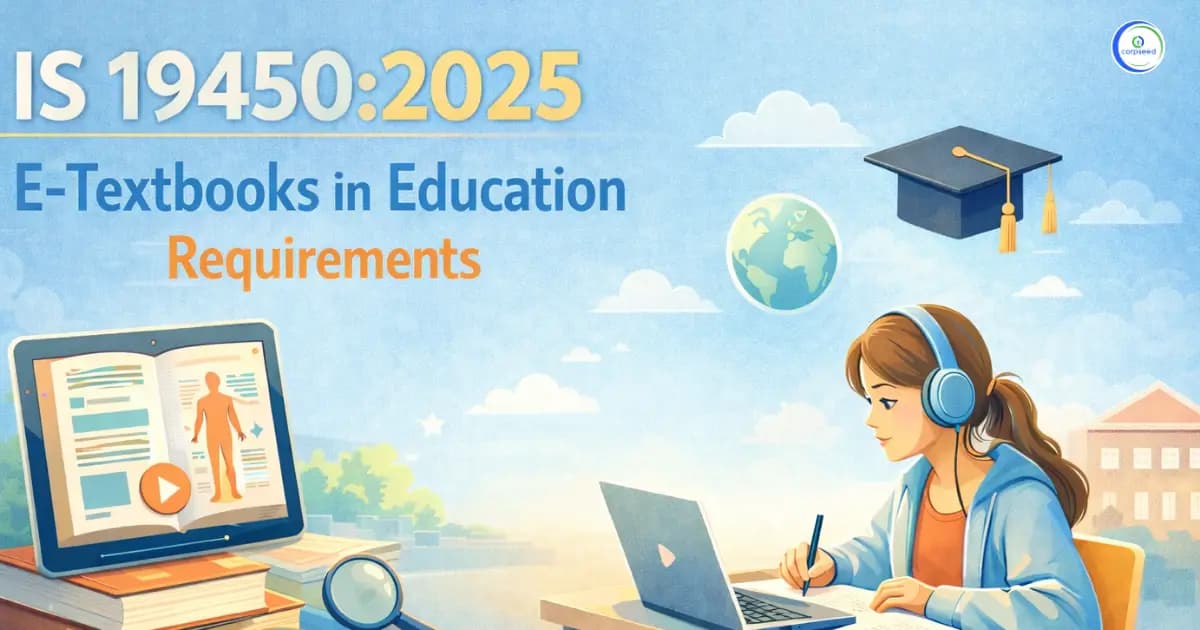
Table of Contents
This Indian Standard defines the learning, functional, and technical requirements for e-textbooks used in education and training. Its objective is simple but important: to make sure that digital textbooks available in India are of similar quality, accessibility, and interoperability standards.
Scope and Applicability
IS 19450:2025 applies to both formal and informal learning environments. It covers all stages of education, including:
- Pre-school education
- School education
- Higher education
- Vocational and skill-based training
- Lifelong learning and professional development
The standard applies to learners, educators, publishers, content developers, educational institutions, and e-learning service providers. Regardless of whether the content is provided using classroom-based digital systems, learning management systems (LMS), or standalone e-textbook readers, the requirements stay applicable.
By defining a broad scope, BIS ensures alignment of digital learning tools across platforms and institutions nationwide.
Learning and Functional Requirements
IS 19450:2025 is mainly aimed at promoting successful learning. An e-textbook is not just a digital copy of a printed book. It is a structured digital learning resource that is designed to enhance comprehension, engagement, and academic performance.
- Structured Content: The standard demands a logical and clear content structure. The chapters, sections, and sub-sections should be properly structured, and it should be easy to navigate. The learners are expected to be able to search, bookmark, and navigate content with ease.
- Interactive Features: The standard supports the following functionalities to help increase learner engagement:
- Embedded assessments and quizzes
- Multimedia integration (audio, video, animations)
- Interactive diagrams and illustrations
- Hyperlinks and cross-references
These characteristics make e-textbooks interactive learning resources instead of reading materials.
- Learning Support Tools: There are provisions for annotations, highlighting, note-taking, and content reorganization. The tools enable learners to personalize their learning process and enhance retention.
--------------Blog Contact Form-------------
Technical Requirements and Interoperability
One of the objectives of IS 19450:2025 is interoperability. E-textbooks are expected to be compatible with various platforms, devices, and e-textbook readers.
- Supported File Formats and Packaging: The standard defines specifications of supported digital file formats and structured packaging. This guarantees compatibility and makes distribution, updates, and content management easy.
- Metadata Standards: Appropriate metadata is required to enhance discoverability and integration in learning management systems. Metadata facilitates classification of subjects, curriculum mapping, and effective indexing of digital material.
- Online and Offline Access: The standard supports online and offline access due to the connectivity issues in different areas. Students should be able to download and access content without the need to be constantly connected to the internet.
Accessibility and Inclusive Design
The key aspects of IS 19450:2025 are accessibility and inclusive design. The standard provides that all learners, including those with disabilities, can use e-textbooks by requiring necessary accessibility features that enhance equal access, participation, and meaningful learning outcomes across digital education platforms.
Key provisions include:
- Compatibility with screen readers
- Adjustable font sizes
- Text-to-speech support
- Captioned multimedia content
- High-contrast display options
Accessibility is treated as a mandatory design consideration, not an optional feature.
Also Read: IS 19418: 2025 Campus Facilities and Accommodation Services for Educational Organizations
Privacy, Digital Rights Management, and Copyright
Digital education depends on trust. When students use e-textbooks, their information is manipulated, and useful intellectual property is distributed online. IS 19450:2025 acknowledges this fact and establishes clear requirements that would guarantee the protection of privacy, digital rights management, and the due recognition of copyright. The standard includes provisions for:
- Data Privacy: E-textbook systems should provide measures to secure the information of learners and to maintain responsible data handling procedures.
- Digital Rights Management (DRM): Publishers and content creators need to have systems that allow them to safeguard their intellectual property while enabling legitimate academic use.
- Copyright Acknowledgement: Adequate copyright recognition and attribution of content is required to ensure transparency and adherence.
Conclusion
IS 19450:2025 is a significant move towards enhancing the digital education system in India. It introduces a lot of structure and reliability to digital content used in institutions by clearly defining learning, functional, and technical requirements for e-textbooks. The standard provides interoperability between platforms, accessibility and inclusive design, and responsible practices via privacy protections and digital rights management. It promotes interactive, well-organized, and learner-focused digital textbooks that improve the interaction and performance. It also offers a clear guideline for compliance and quality assurance to educators, publishers, and service providers. This standard eventually helps to have a uniform, stable, and future-ready digital education environment for the nation.
This portion of the site is for informational purposes only. The content is not legal advice. The statements and opinions are the expression of author, not corpseed, and have not been evaluated by corpseed for accuracy, completeness, or changes in the law.
BOOK A FREE CONSULTATION
Get help from an experienced legal adviser. Schedule your consultation at a time that works for you and it's absolutely FREE.