
IS 19059: 2024 Continuously Transposed Conductor (CTC) Copper Winding Wires
The IS 19059:2024 standard provides a comprehensive framework for making copper conductors, specifying everything from material composition and dimensions to testing procedures and packaging.
Schedule a Call Back
200+ BIS ISI certification assignments since 2018
Clients include Kito India, Hirotec India, N Steels, Agromach Engineering, Annapurna Agronics Machinery, Rajco Metal Industries, Vedas Cement, Sreechem Resins, Appl GOR Plastics India, Global Colours and Chemicals, Deki Electronics, Emerson Process Management (India) (12 of 150+ served since 2018).
A few more clients we've served in this industryHide the list
- Engineering and manufacturing
- Kito India · Hirotec India · N Steels · Agromach Engineering · Annapurna Agronics Machinery · Rajco Metal Industries · Vedas Cement
- Chemicals and materials
- Sreechem Resins · Appl GOR Plastics India · Global Colours and Chemicals
- Electronics and technology
- Deki Electronics · Emerson Process Management (India) · Martelx Electronics
- More clients
- Geepas India · Tegamen Safety Products · TNY Services (India) · Zeal Medical · Trans Health Care India · Agfa Healthcare India · BDS Services · AS Building Solutions · Bhimraj Industries · Indraj Beverages and Distilleries · Knotty Ventures · T Commercialization Global · Bagichi Builder Constructions · Balaji Engineering · Deshi Udyog Corporation · Finnmark India · Nexgen Brands Distributors (I) · Om Construction Company · Provevo Design · SEI Thai Electric Conductor · Amankit Pipes Manufacturing · Essem Srinisons Systems · Ganpat Udyog · IW Software Solutions
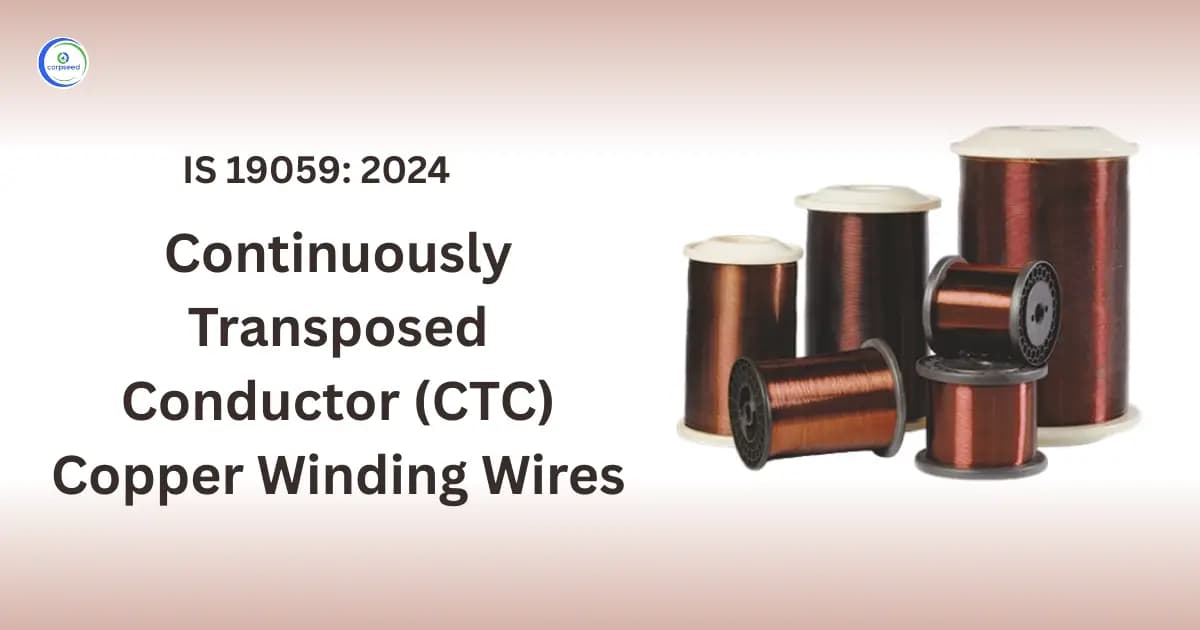
Transformer technology plays an important role in the generation, distribution, and utilization of electrical energy. An important element of transformer technology is the material used in the windings, as it directly affects the performance, efficiency, and durability of the transformer. Among the various types of winding conductors, continuously transposed conductor (CTC) copper winding wires are becoming increasingly popular due to their ability to reduce energy losses. The IS 19059:2024 standard provides a comprehensive framework for making copper conductors, specifying everything from material composition and dimensions to testing procedures and packaging.
Schedule a Call Back
What is IS 19059: 2024 Continuously Transposed Conductor (CTC) Copper Winding Wires?
The Indian Standard IS 19059:2024 focuses on the specifications, tests and requirements for continuously transferred conductor (CTC) copper winding wires used in transformer windings and similar electrical applications. This Indian standard was adopted by the Bureau of Indian Standards, after which the draft was finalized by Winding Wire Sectional Committee and the Electro technical Division Council.
This standard ensures that the wire meets the required technical parameters, such as insulation thickness, copper specifications and electrical and mechanical properties to improve efficiency and reduce energy losses. Continuously transferred conductor (CTC) Copper twisted wire is a special type of conductor used primarily in power transformers, consisting of several thin, rectangular copper strips stacked together along their length and twisted together.
Significance of IS 19059:2024
The IS 19059:2024 marks an important step forward in the standardization and improvement of CTC copper windings used in transformers. A key aspect of the standard is the emphasis on reducing energy losses. In power transformers, it is necessary to minimize eddy current losses to improve efficiency. Continuous transfer of wires in CTC conductors minimizes such losses by ensuring uniform distribution of current.
This aspect of the standard is particularly important in an era where energy conservation and sustainability are becoming increasingly important. The importance of BIS registration and certification cannot be underestimated. These ensure that manufacturers adhere to national standards, giving end-users assurance about product quality and performance.
Scope of IS 19059:2024
The scope of IS 19059:2024 focuses on the requirements for continuous transposed conductor (CTC) copper windings used in electrical transformers and reactors. This standard defines the type, composition, technical specifications, acceptance rules, and packaging for these winding wires. CTC copper windings are used for their ability to reduce energy losses, improve heat dissipation, and increase mechanical strength, making them ideal for power and locomotive transformers. These conductors are made by twisting several thin, rectangular copper wires together and insulating them with a material such as paper or tape. The standard specifies the composition of the copper, the thickness of the insulation layer, and how the wires should be bundled and wound.
Key Components of IS 19059:2024
The important components of IS 19059:2024 cover several technical aspects of CTC copper winding wires. These components are designed to ensure that the cables perform efficiently and meet the required standards of the industry.
- Copper specifications: Copper is the main material used in CTC conductors, and IS 19059:2024 dictates that the copper used should meet IS 191 and IS 12444 standards. These standards ensure that the copper used is of high electrical conductivity, reducing energy losses and increasing the efficiency of transformers.
- Enamelled rectangular wire: CTC conductors are usually made of enamelled rectangular copper wires, coated with an insulating material such as polyvinyl acetal (PVA) or polyester-amide. The standard specifies specific dimensions for rectangular wires, ensuring that they fit perfectly into the transposed structure.
- Insulation thickness and material: The standard specifies the thickness of the enamel insulation, including any bonding layer. This insulation ensures that the wires can withstand high temperatures and maintain their performance.
- Transposition pitch: Transposition pitch refers to the axial length between two adjacent transpositions. It plays an important part in reducing eddy current losses by ensuring that the conductor strands are arranged in a way that improves their electrical properties.
- Bonding layer: Bonding layer is applied to the conductor to bond the copper wires together and improve mechanical strength. The standard specifies the material used for this layer, which usually includes epoxy or similar coatings.
- Lapping and insulation layers: Lapping refers to the process of wrapping an insulating material around a conductor. The standard specifies different lapping methods, such as half overlapping, interlocked lapping, and open lapping, each with specific tolerances and overlaps. These methods make sure that the insulation is applied evenly, prevent defects and confirm consistency.
- Test methods: An important aspect of the standard is the specification of various test methods to evaluate the quality of the driver. These tests measure parameters such as electrical resistance, bond strength, ductility, breakdown voltage, and resistance to solvent.
- Packaging and labelling: Proper packaging ensures that finished drivers are safe during transportation and storage. The wires are coiled and wrapped in a moisture-proof material, and the necessary information is written on the packaging, such as the manufacturer’s description, product dimensions, and customer reference number.
Benefits of IS 19059:2024 CTC Copper Winding Wires
The benefits of using IS 19059:2024 compliant CTC copper winding wires extend too many stakeholders in the transformer and electrical industry.
- Reduction of energy losses: One of the most important advantages of CTC conductors is the reduction of eddy current losses. The continuous repositioning of the wires ensures that the current is evenly distributed across the conductor, preventing hot spots and reducing energy waste. This improvement in efficiency results in lower operating costs for the transformer and increased performance.
- Improved transformer efficiency: Since CTC conductors reduce energy losses and improve current distribution, transformers made of these wires are more efficient. This reduces power consumption and improves reliability, which benefits end users.
- Improved mechanical strength: The bonding layer and insulation techniques used in CTC conductors increase their mechanical strength, making them more durable and resistant to operational stresses. This ensures that the transformer windings can withstand vibrations, temperature fluctuations and other environmental factors.
- BIS certification and confidence: The requirement for BIS certification ensures that manufacturers adhere to stringent quality standards, which increases consumer confidence. BIS certification guarantees that conductors meet national standards and perform as expected, providing a benchmark for quality.
- Compact design: CTC copper winding wires are space efficient, allowing for more compact transformer designs. This can lead to a reduction in the size and weight of transformers, which is particularly beneficial for applications where space is limited.
Impact of IS 19059:2024 on Stakeholders
The implementation of IS 19059:2024 has far-reaching implications for various stakeholders involved in the manufacture, distribution and use of CTC copper winding wires:
- Manufacturers: For manufacturers, adherence to IS 19059:2024 standard make sure that the products meet the quality requirements and are market ready. The standard also facilitates easy regulatory approvals and BIS certification, which is important for establishing credibility in the industry.
- Users and engineers: For users, including transformer manufacturers and electrical engineers, the standard provides clarity on technical specifications and ensures that CTC copper winding wires meet performance expectations. This leads to better transformer design and improved electrical system performance.
- Regulatory bodies: Regulatory bodies, including the BIS, benefit from the standardized guidelines outlined in IS 19059:2024. This ensures that only the highest quality products are produced and sold in the market, maintaining industry standards and ensuring safety and efficiency.
- End-users: End-users, including power utilities and industries that rely on transformers, benefit from increased efficiency, lower energy consumption, and more durable transformers. This reduces operating costs and provides a more reliable power supply.
Also Read: IS 18967: 2024 ISO 5365: 2024 Dentistry - Designation System for Tooth Developmental Stages
Conclusion
IS 19059:2024 Continuously transferred conductors (CTCs) is standard transformers play an important role in improving the quality, efficiency and reliability of copper windings. With its widespread guidelines on manufacturing, testing and packaging, it ensures that these conductors perform optimally, reducing energy losses and increasing transformer efficiency. For manufacturers, BIS certification provides a mark of quality that meets national standards, increases consumer confidence and drives long-term business success. Adopting this standard benefits all stakeholders, from manufacturers to end users, ensuring high-performance drivers that drive advances in electrical technology and sustainability.
About the Author

Mahek Sancheti
Content WriterMahek Sancheti, BAJMC graduate with a deep passion for writing. As a content writer, video content creator, creative content creator, and scriptwriter, I bring stories to life through words and visuals. I honed my skills by working with a prominent news agency, where I excelled in crafting compelling narratives and engaging content. Coming from a journalism and mass communication background I have skills to craft engaging narratives that captivate audiences. With a keen interest in writing and creativity, I aim to deliver impactful and meaningful content that resonates with diverse audiences.
https://www.linkedin.com/in/mahek-sancheti-837196212
Related articles
BIS Hallmarking Centre Setup Scheme 2026-31
2026-11-02
BIS Establishes Three New Indian Standards for Electric Cycles, Therapeutic Footwear and EV Charging Cables
2026-10-19
Importing Toys into India: BIS Toy Certification & Battery EPR Requirements
2026-10-19
BIS Notifies 33 New and Revised Indian Standards in October 2026: Compliance Guide
2026-10-16
BIS Certification for Electrical Appliances: 2026 Guide for Manufacturers & Importers
2026-10-14
BIS Solar PV Module Model Number Update: New MNRE SOP and Registration Requirements
2026-10-09