
Plastic EPR Credits: How Producers, Importers & Brand Owners Buy and Use EPR Certificates
Plastic EPR credits help Producers, Importers and Brand Owners meet their plastic packaging waste obligations by purchasing eligible plastic EPR certificates.
Schedule a Call Back
4,500+ plastic EPR assignments since 2018
Clients include Brenntag Ingredients India, Reliant Packaging Films, Taurus Packaging, Axel Polymers, Lintec India, Kumar Organic Products, HP Adhesives, DDP Speciality Products India, Colt Technology Services India, Emerson Automation Solutions Intelligent Platforms, Intangles Lab, Shindengen India (12 of 1,700+ served since 2018).
A few more clients we've served in this industryHide the list
- Chemicals and materials
- Brenntag Ingredients India · Reliant Packaging Films · Taurus Packaging · Axel Polymers · Lintec India · Kumar Organic Products · HP Adhesives · DDP Speciality Products India
- Electronics and technology
- Colt Technology Services India · Emerson Automation Solutions Intelligent Platforms · Intangles Lab · Shindengen India · Emerson Process Management (India) · Lianchuang Electronic India · Emerson Process Management Chennai · Hayakawa Electronics India
- Pharma and healthcare
- Beryl Drugs · Ascent Meditech · Eli Lilly and Company (India) · Q-Line Biotech · Rajasthan Antibiotics · G D Pharmaceuticals · Micro Labs · ADK Health Care
- Engineering and manufacturing
- Essel Mining & Industries · Juki India · Hilti India · Bundy India · Hilti Manufacturing India · KJS Cement (I) · Mangalam Cement · Birla Precision Technologies
- Food and consumer goods
- Onest · AVT McCormick Ingredients · Akay Natural Ingredients · Ugraya Foods and Feeds · AVT Natural Products · Jalpaiguri Food Industries · Param Dairy · Esther Parfumerie
- Logistics and trade
- Siddhartha Logistics · Siddhartha Logistics Ftwz · Honda Trading Corporation India · Dksh India · MOL Logistics (India) · Fibs Logistics India · Zenexpress Logistics
- More clients
- Nilkamal
Introduction
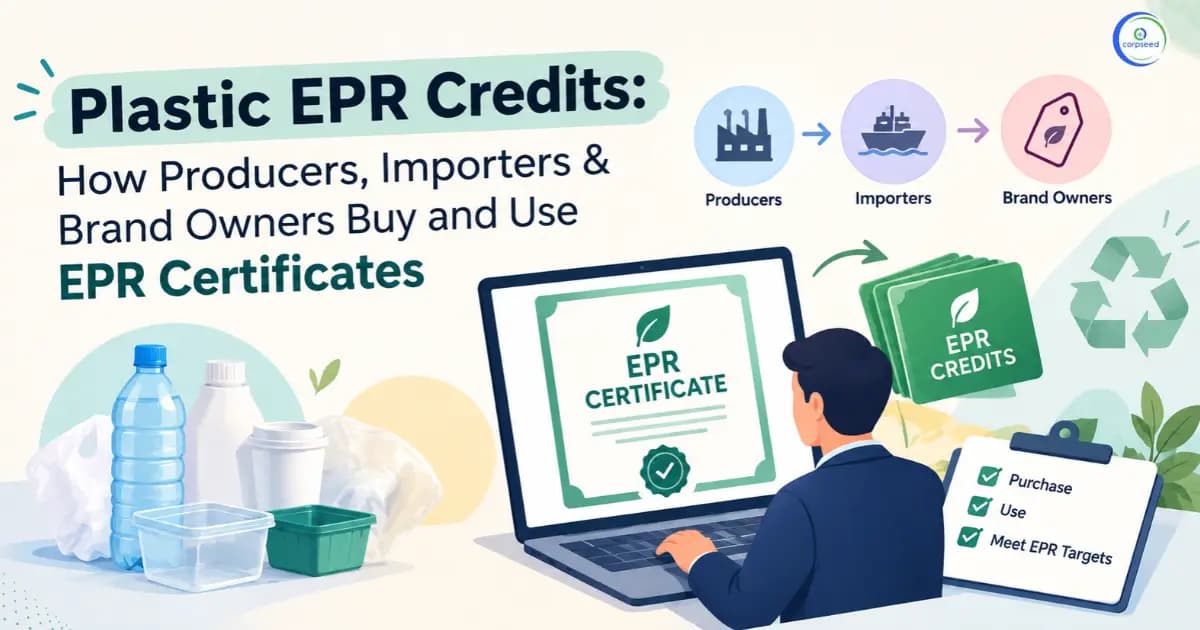
To buy and use these certificates, businesses must calculate their outstanding EPR targets, identify the certificate they need, check its validity and complete the transaction through the authorised process. The certificates can then be used to meet the relevant EPR obligations, subject to the applicable rules and portal requirements.
What Are Plastic EPR Credits?
Plastic EPR credits is a commonly used term for certificates associated with meeting specified obligations under the Plastic Waste Management Rules, 2016, as amended. Extended Producer Responsibility requires covered businesses to fulfil the obligations applicable to the plastic packaging they produce, import or use.
The rules and guidelines provide a framework for registered entities to meet eligible obligations through certificates generated by authorised plastic waste processors and other permitted mechanisms. The certificate must relate to the relevant obligation and packaging category.
CPCB's published Guidelines for Functioning of the Extended Producer Responsibility Electronic Trading and Settlement Platform (EPRETP) describe a trading framework for eligible entities. Under these guidelines, certificate generation and transfer take place through the centralised EPR portal, while price discovery and trading are handled through the EPRETP.
A certificate is not a general-purpose environmental credit. Its use depends on the applicable rules, the certificate category and the obligation being fulfilled.
Who Needs to Buy Plastic EPR Certificates in India?
Producers, Importers and Brand Owners (PIBOs) covered by the Plastic Waste Management Rules may need to fulfil applicable EPR obligations. Whether a business needs to buy certificates depends on its activities, packaging category, outstanding targets and the compliance it has already completed.
- Producers: Covered producers may need to meet obligations associated with the plastic packaging they manufacture or produce.
- Importers: Importers may have obligations relating to plastic packaging brought into India. The recycled-content requirements and certificate mechanism introduced by the 2026 amendment are particularly relevant to importers.
- Brand Owners: Brand owners covered by the rules may need to fulfil obligations relating to the plastic packaging used for their products.
Not every business that handles plastic needs to purchase certificates. A business should first establish whether the rules apply to it, identify its obligations and calculate any outstanding requirement. Certificate purchasing is one possible compliance route where the rules permit it, not an automatic requirement for every business.
What Types of Plastic EPR Certificates Are Available?
The CPCB trading guidelines identify different certificate categories for plastic packaging. Buyers need to distinguish them because they do not all fulfil the same purpose.
- Recycling certificates: These relate to the recycling of plastic packaging waste. The relevant packaging category and the eligibility of the generating processor must match the applicable requirements.
- End-of-life disposal certificates: These relate to permitted end-of-life disposal routes recognised under the rules and guidelines. The 2026 amendment clarifies the definition of end-of-life disposal, including specified energy-recovery routes, co-processing and road construction in accordance with applicable guidelines.
- Recycled-content certificates: These relate to the use of recycled plastic content in packaging. The 2026 amendment also sets out a specific mechanism for importers to meet their recycled-content obligation through certificates of equivalent quantity from eligible PIBOs that have exceeded their own recycled-content obligation. The amendment states that CPCB will develop the exchange mechanism on the centralised online portal.
- Reuse certificates: CPCB's published trading guidelines identify reuse certificates for specified Category I rigid plastic packaging. Their use is subject to the applicable conditions.
The correct certificate depends on the obligation being fulfilled. Buyers should check the current rules and portal instructions rather than assume that a certificate for recycling can also meet a recycled-content or reuse requirement.
How Producers, Importers and Brand Owners Buy and Use EPR Certificates
This is the central process for businesses looking to purchase plastic EPR certificates and apply them to their obligations. The precise transaction process must follow the current CPCB instructions and the authorised trading arrangement.
Step 1: Identify the applicable EPR obligation
Review the plastic packaging associated with your business and establish which obligations apply. The requirements may differ depending on whether the business is a producer, importer or brand owner.
Keep each applicable EPR obligation separate rather than combining all plastic packaging requirements into one quantity. Different certificate categories serve different purposes, so identify the certificate required for each obligation.
Step 2: Calculate the outstanding quantity
Calculate the quantity due for the reporting period using your packaging data, and applicable EPR target. Deduct the quantity already covered to avoid double-counting.
Do not buy certificates based only on an estimate of total plastic consumption. The required quantity must be based on the applicable rules and the business's actual records.
Step 3: Select the certificate that matches the obligation
Identify the certificate type and packaging category permitted for the requirement. Check whether the intended use is recycling, end-of-life disposal, recycled content or reuse.
For example, a business trying to meet a recycled-content requirement should not automatically purchase recycling certificates. It must follow the specific mechanism permitted for that obligation.
Step 4: Check the seller and certificate details
CPCB's published trading framework provides for trading between eligible registered entities, and relevant waste processors. Before proceeding, verify the seller's registration and eligibility, the certificate category, the quantity available and the relevant certificate records.
Do not rely only on a seller's claim that certificates are available. Ask for verifiable information through the applicable official system.
Step 5: Check the current authorised trading process
CPCB's EPRETP guidelines describe how price discovery, trading and financial settlement are intended to operate, with certificate generation and transfer handled through the centralised EPR portal.
Before making a payment, check the latest CPCB instructions to confirm which platform, and process are currently permitted for the transaction. Do not rely on older portal procedures, or third-party instructions without verifying that they are still valid.
Step 6: Complete the purchase and confirm the transfer
Complete the purchase as per the authorised process. Check your account to confirm that the certificate has been transferred, and the recorded quantity matches the purchase.
A payment receipt or private invoice alone does not establish that the certificate has been validly transferred.
Step 7: Use the certificate for the permitted obligation
Once the transfer is confirmed, account for the certificate according to the applicable rules, and portal instructions. Check how it must be reflected in the relevant compliance records, or return.
How to Verify Plastic EPR Certificates Before Buying
Before buying plastic EPR certificates, check whether the certificate is valid, matches your EPR requirement and can be transferred through the authorised process. CPCB audits have found irregularities among registered plastic waste processors, so check the seller, and certificate details before making a payment.
Check the following before you buy:
- Seller eligibility: Verify the registration and permitted activity of the certificate-generating entity.
- Certificate category: Confirm that the certificate matches the obligation, and packaging category.
- Quantity and validity: Check the available quantity, and validity information through the applicable official system.
- Transaction process: Confirm that the purchase follows the current authorised trading, and settlement procedure.
- Transfer records: After the transaction, verify that the certificate is credited to the correct account.
If the details do not match, pause the transaction and seek clarification through the relevant official channel. Do not treat a screenshot, or verbal assurance as a substitute for verifiable records.
What Is the Price of Plastic EPR Credits in India?
There is no single price that applies to every plastic EPR certificate. The price can vary according to certificate category, demand and supply, quantity and applicable transaction charges.
CPCB's published EPRETP guidelines provide for price discovery based on market demand and supply. However, those guidelines are not a live price list and do not establish the current price of every certificate category.
To assess the cost compare certificates that can fulfil the same obligation. Check the current price information available through the authorised trading platform, where operational and account for applicable charges.
Do not rely on online quotes that list a fixed price per tonne without stating the certificate category, quote date and source. Prices may differ, and an outdated or unverified quote may not match the price offered for your purchase.
How Do You Calculate the Number of EPR Certificates You Need?
The quantity required depends on the applicable obligation, packaging category, reporting period and compliance already completed. There is no single calculation that applies to every business and certificate type.
Use the following approach:
- Compile the relevant plastic packaging data for the reporting period.
- Identify the applicable packaging category and business role.
- Check the target or requirement prescribed by the current rules.
- Work out the required quantity under the applicable EPR target.
- Deduct the quantity already covered through compliance.
- Calculate how much of the obligation remains.
- Check the figures against your portal records, and the latest CPCB instructions.
For example, a business reporting 10 tonnes of plastic packaging cannot determine its certificate requirement from that figure alone. The applicable target, packaging category, obligation type and existing compliance must first be established.
Keep your packaging records and calculation for reference. If you plan to claim an exemption, carry forward an obligation or use the recycled-content certificate mechanism, check the applicable rules to confirm that your business qualifies.
What Changed Under the Plastic Waste Management Amendment Rules, 2026?
The Ministry of Environment, Forest and Climate Change notified the Plastic Waste Management (Amendment) Rules 2026, through G.S.R. 237(E), dated 31 March 2026. The changes relevant to certificate buyers include provisions concerning end-of-life disposal, and recycled-plastic-content obligations.
The amendment sets the following recycled-plastic-content targets:
| Plastic packaging category | 2025-26 | 2026-27 | 2027-28 | 2028-29 onwards |
| Category I | 30% | 40% | 50% | 60% |
| Category II | 10% | 10% | 20% | 20% |
| Category III | 5% | 5% | 10% | 10% |
These are recycled-content targets, not recycling-certificate purchase percentages. The applicable calculation depends on the business's role and packaging category.
The amendment also provides a certificate mechanism for importers to fulfil their recycled-content obligation through certificates of equivalent quantity from eligible PIBOs that have used recycled content beyond their own obligation. It states that CPCB will develop an exchange mechanism on the centralised online portal. Buyers should check the current official instructions before relying on this mechanism for a transaction.
The amendment provides for exemptions where recycled plastic is not permitted under specified laws, regulations, rules, mandatory Indian Standards or other statutory requirements covered by the provision. Businesses claiming an exemption must submit the relevant basis in their annual return.
What Mistakes Should Businesses Avoid When Buying EPR Certificates?
Businesses can reduce purchase risks by avoiding these common mistakes:
- Buying a certificate without checking whether it matches the obligation.
- Relying on an unverified seller or processor.
- Paying before confirming the authorised transaction process.
- Accepting an undated price quotation as a current market rate.
- Assuming that payment alone confirms a valid certificate transfer.
- Treating a certificate purchase as proof that every reporting requirement has been completed.
- Applying an exemption or special mechanism without checking its legal conditions.
The key is to maintain a clear link between the original obligation, the certificate purchased, the confirmed transfer and the final compliance record.
How Can a Plastic EPR Compliance Consultant Help?
A plastic EPR compliance consultant can help businesses review their packaging data, identify applicable obligations and understand the certificate purchase process. Depending on the business's needs, support may include:
- Reviewing EPR registration and packaging information.
- Calculating applicable obligations and outstanding quantities.
- Identifying the certificate category relevant to the requirement.
- Reviewing seller eligibility and certificate details.
- Helping interpret official portal instructions and transaction records.
- Organising supporting documents for compliance reporting.
A plastic EPR registration consultant may also help a business understand its registration requirements and prepare the relevant information. However, a consultant cannot make an unsuitable certificate valid or guarantee regulatory acceptance. Businesses should still verify transactions through the applicable official system.
If you are unsure which certificate your business needs or how to calculate the outstanding quantity, consult a specialist who can review your actual packaging data and the rules that apply to your business.
Conclusion
Producers, importers and brand owners should begin by identifying their applicable plastic packaging EPR obligations and calculating the outstanding requirement. They can then select the permitted certificate, verify the seller and transaction, complete the purchase through the current authorised process and account for the certificate in the relevant compliance records.
The certificate type matters. Recycling, end-of-life disposal, recycled-content and reuse certificates are not automatically interchangeable. Check the current CPCB instructions, and applicable rules before purchasing, particularly where the 2026 amendment introduces a specific certificate mechanism.
About the Author

Parul Bohral
Legal Content WriterParul Bohral, a BALLB graduate and experienced legal researcher and content writer with expertise in various legal areas, including corporate law and intellectual property. I have gained valuable experience in esteemed legal environments, where I have strengthened my research skills, allowing me to approach legal writing with precision and depth.
As a legal content writer, I am committed to delivering work that not only informs but also engages readers. By staying informed about the latest trends in content marketing and regulatory developments, I ensure that my writing remains sophisticated and meets industry standards. My dedication to thorough research enables me to craft content that is both insightful and impactful.
Related articles
Delhi Air Pollution Control Measures 2026: CAQM's New Directions, Air Quality Monitoring and Business Compliance
2026-10-16
MoEFCC Draft Notification 2026: Changes Proposed in CRZ and ICRZ Regulations
2026-05-30
How to Obtain a CGWA Compliance Report
2025-10-15
2025 Guidelines for Cage and Pen Culture in Marine Aquaculture
2025-07-29

Deepor Beel Wildlife Sanctuary: A Strategic Conservation Initiative
2025-07-05

Lippa-Asrang Wildlife Sanctuary: A Crucial Haven for Himalayan Wildlife and Conservation Efforts
2025-06-18