
India-New Zealand FTA: How Startups Can Export Duty-Free and Enter the New Zealand Market
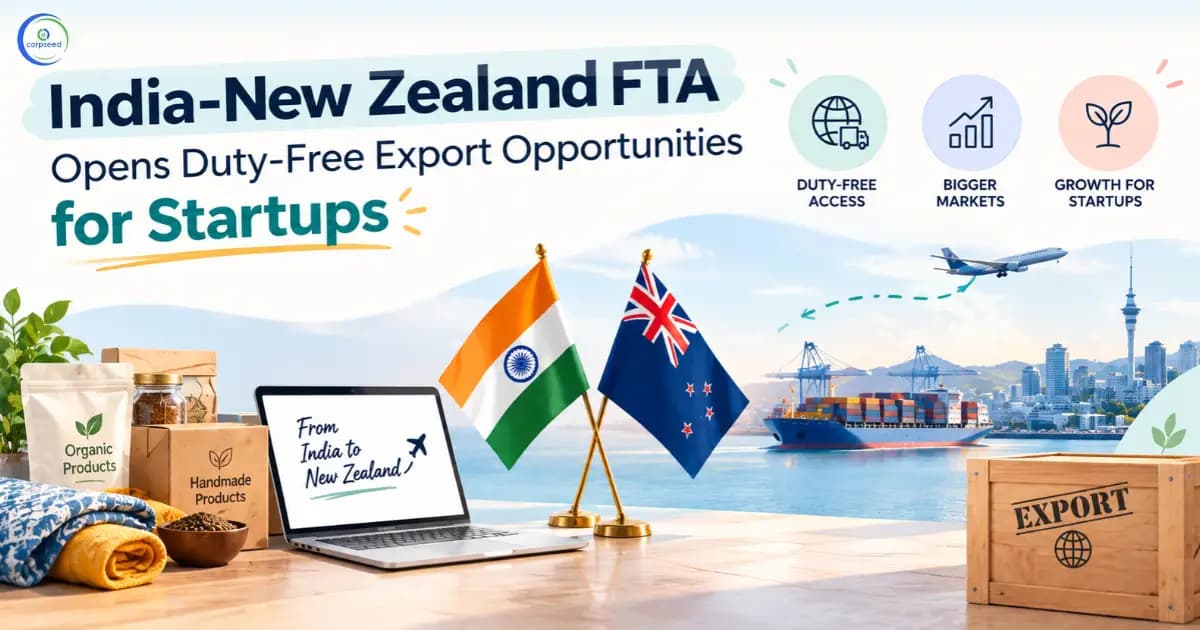
The India-New Zealand FTA came into force on 20 October 2026, allowing Indian goods to enter New Zealand duty-free under the agreement.
Schedule a Call Back
Introduction
If you're planning to take your business overseas, this agreement could help you reduce tariff costs. Before shipping your products, you'll need to check whether they qualify for duty-free access, what requirements apply and how much you could save.
Which Products Can Indian Startups Export to New Zealand?
New Zealand has removed customs duties on all tariff lines covering Indian exports under the India-New Zealand FTA, subject to the agreement's applicable requirements. Products highlighted by the Indian government include textiles, footwear, leather goods, engineering products, pharmaceuticals, chemicals, gems and jewellery, and processed foods.
Some sectors worth exploring include:
- Textiles and Apparel: Clothing, home textiles and other fabric-based products for retailers, wholesalers and online businesses. Exporters should check the applicable export policy, labelling requirements and product-specific restrictions. An Import Export Code (IEC) is generally required for commercial exports, subject to applicable exemptions.
- Footwear and Leather Goods: Shoes, bags, belts and related products where Indian manufacturers can compete on quality, design or price. Businesses should check the export policy for the specific product and confirm any applicable material, labelling or destination-market requirements. Where a product requires a specific export authorisation, businesses can review the applicable DGFT export licence requirements.
- Engineering Goods: Industrial components, machinery and manufactured products for business buyers and distributors. Depending on the product, exporters may need to check technical standards, testing requirements and export authorisations. Where applicable, businesses can explore BIS certification services and review DGFT export licence requirements before shipping.
- Gems and Jewellery: Finished jewellery and other eligible products for retailers and specialist buyers. Exporters should check the applicable DGFT export policy, customs documentation and any product-specific requirements. Businesses exporting eligible products can also review the Import Export Code (IEC) registration process.
- Processed Foods: Packaged foods, spices and other food products, subject to New Zealand's import, food safety and biosecurity requirements. Indian food businesses generally need the appropriate FSSAI licence or registration. Depending on the product, exporters may also need APEDA registration, phytosanitary documentation, health certificates or other export documents. New Zealand's rules vary by food type, ingredients and processing method, so these should be checked before shipping.
- Pharmaceuticals and Chemicals: Eligible products for which exporters must check the relevant regulatory, safety and product approval requirements. Pharmaceutical exports may involve product-specific approvals, manufacturing licences and documentation under applicable Indian drug regulations. Businesses can review relevant CDSCO registration and licensing services where applicable. Chemical exports may be subject to restrictions, hazardous-goods requirements or other controls depending on the substance and its intended use. Exporters should also check the applicable DGFT export licence requirements.
These are potential areas for market research, not guaranteed sales opportunities. The best product for a startup will depend on its manufacturing capacity, target customers and ability to meet New Zealand's requirements.
Before exporting, businesses should confirm whether an IEC registration is required, check whether any product-specific authorisation, or registration applies and verify New Zealand's import conditions. They should also confirm that the goods meet the FTA's rules of origin before claiming preferential tariff treatment.
How Much Can a Startup Save Under the India-New Zealand FTA?
The savings depend on the customs duty normally charged on a product and the rate available under the FTA. New Zealand tariff concessions could lower the duty on eligible Indian goods. To work out the actual saving, exporters need to check the product's HS code and confirm that it qualifies for preferential tariff treatment.
This is an illustration, not a confirmed rate for any specific product. Exporters must verify the correct HS code, applicable tariff schedule and origin requirements before calculating actual savings.
Zero customs duty also does not mean zero export costs. Freight, insurance, handling, distribution, applicable taxes and product compliance expenses may still affect the final selling price.
For a startup, the useful calculation is the landed cost: the total cost of getting the product to the intended customer or distribution point.
How Can Startups Check Whether Their Products Qualify?
Finding buyers is only one part of entering the New Zealand market. Startups also need to check local demand, compare competing products and work out whether they can sell at a price that covers their costs. This research can help them decide which buyers to approach and how much stock they can realistically supply.
Identify the correct HS code
The Harmonized System (HS) code classifies products for international trade. The correct classification helps determine the tariff treatment, and the product-specific requirements that apply.
A broad product description may not be enough. Businesses should confirm the appropriate classification for the actual product.
Check the applicable tariff
Use the official tariff schedule, or relevant tariff-finding resources to verify the treatment applicable to the product under the India-New Zealand FTA.
Do not assume that a tariff benefit for one product automatically applies to another product in the same industry.
Review the rules of origin
Rules of origin determine whether a product qualifies for preferential treatment under the agreement. A product does not automatically qualify simply because it is shipped from India.
Startups using imported raw materials or components should examine the applicable product-specific origin rules and maintain supporting production and supplier records.
New Zealand Customs provides official information on the agreement, rules of origin and the documents used to support preferential tariff claims.
What Does a Startup Need Before Exporting to New Zealand?
The export procedure from India involves more than receiving an order from an overseas buyer. Startups need to check export formalities, confirm the product's tariff and origin eligibility, prepare the required documents and review New Zealand's import rules. The checklist below covers the main requirements to review before shipment.
| Requirement | What to Check |
| Business readiness | Confirm that the business can manufacture, supply and deliver the required quantity. |
| Importer Exporter Code (IEC) | Check whether an IEC is required for the proposed export activity under current DGFT rules. |
| Product classification | Confirm the correct HS code and applicable tariff treatment. |
| Rules of origin | Check eligibility and maintain supporting records. |
| Origin documentation | Certificate of origin and other origin documents |
| Product compliance | Review relevant safety, testing, labelling, registration and certification requirements. |
| Export documents | Export documents required for New Zealand |
| Cost and payment terms | Calculate landed cost, freight, insurance, payment risks and distributor margins. |
Some products may require specific export authorisations or licences under DGFT rules. Check the applicable requirements before shipping, and seek guidance on the DGFT export licence if your product or export activity requires one.
How Can Startups Find Buyers in New Zealand?
Duty-free access can improve a product's price position, but it does not create demand on its own. Startups need a clear plan for reaching potential customers.
- Research the Market First: Find out which similar products are already being sold in New Zealand, how much they cost and who is buying them. This will help you decide whether your product can compete on price, quality or design.
- Identify the Right Buyer: Depending on the product, potential buyers may include importers, wholesalers, retailers, distributors or business customers. A suitable partner can help the startup understand local expectations and distribution costs.
- Prepare an Export-ready Offer: Overseas buyers need clear product specifications, pricing, minimum order quantities, delivery timelines and quality information. Regulated products may also require evidence of relevant approvals or testing.
- Calculate a Workable Price: Include manufacturing, packaging, freight, insurance, handling and distribution expenses. Use verified tariff information to calculate the potential duty saving.
- Test Demand before Scaling: Where commercially practical, begin with a manageable order and use the results to assess repeat demand, delivery performance and profitability.
The aim is not simply to ship a product to New Zealand. It is to determine whether the business can supply it reliably and earn a sustainable margin.
What Challenges Should Startups Consider?
Even with zero-duty access, a startup may face several practical challenges.
- Competition: Other international suppliers may offer similar products, so price alone may not be enough to win buyers.
- Shipping Costs: Freight and delivery expenses can reduce the benefit of lower customs tariffs.
- Product Requirements: The applicable import rules, testing, labelling and approvals must be checked before shipment.
- Origin Verification: Unsupported claims can result in a preferential tariff being denied.
- Payment Terms: Agree on when and how the buyer will pay, and check the risks of currency fluctuations and delayed payments.
- Production Capacity: Check whether you can fulfil the export order on time without affecting existing orders or product quality.
Addressing these issues before committing to an order helps businesses avoid treating a tariff benefit as a guarantee of profitability.
How Can Corpseed Help with Export Compliance?
Startups entering a new export market may need help identifying the registrations, documentation and product compliance requirements relevant to their business.
Corpseed can assist with relevant registration and compliance services within its service scope. Depending on the product and business requirements, this may include guidance on applicable business registrations, product certifications and regulatory formalities.
Before proceeding, businesses should identify the exact product, confirm the applicable export requirements and verify the FTA's tariff and origin provisions.
Planning to export to New Zealand? Consult Corpseed's experts to discuss the registrations and compliance requirements relevant to your business.
Conclusion
The India-New Zealand FTA gives Indian startups a new opportunity to evaluate the New Zealand market. Duty-free access can improve the price position of eligible products, but commercial success depends on choosing the right market, verifying origin requirements, meeting product regulations and calculating the full cost of exporting.
Startups that validate demand and prepare their export documentation before approaching buyers will be better placed to assess whether the agreement offers a viable route to international growth.
About the Author

Parul Bohral
Legal Content WriterParul Bohral, a BALLB graduate and experienced legal researcher and content writer with expertise in various legal areas, including corporate law and intellectual property. I have gained valuable experience in esteemed legal environments, where I have strengthened my research skills, allowing me to approach legal writing with precision and depth.
As a legal content writer, I am committed to delivering work that not only informs but also engages readers. By staying informed about the latest trends in content marketing and regulatory developments, I ensure that my writing remains sophisticated and meets industry standards. My dedication to thorough research enables me to craft content that is both insightful and impactful.
Related articles
Exporting Handicrafts & Home Decor from India: IEC, DGFT & Customs Compliance Checklist
2026-10-14
How to Export Through Amazon Global & Etsy From India: Complete MSME Export Guide
2026-10-13
Textile & Apparel Testing in India: Export Compliance with REACH, Azo Dyes & ISO 105 Guide 2026
2026-09-02
India's Engineering Exports Rise 21% to 11.48 Billion US Dollar: Opportunities for Indian Exporters
2026-07-31
Export Compliance Checklist for Oman: A Complete Guide for Indian Exporters to Avoid Customs Delays
2026-07-29
Certificate of Origin Requirements under India-Oman CEPA: Complete Export Guide
2026-07-24