Union Budget 2026–27 sets a clear path for India’s future growth. This budget focuses on jobs, skills, industries, and fair development. It follows three strong goals called kartavyas. These goals support economic growth, people’s capacity, and equal progress for all regions. The budget gives special attention to manufacturing, MSMEs, infrastructure, energy, education, healthcare, and digital growth.
It also introduces large-scale tax reforms to ease the lives of citizens and people in business. Simplified rules, improved support, and faster systems are at the heart of this budget. The Union Budget 2026 has a vision to make India strong, stable, and ready to meet the world's challenges. Each sector gets a clear boost for development.
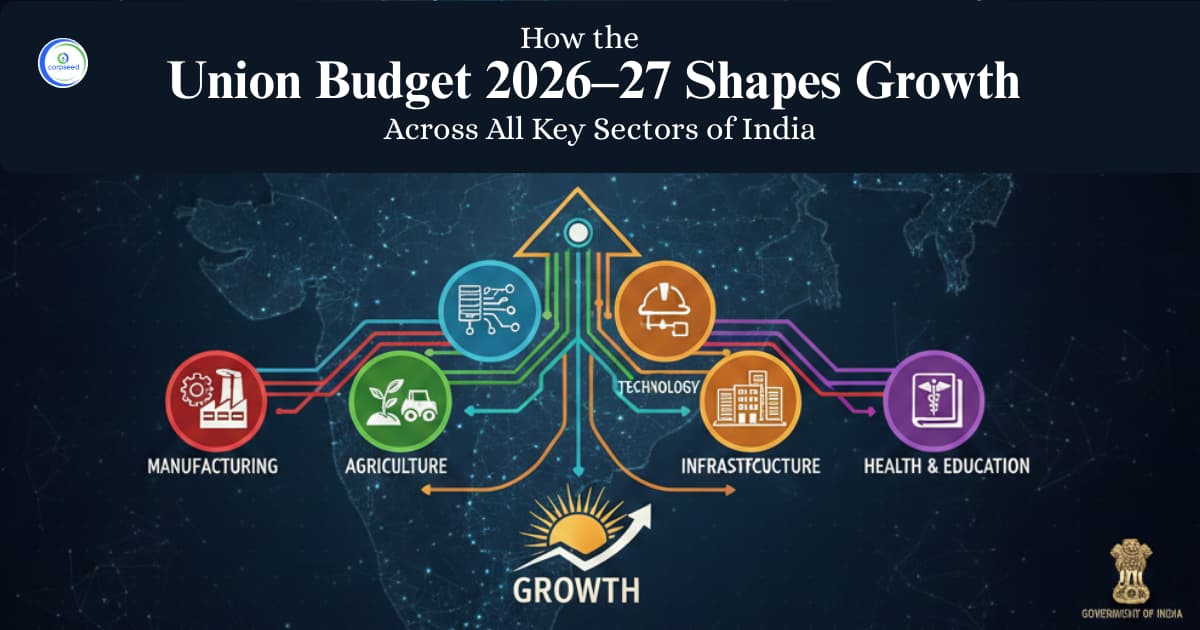
Table of Contents
- How does the Union Budget 2026 Supports Overall Economic Growth?
- Sector-Wise Impact of Union Budget 2026–27
- Manufacturing
- MSMEs and Startups
- Infrastructure
- Energy and Power
- Agriculture and Rural Economy
- Education and Skill Development
- Healthcare and Wellness
- Financial Services
- Trade and Commerce
- Digital and Technology
- Transport and Logistics
- Urban Development
- Environment and Climate Action
- Tourism and Culture
- Social Welfare and Inclusion
- Taxation and Public Finance
- Conclusion
--------------Blog Contact Form-------------
How does the Union Budget 2026 Supports Overall Economic Growth?
The Union Budget 2026 emphasizes a stable and safe economic expansion. The government increases its capital outlay to generate employment and produce assets. The public capital outlay increases to 12.2 lakh crore rupees. This increase promotes the construction, transport, and industrial sectors.
The fiscal discipline is maintained. The fiscal deficit decreases to 4.3 percent of the GDP. This is an important step that enhances investor confidence. Market borrowings are maintained within the target range to manage inflation and interest rates.
Manufacturing receives special focus through new schemes and industrial parks. India aims to reduce imports and increase exports. New freight corridors and waterways lower transport costs. Energy security also receives support through funding for clean energy and carbon capture. These steps help industries grow without harming nature. Union Budget 2026 builds growth on strong foundations and long-term planning.
Also Read: Union Budget 2026–27: Complete Analysis, Key Highlights and Sector-Wise Impact
Sector-Wise Impact of Union Budget 2026–27
The union budget has impacted different sectors in different ways. Here is how it has impacted each sector:
1. Manufacturing
The manufacturing sector is prioritized in the 2026 Union Budget. Seven strategic sectors receive strong support. Biopharma SHAKTI helps India grow as a global medicine hub. Semiconductor Mission 2.0 helps strengthen chip design and production. Electronics manufacturing gets higher funding. Chemical parks and rare earth corridors support future industries. Textile schemes help traditional and modern textile units grow together. Capital goods and container manufacturing reduce dependence on imports.
2. MSMEs and Startups
MSMEs gain direct financial support. A 10,000 crore rupees SME Growth Fund helps small firms scale up. Extra funds for the Self-Reliant India Fund improve access to risk capital. Simplified tax rules and easier compliance reduce stress on small businesses. Professional support through Corporate Mitras improves business skills in small towns.
3. Infrastructure
Infrastructure receives a strong push. New freight corridors, waterways, ports, and rail links improve logistics. The Infrastructure Risk Guarantee Fund increases private investment confidence. REITs unlock value from public assets. High-speed rail corridors connect major cities and boost regional growth.
4. Energy and Power
Energy security becomes a long-term focus. 20,000 crore rupees are allocated to support carbon capture technology. Customs duty relief supports battery, solar, and nuclear power projects. These steps ensure clean, stable, and affordable energy for industries.
5. Agriculture and Rural Economy
Farmers gain support through water projects and high-value crops. Coconut, cocoa, cashew, and sandalwood get special focus. Bharat-VISTAAR uses AI to guide farmers in local languages. Better reservoirs and Amrit Sarovars improve irrigation and rural income.
6. Education and Skill Development
Education links closely with jobs. University townships near industrial corridors create skilled talent. Allied Health institutions add 1 lakh professionals. Creative Labs promotes animation, gaming, and design skills. Girls’ hostels improve access to education.
7. Healthcare and Wellness
Healthcare capacity expands across regions. New Ayurveda institutes promote traditional medicine. Medical hubs boost medical tourism. Allied health training strengthens hospitals and labs. Mental health receives attention through NIMHANS-2 and upgraded institutes.
8. Financial Services
Banking reforms support future growth. A high-level committee reviews banking needs. NBFC restructuring improves efficiency. Municipal bonds are used to fund city development. These steps strengthen financial stability.
9. Trade and Commerce
Export growth gains momentum. Courier export limits remove barriers for small sellers. Duty-free fish exports help coastal communities. SEZ reforms allow easier domestic sales. Tariff simplification supports trade competitiveness.
10. Digital and Technology
Digital systems improve tax, customs, and logistics. Single digital windows reduce delays. IT services are subject to simplified tax rules and safe-harbour benefits. Data centres get tax holidays to attract global investment.
11. Transport and Logistics
New rail, waterway, coastal shipping, and seaplane schemes reduce transport costs. Inland waterways and coastal cargo double their share by 2047. Logistics efficiency improves national competitiveness.
12. Urban Development
City Economic Regions receive funding through challenge-based models. Municipal bonds support large city projects. Urban transport and housing improve living standards.
13. Environment and Climate Action
Carbon capture funding supports climate goals. Clean transport and energy incentives reduce emissions. Sustainable cargo movement protects nature while supporting growth.
14. Tourism and Culture
Tourism infrastructure improves across heritage and cultural sites. Training programs raise service quality. Digital documentation preserves cultural assets. Sports development through Khelo India builds youth potential.
15. Social Welfare and Inclusion
Divyangjan skill schemes promote inclusive employment. Mental health services expand nationwide. Focus on Purvodaya and North-East ensures regional balance.
16. Taxation and Public Finance
The New Income Tax Act, effective from April 2026, simplifies compliance. TDS and TCS rates reduce the burden. Penalty and prosecution rules become fairer. Customs processes move toward trust-based systems. These reforms improve ease of living and doing business.
Conclusion
Union Budget 2026–27 presents a clear vision for India’s future. The budget balances growth, fairness, and stability. Strong support for manufacturing, MSMEs, infrastructure, energy, and agriculture builds a solid economic base. Education, healthcare, and skills prepare people for better jobs. Digital systems simplify taxes, trade, and logistics. Climate action and clean energy protect long-term interests.
Regional development ensures that no area is left behind. Union Budget 2026 focuses on action, not promises. Simple rules, targeted spending, and inclusive planning define this budget. The three kartavyas guide India toward steady progress. This budget strengthens confidence among citizens, investors, and global partners. India moves forward with clarity, courage, and commitment under the Union Budget 2026–27.
This portion of the site is for informational purposes only. The content is not legal advice. The statements and opinions are the expression of author, not corpseed, and have not been evaluated by corpseed for accuracy, completeness, or changes in the law.
BOOK A FREE CONSULTATION
Get help from an experienced legal adviser. Schedule your consultation at a time that works for you and it's absolutely FREE.