The Union Budget 2026–27 is presented at a crucial stage in India’s economic journey. The economy is moving from recovery to consolidation, with strong growth momentum, rising formalisation, and increasing global confidence in India as a manufacturing and investment destination. This Budget builds on previous structural reforms while responding to emerging global and domestic challenges.
The Finance Minister Nirmala Sitharaman presented the Union Budget 2026–27 in Parliament on the scheduled Budget day, setting the financial roadmap for the coming fiscal year. It reflects continuity in policy direction while introducing new initiatives to strengthen growth engines.
Vision of the Budget
The vision of Union Budget 2026–27 is rooted in building a strong, resilient, and inclusive Indian economy. The Budget adopts a future-oriented approach by combining public investment, private sector participation, and institutional reforms. It recognises that sustained growth requires not only capital expenditure but also skilled human resources, efficient markets, and strong governance systems.
A key pillar of the Budget vision is balanced development. While major investments are proposed in infrastructure, manufacturing, and technology, equal emphasis is placed on education, healthcare, social security, and regional equity. The Budget also seeks to deepen India’s role in global value chains by strengthening strategic sectors such as semiconductors, electronics, pharmaceuticals, and clean energy.
Another important element of the vision is trust-based governance. Simplification of laws, rationalisation of taxes, and reduction in compliance burden are aimed at improving ease of living and ease of doing business. Overall, the Budget presents a clear roadmap to transform India into a high-income, innovation-driven economy.
Table of Contents
- Vision of the Budget
- Key Budget Numbers at a Glance
- First Kartavya - Growth-Driven Reforms and Investments
- Second Kartavya - Building Human Capital and Aspirations
- Third Kartavya - Inclusive Growth and Social Empowerment
- Role of the 16th Finance Commission
- The Direct Tax Reforms
- Indirect Tax Reforms and Customs Duty Changes
- Customs Process and Trust-Based Systems
- Ease of Living Measures for Citizens and Travellers
- Overall Impact of Union Budget 2026–27 on India’s Economy
- Conclusion
--------------Blog Contact Form-------------
Key Budget Numbers at a Glance
Union Budget 2026–27 presents a balanced fiscal roadmap, focusing on growth, capital investment, and macroeconomic stability. The government aims to sustain public spending on infrastructure, social sectors, and industrial development while gradually consolidating fiscal deficits.
Budget Estimates for 2026–27
- Total Expenditure: 53,47,315 crore rupees, 7.7% higher than the revised estimates of 2025–26.
- Revenue Receipts (excluding borrowings): 36,51,547 crore rupees, up 7.2%, with tax revenue expected to grow by 8%.
- Interest Payments: 26% of total expenditure, highlighting the importance of debt management.
- Nominal GDP Growth: Estimated at 10%, reflecting both real growth and inflation.
- Revenue Deficit: 1.5% of GDP, consistent with FY 2025–26.
- Fiscal Deficit: 4.3% of GDP, slightly lower than the revised 4.4% in FY 2025–26.
- Debt-to-GDP Ratio: 55.6%, with a long-term target of around 50% by March 2031.
Revised Estimates for 2025–26
- Total Expenditure: 49,60,000 crore rupees, reflecting controlled spending and better revenue performance.
- Revenue Receipts: 34,00,000 crore rupees, supported by strong tax collections.
- Fiscal Deficit: 4.4% of GDP.
- Revenue Deficit: 1.5% of GDP.
These numbers underline the government’s strategy of boosting investment, ensuring fiscal prudence, and maintaining investor confidence, providing a strong foundation for sustainable economic growth.
First Kartavya - Growth-Driven Reforms and Investments
The first Kartavya of the Union Budget 2026–27 focuses on accelerating economic growth through reforms and strategic investments. The emphasis is on strengthening manufacturing, infrastructure, logistics, and financial systems. These measures aim to enhance productivity, attract investment, and generate quality employment across sectors.
1. Scaling Up Manufacturing in Strategic and Frontier Sectors
Manufacturing is central to India’s growth strategy. To build global-scale capabilities in high-value and frontier sectors, the government has announced a series of initiatives:
- Biopharma SHAKTI Mission: The Biopharma SHAKTI Mission (Strategy for Healthcare Advancement through Knowledge, Technology, and Innovation) will have a five-year outlay of 10,000 crore rupees. Its goal is to establish India as a global biopharma hub by promoting domestic manufacturing of vaccines, biologics, and advanced therapeutics. The initiative also emphasizes industry-academia collaboration, innovation, and streamlined regulatory processes.
- Expansion of NIPER and Clinical Trial Infrastructure: Three new National Institutes of Pharmaceutical Education and Research (NIPERs) will be established, and seven existing ones will be upgraded. Additionally, a nationwide network of over 1,000 accredited clinical trial sites will be created to reduce drug development timelines and attract international research investment.
- India Semiconductor Mission 2.0: ISM 2.0 will focus on producing semiconductor equipment and materials, developing full-stack Indian intellectual property, and strengthening supply chains. Industry-led research centres and training programmes will ensure a skilled workforce to support domestic and export-oriented production.
- Electronics Components Manufacturing Scheme: The outlay for this scheme has been increased to 40,000 crore rupees, aiming to boost domestic production of critical electronic components and reduce import dependence. Incentives will be linked to technology adoption, scale, and export performance.
- Rare Earth Corridors for Critical Minerals: Dedicated rare-earth corridors will be established in mineral-rich states like Odisha, Kerala, Andhra Pradesh, and Tamil Nadu. These corridors will support mining, processing, research, and manufacturing of critical minerals essential for advanced technologies and clean energy.
- Chemical Parks on Plug-and-Play Model: The government will support the creation of three chemical parks through a challenge-based approach. These plug-and-play clusters will provide ready infrastructure, promote environmental compliance, and reduce entry barriers for investors.
2. Strengthening Capital Goods Capability
Robust capital goods manufacturing is critical to industrial self-reliance and productivity. Key initiatives include:
- Hi-Tech Tool Rooms by CPSEs: Two digitally enabled hi-tech tool rooms will be established by CPSEs to design, test, and manufacture high-precision components locally, providing cost-effective solutions for MSMEs and startups.
- Construction and Infrastructure Equipment (CIE) Scheme: This scheme will strengthen domestic production of high-value, technologically advanced construction and infrastructure equipment, thereby reducing reliance on imports and lowering project costs.
- Container Manufacturing Ecosystem: A new container manufacturing scheme, with a budget allocation of over 10,000 crore rupees over five years, aims to create a globally competitive ecosystem supporting logistics and exports.
3. Integrated Programme for the Textile Sector
The textile sector will receive targeted support to enhance competitiveness and employment:
- National Fibre Scheme: This programme promotes self-reliance in natural fibres like silk, wool, and jute, as well as man-made and new-age fibres.
- Textile Expansion and Employment Scheme: Traditional textile clusters will be modernized with capital support for machinery, technology upgrades, and common testing and certification centres, linking growth to employment creation.
- Mega Textile Parks: Mega parks will be established through challenge mode, with a focus on value addition in technical textiles.
- Mahatma Gandhi Gram Swaraj Initiative: This initiative aims to strengthen rural handicrafts, handloom, and khadi clusters by providing support for branding, access to global markets, quality improvement, and skills development.
4. Rejuvenating Legacy Industrial Sectors
A dedicated scheme will revive 200 legacy industrial clusters, improving cost competitiveness and efficiency through infrastructure and technology upgrades. This initiative will enhance regional development and support MSMEs.
5. Creating Champion SMEs and Supporting Micro Enterprises
- SME Growth Fund: The fund, which is 10,000 crore rupees, will provide growth capital to high-potential SMEs, helping them scale and compete globally.
- Expansion of the Self-Reliant India Fund: An additional 2,000 crore rupees will support micro-enterprises by ensuring continued access to risk capital.
- Corporate Mitras for MSME Capacity Building: Professional institutions such as ICAI, ICSI, and ICMAI will design short-term, modular courses to develop a cadre of ‘Corporate Mitras’ who will mentor MSMEs in Tier-II and Tier-III towns on technology adoption, quality management, and market linkages.
6. Delivering a Powerful Push to Infrastructure
Infrastructure remains a cornerstone of growth:
- Public Capital Expenditure: Capital spending is projected at 12.2 lakh crore rupees in FY 2026–27, supporting roads, railways, urban infrastructure, and energy projects.
- Infrastructure Risk Guarantee Fund: A new fund will mitigate risks for private developers, boosting confidence during construction phases.
- Monetisation of CPSE Real Estate through REITs: Significant CPSE real estate assets will be recycled through REITs, improving fiscal space.
Sustainable Transport and Logistics
- Dedicated Freight Corridors: Connecting Dankuni (East) to Surat (West).
- Expansion of National Waterways: 20 new waterways to improve inland and coastal shipping, starting with NW-5 in Odisha.
- Coastal Cargo Promotion Scheme: Incentivises a modal shift from road and rail to waterways, increasing the share of cargo on waterways from 6% to 12% by 2047.
- Seaplane VGF Scheme: Supports operations, manufacturing, and regional connectivity.
7. Long-Term Energy Security and Climate Action
- Carbon Capture Utilisation and Storage (CCUS) Mission: 20,000 crore rupees over five years is allocated to support carbon capture and storage technologies, reducing emissions from hard-to-abate sectors.
8. Developing City Economic Regions (CERs)
- Reform-Linked Financing for CERs: Each CER will receive 5,000 crore rupees over five years through a challenge-mode financing linked to reforms and outcomes.
- High-Speed Rail Corridors: Seven high-speed rail corridors, connecting Mumbai-Pune, Pune-Hyderabad, Hyderabad-Bengaluru, Hyderabad-Chennai, Chennai-Bengaluru, Delhi-Varanasi, and Varanasi-Siliguri, will act as growth connectors, promoting sustainable passenger mobility.
9. Financial Sector and Investment Reforms
- High-Level Committee on Banking for Viksit Bharat: To align the banking sector with future growth, ensuring financial stability and inclusion.
- Restructuring of PFC and REC: To improve the scale and efficiency of power sector financing.
- Review of FEMA Non-Debt Instruments Rules: Creating a modern, investor-friendly framework for foreign investment.
10. Strengthening Municipal Finance
- Incentives for High-Value Municipal Bonds: A 100 crore rupees incentive for single-bond issuances above 1,000 crore rupees has been introduced to encourage large cities to access capital markets efficiently.
Second Kartavya - Building Human Capital and Aspirations
The Second Kartavya of Union Budget 2026–27 focuses on strengthening India’s human capital to support long-term economic growth and social progress. The Budget recognises that sustainable development depends on skilled, healthy, and aspirational citizens. Accordingly, it adopts an integrated approach that connects education with employment, expands healthcare capacity, promotes culture and creativity, and builds supportive social infrastructure across regions.
1. Education to Employment and Enterprise Framework
A comprehensive Education to Employment and Enterprise Framework will be implemented to bridge the gap between academic learning and industry requirements. A high-level standing committee will identify skill gaps in emerging sectors and recommend curriculum reforms, apprenticeship models, and enterprise-based learning.
2. Healthcare and Allied Health Professionals
The Budget strengthens the healthcare workforce to meet growing domestic and global demand for medical services.
- Expansion of Allied Health Institutions: New allied health institutions will be established, and existing ones upgraded, to train professionals such as lab technicians, physiotherapists, paramedics, and medical technologists. The initiative aims to expand the pool of skilled personnel while improving healthcare delivery at all levels.
- Medical Tourism and Regional Medical Hubs: Five regional medical hubs will be developed with advanced infrastructure, accreditation support, and global marketing. These hubs will position India as a preferred destination for affordable, high-quality healthcare services, generating employment and foreign exchange.
3. AYUSH Sector Expansion
The Budget supports the growth of traditional medicine systems as part of holistic healthcare.
- New All India Institutes of Ayurveda: Three new All India Institutes of Ayurveda will be established to strengthen education, research, and clinical practice. These institutes will also promote global acceptance of Ayurveda through standardisation and evidence-based practices.
4. Animal Husbandry and Veterinary Infrastructure
Recognising livestock as a key rural income source, the Budget focuses on veterinary education and services.
- Veterinary Education and Private Sector Support: New veterinary colleges and training centres will be supported, along with private sector participation through credit-linked incentives. This will improve animal healthcare, productivity, and disease management.
5. Orange Economy and Creative Industries
The Budget promotes the orange economy to harness India’s creative potential.
- AVGC Content Creator Labs in Schools and Colleges: AVGC labs will be set up in schools and colleges to provide early exposure to animation, gaming, visual effects, and digital content creation. These labs will nurture creative skills and support future-ready employment.
6. Education Infrastructure Development
- University Townships: Five integrated university townships will be developed near industrial corridors, combining education, research, housing, and innovation ecosystems.
- Girls’ Hostels in Every District: To improve access to education for women, one girls’ hostel will be established in each district, supported by viability gap funding.
7. Tourism, Culture and Heritage Promotion
The Budget leverages India’s cultural assets to drive tourism-led development.
- National Institute of Hospitality: The National Council for Hotel Management will be upgraded into a National Institute of Hospitality to improve the quality and scale of hospitality education.
- Tourist Guide Upskilling Programme: A structured programme will train and certify tourist guides to enhance visitor experience and service standards.
- National Destination Digital Knowledge Grid: A digital knowledge grid will document and promote cultural, spiritual, and heritage destinations through integrated digital platforms.
- Development of Archaeological and Cultural Sites: Selected archaeological and cultural sites will be developed as experiential destinations with improved amenities and conservation support.
8. Sports Development
- Khelo India Mission: The Khelo India Mission will be strengthened to build sports infrastructure, identify talent at the grassroots level, and support athletes through training, nutrition, and international exposure, thereby contributing to a strong national sports ecosystem.
Third Kartavya - Inclusive Growth and Social Empowerment
The Third Kartavya of Union Budget 2026–27 focuses on ensuring that economic growth reaches every section of society and every region of the country. The emphasis is on improving rural livelihoods, supporting vulnerable groups, strengthening social infrastructure, and addressing regional imbalances. This Kartavya reinforces the commitment to inclusive development by combining income enhancement, social security, and targeted regional interventions to ensure growth is broad-based and sustainable.
1. Increasing Farmer Incomes
Enhancing farm incomes remains a core priority of the Budget. The strategy goes beyond price support and focuses on productivity, diversification, risk management, and technology-driven decision-making.
- Reservoir and Amrit Sarovar Development: The Budget announces the development of 500 new reservoirs and Amrit Sarovars across drought-prone and water-stressed regions. These water bodies will improve irrigation coverage, groundwater recharge, and agricultural climate resilience. The programme also supports fisheries, livestock, and rural employment, creating multiple income streams for farming households.
- High-Value Agriculture and Coastal Crops: To reduce dependence on low-value crops, the Budget promotes high-value agriculture, including horticulture, spices, medicinal plants, and plantation crops. Special focus is placed on coastal crops, including coconut, cocoa, cashew, seaweed, and salt-tolerant varieties. Dedicated infrastructure, market linkages, and credit support will help farmers access premium domestic and export markets.
- Bharat-VISTAAR AI Platform: The Bharat-VISTAAR AI Platform will integrate satellite data, weather forecasts, soil health information, and market prices to provide real-time advisory services to farmers. This platform will support crop planning, pest management, and risk mitigation, enabling informed decision-making and improved farm profitability.
2. Empowering Divyangjan
The Budget strengthens social empowerment by expanding economic participation opportunities for Divyangjan through focused skilling and employment support.
- Divyangjan Kaushal Yojana: The Divyangjan Kaushal Yojana will provide specialised skill training aligned with industry demand in sectors such as IT services, AVGC, hospitality, food processing, and e-commerce. Training centres will be equipped with assistive technologies, and placement-linked incentives will encourage private sector participation. The scheme aims to promote financial independence and workplace inclusion.
3. Mental Health and Trauma Care
Recognising mental health as a critical component of public health, the Budget enhances institutional capacity and access to quality care.
- NIMHANS-2 and Regional Mental Health Institutions: A new NIMHANS-2 will be established in northern India to expand advanced mental health education, research, and clinical services. Existing mental health institutions in Ranchi and Tezpur will be upgraded to regional centres of excellence. These initiatives will improve access to trauma care, reduce treatment gaps, and support community-based mental health services.
4. Focus on Purvodaya States and North-East
The Budget gives special attention to eastern India and the North-East to unlock their economic potential and reduce regional disparities.
- East Coast Industrial Corridor: The East Coast Industrial Corridor will be developed as an integrated manufacturing and logistics zone linking ports, industrial clusters, and urban centres. This corridor is expected to attract large-scale investments, create employment, and strengthen export competitiveness in Purvodaya states.
- Buddhist Circuit Development: Buddhist Circuit projects will be implemented to develop spiritual tourism infrastructure across the North-East and eastern India. Improved connectivity, amenities, and digital promotion will support local livelihoods and cultural preservation.
- E-Bus Deployment: Deploying electric buses in major cities and towns across the region will support clean mobility, reduce pollution, and improve urban transport services. This initiative also promotes green jobs and sustainable urban development.
Role of the 16th Finance Commission
The Union Budget 2026–27 recognises the critical role of the 16th Finance Commission in strengthening cooperative federalism and ensuring balanced development across states. The Finance Commission framework is the backbone of fiscal decentralisation in India, enabling predictable and equitable resource transfers from the Centre to the states. Through this mechanism, states receive greater fiscal capacity to deliver public services, undertake development projects, and manage regional priorities effectively.
- Grants to States: For FY 2026–27, substantial Finance Commission grants have been allocated to states to support revenue deficits, local body financing, health sector improvements, and disaster management preparedness. These grants provide states with flexibility to address region-specific challenges, strengthen urban and rural governance, and invest in critical infrastructure without excessive borrowing.
- Fiscal Federalism Impact: The recommendations of the 16th Finance Commission reinforce fiscal federalism by promoting transparency, accountability, and outcome-based spending. By linking transfers with performance indicators and reform milestones, the framework encourages states to adopt prudent fiscal practices while maintaining autonomy in policy execution.
The Direct Tax Reforms
Part B of the Union Budget 2026–27 focuses on deep structural reforms in the direct tax system with the objective of simplicity, certainty, and taxpayer trust. The government has moved beyond incremental changes and adopted a reform-oriented approach that reduces litigation, improves ease of compliance, and aligns India’s tax framework with global best practices. These reforms aim to enhance ease of living for individuals, improve ease of doing business, and make India a more attractive investment destination.
- New Income Tax Act, 2025
The New Income Tax Act, 2025, marks a significant shift towards a simpler and more modern tax law. The Act replaces complex language, multiple provisos, and overlapping provisions with clear and principle-based drafting. Redundant sections have been removed, and compliance procedures have been consolidated. The new law focuses on certainty and predictability, ensuring that taxpayers can understand their obligations without undue reliance on professionals. It is expected to reduce disputes and improve voluntary compliance.
- Ease of Living for Taxpayers
Several measures have been introduced to make tax compliance less burdensome for individuals. Interest income from Motor Accident Claims Tribunal awards is exempt from tax. Time limits for filing updated returns have been rationalised, allowing taxpayers to correct genuine errors without fear of penalties. Faceless processes have been strengthened to ensure transparency and reduce direct interaction with tax authorities.
- TDS and TCS Rationalisation
The Budget rationalises TDS and TCS provisions to reduce unnecessary cash flow blockages. TCS rates on overseas tour packages, education-related remittances, and specific transactions have been reduced. Certain low-risk transactions have been removed from the TDS framework altogether. These changes reduce compliance costs for taxpayers and simplify reporting obligations for businesses.
- Simplification of Tax Compliance
Tax compliance has been simplified through increased automation and system-based approvals. Applications for lower- or no-deduction certificates will now be processed automatically through digital systems. Return filing utilities will be pre-filled with expanded data sets, reducing errors and reconciliation issues. These measures aim to minimise manual intervention and improve compliance efficiency.
- Rationalisation of Penalties and Prosecution
To reduce fear and litigation, penalties for procedural and technical defaults have been rationalised. Several minor offences have been decriminalised, and prosecution provisions have been restricted to serious cases involving wilful evasion or fraud. This shift promotes a trust-based tax administration system.
- Cooperative Sector Tax Benefits
The cooperative sector has received targeted tax relief to enhance competitiveness and financial sustainability. Extended deductions, relaxed compliance requirements, and clarity on taxation of surplus and dividends will strengthen cooperatives engaged in agriculture, credit, and allied activities. These measures support inclusive economic growth at the grassroots level.
- Supporting the IT and Digital Services Sector
Safe Harbour and APA Reforms: Safe Harbour thresholds have been enhanced, and Advance Pricing Agreement timelines have been streamlined. These reforms provide certainty to IT and digital service companies on transfer pricing matters, reduce disputes, and support India’s position as a global technology services hub.
- Attracting Global Business and Investment
Tax Incentives for Data Centres: Tax incentives have been announced for foreign companies that use data centres in India. These incentives support data localisation, the expansion of digital infrastructure, and the growth of the cloud ecosystem.
Incentives for Non-Resident Experts and Manufacturers: Targeted tax exemptions and concessional regimes have been introduced to attract global experts and manufacturers, particularly in high-technology and advanced manufacturing sectors.
- MAT Reforms and Buyback Tax Changes
Minimum Alternate Tax has been rationalised and made more predictable, while buyback taxation has been simplified to remove ambiguities. These measures improve investor confidence and capital market efficiency.
Indirect Tax Reforms and Customs Duty Changes
The Union Budget 2026–27 introduces targeted indirect tax reforms to simplify tariff structures, support domestic manufacturing, and align customs policy with India’s long-term industrial and trade objectives. The emphasis is on reducing inverted duty structures, improving compliance ease, and ensuring that customs duties actively support the energy transition, strategic sectors, and export-oriented manufacturing.
- Tariff Simplification by Sector
The Budget continues the process of tariff rationalisation across key sectors, including textiles, leather, marine products, and electronics. Multiple duty slabs have been merged to reduce classification disputes and compliance complexity. Inverted duty structures that previously increased input costs for domestic manufacturers have been corrected, thereby improving competitiveness and encouraging value addition within India. These changes also enhance predictability for businesses engaged in cross-border trade.
- Energy Transition and Critical Minerals
To support India’s clean energy goals, customs duty exemptions and concessional rates have been extended to components used in renewable energy systems, energy storage solutions, and electric mobility. Critical minerals such as lithium, cobalt, and rare earth elements have been included under a favourable duty framework to ensure stable supply chains and reduce import dependency in strategic sectors.
- Defence, Aviation and Electronics
Customs duty exemptions have been rationalised to promote indigenous manufacturing in the defence and aerospace sectors. Concessions on aircraft components, maintenance, repair and overhaul activities, and electronics sub-assemblies aim to strengthen domestic capabilities while maintaining global competitiveness.
- SEZ Reforms
SEZ manufacturing units have been allowed limited sales in the domestic tariff area at concessional duty rates as a one-time measure. This reform improves capacity utilisation, supports employment, and enhances the viability of SEZs in a changing global trade environment.
Customs Process and Trust-Based Systems
The Union Budget 2026–27 strengthens customs administration by shifting towards a trust-based, technology-driven system. The objective is to reduce procedural delays, improve compliance efficiency, and lower transaction costs for businesses engaged in international trade. These reforms are aligned with global best practices and focus on risk management rather than physical intervention.
- Ease of Doing Business in Trade
Customs clearance processes will increasingly rely on advanced data analytics and risk profiling to minimise inspections for compliant importers and exporters. A fully integrated digital single-window system will enable seamless coordination between customs and other regulatory agencies. Time-bound clearances, paperless documentation, and expanded Authorised Economic Operator benefits will significantly improve trade facilitation and reduce logistics costs.
- New Export Opportunities for MSMEs and E-Commerce
To boost exports by MSMEs and digital sellers, procedural barriers for courier and postal exports have been eased. Simplified documentation, higher value limits, and faster refunds will allow small exporters to access global markets efficiently. These measures encourage participation of MSMEs and e-commerce enterprises in cross-border trade.
Ease of Living Measures for Citizens and Travellers
The Union Budget 2026–27 places strong emphasis on improving ease of living by simplifying rules that affect daily life and travel. Customs and immigration procedures will become more citizen-friendly through greater use of digital systems and risk-based checks. Baggage rules and duty-free allowances are being revised to align with present-day travel patterns, reducing inconvenience at airports. Online self-declaration facilities and faster green-channel clearances will shorten waiting times for passengers.
For citizens, several public service processes will be integrated into digital platforms to reduce paperwork and in-person office visits. Grievance redressal systems will be strengthened to ensure the timely resolution of issues related to taxation, pensions, and welfare schemes. Together, these measures aim to reduce procedural stress, save time, and improve overall quality of life while maintaining regulatory efficiency and security.
Overall Impact of Union Budget 2026–27 on India’s Economy
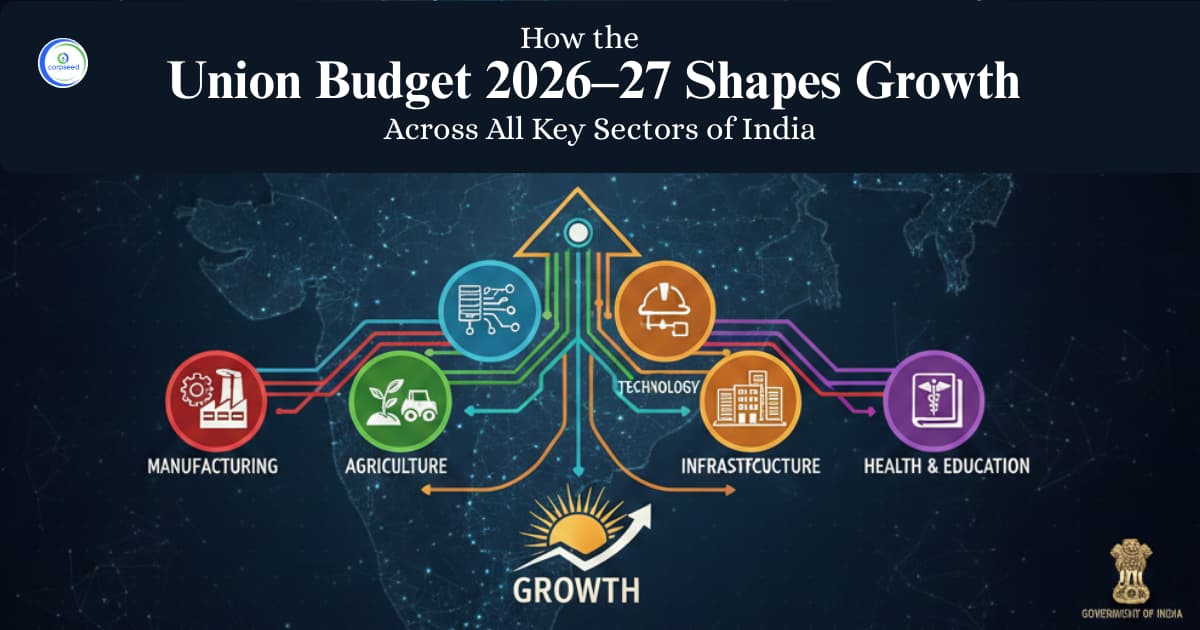
The Union Budget 2026–27 is designed to strengthen economic fundamentals while ensuring inclusive and sustainable growth. Its overall impact can be understood across the following key dimensions:
- Stronger Economic Growth: Higher capital expenditure and manufacturing-focused reforms support long-term productivity and job creation.
- Improved Fiscal Stability: Gradual fiscal consolidation enhances macroeconomic stability and boosts investor confidence.
- Boost to Manufacturing and MSMEs: Targeted schemes enhance competitiveness, add value, and strengthen export capacity.
- Human Capital Development: Investments in education, healthcare, skills, and sports raise workforce quality.
- Regional and Social Inclusion: Focus on states, farmers, MSMEs, and vulnerable groups ensures balanced development.
- Global Competitiveness: Tax reforms, customs simplification, and trade facilitation strengthen India’s position in global value chains.
Conclusion
Union Budget 2026–27 provides a clear roadmap for India’s long-term transformation. By aligning growth-driven reforms with human development and social inclusion, the Budget reflects a mature policy approach. Structural tax reforms, infrastructure investment, and sector-focused initiatives strengthen economic foundations. At the same time, support for states, regions, and vulnerable sections ensures equitable progress. The emphasis on trust-based governance and institutional reform signals confidence in India’s economic maturity. As the nation advances towards its 2047 vision, this Budget lays a credible and sustainable pathway to achieving the goal of Viksit Bharat.
This portion of the site is for informational purposes only. The content is not legal advice. The statements and opinions are the expression of author, not corpseed, and have not been evaluated by corpseed for accuracy, completeness, or changes in the law.
BOOK A FREE CONSULTATION
Get help from an experienced legal adviser. Schedule your consultation at a time that works for you and it's absolutely FREE.