
Does Your Solar Waste Storage Actually Meet the New CPCB Guidelines of 2026?
Moving solar waste from one place to another is not simple. Careless transportation causes breakage, and breakage exposes people to toxic materials.
Schedule a Call Back
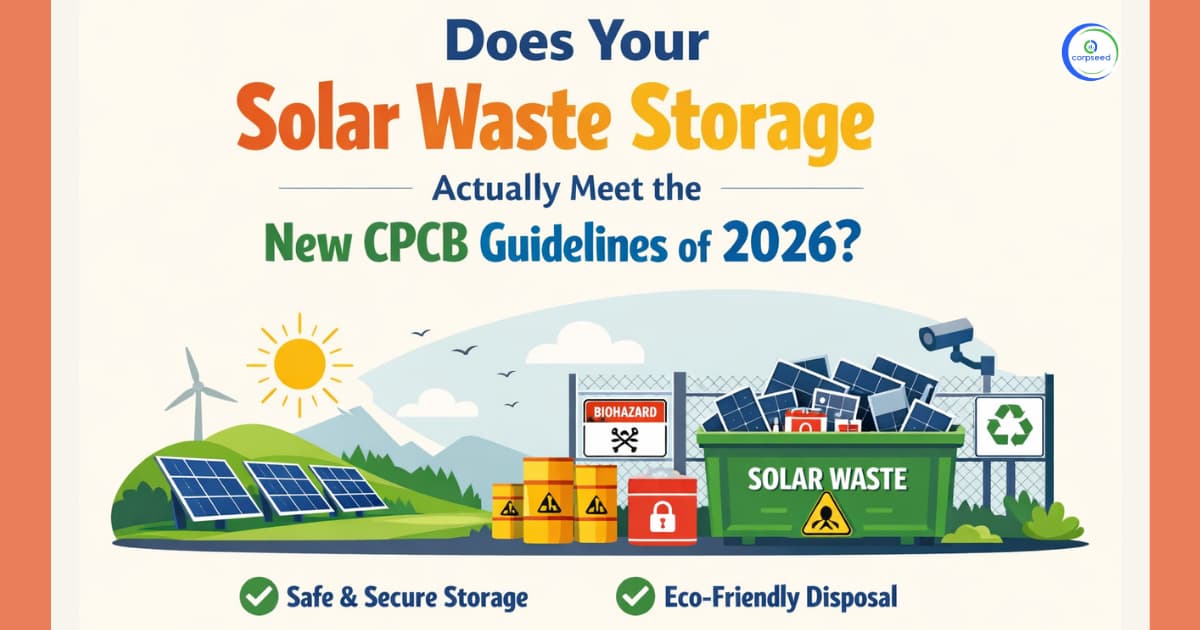
India is racing toward a clean energy future. Solar panels are going up on rooftops, farms, and factories across the country. But here is a question that almost nobody asks, what happens to solar panels when they get old, broken, or damaged?
The answer matters more than most people think. Old solar panels contain toxic metals. If these panels are dumped carelessly, they poison the soil, pollute groundwater, and harm human health. This is exactly why the Central Pollution Control Board (CPCB) released detailed guidelines in March 2026 on the storage, handling, and transportation of waste solar photovoltaic (PV) modules, panels, and cells.
These guidelines fall under the E-Waste (Management) Rules, 2022, which have been in force since 1 April 2023. Every producer, manufacturer, and recycler of solar panels in India must follow these rules.
Schedule a Call Back
What is Solar Waste and Why is it a Problem?
Solar waste refers to any solar photovoltaic module, panel, or cell that has been discarded. This includes:
- End-of-life solar panels that have stopped working
- Panels damaged during transportation, storage, or installation
- Rejects and waste generated during manufacturing, refurbishment, and repair
Solar panels are made of both recyclable and non-recyclable materials. The general average composition of solar panels includes glass, aluminium frames, silicon wafers, plastics, and a range of metals, including copper, silver, lead, cadmium, tellurium, gallium, arsenic, and tin.
Metals like lead, cadmium, and arsenic are highly toxic. When broken panels are left in open areas or dumped in landfills, these metals leach into the ground. From there, they enter the groundwater and the food chain. Improper management of end-of-life solar waste creates serious environmental and health risks, and India is sitting on a growing mountain of it.
The Legal Framework of the Rules
The E-Waste (Management) Rules, 2022, notified by the Ministry of Environment, Forest and Climate Change (MoEFCC), Government of India, cover 106 categories of electrical and electronic equipment. Solar PV panels, modules, and cells fall under Category CEEW 14 in Schedule I of these rules.
The rules operate on the principle of Extended Producer Responsibility (EPR). Under EPR, producers are responsible for the waste their products generate, not just during their lifetimes but also at the end of their lifetimes.
For solar panels specifically, recycling targets are not yet applicable. However, compliance responsibilities are already active. Under Chapter V of the E-Waste (Management) Rules, 2022, producers, manufacturers, and recyclers of solar PV products must:
- Register on the official portal
- Store waste solar panels safely until the year 2034–35
- File annual returns with accurate data
- Follow the guidelines and standard operating procedures (SOPs) issued by CPCB
The CPCB guidelines of March 2026 are the official SOP that every registered stakeholder must follow. Non-compliance is not an option.
CPCB Guidelines for Transporting Waste Solar Panels
Moving solar waste from one place to another is not simple. Careless transportation causes breakage, and breakage exposes people to toxic materials. The CPCB guidelines set clear rules for this:
1. No Open Dumping Solar waste must never be dumped in open areas or sent to landfills. This releases toxic chemicals directly into the environment.
2. Hand Over Only to Registered Recyclers Solar waste meant for recycling must go only to a registered e-waste recycler. For storage and collection purposes, it can be handed over to registered producers and manufacturers.
3. Build a Consumer Collection System. Producers and manufacturers must create a practical collection mechanism for consumers and bulk consumers. This may include take-back programs, collection points, and pick-up vans linked to collection centres.
4. Share Collection Information Publicly, producers must publish their collection system details, including:
- Website links with collection/take-back information
- Contact numbers of designated persons for consumer queries and grievance support
Details of collection points and authorized recycling facilities
5. Maintain a Consumer Database. Producers should maintain a database of consumers and bulk consumers who have purchased solar panels. This makes it easier to collect the panels when they reach end-of-life.
6. Use Covered Trucks. All transportation of solar waste must happen in covered trucks. Open vehicles expose solar waste to the weather and increase the risk of breakage.
7. Follow Hazardous Waste Rules for Final Disposal. When solar waste is being sent for final disposal, the sender must comply with the Hazardous and Other Wastes (Management and Transboundary Movement) Rules, 2016.
CPCB Guidelines for Storing Waste Solar Panels
Storage is where most violations happen. Improper storage damages panels, releases toxic materials, and puts workers at risk. The CPCB guidelines lay down 13 clear rules for storage:
1. Store Without Causing Breakage
Storage must be designed to prevent breakage. Avoid any contact with sharp objects or collision with the panels.
2. Use Covered, Dry, Well-Ventilated Spaces
Solar waste must be kept in a covered shed with proper ventilation, lighting, and dry conditions. Open or outdoor storage is not permitted.
3. Use Impervious, Non-Leachable Flooring
Metals like antimony, cadmium, arsenic, lead, and selenium have high leaching potential. The floor of every storage area must be non-leachable and impervious to prevent contamination of groundwater and soil.
4. Store Broken Panels in Separate Rigid Containers
Any disintegrated or broken solar waste must be stored separately in a rigid, stable, and water-resistant container, properly labelled. Broken panels mixed with intact panels create safety and contamination risks.
5. Do Not Over-Stack
Solar panels must be stacked only to a height at which mechanical stability and safe access can be maintained. Over-stacking leads to collapse, breakage, and worker injury.
6. Mandatory Fire Safety Systems
Every storage area must have a complete fire protection system in place, including:
- Adequate firefighting equipment
- Clearly marked emergency exit routes
- A ready and updated Emergency Response Plan (ERP)
- Any fire incident must be reported to the local authority immediately.
7. Clear Labelling on All Racks and Containers
Every storage rack and container must carry clear labels identifying the type of waste stored. This makes identification, sorting, and recycling faster and safer.
8. Regular Inventorization
Inventory records of all stored solar waste must be maintained and updated regularly. These records support accountability and help during audits.
9. Monthly Inspection and Reporting
The storage area must be formally inspected every month. The inspection must be recorded in accordance with the CPCB guidelines. CPCB, the State Pollution Control Board (SPCB), or any other designated agency must keep the monthly report available at all times for inspection or audit.
Worker Safety Is Non-Negotiable
Every person who handles waste solar panels must be equipped with proper Personal Protective Equipment (PPE). The CPCB guidelines make this mandatory. Required PPE includes:
- Gloves to protect hands from sharp glass and toxic residues
- Safety footwear to prevent injury from falling panels
- Eye protection against glass fragments and dust
- Respirators are required wherever dust or glass breakage risk exists
Worker health is a direct responsibility of whoever manages solar waste storage. No shortcuts are acceptable.
The Cost of Non-Compliance
There are actual consequences of ignoring the CPCB solar waste guidelines. Poor disposal of end-of-life solar wastes can:
- Pollute soil and groundwater with toxic metals, including lead and cadmium.
- Risk employees' lives by working with broken panels.
- Initiate enforcement of E-Waste (Management) Rules, 2022.
- Welcome the scrutiny and fines by CPCB or SPCB.
Conclusion
Solar capacity in India is growing annually. As that growth is achieved, so is the increasing accountability for solar waste management. The CPCB Guidelines of March 2026 offer an elaborate, hands-on, practical, and legally binding roadmap for producers, manufacturers, and recyclers. The standards that all solar stakeholders in India should fulfil include safe transport, covered storage, impervious flooring, fire safety, clear labelling, monthly inspections, and complete protection of the workers. The time to act is now. It will not be a strategy to wait until 2034 to think about solar waste storage, it will be a risk that no responsible business will be able to bear.
About the Author

Mahek Sancheti
Content WriterMahek Sancheti, BAJMC graduate with a deep passion for writing. As a content writer, video content creator, creative content creator, and scriptwriter, I bring stories to life through words and visuals. I honed my skills by working with a prominent news agency, where I excelled in crafting compelling narratives and engaging content. Coming from a journalism and mass communication background I have skills to craft engaging narratives that captivate audiences. With a keen interest in writing and creativity, I aim to deliver impactful and meaningful content that resonates with diverse audiences.
https://www.linkedin.com/in/mahek-sancheti-837196212
Related articles
Compliance Checklist for Manufacturing Businesses in India
2026-08-24
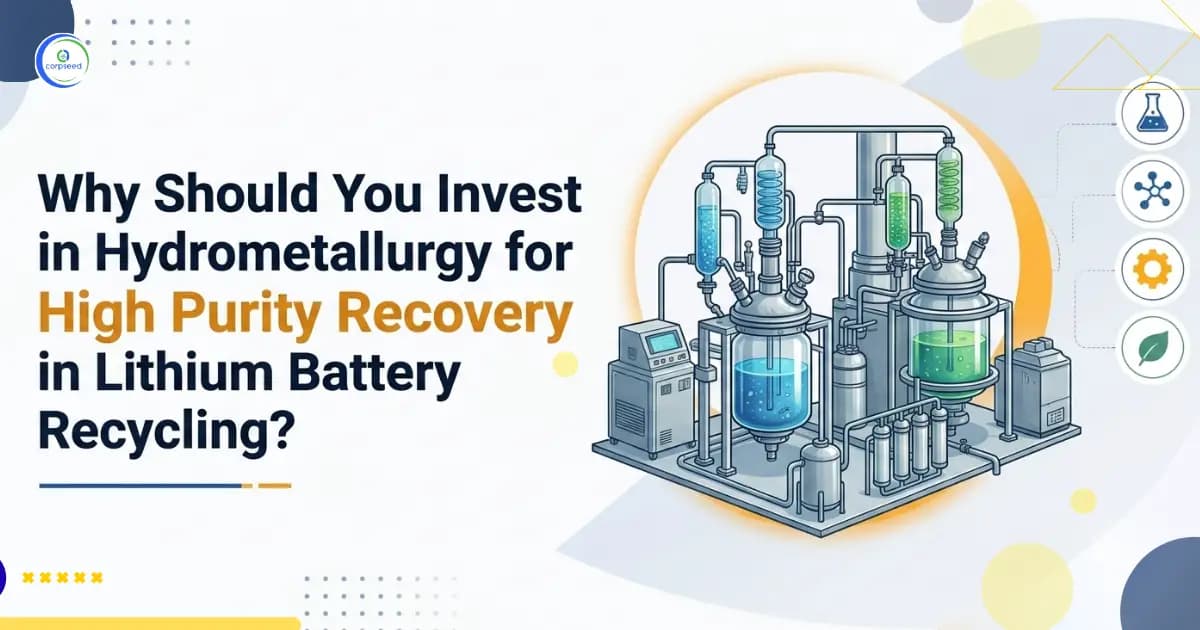
Why Should You Invest in Hydrometallurgy for High Purity Recovery in Lithium Battery Recycling?
2026-08-21
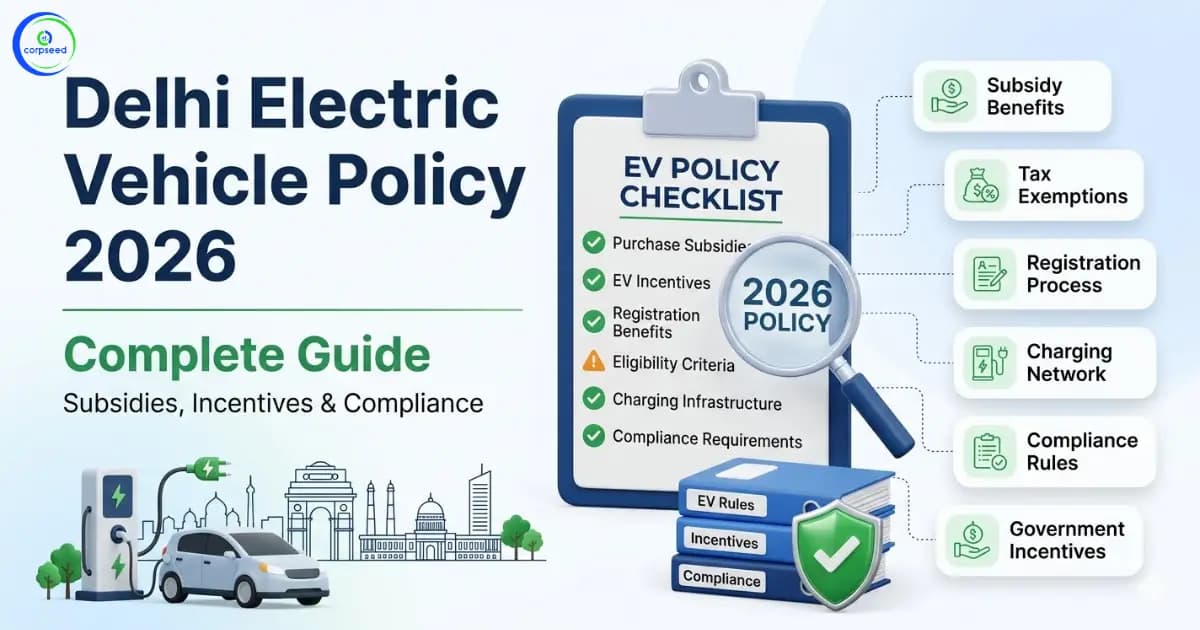
Delhi Electric Vehicle Policy 2026: Complete Guide to Subsidies, Incentives and Compliance
2026-07-01
Is a Lithium Battery Recycling Plant Profitable with 2026 Metal Price Volatility?
2026-05-04

How to Apply for PCI Registration in Telangana
2025-12-23
MNRE Guidelines for Storage Battery Testing for Solar Systems
2025-10-03