
Why Should You Invest in Hydrometallurgy for High Purity Recovery in Lithium Battery Recycling?
Hydrometallurgy is gaining attention in lithium battery recycling because it can help recover valuable metals with better separation and purity.
Schedule a Call Back
Introduction
Hydrometallurgy is gaining attention in lithium battery recycling because it can help recover valuable metals with better separation and purity. For businesses considering a lithium battery recycling plant, the focus is not just on recovering materials. It is also on producing recovered metals with the quality needed for potential downstream use.
The investment case can become more attractive when a recycling project is designed to recover several valuable metals, including lithium, nickel, cobalt, and manganese. Through controlled leaching, purification, and separation, hydrometallurgical battery recycling can help recover these materials while keeping unwanted impurities under control.
But is high-purity recovery enough to justify a lithium battery recycling investment? The answer depends on factors such as battery chemistry, feedstock availability, recovery targets, processing costs and the intended market for recovered materials. This article explains why hydrometallurgy is being considered for high-purity recovery and what investors should evaluate before setting up a recycling project.
What Is Hydrometallurgy in Lithium Battery Recycling?
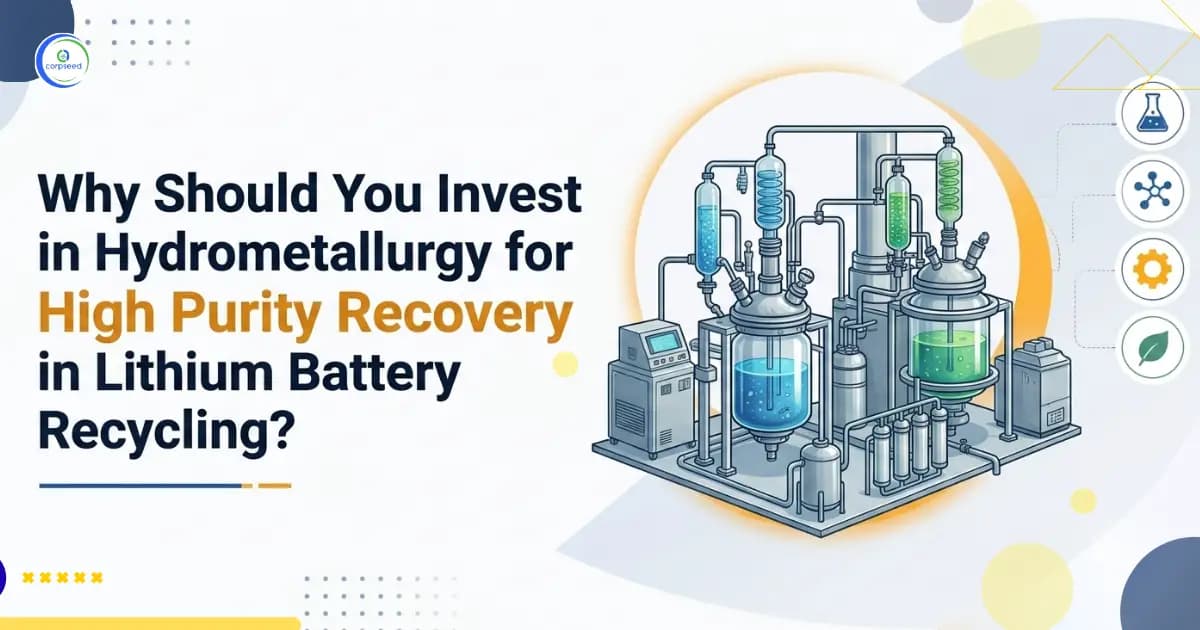
Hydrometallurgy is a metal recovery approach that uses aqueous chemical solutions to extract and separate valuable metals from processed battery materials.
In a typical hydrometallurgical recycling process, spent lithium-ion batteries are first broken down and prepared for metal recovery. The prepared material is then treated with a chemical solution that brings the target metals into the liquid phase.
That solution still contains impurities and different metals, so it goes through further treatment. The metals are then separated and recovered in a more refined form, depending on the battery type, and the quality of material the recycling plant wants to produce.
A simplified process is:
Spent lithium-ion batteries- pre-processing- leaching- purification- separation- metal recovery- high-purity products
The exact process depends on the battery chemistry, feedstock composition, desired recovery rate and required product specifications.
Why Does High-Purity Recovery Matter?
The commercial value of battery recycling is closely connected to what can actually be recovered and the quality of those recovered materials.
A recycling process that produces a mixed or contaminated output may have fewer downstream applications than one capable of producing materials with controlled purity.
This makes high purity lithium recovery and high-purity recovery of other valuable metals important considerations for recycling projects.
High-purity recovery can support:
- Better separation of valuable metals
- Greater control over recovered material quality
- Potential use in suitable industrial applications
- Improved utilisation of recovered battery materials
- Better integration with downstream material processing
For investors evaluating a lithium battery recycling plant, recovery quality should be considered alongside processing capacity and overall recovery efficiency.
Why Invest in Hydrometallurgy for Lithium Battery Recycling?
Investing in hydrometallurgy for lithium battery recycling can make sense for businesses focused on high-purity recovery, multi-metal extraction and better utilisation of valuable battery materials. The technology offers several points worth considering when evaluating a lithium battery recycling investment.
- High-Purity Metal Recovery
Hydrometallurgy uses controlled leaching, purification and separation stages to remove impurities and recover targeted metals at high purity. This makes it suitable for recycling projects where the quality of recovered materials is as important as the quantity recovered.
- It Can Recover Multiple Valuable Battery Metals
Depending on battery chemistry, spent lithium-ion batteries can contain lithium, nickel, cobalt, manganese and copper. Hydrometallurgical processing can be designed to recover multiple metals from the same feedstock. This can broaden the recovery strategy for a lithium recycling investment opportunity, rather than making the project dependent on lithium recovery alone.
- Selective Separation Can Improve Recovery Quality
Battery feedstock contains different materials that need to be separated efficiently. Hydrometallurgy uses controlled leaching, purification and separation to target specific metals and manage impurities. For investors planning a hydrometallurgical recycling plant, this control can support better-quality recovered materials, and defined purity targets.
- It Can Turn Battery Waste into Recoverable Resources
Spent batteries contain valuable materials that can potentially be recovered and returned to industrial supply chains. Hydrometallurgical processing can support lithium recovery from batteries along with the recovery of other valuable metals, creating a resource recovery model:
Spent batteries- recovered metals- refined materials- potential industrial use
The commercial value will depend on factors such as feedstock quality, recovery performance, product specifications, processing costs and market conditions.
- It Can Be Designed Around Specific Recovery Targets
Not every recycling facility has the same feedstock or output requirements.
Battery chemistry, feedstock composition and desired recovered products can vary significantly.
Hydrometallurgical systems can be designed around specific recovery objectives. This allows project developers to consider factors such as:
- Target metals
- Required purity
- Feedstock composition
- Processing capacity
- Recovery efficiency
- Chemical requirements
- Waste and residue management
This flexibility can be useful when developing a lithium battery recycling plant setup based on a defined business model.
How Does Hydrometallurgy Achieve High-Purity Recovery?
High-purity recovery does not happen at one single stage. It depends on the overall process design.
Step 1: Pre-processing
Spent batteries are first processed to prepare the material for further recovery. Depending on the technology, this can involve mechanical treatment and separation of different battery components.
Step 2: Leaching
The processed battery material is mixed with a suitable chemical solution. This helps dissolve the metals that the recycling process is designed to recover, while leaving unwanted materials behind as much as possible.
Step 3: Purification
The resulting solution may contain several dissolved metals and impurities.
Purification removes unwanted components and prepares the solution for selective metal separation.
Step 4: Separation
Different techniques can be used to separate individual metals from the purified solution.
The exact approach depends on the target metals and required product quality.
Step 5: Metal Recovery
The separated metals are recovered in suitable forms based on the intended downstream application and process design.
This combination of leaching, purification, separation and recovery is what makes hydrometallurgy relevant to high-purity metal recovery.
Which Metals Can Hydrometallurgy Recover?
The exact recovery profile depends on the battery chemistry and process configuration. However, hydrometallurgical systems can target several valuable materials.
| Material | Recovery Significance |
| Lithium | Important battery raw material |
| Nickel | Valuable cathode material |
| Cobalt | High-value battery material |
| Manganese | Used in several battery chemistries |
| Copper | Valuable conductive material |
| Other Metals | May contribute to overall resource recovery |
For an investor, the important point is that the technology can potentially support a multi-metal recovery strategy, rather than focusing on lithium alone.
What Should You Consider Before Investing in a Hydrometallurgical Recycling Plant?
A lithium battery recycling plant setup in India requires more than selecting a recovery technology. Before investing, businesses should assess:
- Feedstock Availability
A plant needs a reliable supply of suitable spent batteries or processed battery material.
The chemistry and composition of the feedstock can directly influence the recovery process and economics.
- Required Recovery Purity
Investors should define what quality of recovered material the project needs to produce.
The required purity level can influence process design, purification stages and operating requirements.
- Processing Capacity
Plant capacity should match the expected feedstock supply. Excess capacity can affect project economics.
- Chemical and Operating Requirements
Hydrometallurgical processes use chemicals, water and energy. These requirements should be evaluated during project planning.
- Residue and Wastewater Management
Chemical processing can generate wastewater, residues and other process streams.
Their treatment and management should form part of the plant design.
- Regulatory Requirements
A battery recycling project must account for applicable environmental, waste management and operational requirements before commencing commercial operations.
- Product Market
Recovered materials need suitable downstream markets.
Investors should evaluate the specifications, demand and potential buyers for the recovered products before finalising the project.
Also Read: Is a Lithium Battery Recycling Plant Profitable with 2026 Metal Price Volatility?
Is Hydrometallurgy a Good Investment for Lithium Battery Recycling?
Yes, hydrometallurgy can be a suitable investment option for lithium battery recycling projects focused on high-purity and multi-metal recovery.
Its potential to recover lithium and other valuable metals through controlled leaching, purification and separation makes it relevant for advanced battery recycling operations.
However, the right investment decision depends on several factors, including feedstock availability, battery chemistry, recovery targets, plant capacity, technology design, operating costs, environmental requirements and the market for recovered materials.
The strongest investment case is not simply based on adopting hydrometallurgy. It comes from designing a recycling project where the technology, feedstock, recovery targets and commercial strategy work together.
Planning a Lithium Battery Recycling Plant?
Setting up a lithium battery recycling plant involves technical, commercial and regulatory decisions. Selecting the right recovery technology is only one part of the process.
Businesses planning a lithium battery recycling investment should evaluate project feasibility, applicable approvals, environmental requirements, plant requirements, recovery targets and operational considerations before committing capital.
Planning a lithium battery recycling project? Get professional guidance on the regulatory, environmental and project requirements for setting up a hydrometallurgical recycling facility.
Conclusion
Hydrometallurgy offers a promising route for lithium battery recycling investment when the focus is on high-purity and multi-metal recovery. Its controlled processing can help recover valuable materials while supporting defined quality requirements. However, the right technology and investment model depend on factors such as feedstock, battery chemistry, recovery targets, processing requirements and market demand. A careful assessment of these factors can help businesses plan a hydrometallurgical recycling plant that aligns with their technical and commercial objectives.
About the Author

Parul Bohral
Legal Content WriterParul Bohral, a BALLB graduate and experienced legal researcher and content writer with expertise in various legal areas, including corporate law and intellectual property. I have gained valuable experience in esteemed legal environments, where I have strengthened my research skills, allowing me to approach legal writing with precision and depth.
As a legal content writer, I am committed to delivering work that not only informs but also engages readers. By staying informed about the latest trends in content marketing and regulatory developments, I ensure that my writing remains sophisticated and meets industry standards. My dedication to thorough research enables me to craft content that is both insightful and impactful.
Related articles
Compliance Checklist for Manufacturing Businesses in India
2026-08-24
Delhi Electric Vehicle Policy 2026: Complete Guide to Subsidies, Incentives and Compliance
2026-07-01
Is a Lithium Battery Recycling Plant Profitable with 2026 Metal Price Volatility?
2026-05-04
Does Your Solar Waste Storage Actually Meet the New CPCB Guidelines of 2026?
2026-03-19

How to Apply for PCI Registration in Telangana
2025-12-23

MNRE Guidelines for Storage Battery Testing for Solar Systems
2025-10-03