
Is a Lithium Battery Recycling Plant Profitable with 2026 Metal Price Volatility?
With rising EV adoption, increasing battery waste generation, and government-backed recycling policies, lithium battery recycling is emerging as one of India’s most scalable circular economy business opportunities in 2026.
Schedule a Call Back
1,800+ plant setup, DPR and CTE/CTO assignments since 2018
Clients include Quantara Battery Recycling, Servotech Renewable Power System, Intangles Lab, Alten India, Saurya Urja Company of Rajasthan, 20Cube Logistics Solutions, Adit Buildwell, Bake Wish, Ecowise Trading, Magnum Aluminium, PMS Waste Management, GS E-Commerce.
A few more clients we've served in this industryHide the list
- Battery recyclers
- Quantara Battery Recycling
- Plant setup clients (DPR, CTE, CTO)
- Servotech Renewable Power System · Intangles Lab · Alten India · Saurya Urja Company of Rajasthan · 20Cube Logistics Solutions · Adit Buildwell · Bake Wish · Ecowise Trading · Magnum Aluminium · PMS Waste Management · GS E-Commerce · Beaucience India · Jiva Ayurveda Pharmacy · Radical Aftermarket Services · SNS Metpro Industries · Enershell Alloys and Steel · Gorevive · Innovation Elephants · P P Bafna Ventures · Sun Mobility · Daebak India Recycler · Ganesh Foundry & Cast · Ganix Rubber Recycling · Pashidaa E Waste Copper Battery Recycling PLT Company · RSV Seeds & Agro Chemicals Products · Boulevard Hotel and Resorts · Dev Plast Privat E · Flexfit Activewear · Resurge Green Tech · SAM Constructions · Abhinandan Jan Kalyan Society · GCM Carbon · Infrathon Projects · Inland Speciality Metals · Moore Pipe India · R K Laxmi General Sales · S G Overseas · Shreeji Anand Resort · SR Polygrain · Switch 2 Nature · Blubble · M-Swasth Solutions · Krisba Healthcare · Meritech India · Proximise · Enzolt Energy · Rays Global Energypower
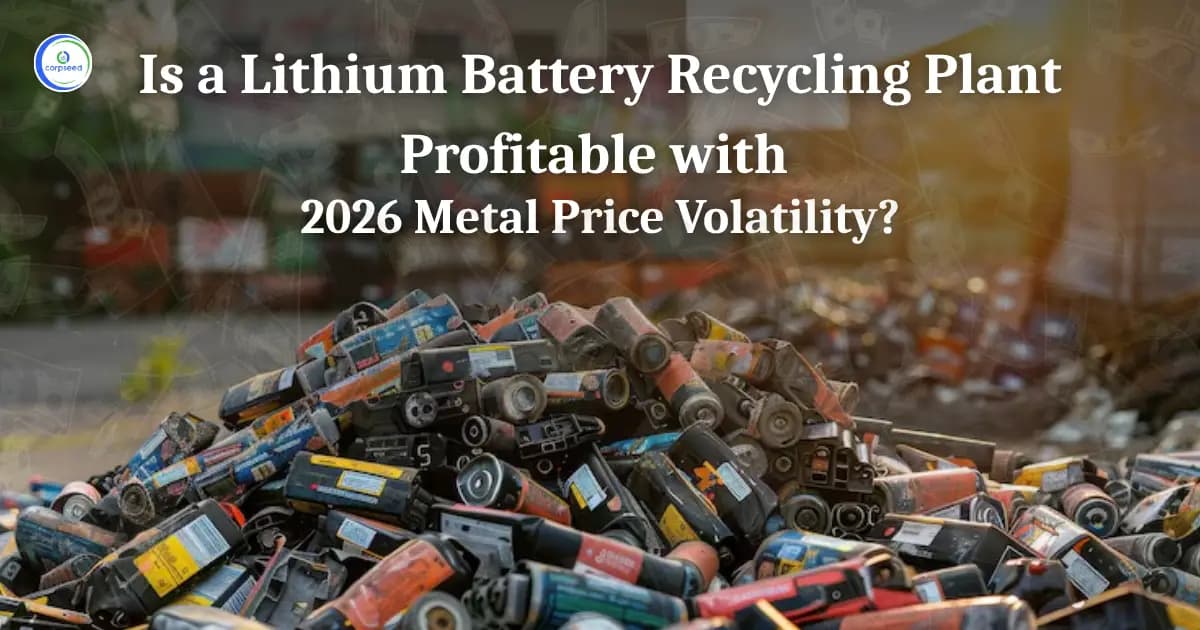
The lithium-ion battery recycling sector in 2026 has evolved into a value-driven industry shaped by electric vehicle growth and regulatory enforcement. As EV adoption rises across India, the volume of end-of-life batteries is increasing rapidly. The key question is no longer demand. With rising EV adoption, increasing battery waste generation, and government-backed recycling policies, lithium battery recycling is emerging as one of India’s most scalable circular economy business opportunities in 2026.
Navigating 2026 Metal Price Volatility
In 2026, lithium, cobalt, and nickel prices have remained unstable due to supply constraints, policy changes, and limited refining capacity. Lithium carbonate, in particular, reacts quickly to these shifts.
For recycling businesses, this directly affects the value of recovered materials. At the same time, they are not impacted in the same way as mining companies. The cost of sourcing battery waste stays relatively stable, which helps maintain operational balance even when metal prices decline.
Even during periods of metal price fluctuation, recycling businesses continue to benefit from growing battery waste availability and increasing demand for recovered critical minerals.
Shift in Battery Chemistry and Recovery Focus
Another important change is that the type of batteries being recycled is also changing. While NMC batteries still provide better returns because of cobalt and nickel, LFP batteries are becoming more common in the Indian market.
This shift changes how recyclers earn. Since LFP batteries have very little cobalt, the focus is now moving towards recovering lithium efficiently. Businesses that adjust their processes and improve recovery methods are in a better position to maintain steady returns over time. Advanced recovery technologies are helping recyclers maintain profitable operations even as battery chemistry trends evolve.
Schedule a Call Back
Revenue Expansion through EPR Certificates
In 2026, recycling plants will not earn only from recovered metals anymore. Extended Producer Responsibility (EPR) has added a second, more predictable source of income.
- EPR certificates are issued based on actual recycling output
- Battery producers purchase these credits to meet compliance targets
- In early 2026, rates are usually around Rs 45 to Rs 65 per kg, depending on the battery type
For many plants, EPR certificates contribute around 15% to 25% of total revenue. This creates a more stable and predictable income stream compared to industries that depend entirely on commodity pricing.
Is a Lithium Battery Recycling Plant Profitable in 2026?
Lithium battery recycling plant in India remains a profitable and high-growth business opportunity in 2026, especially for companies that invest in efficient recovery systems, compliance infrastructure, and scalable operations.
According to the Battery Waste Management Rules, the recovery rate should not be less than 80%. It is necessary to meet this requirement to obtain valid EPR credits. From the FY 2026-27 onwards, the target is expected to increase to 90%, and therefore, improving the recovery process is critical.
The requirement is expected to increase to 90% from FY 2026-27, which makes early investment in high-efficiency technology critical. Higher recovery efficiency not only supports compliance but also significantly improves revenue generation from recovered lithium, nickel, and cobalt.
- Higher recovery rates directly improve revenue and compliance eligibility
- Hydrometallurgical processes enable the extraction of high-purity lithium compounds
- A consistent supply of battery waste ensures stable plant utilization
At the same time, battery waste supply is expanding. EV adoption between 2021 and 2023 is now entering the recycling cycle, especially from two-wheelers and small commercial fleets. This expanding battery waste stream is creating long-term raw material availability for recyclers, supporting consistent plant utilization and business scalability.
Investment and Cost Benchmarks in 2026
Setting up a lithium battery recycling plant in 2026 requires structured investment aligned with compliance, recovery efficiency, and long-term operational sustainability.
- Small to medium-scale plants with 500 to 1000 tons annual processing capacity generally require an investment of around Rs 1.5 crore to Rs 4 crore.
- Major cost components include recycling machinery, environmental control systems, infrastructure, and raw material procurement.
- Closed-loop processing systems are increasingly being adopted to reduce chemical consumption and long-term operating costs.
Although the initial investment can be significant, many recycling businesses are focusing on long-term returns driven by rising battery waste volumes, EPR revenue opportunities, and increasing demand for recovered critical minerals.
Location strategy also plays an important role. Plants located near EV hubs such as NCR, Pune, and Chennai benefit from lower logistics costs and improved access to battery waste streams.
Government Incentives and Policy Support
The National Critical Mineral Mission has introduced a Rs 1,500 crore incentive framework to strengthen domestic recycling and recovery of critical minerals.
Lithium battery recycling plants can benefit from this initiative by aligning with approved technologies and compliance standards. This reduces capital burden and improves long-term financial viability.
Government support is further improving the financial viability of lithium battery recycling projects across India.
2026 Compliance Checklist for Recycling Plants
A structured compliance approach is now essential for profitability and continuity.
- Authorization from CPCB or State Pollution Control Board
- Ability to meet the minimum 80% recovery target for FY 2025-26
- Readiness to scale up to 90% recovery from FY 2026-27
- Proper tracking and reporting for EPR credit generation
- Environmentally compliant processing and waste handling systems
Conclusion
Yes, a lithium battery recycling plant is profitable in 2026 when supported by efficient recovery systems, strong compliance, and scalable operations. A lithium battery recycling plant in 2026 will operate as an enforcement-based, technology-led venture. Although fluctuations in metal prices may affect profitability and EPR revenue, regulatory approval, and rising battery waste make future sustainability feasible.
Industries that invest in effective recovery systems and comply with evolving regulations are more likely to achieve stable, scalable returns.
About the Author

Parul Bohral
Legal Content WriterParul Bohral, a BALLB graduate and experienced legal researcher and content writer with expertise in various legal areas, including corporate law and intellectual property. I have gained valuable experience in esteemed legal environments, where I have strengthened my research skills, allowing me to approach legal writing with precision and depth.
As a legal content writer, I am committed to delivering work that not only informs but also engages readers. By staying informed about the latest trends in content marketing and regulatory developments, I ensure that my writing remains sophisticated and meets industry standards. My dedication to thorough research enables me to craft content that is both insightful and impactful.
Related articles
Compliance Checklist for Manufacturing Businesses in India
2026-08-24
Why Should You Invest in Hydrometallurgy for High Purity Recovery in Lithium Battery Recycling?
2026-08-21
Delhi Electric Vehicle Policy 2026: Complete Guide to Subsidies, Incentives and Compliance
2026-07-01
Does Your Solar Waste Storage Actually Meet the New CPCB Guidelines of 2026?
2026-03-19

How to Apply for PCI Registration in Telangana
2025-12-23
MNRE Guidelines for Storage Battery Testing for Solar Systems
2025-10-03