
Is Your Food Business Ready for the New FSSAI Rules 2026?
The Food Safety and Standards Authority of India (FSSAI) officially notified a major amendment on March 10, 2026, that is the Food Safety and Standards (Licensing and Registration of Food Businesses) Amendment Regulations, 2026.
Schedule a Call Back
500+ FSSAI licence assignments since 2018
Clients include Bidada Foods, Silvertip Foods, Good Food Innovations, Minimal Food, Alluring India Foods and Beverages, Auroras TEA Company, Ania Consumer Products, Ginger Foods Company, Magnalis Foods, ND Spices, Antara Assisted Care Services, Aggriveda Pharmaceutical (12 of 350+ served since 2018).
A few more clients we've served in this industryHide the list
- Food and consumer goods
- Bidada Foods · Silvertip Foods · Good Food Innovations · Minimal Food · Alluring India Foods and Beverages · Auroras TEA Company · Ania Consumer Products · Ginger Foods Company · Magnalis Foods · ND Spices
- Pharma and healthcare
- Antara Assisted Care Services · Aggriveda Pharmaceutical
- Logistics and trade
- Solankili Logistics Management · 23North Logistics Solutions
- Non-profits and education
- All India Hindu Mahajot Foundation · Manovikas Charitable Society
- More clients
- Cure and Care Wellness · Seven Turns · Akshamaala Solutions · Krisba Healthcare · Matha Exports International · Indo Gulf Company · Crescent Biologicals · Cura Consumer Health · Biolush · Cura Consumer · Ethics Prosperity · Rocking Deals · Subohi Agriparks · Aurous International Merchants · Anagh Traders · Shin Traders · Zexcorp Services · Aprodite Infotech · Grandmaz Organics · Instruments and Chemicals · Aaravbabbar Enterprises · DUA OLD Age Caring Institution · Goenka Scrapco · Prime Health
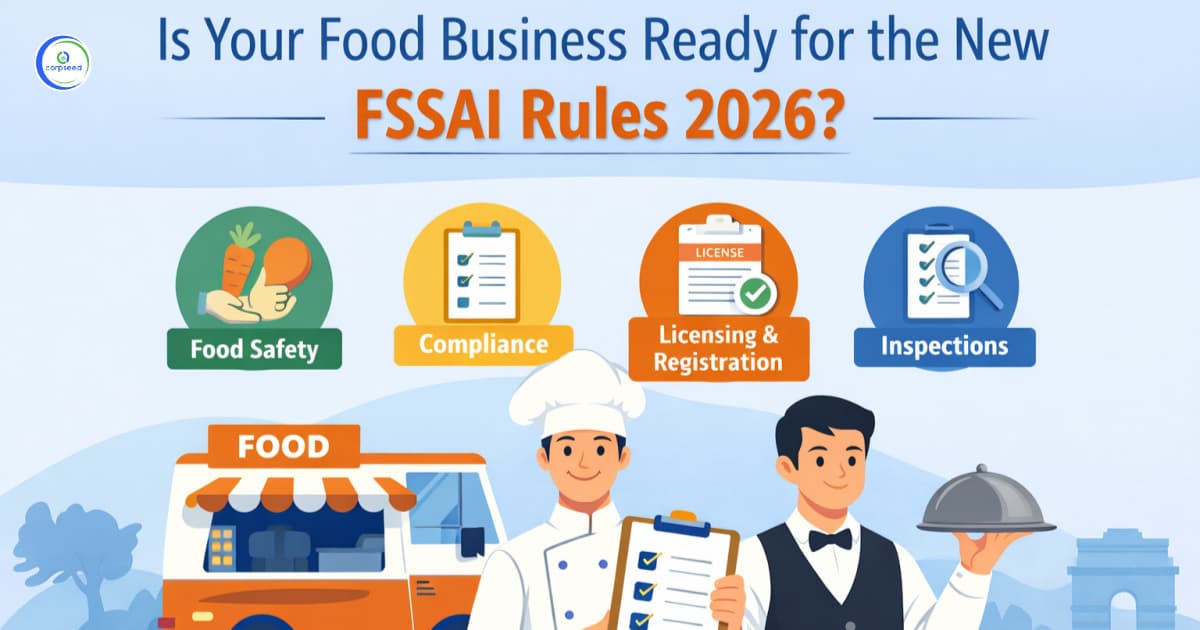
The Food Safety and Standards Authority of India (FSSAI) officially notified a major amendment on March 10, 2026, that is the Food Safety and Standards (Licensing and Registration of Food Businesses) Amendment Regulations, 2026. It updates the original 2011 regulations and was published in the Gazette on March 11, 2026. The new turnover limits and the perpetual validity of licenses and registrations apply from April 1, 2026.
FSSAI initially published this in November 2020 as a draft, and it invited people to make their suggestions within 60 days. FSSAI considered all proposals and released the final version in March 2026. These new regulations apply to all those who manufacture, market, package, or distribute food in India, from a small street food cart to a large food company. Missing these updates can lead to automatic suspension, penalties, or even loss of your food license.
Schedule a Call Back
What is the FSSAI 2026 Amendment?
The Food Safety and Standards (Licensing and Registration of Food Businesses) Amendment Regulations, 2026, are an official update to India's food business rules, notified by FSSAI on March 10, 2026. These regulations amend the original 2011 rules under the Food Safety and Standards Act, 2006. The amendment redefines who qualifies as a petty food business operator, introduces instant registration, makes licenses permanently valid, and lets the authorities direct third-party food safety audits. Every food business in India, from street vendors and food trucks to large manufacturers, must understand and follow these updated rules to stay legally compliant and avoid penalties.
7 Key Changes in the FSSAI 2026 Amendment
The 7 main changes made by FSSAI that every food business must know are:
1. New Definition of 'Petty Food Business Operator'
Petty Food Business Operator (PFBO) now officially includes a person who makes or sells food themselves, petty retailers, food truck operators, street food vendors, hawkers, itinerant vendors, temporary stall holders, and anyone who distributes food at religious or social gatherings. Caterers are not PFBOs.
Why it matters: Food trucks had no clear legal category before. This definition removes all confusion and gives food truck operators a defined place in India's food law for the first time.
2. Instant FSSAI Registration Certificate
FSSAI can now grant a registration certificate instantly, the moment an applicant submits all required documents. Earlier, food businesses waited days or even weeks. This single change helps home bakers, tiffin services, roadside stalls, and new food startups get legally registered faster and start selling sooner.
Note: FSSAI will announce the exact document list and procedure for instant registration separately.
3. Street Vendors Deemed Registered Under FSSAI
Street food vendors, hawkers, food trucks, and carts already registered under the Street Vendors (Protection of Livelihood and Regulation of Street Vending) Act, 2014, are now automatically treated as registered under the Food Safety and Standards Act, 2006. They do not need a separate FSSAI registration.
Important condition: Every such vendor, including those who are deemed registered, must strictly follow the hygiene and sanitary rules listed in Schedule 4 of the FSSAI regulations. This includes clean utensils, safe water, proper food storage, pest control, and personal hygiene.
4. FSSAI Can Now Set Turnover Thresholds and Classify Food Businesses
FSSAI now has the power to set annual turnover limits to decide whether a food business needs a registration or a full license. It can also classify different types of food businesses and assign the correct registering authority for each. This gives the regulator flexibility to update rules as India's food industry evolves without passing a new law each time.
FSSAI's Order dated March 13, 2026 then set the new limits, in force from April 1, 2026: FSSAI registration for an annual turnover up to ₹1.5 crore, a State license above ₹1.5 crore and up to ₹50 crore, and a Central license above ₹50 crore. These replace the earlier ₹12 lakh and ₹20 crore limits. FoSCoS assigns the category when you choose your kind of business; importers, exporters, e-commerce operators and head offices of multi-State businesses are licensed by the Central authority whatever their turnover.
5. License and Registration Now Permanently Valid
Old rule: Licenses expired after 1 to 5 years and needed renewal.
New rule: Licenses and registrations are now permanently valid, they never expire on their own. This applies to every license and registration issued on or after April 1, 2026 (FSSAI FAQs of March 27, 2026). If your certificate was issued before April 1, 2026 and shows an expiry date, check its status on FoSCoS before that date; Corpseed can check it for you.
If a food business misses the annual fee payment or fails to submit a mandatory return on time, the license is automatically suspended, and no notice is given. The business must pay all outstanding fees plus a penalty to get the suspension lifted. Operating a food business during suspension is illegal and attracts strict action under the FSS Act, 2006.
Inform the licensing authority in writing within 30 days of closure and surrender the certificate. No fee refund is given under any circumstances.
6. FSSAI Can Now Set Its Own Eligibility Criteria and Licensing Conditions
A new clause gives FSSAI the authority to specify eligibility conditions for starting or continuing any food business and to designate which authority grants licenses for which type of food business. This helps create tailored rules for very different food business types, from tiny home kitchens to multinational food manufacturers, without a one-size-fits-all approach.
7. Risk-Based Inspections and Third-Party Food Safety Audits
FSSAI must now ensure periodic inspections of all food businesses. Inspections follow a smart, risk-based system, businesses with poor compliance records, high-risk food products, or bad third-party audit results get inspected more frequently. Each state's Commissioner of Food Safety plans and manages inspections within their area.
Third-party audits: FSSAI or the Commissioner can now direct any food business to get an audit done by an FSSAI-recognised third-party auditor at the business's own cost. The business must grant full access to the auditor and provide all requested records. Refusing or blocking an audit is a direct violation of the regulations.
Key Action: Maintain clean food safety records at all times. Budget for potential audit costs. Pay annual FSSAI fees before the due date every year without fail.
How Will the New FSSAI 2026 Amendments Impact Your Food Business in India?
Here is how the FSSAI 2026 amendments will impact food businesses in India:
- Street food vendors and hawkers registered under the Street Vending Act 2014 no longer need a separate FSSAI registration, they are automatically treated as registered.
- Food trucks now have a clear legal identity under the Petty Food Business Operator category for the first time in India.
- Small food businesses can receive their FSSAI registration certificate instantly upon submitting the required documents.
- Every food business must pay annual FSSAI fees on time, missing the deadline triggers automatic suspension with no prior warning.
- FSSAI can now order a third-party food safety audit at any time, and the business must bear the full cost.
- Businesses with poor compliance history will face more frequent and thorough inspections under the new risk-based system.
- All food businesses, including those deemed registered, must strictly follow the hygiene and sanitary rules listed in Schedule 4.
Conclusion
The FSSAI 2026 Amendment is one of the most practical and forward-thinking updates to India's food safety law. It gives street vendors a legal identity, helps small businesses register faster, removes the burden of license renewal, and makes inspections smarter and fairer.
The three things every food business must do right now are register or confirm registration status, pay all FSSAI fees on time, and maintain proper food safety and hygiene records as per Schedule 4.
Food safety is not a legal checkbox , food safety is a guarantee to all individuals who consume food. The government has streamlined the regulations. It is high time that all the food businesses in India get on board, remain in line and win the confidence of all customers they are attending.
About the Author

Mahek Sancheti
Content WriterMahek Sancheti, BAJMC graduate with a deep passion for writing. As a content writer, video content creator, creative content creator, and scriptwriter, I bring stories to life through words and visuals. I honed my skills by working with a prominent news agency, where I excelled in crafting compelling narratives and engaging content. Coming from a journalism and mass communication background I have skills to craft engaging narratives that captivate audiences. With a keen interest in writing and creativity, I aim to deliver impactful and meaningful content that resonates with diverse audiences.
https://www.linkedin.com/in/mahek-sancheti-837196212
Related articles
FSSAI State License Renewal in India 2026: Process, Fees & New Rules
2026-11-12
FSSAI Central License Renewal in 2026: Rules, Fees, Documents & Process
2026-11-12

FSSAI Draft Packaging Rules 2026: New Standards for Recycled Plastic in Food Packaging
2026-11-04

Selling Food Online? FSSAI Rules for Amazon, Flipkart, Swiggy, Zomato & Marketplace Sellers (2026)
2026-10-15
FSSAI Diwali Drive 2026: Food Safety Inspection Checklist for Food Businesses
2026-10-14
FSSAI Licence vs Registration for Sweet Shops, Bakeries & Home Bakers
2026-10-13