
Government Initiatives of Compressed Biogas (CBG) Subsidy
These incentives are designed to minimise capital expenditures for companies, stabilise the market, and give technical and operational support through offtake agreements with Oil Marketing Companies (OMCs).
Schedule a Call Back
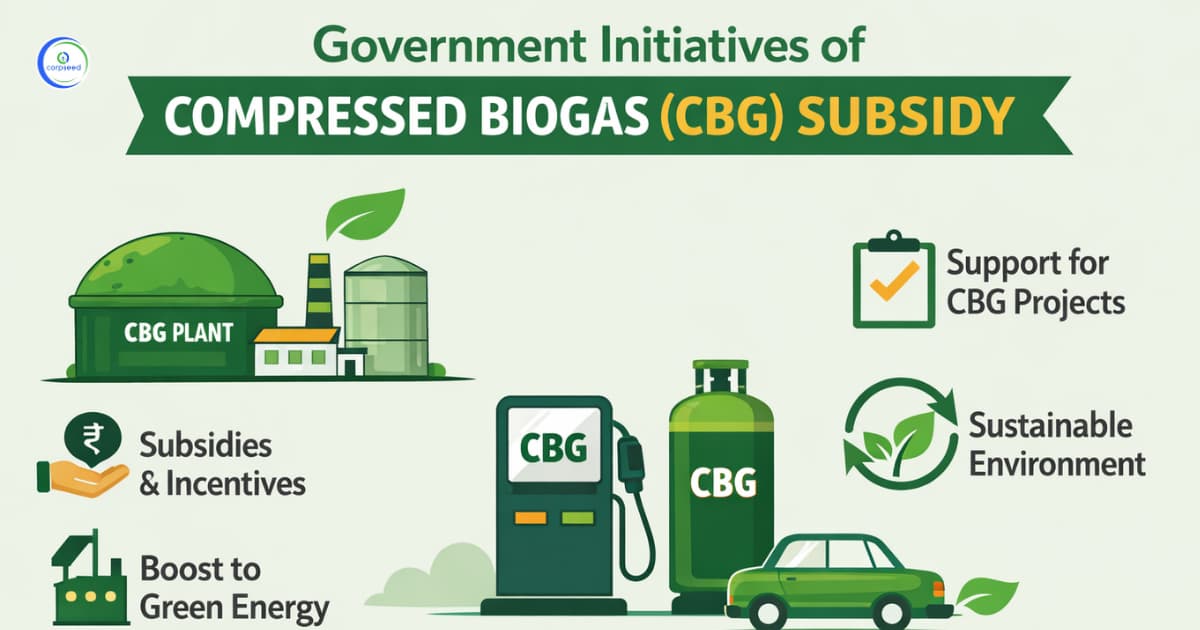
One of the most promising sources of renewable energy is compressed biogas, or CBG. Although biogas has been utilised for decades, CBG can directly replace natural gas and CNG in industrial and transportation settings after being compressed and purified. In addition to lessening reliance on fossil fuels, this offers a workable way to manage organic waste, cut greenhouse gas emissions, and create jobs in rural areas. CBG facilities use organic waste, such as bovine dung and agricultural wastes, to turn waste into a useful energy source that promotes economic growth and environmental sustainability.
After realising the strategic importance of CBG, the Indian government has put in place a variety of legislative initiatives and incentives to promote its implementation. These incentives are designed to minimise capital expenditures for companies, stabilise the market, and give technical and operational support through offtake agreements with Oil Marketing Companies (OMCs). By providing a structured framework, the government improves national energy security, encourages participation from the public and private sectors, and helps rural economie
Schedule a Call Back
Government Policy Framework for CBG Subsidy
A comprehensive policy framework that incorporates financial incentives, technical advice, and regulatory control forms the basis of the Indian government's strategy for supporting CBG facilities.
1. MNRE's function
Central financial support for the construction of CBG facilities is provided by the Ministry of New and Renewable Energy (MNRE). It oversees project execution, provides technical advice, and guarantees adherence to national environmental and energy regulations. With MNRE's help, projects become more financially viable and require less initial capital expenditure.
2. MoPNG's Function
The SATAT program is carried out by the Ministry of Petroleum and Natural Gas (MoPNG). It makes it easier for CBG producers and Oil Marketing Companies (OMCs) like IOCL, BPCL, and HPCL to enter into offtake agreements. By guaranteeing a market for CBG, these agreements lower plant operators' business risk.
3. MoEFCC's role
CBG plants are subject to environmental rules, which are monitored by the Ministry of Environment, Forest, and Climate Change (MoEFCC). It ensures that projects are in line with India's sustainability objectives by supervising waste management procedures, keeping an eye on emissions, and granting the required permissions.
4. Central and State Agency Coordination
To expedite permits, offer localised support, and make subsidy disbursement easier, central ministries collaborate closely with state renewable energy organisations. Through central incentives and state-specific assistance programs, this coordination guarantees that projects are carried out effectively.
5. Compliance with National Initiatives
CBG or compressed biogas promotion is in line with larger government programs like Atmanirbhar Bharat, which encourages domestic energy production and self-sufficiency, and Swachh Bharat Mission, which concentrates on cleanliness and waste management. This strategic alignment guarantees that CBG initiatives support several national goals at once.
Major Subsidy Schemes for CBG Plants
Below are the government-provided subsidy schemes for the CBG plant, which are as follows:
1. SATAT Initiative (Sustainable Alternative Towards Affordable Transportation)
The SATAT initiative, launched by the Government of India in 2018, aims to promote the production and use of Compressed Biogas (CBG) as a clean transportation fuel. Under this scheme, Oil Marketing Companies (OMCs) such as IOCL, BPCL, and HPCL provide assured long-term offtake agreements at a fixed price, ensuring revenue certainty for plant developers. It also supports businesses by creating a strong ecosystem for converting agricultural residues, municipal waste, and other biomass into compressed biogas (CBG) thereby reducing dependence on fossil fuels and promoting circular economy practices.
2. Capital Subsidy under MNRE (Ministry of New and Renewable Energy)
The MNRE provides Central Financial Assistance (CFA) under the National Bioenergy Programme for setting up CBG plants. The subsidy can go up to ₹10 crore per project, depending on plant capacity and type.
This capital support significantly reduces the initial investment burden and improves project viability. Additional incentives are also provided for special categories such as SC/ST, North-East regions, and rural-based projects, encouraging decentralised renewable energy development.
3. GOBARDhan Scheme (Galvanising Organic Bio-Agro Resources Dhan)
The GOBARDhan scheme focuses on converting cattle dung, agricultural waste, and organic municipal waste into biogas and organic fertilisers. GOBARDhan scheme also provides multiple financial incentives, such as:
- Market Development Assistance (MDA) of ₹1500 per tonne for organic manure (FOM/LFOM)
- Financial support for biomass aggregation machinery (up to 50% cost)
- Assistance for Compressed Biogas or CBG plant development (up to ₹9 crore, depending on capacity)
The scheme also provides a unified registration portal, making it easier for project developers to access benefits and streamline approvals.
4. Bank Finance & Priority Sector Lending
To ease financing challenges, the Reserve Bank of India has included CBG projects under Priority Sector Lending (PSL). This enables easier access to bank loans at favourable interest rates.
Additionally, schemes like the Agriculture Infrastructure Fund (AIF) offer interest subvention of up to 3% on loans, further reducing the cost of capital and improving project bankability.
5. Organic Manure Benefits (FOM/LFOM)
CBG plants produce Fermented Organic Manure (FOM) and liquid slurry as by-products, which are now recognised under the Fertiliser Control Order (FCO).
Key benefits include:
- Additional revenue stream for plant operators
- Improved soil health and reduced chemical fertiliser usage
- Government-backed support through MDA schemes
This dual-revenue model (gas + manure) enhances the overall financial viability of CBG projects.
6. Carbon Credits & Environmental Benefits
CBG projects contribute to greenhouse gas reduction by capturing methane emissions and replacing fossil fuels. As a result, project developers can earn carbon credits, which can be traded in domestic and international markets.
It also creates an additional income stream while supporting India’s climate commitments and net-zero targets. The integration of carbon markets is increasingly making CBG projects financially attractive and environmentally sustainable.
7. Blending Targets and Injection into CGD Pipeline
To ensure long-term demand, the government has introduced the CBG Blending Obligation (CBO) under the City Gas Distribution (CGD) network.
Additionally, financial assistance is provided for pipeline infrastructure (up to ₹28.75 crore per project) to enable direct injection of CBG into CGD networks. Its policy ensures stable demand, reduces LNG imports, and integrates CBG into mainstream energy supply chains.
8. State Govt Initiatives
State governments play a crucial role in accelerating the adoption of Compressed Biogas (CBG) projects by offering region-specific incentives and simplifying regulatory processes. These kinds of initiatives are designed to complement central schemes like SATAT and GOBARDhan, and make project implementation more practical at the ground level. Many states have introduced dedicated bioenergy or waste-to-energy policies that focus on facilitating land access by ensuring feedstock availability and reducing operational bottlenecks. By creating a supportive ecosystem, states also aim to attract private investment, promote rural entrepreneurship, and strengthen sustainable waste management practices.
Key initiatives by State Governments include:
- Land Allocation Support: Provision of land at concessional rates or through long-term leases especially in industrial zones or near waste generation sites.
- Capital Subsidies & Fiscal Incentives: Additional state-level subsidies, reimbursement of SGST, and exemptions on stamp duty and electricity duty to reduce project costs.
- Single-Window Clearance Systems: Simplified approval processes through the online portals to fast-track permits and licenses required for CBG plant setup.
Conclusion
Through several initiatives, such as the National Bioenergy Program, the Ministry of New and Renewable Energy's (MNRE) Waste-to-Energy Program, and the Sustainable Alternative Towards Affordable Transportation (SATAT) scheme, the Indian government is aggressively promoting the facilities of Compressed Biogas (CBG).
These programs seek to increase the generation of sustainable energy, lessen reliance on fossil fuels, and encourage waste-to-wealth prospects in the industrial and rural sectors. New CBG plants can receive up to ₹4 crore for a 4,800 kg/day capacity under the MNRE's Central Financial Assistance (CFA), while upgraded biogas plants can receive up to ₹3 crore every 4,800 kg/day, with a maximum of ₹10 crore per project.
About the Author

Anshika Jindal
Content WriterAnshika Jindal, a Legal Content Writer with strong expertise in legal research and a solid academic background in BA LLB and LLM (Criminal Law). I specialize in researching statutes, case laws, and legal developments and presenting them in clear, accurate, and engaging written content. With strong analytical skills and attention to detail, I create reliable, well-structured legal content while maintaining professional and ethical standards.
I specialize in conducting in-depth legal research using credible sources and presenting legal information in a structured, reader-friendly manner while maintaining precision and authenticity. My work focuses on simplifying legal language without compromising its meaning, making legal content accessible to a wider audience.
Related articles
National Green Hydrogen Mission in India
2026-11-02
CBG Plant Compliance Under GOBARdhan Scheme: Online GC Rules Relaxed Until March 2027
2026-10-28
PNGRB Hydrogen Blending Guidelines 2026: 5% PNG Rules, Safety and Approvals
2026-10-15
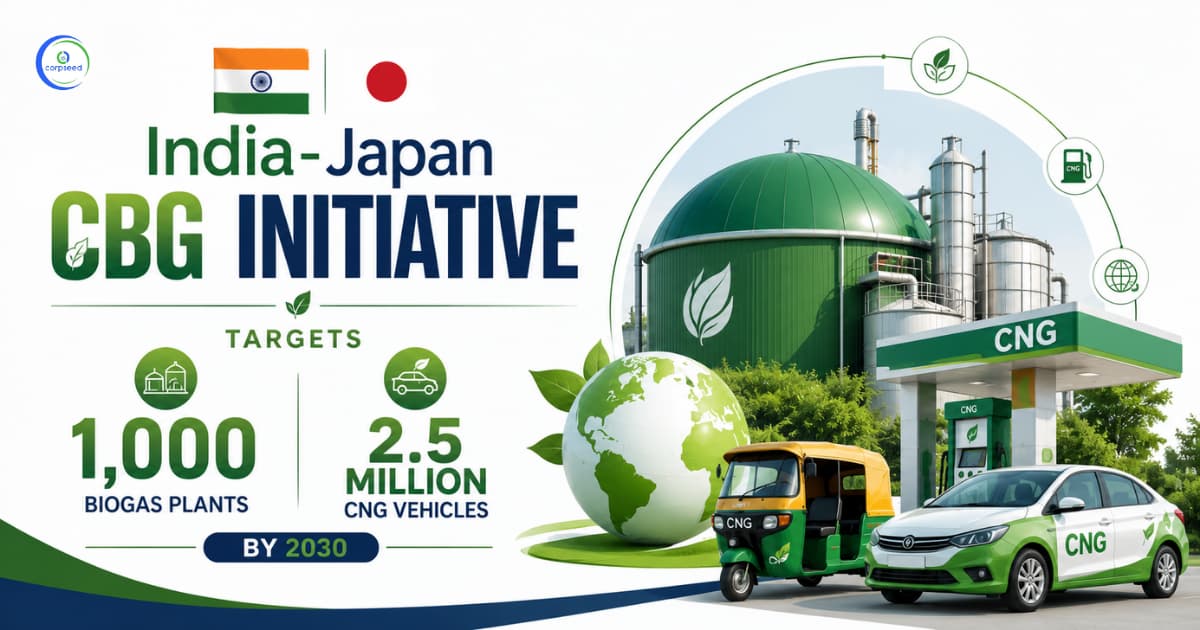
India-Japan CBG Initiative Targets 1,000 Biogas Plants and 2.5 Million CNG Vehicles by 2030
2026-07-07
How to Start an E-waste Recycling Business in India?
2026-04-28
Cleaner Engines, Greener Future: What India’s New Emission Rules Mean for Agriculture and Construction
2026-03-26