
What is the DPCC License?
The Delhi Pollution Control Committee (DPCC) is an autonomous regulatory body established on 1.06.1991, by the Delhi Government under the supervision of Central Pollution Control Board. The Central Pollution Control Board has delegated all its powers and function to DPCC. It is an organization with the main motto to create awareness about sustainable development by ensuring improvement in “environment quality” of National capital Region through the contribution of all the stakeholders.
Schedule a Call Back
1,800+ CTE/CTO and plant setup assignments since 2018
Clients include Magnum Aluminium, Enershell Alloys and Steel, Ganesh Foundry & Cast, Inland Speciality Metals, JK Cement, Sskbp India Alloy, Denso India, Neometrix Defence, PMS Waste Management, Daebak India Recycler, Ganix Rubber Recycling, Pashidaa E Waste Copper Battery Recycling PLT Company (12 of 1,100+ served since 2018).
A few more clients we've served in this industryHide the list
- Engineering and manufacturing
- Magnum Aluminium · Enershell Alloys and Steel · Ganesh Foundry & Cast · Inland Speciality Metals · JK Cement · Sskbp India Alloy · Denso India · Neometrix Defence
- Recycling and waste management
- PMS Waste Management · Daebak India Recycler · Ganix Rubber Recycling · Pashidaa E Waste Copper Battery Recycling PLT Company · Upcycle Debris Management · Ficusa Ewaste Recyclers · Shuchaye Recyclers · Quantara Battery Recycling
- Logistics and trade
- 20Cube Logistics Solutions · Airsurge Logistics · Green Space Logistics · Saap Logistics
- Food and consumer goods
- Bake Wish · Kokora Spices · Babi Beverages · Indraj Beverages and Distilleries · Adheshwar Agro Dairy Products · Venco Research and Breeding Farm · Explore Food · IFF India Frozen Foods
- Energy and power
- Servotech Renewable Power System · Saurya Urja Company of Rajasthan · Sun Mobility · Sun Max Solar · Maxvolt Energy Industries · Rays Power Infra
- Chemicals and materials
- Venkateshwara Roto Pack · Lami Tube · M C Bauchemie I · Pro Flexi Packaging · Rustchem Corrosols · SVN Polymers · Kairaa Polypack · Sanctum Chemicals
- More clients
- Intangles Lab · Alten India · Adit Buildwell · Ecowise Trading · GS E-Commerce · Beaucience India
Every business that runs in Delhi must follow certain rules to keep the environment safe. One of the most important rules is getting a DPCC license. DPCC stands for Delhi Pollution Control Committee. This body works to control pollution in Delhi and make sure industries do not harm the air, water, or land.
Whether someone wants to open a factory, a workshop, or any kind of industry, they must first get permission from DPCC. This permission comes in the form of a DPCC NOC (No Objection Certificate) or a DPCC certificate. Without this certificate, no industry can legally operate in Delhi.
Many business owners find the DPCC license process confusing. This blog breaks it down in simple steps. It explains what a DPCC license is, why it matters, and how the two main phases, CTE (Consent to Establish) and CTO (Consent to Operate), work in practice.
Schedule a Call Back
What is a DPCC License?
A DPCC license is an official permission given by the Delhi Pollution Control Committee under the Water (Prevention and Control of Pollution) Act, 1974 and the Air (Prevention and Control of Pollution) Act, 1981. It allows a business or industry to function legally in Delhi while following environmental rules.
In simple words, the DPCC license is a green signal from the government. It says: "This business has passed the environmental check, and it can run safely." Any industry that produces waste, like smoke, dirty water, chemicals, or noise, must apply for this license.
Once a business gets its DPCC certificate, it becomes proof that the business cares about Delhi's environment. This certificate also helps during inspections by government officials or during legal disputes.
Importance of DPCC License
Getting a DPCC license is not just a legal requirement, it is also a sign that a business operates responsibly. Here are some key reasons why this license matters so much:
- Legal Compliance: Any business that operates without a DPCC license breaks the law. The government can shut it down, impose heavy fines, or even take legal action. A valid DPCC certificate protects the business from such penalties.
- Environmental Protection: Delhi is one of the most polluted cities in the world. The DPCC license ensures that every industry follows pollution control standards. This helps reduce air and water pollution in the city.
- Business Credibility: A business that holds a valid DPCC NOC and DPCC certificate builds trust with customers, investors, and partners. It shows the business is transparent and plays by the rules.
- Required for Other Approvals: Many government approvals and bank loans require a DPCC certificate as proof of environmental compliance. Without it, a business may face roadblocks in getting funding or scaling up.
- Protects Public Health: The DPCC license makes sure that industries do not dump untreated waste in rivers, drains, or open areas. This directly protects the health of Delhi's residents.
Phases of DPCC License
The DPCC license process happens in two main phases. The first phase is called CTE (Consent to Establish), and the second phase is called CTO (Consent to Operate). Both phases are mandatory and must be completed in order.
Phase 1: CTE
CTE stands for Consent to Establish. This is the first permission a business needs from DPCC before starting the construction or setup of its unit. Think of it as getting approval to build the workplace.
Phase 2: CTO
CTO stands for Consent to Operate. Once a business completes its construction or setup and is ready to start operations, it must apply for a CTO. This is the second and final phase of the DPCC license process.
Conclusion
Getting a DPCC license is one of the most important steps for any business in Delhi. It is not just a legal formality, it is a promise to keep the city's air, water, and environment clean for everyone who lives here.
The two-phase process, CTE (Consent to Establish) and CTO (Consent to Operate), ensures that every industry gets proper checks before and after it starts running. The DPCC NOC and the DPCC certificate are the two key documents every business owner must obtain and keep valid at all times.
Business owners who apply on time, keep their documents updated, and follow pollution control standards never face trouble from authorities. On the other hand, those who skip or delay the process risk heavy fines, closure, and legal problems.
So, if anyone plans to start an industry or business unit in Delhi, the first call should go to DPCC, and the first goal should be getting that DPCC certificate in hand.
About the Author

Vinay Singh
Co-founder & Fintech AdvisorRelated articles
Compliance Report for CTO in India: Format, Due Dates & Filing Guide
2026-11-17
CPCB Steel Slag Management Guidelines 2026: Storage, Utilisation and Compliance Requirements
2026-11-16
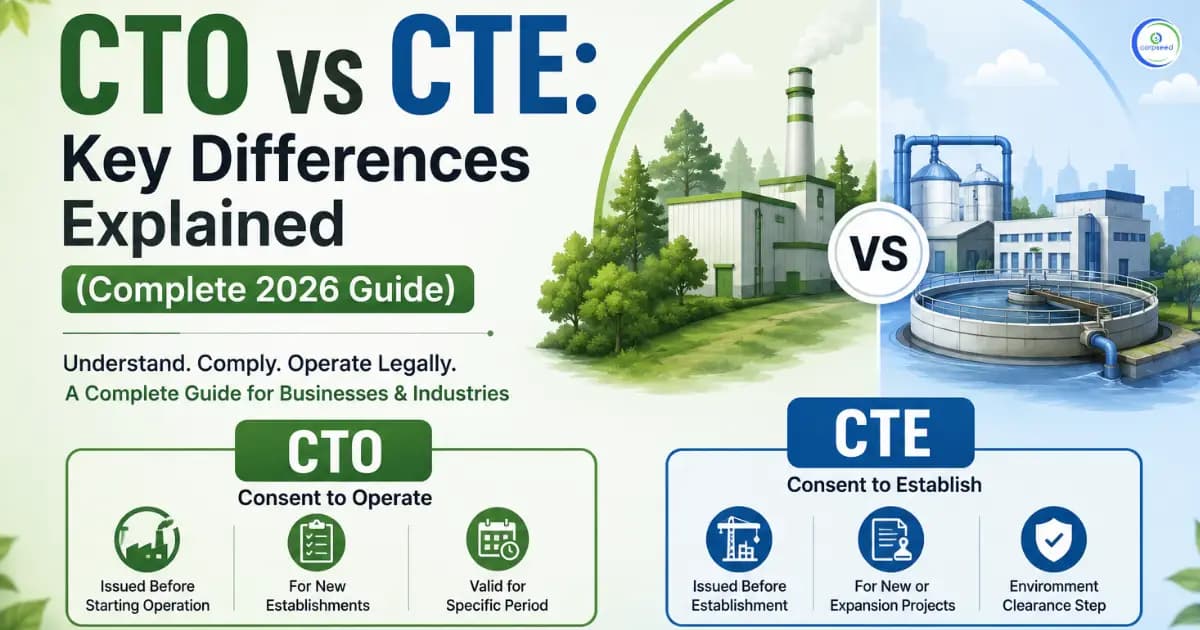
CTO vs CTE: Key Differences Explained (Complete 2026 Guide)
2026-07-31
How to Obtain NOC from the Pollution Control Board in India 2026?
2026-05-29
DPCC Issues SOP for Noise Pollution Enforcement and Compensation in Delhi
2026-05-14
How to Apply for a State Pollution NOC Online in 2026?
2026-04-07