
CTO vs CTE: Key Differences Explained (Complete 2026 Guide)
Consent to Establish (CTE) and Consent to Operate (CTO) are two mandatory environmental approvals issued by the respective State Pollution Control Boards (SPCBs) or Pollution Control Committees (PCCs) under the Water (Prevention and Control of Pollution) Act, 1974 and the Air (Prevention and Control of Pollution) Act, 1981.
Schedule a Call Back
1,800+ CTE/CTO and plant setup assignments since 2018
Clients include Magnum Aluminium, Enershell Alloys and Steel, Ganesh Foundry & Cast, Inland Speciality Metals, JK Cement, Sskbp India Alloy, Denso India, Neometrix Defence, PMS Waste Management, Daebak India Recycler, Ganix Rubber Recycling, Pashidaa E Waste Copper Battery Recycling PLT Company (12 of 1,100+ served since 2018).
A few more clients we've served in this industryHide the list
- Engineering and manufacturing
- Magnum Aluminium · Enershell Alloys and Steel · Ganesh Foundry & Cast · Inland Speciality Metals · JK Cement · Sskbp India Alloy · Denso India · Neometrix Defence
- Recycling and waste management
- PMS Waste Management · Daebak India Recycler · Ganix Rubber Recycling · Pashidaa E Waste Copper Battery Recycling PLT Company · Upcycle Debris Management · Ficusa Ewaste Recyclers · Shuchaye Recyclers · Quantara Battery Recycling
- Logistics and trade
- 20Cube Logistics Solutions · Airsurge Logistics · Green Space Logistics · Saap Logistics
- Food and consumer goods
- Bake Wish · Kokora Spices · Babi Beverages · Indraj Beverages and Distilleries · Adheshwar Agro Dairy Products · Venco Research and Breeding Farm · Explore Food · IFF India Frozen Foods
- Energy and power
- Servotech Renewable Power System · Saurya Urja Company of Rajasthan · Sun Mobility · Sun Max Solar · Maxvolt Energy Industries · Rays Power Infra
- Chemicals and materials
- Venkateshwara Roto Pack · Lami Tube · M C Bauchemie I · Pro Flexi Packaging · Rustchem Corrosols · SVN Polymers · Kairaa Polypack · Sanctum Chemicals
- More clients
- Intangles Lab · Alten India · Adit Buildwell · Ecowise Trading · GS E-Commerce · Beaucience India
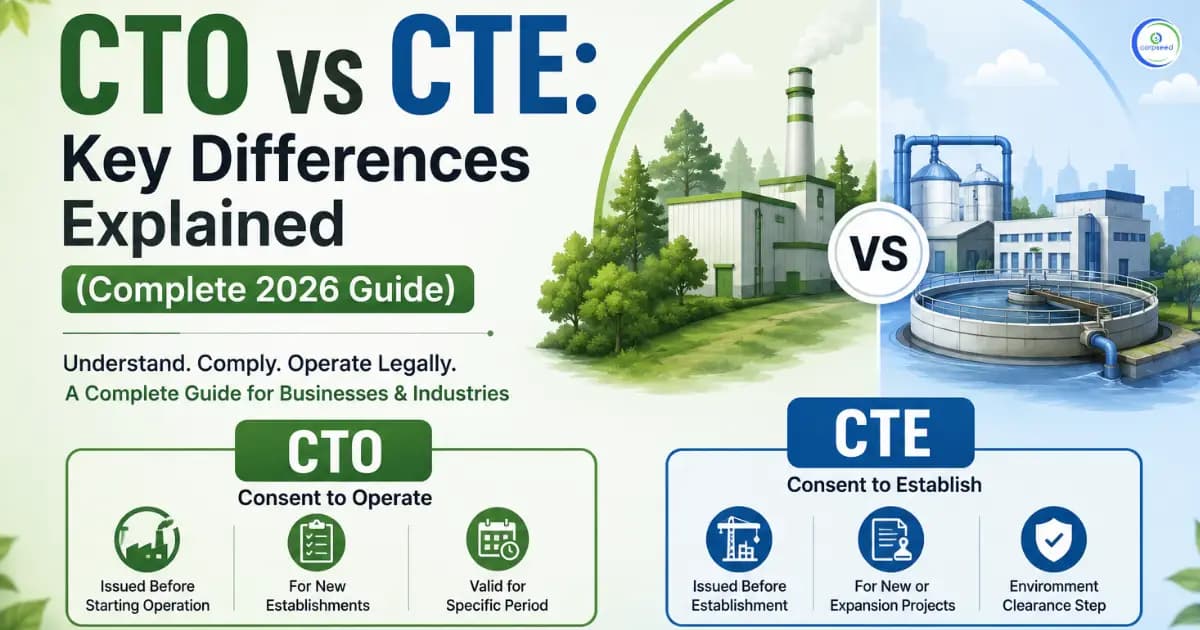
Introduction
When setting up your factory, manufacturing unit, hotel, hospital or any other industrial project in India, you have undoubtedly heard two three-letter terms: CTO and CTE. Try searching for either of the two on the internet, and you'll come across several pages of complicated jargon, legal sections, and government websites all adding to the complexity of the procedure.
To keep it simple, CTE (Consent to Establish) is the consent you require before construction. CTO (Consent to Operate) is the consent you require before the actual operation. Failure to obtain both consents will result in fines, mandatory closure, and will delay the completion of your project.
In this article, we will explain in detail what CTE and CTO are, their difference, who requires them, the documents needed, the duration and what can happen if you don't. In addition, we'll explain how our team can handle the entire process for you.
Schedule a Call Back
What Is CTE (Consent to Establish)?
Consent to Establish, commonly known as CTE, is the first environmental approval a business must obtain under the Water (Prevention and Control of Pollution) Act, 1974 and the Air (Prevention and Control of Pollution) Act, 1981.
Think of the CTE as the permit to construct the environment. Before you set the first stone or pour the first drop of concrete, your State Pollution Control Board (SPCB) or Pollution Control Committee (PCC) will have to examine your construction plans and verify that they do not pose any harm to the environment.
Why CTE Matters?
- It's mandatory before commencing commercial operations.
- It verifies real-world compliance, not just paper plans.
- Businesses cannot apply for CTO without first having a valid CTE; the two are sequential, not interchangeable.
- CTO isn't a one-time approval; it must be renewed periodically based on your industry category.
What You Need to Apply for CTO
- Copy of the valid CTE certificate
- Commissioning certificates for ETP, STP, and air pollution control equipment
- Lab analysis reports for effluent and emissions (from accredited laboratories)
- Water consumption and consent fee payment details
- Environmental Management Plan
- Hazardous waste authorization (if applicable)
- Compliance report against CTE conditions
CTO vs CTE: Key Differences at a Glance
| Parameter | CTE (Consent to Establish) | CTO (Consent to Operate) |
| Full Form | Consent to Establish | Consent to Operate |
| When It's Needed | Before construction/installation begins | Before commercial operations begin |
| Purpose | Approves the project plan and proposed pollution controls | Verifies installed systems are functional and compliant |
| Issued By | State Pollution Control Board (SPCB) / PCC | State Pollution Control Board (SPCB) / PCC |
| Prerequisite | None (first-stage approval) | Valid CTE is mandatory |
| Validity | Typically 3–5 years (project setup period) | Typically 1–5+ years, based on industry category (Red/Orange/Green) |
| Renewal | Usually one-time, with extension if project is delayed | Recurring - must be renewed before expiry |
| Site Inspection | Often required before approval | Required to confirm actual compliance |
| Applicable Laws | Water Act 1974, Air Act 1981 | Water Act 1974, Air Act 1981 |
Understanding Industry Categories: Red, Orange, Green, and White
Not every business is treated the same way under CTE and CTO rules. The Central Pollution Control Board (CPCB) classifies industries into four categories based on their pollution potential. This classification directly affects your documentation, fees, and validity period.
- Red Category: High pollution potential (e.g., chemical plants, tanneries, distilleries). Requires the most rigorous scrutiny and shortest renewal cycles.
- Orange Category: Moderate pollution potential (e.g., food processing, textile dyeing, large hotels). Subject to regulatory oversight but with somewhat simpler compliance than the Red category.
- Green Category: Minimal pollution impact (such as bakeries, small assembly units, furniture factories). Usually qualify for an extended validity period and, in some cases, receive clearance through documentation without requiring a site inspection.
- White Category: Non-polluting and minimal-impact activities (like solar power generation plants, tailoring units, selected IT/software operations). Usually exempted from CTE/CTO requirement but need to provide pre-commencement intimation to SPCB.
Knowing your category upfront saves significant time it determines how much paperwork you'll need, how long the approval process will take, and how often you'll need to renew.
Step-by-Step: How the CTE and CTO Process Works
- Classify your industry using CPCB's published guidelines to confirm whether you fall under the Red, Orange, Green, or White category.
- Apply for CTE through your state's SPCB portal (most states now use the Online Consent Management and Monitoring System OCMMS) with your project report, site plan, and pollution control design.
- Pay the consent fee, which is calculated based on capital investment, water consumption, and industry category.
- Await scrutiny and inspection the SPCB reviews your application and may visit the proposed site.
- Receive CTE approval and begin construction/installation as per the approved plan.
- Install and commission pollution control systems (ETP, STP, air scrubbers, etc.) exactly as specified in your CTE.
- Apply for CTO with commissioning certificates, lab test reports, and compliance documentation.
- Undergo final inspection, during which officials verify that your systems are functioning as promised.
- Receive CTO and legally commence commercial operations.
- Track renewal deadlines the CTO must be renewed before expiry (applications are usually filed about four months in advance) to avoid any operational disruption.
What Happens If You Skip CTE or CTO?
Operating without valid consent isn't a minor paperwork oversight it carries real legal and financial consequences:
- Closure orders: Authorities can order your unit to stop operations immediately.
- Heavy penalties and fines under the Water Act and Air Act.
- Legal proceedings, including possible criminal liability for repeated or willful non-compliance.
- Loss of other approvals- many licenses (fire safety, electricity connection, factory license, bank loans, government tenders) require valid CTE/CTO as a prerequisite.
- Reputational damage- non-compliance can affect your standing with investors, clients, and regulators, and hurt your ability to participate in CSR-linked or government contracts.
Given how interconnected these approvals are with the rest of your business operations, most companies find it far cheaper to get compliance right the first time than to deal with penalties and delays later.
Common Mistakes Businesses Make
Businesses Commonly Make These Mistakes:
- Beginning construction without obtaining CTE is a surprisingly common and costly mistake.
- Filing for CTO after it is too late, causing delays in operations after the construction is completed.
- Failing to understand the documentation process, causing rejection and resubmission of paperwork.
- Not being aware of renewal dates can lead to temporary closure, even if you follow all regulations.
- Incorrect classification of industry sector, which leads to incorrect calculations of fees or inspections.
- Not considering that rules for CTE/CTO vary from state to state.
Why Businesses Choose to Work with Environmental Compliance Experts?
CTE and CTO procedures require the submission of a project report, drawings, laboratory test results, legal documents, and repeated coordination with government officials. If any document is missing or incorrect, the process may take several months.
Not all business people have enough time to meet all requirements from SPCB authorities and coordinate inspections and renewal deadlines. This is precisely where the role of professional services comes into play.
Our team specializes in end-to-end CTE and CTO consulting, including:
- Industry category assessment and applicability check
- Preparation and filing of CTE and CTO applications across all major state portals
- Documentation support, including project reports and environmental management plans
- Coordination with laboratories for effluent and emission testing
- Liaising with SPCB officials during inspections
- Renewal tracking so you never miss a deadline.
Consolidated Consent & Authorisation (CCA) support in states where CTE, CTO, and hazardous waste authorizations are combined into a single license
Whether you're setting up a new industrial unit, expanding an existing one, or need to renew an expiring CTO, our consultants can guide you through every step so you can focus on building your business, not chasing paperwork.
Get in touch today for a free consultation and find out exactly what CTE/CTO requirements apply to your business.
About the Author

Anshika Jindal
Content WriterAnshika Jindal, a Legal Content Writer with strong expertise in legal research and a solid academic background in BA LLB and LLM (Criminal Law). I specialize in researching statutes, case laws, and legal developments and presenting them in clear, accurate, and engaging written content. With strong analytical skills and attention to detail, I create reliable, well-structured legal content while maintaining professional and ethical standards.
I specialize in conducting in-depth legal research using credible sources and presenting legal information in a structured, reader-friendly manner while maintaining precision and authenticity. My work focuses on simplifying legal language without compromising its meaning, making legal content accessible to a wider audience.
Related articles
How to Obtain NOC from the Pollution Control Board in India 2026?
2026-05-29
DPCC Issues SOP for Noise Pollution Enforcement and Compensation in Delhi
2026-05-14
How to Apply for a State Pollution NOC Online in 2026?
2026-04-07
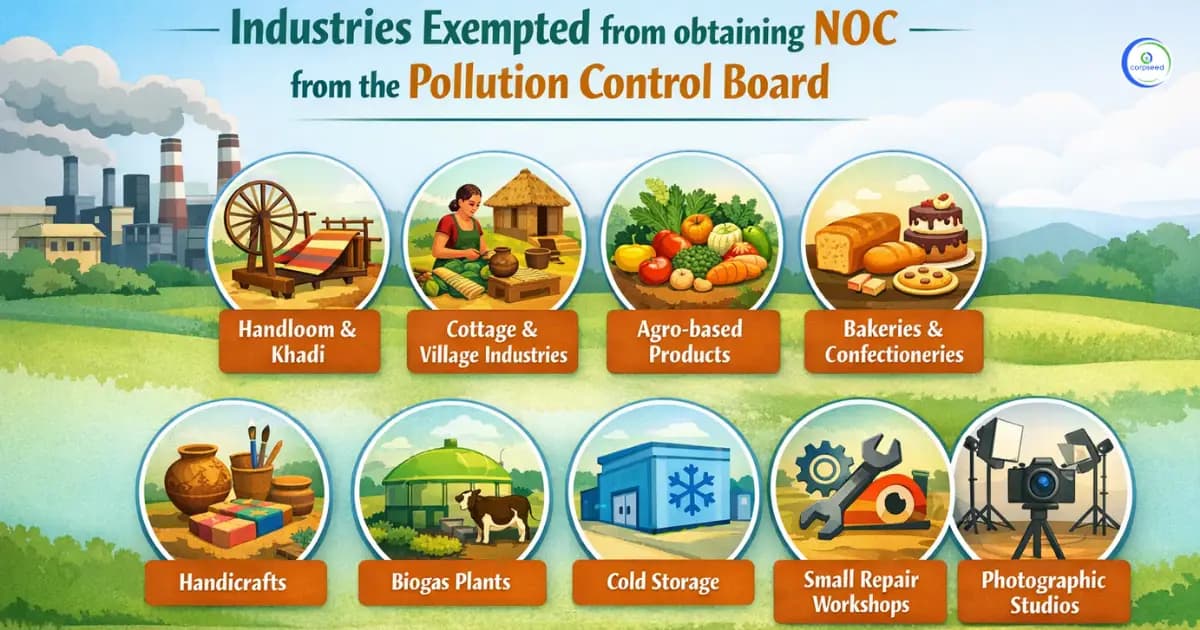
Industries Exempted From Obtaining Noc From The Pollution Control Board
2026-02-18
MOEFCC Water Pollution Consent Guidelines 2026: CTE, CTO, Fees, Validity & Approvals
2026-02-11
Kerala Pollution Board Issues Updated Guidelines on Sampling and Transportation Charges
2026-01-22