
How to Apply for a State Pollution NOC Online in 2026?
The Government of India has pushed hard for digital transformation in environmental compliance. Here is what has changed and why the process feels far less painful today.
Schedule a Call Back
1,800+ CTE/CTO and plant setup assignments since 2018
Clients include Magnum Aluminium, Enershell Alloys and Steel, Ganesh Foundry & Cast, Inland Speciality Metals, JK Cement, Sskbp India Alloy, Denso India, Neometrix Defence, PMS Waste Management, Daebak India Recycler, Ganix Rubber Recycling, Pashidaa E Waste Copper Battery Recycling PLT Company (12 of 1,100+ served since 2018).
A few more clients we've served in this industryHide the list
- Engineering and manufacturing
- Magnum Aluminium · Enershell Alloys and Steel · Ganesh Foundry & Cast · Inland Speciality Metals · JK Cement · Sskbp India Alloy · Denso India · Neometrix Defence
- Recycling and waste management
- PMS Waste Management · Daebak India Recycler · Ganix Rubber Recycling · Pashidaa E Waste Copper Battery Recycling PLT Company · Upcycle Debris Management · Ficusa Ewaste Recyclers · Shuchaye Recyclers · Quantara Battery Recycling
- Logistics and trade
- 20Cube Logistics Solutions · Airsurge Logistics · Green Space Logistics · Saap Logistics
- Food and consumer goods
- Bake Wish · Kokora Spices · Babi Beverages · Indraj Beverages and Distilleries · Adheshwar Agro Dairy Products · Venco Research and Breeding Farm · Explore Food · IFF India Frozen Foods
- Energy and power
- Servotech Renewable Power System · Saurya Urja Company of Rajasthan · Sun Mobility · Sun Max Solar · Maxvolt Energy Industries · Rays Power Infra
- Chemicals and materials
- Venkateshwara Roto Pack · Lami Tube · M C Bauchemie I · Pro Flexi Packaging · Rustchem Corrosols · SVN Polymers · Kairaa Polypack · Sanctum Chemicals
- More clients
- Intangles Lab · Alten India · Adit Buildwell · Ecowise Trading · GS E-Commerce · Beaucience India
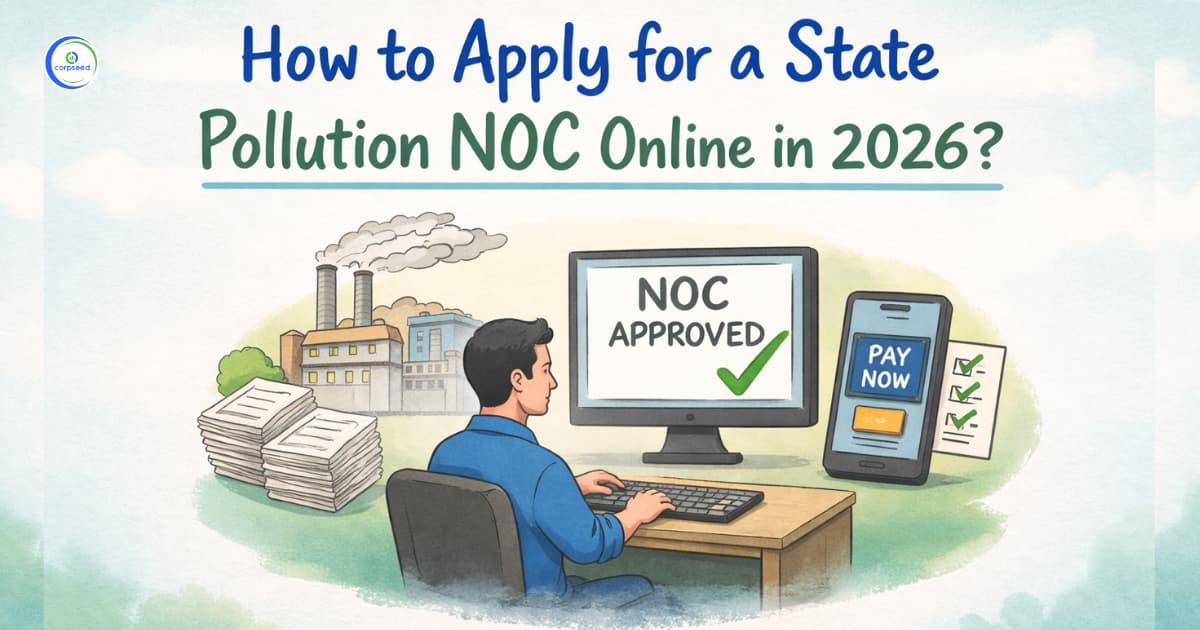
Every business that sets up a factory, plant, or industrial unit in India needs one key document before it starts operations, the State Pollution NOC (No Objection Certificate). The State Pollution Control Board (SPCB) or the Pollution Control Committee (PCC) in the union territories issues this document.
Without this certificate, no industry can legally start production. It confirms that the industry complies with environmental regulations and does not exceed permitted limits for air, water, or soil.
The good news? The entire process now happens online. This guide breaks down every step in the simplest possible way, so any business owner, even someone applying for the first time, can understand and complete the process without confusion.
Schedule a Call Back
Why Getting a State Pollution NOC in 2026 is Now Easier?
The Government of India has pushed hard for digital transformation in environmental compliance. Here is what has changed and why the process feels far less painful today:
Key Improvements in 2026
- The Parivesh portal (parivesh.nic.in) now integrates permissions from the Centre and the states, so applicants submit a single form instead of running between offices.
- Most state PCBs have launched dedicated online portals with real-time application tracking.
- Green and White category industries get faster processing timelines, sometimes as short as 30 days.
- Aadhaar-linked digital signatures make document uploads legally valid without physical submission.
- SMS and email alerts keep applicants informed at every stage, no more chasing officers for status updates.
This shift has dramatically reduced delays and unnecessary trips to government offices. Applicants who prepare documents correctly rarely face rejections or long waits.
Understanding Industry Colour Category Before Applying
Not every factory pollutes the same way. That is exactly why the CPCB sorts industries into four colour categories based on a Pollution Index score. Before any NOC application moves forward, the right category must be identified.
- The Red Category sits at the top of the risk chart with a score of 60 or above. Think cement plants, chemical factories, and pharmaceutical units. These industries undergo the most stringent approval checks.
- The Orange Category covers moderate-risk businesses, auto parts makers, paper mills, food processing units, scoring between 41 and 59. The process here is detailed but less intense than Red.
- The Green Category is for low-risk operations like bakeries, garment shops, and small metalwork units, scoring between 21 and 40. Approvals come faster and with fewer conditions.
- White Category is the lightest group, scoring 20 or below. Software firms, handicraft makers, and select food processing units fall under this category. No Consent to Operate needed, just a self-declaration works.
Getting the category wrong delays everything. Identify it first, then apply.
The New Rules for Indefinite Consent to Operate in 2026
One of the biggest policy shifts in recent years is the move toward Indefinite or Long-Term Consent to Operate (CTO). Earlier, industries had to renew their CTOs every 1 to 5 years. This created a paperwork burden and room for delays.
What the 2026 Rules Say About CTO Validity
- Green category industries with a clean compliance record can now obtain CTO for up to 10 years, or an indefinite period in some states.
- Orange category industries get a CTO for 5 to 7 years based on their compliance history.
- Red category industries still go through stricter review cycles of 1 to 5 years.
- Industries that upload real-time pollution monitoring data to the SPCB server automatically qualify for longer validity periods.
- Automatic renewal via the portal is available for low-risk industries that maintain clean discharge records for 3 or more consecutive years.
This policy change rewards compliant businesses. Industries that stay honest with their pollution data get less regulatory friction over time.
Step-by-Step Process to Complete the Online NOC Application
The process varies slightly from state to state, but the core steps remain the same across India.
1. Register on the State SPCB Portal or Parivesh
Visit the official SPCB website of the respective state or go to parivesh.nic.in. Create an account using a valid mobile number and an Aadhaar-linked email address.
2. Select the Correct Application Type
Choose between Consent to Establish (CTE) for new projects and Consent to Operate (CTO) for units already set up. Picking the wrong type is a common mistake.
3. Fill in Industry Details and Colour Category
Enter the type of industry, production capacity, raw materials used, and nature of waste generated. The portal auto-suggests the colour category based on this data.
4. Upload All Required Documents
Upload scanned copies of the necessary documents in the prescribed format. All files must be clear, legible, and within the size limits set by the portal.
5. Pay the Application Fee Online
The fee depends on the industry category and the production capacity. Pay through net banking, UPI, or debit card. Save the payment receipt.
6. Submit and Track the Application
After submission, the portal generates an acknowledgment number. Use this number to track the status. Red and Orange category units may need a physical site inspection before approval.
7. Receive the NOC Certificate Digitally
Once approved, the SPCB officer digitally signs the NOC. The certificate can be downloaded directly from the portal. No physical visit is needed to collect it.
Common Mistakes That Lead to Pollution NOC Rejections
Rejection wastes time, money, and effort. These are the most common errors that trigger an outright rejection or a request for resubmission:
- Uploading blurry or incomplete documents: The SPCB officer cannot process illegible documents. Each page must be fully visible and within the file size limit.
- Selecting the wrong industry category: Choosing a lower category to reduce fees or avoid scrutiny is a serious legal mistake. The SPCB verifies the industry type independently.
- Mismatch between land use permission and industrial activity: If the land is not zoned for industrial use as per the local authority, the SPCB automatically rejects the NOC application.
- Not mentioning all pollutants or effluents generated: Any pollution source that gets hidden at the application stage creates legal trouble during inspections. Full disclosure is always safer.
- Applying for CTO without first getting CTE approval: A Consent to Operate cannot precede a Consent to Establish. The sequence must follow the correct order.
- Missing or expired pollution control equipment records: Effluent Treatment Plant (ETP), Sewage Treatment Plant (STP), and stack emission control equipment certificates must be current and valid.
Conclusion
The State Pollution NOC is not just a regulatory formality, it is a foundation for running a legally sound and environmentally responsible business in India.
The 2026 system has made this process faster, more transparent, and far less intimidating. The online portals have removed much of the paperwork chaos, and the new long-term CTO rules reward industries that stay compliant.
The key to a smooth approval process is preparation. Know the industry colour category. Gather all documents before starting the application. Fill every detail accurately. And submit to the right portal.
Businesses that treat environmental compliance as a priority, not an afterthought, build a stronger reputation, avoid penalties, and operate with peace of mind. The State Pollution NOC is the first step on that path.
About the Author

Mahek Sancheti
Content WriterMahek Sancheti, BAJMC graduate with a deep passion for writing. As a content writer, video content creator, creative content creator, and scriptwriter, I bring stories to life through words and visuals. I honed my skills by working with a prominent news agency, where I excelled in crafting compelling narratives and engaging content. Coming from a journalism and mass communication background I have skills to craft engaging narratives that captivate audiences. With a keen interest in writing and creativity, I aim to deliver impactful and meaningful content that resonates with diverse audiences.
https://www.linkedin.com/in/mahek-sancheti-837196212
Related articles
CTO vs CTE: Key Differences Explained (Complete 2026 Guide)
2026-07-31
How to Obtain NOC from the Pollution Control Board in India 2026?
2026-05-29
DPCC Issues SOP for Noise Pollution Enforcement and Compensation in Delhi
2026-05-14
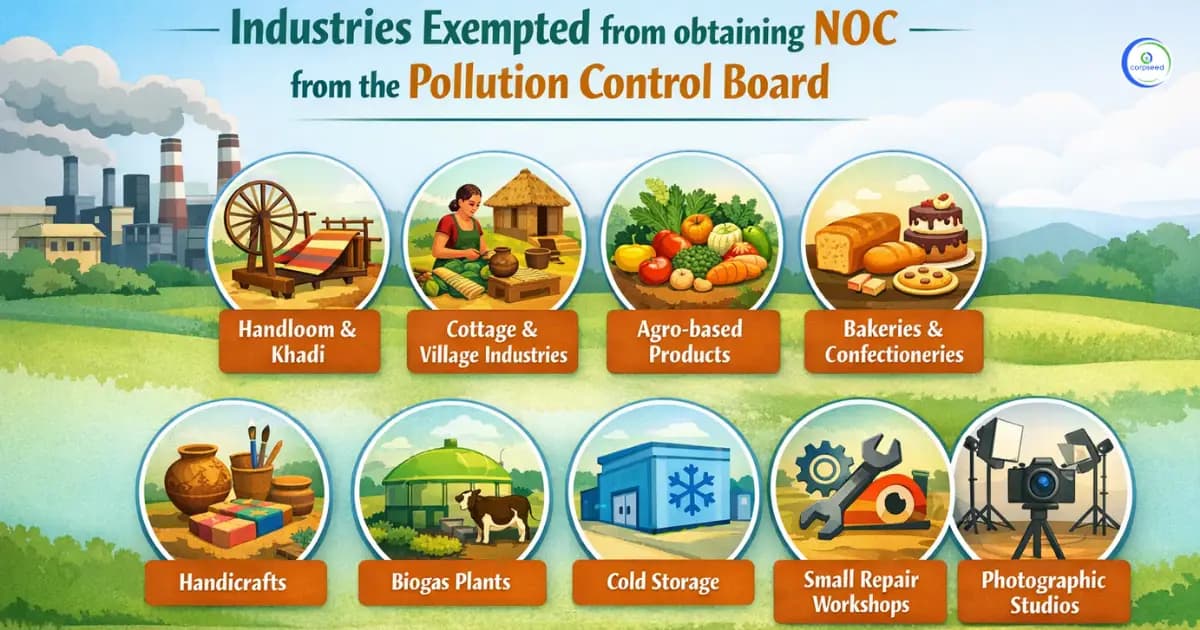
Industries Exempted From Obtaining Noc From The Pollution Control Board
2026-02-18
MOEFCC Water Pollution Consent Guidelines 2026: CTE, CTO, Fees, Validity & Approvals
2026-02-11
Kerala Pollution Board Issues Updated Guidelines on Sampling and Transportation Charges
2026-01-22