The Ministry of Environment, Forest and Climate Change (MOEFCC) has issued the Control of Water Pollution (Grant, Refusal or Cancellation of Consent) Amendment Guidelines, 2026. These guidelines aim to simplify the process of granting consent to industries under the Water (Prevention and Control of Pollution) Act, 1974, ensure environmental safety, and promote transparency.
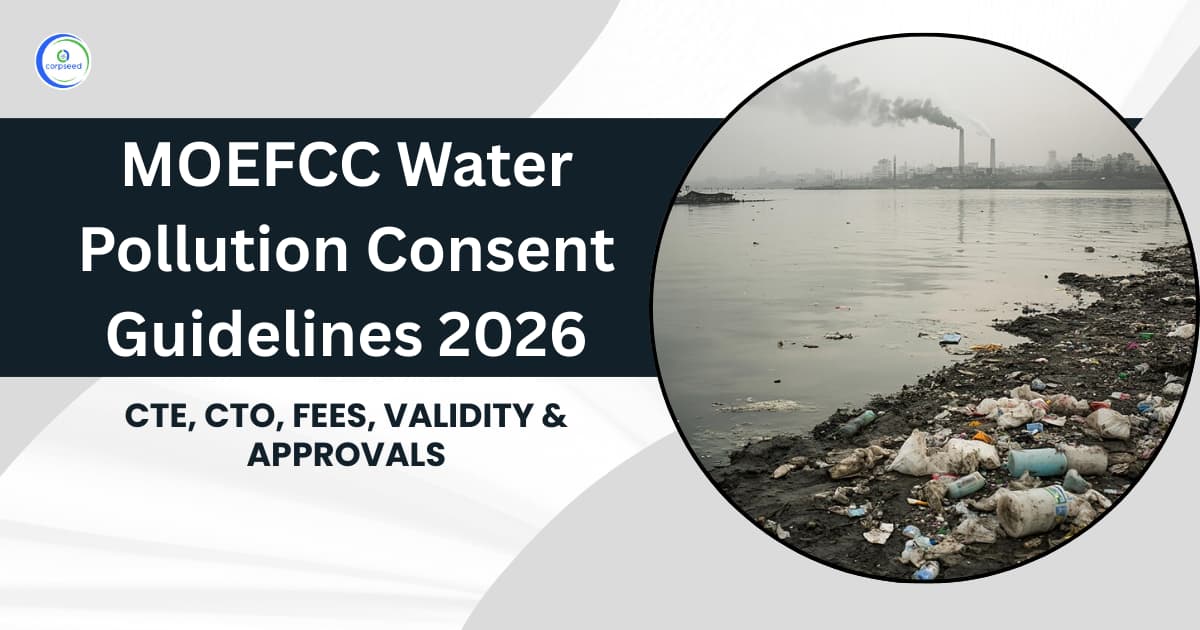
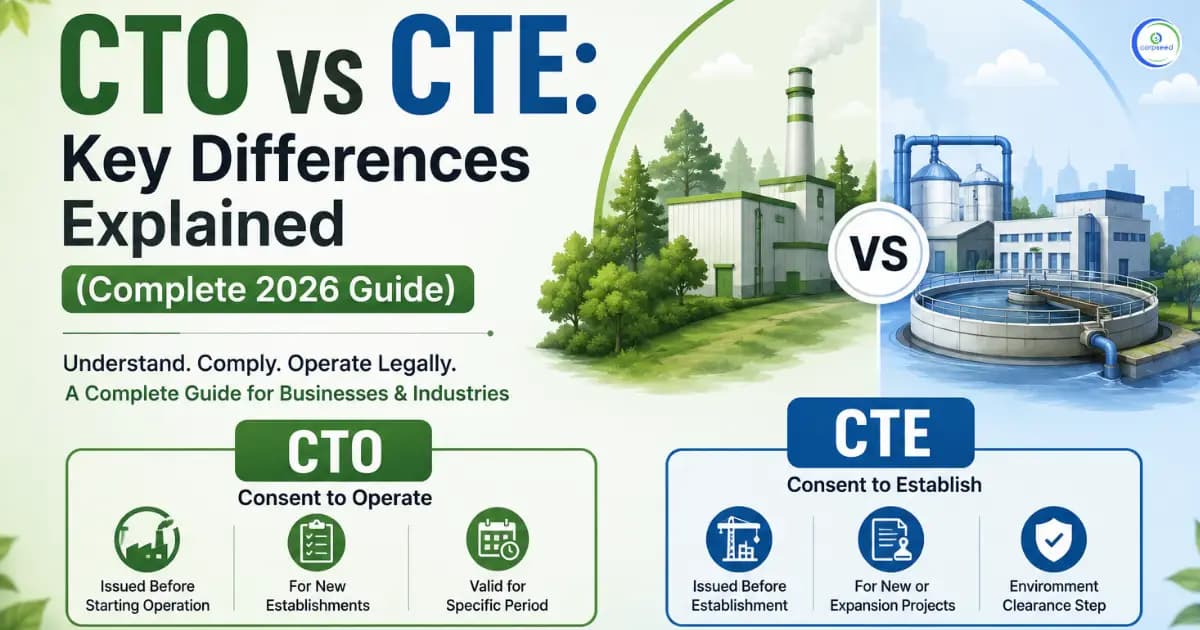
The new notification brings major changes to consent to establish (CTE) and consent to operate (CTO) procedures. It introduces Registered Environment Auditors, an online portal, a single-window system, and changes in fees and validity, making compliance easier for industries while strengthening environmental protection.
Table of Contents
- What are the Water Pollution Consent Guidelines issued by MOEFCC?
- Legal Framework under the Water (Prevention and Control of Pollution) Act, 1974
- Key Amendments in Consent to Establish and Consent to Operate
- Procedure for Making Enquiry on Application for Consent
- Changes in Consent Validity, Fee Structure, and Deemed Approval
- Role of Registered Environment Auditors in the Consent Process
- Online Portal and Single-Window System for Water Act Consent Implementation
- Impact on Industries and Compliance Roadmap
- Conclusion
--------------Blog Contact Form-------------
What are the Water Pollution Consent Guidelines issued by MOEFCC?
The Water Pollution Consent Guidelines provide a structured process for industries to obtain permission to establish and operate industrial units that discharge water pollutants.
These guidelines regulate industrial water pollution, prevent environmental harm, and ensure industries adopt pollution control measures. They apply to all states and union territories and cover the following:
- Granting or refusal of Consent to Establish (CTE) for new industrial units.
- Granting or refusal of Consent to Operate (CTO) for existing industrial units.
- Integrating hazardous and other waste management consents in a single procedure.
- Monitoring compliance with pollution norms under the Water (Prevention and Control of Pollution) Act, 1974.
The 2026 amendment focuses on digitalization, efficiency, and transparency, and introduces provisions for deemed approval for micro and small units.
Legal Framework under the Water (Prevention and Control of Pollution) Act, 1974
The Water (Prevention and Control of Pollution) Act, 1974, is the backbone of India’s water pollution management system. Its main objectives are:
- Prevent pollution of water sources in India.
- Establish Central and State Pollution Control Boards (CPCB and SPCB) to monitor pollution.
- Authorize Boards to issue Consent to Establish and Consent to Operate for industrial units.
- Enforce penalties for non-compliance.
The Act empowers MOEFCC to issue guidelines for industries, including consent procedures, fees, validity, and monitoring mechanisms. The 2026 amendment builds on this legal framework and integrates modern audit and digital systems.
Also Read: Control of Air Pollution Grant of Consent Amendment Guidelines 2026
Key Amendments in Consent to Establish and Consent to Operate
The 2026 MOEFCC amendment has introduced significant changes:
- Introduction of Registered Environment Auditors: Industries can now engage certified auditors under the Environment Audit Rules, 2025, to inspect premises and verify compliance.
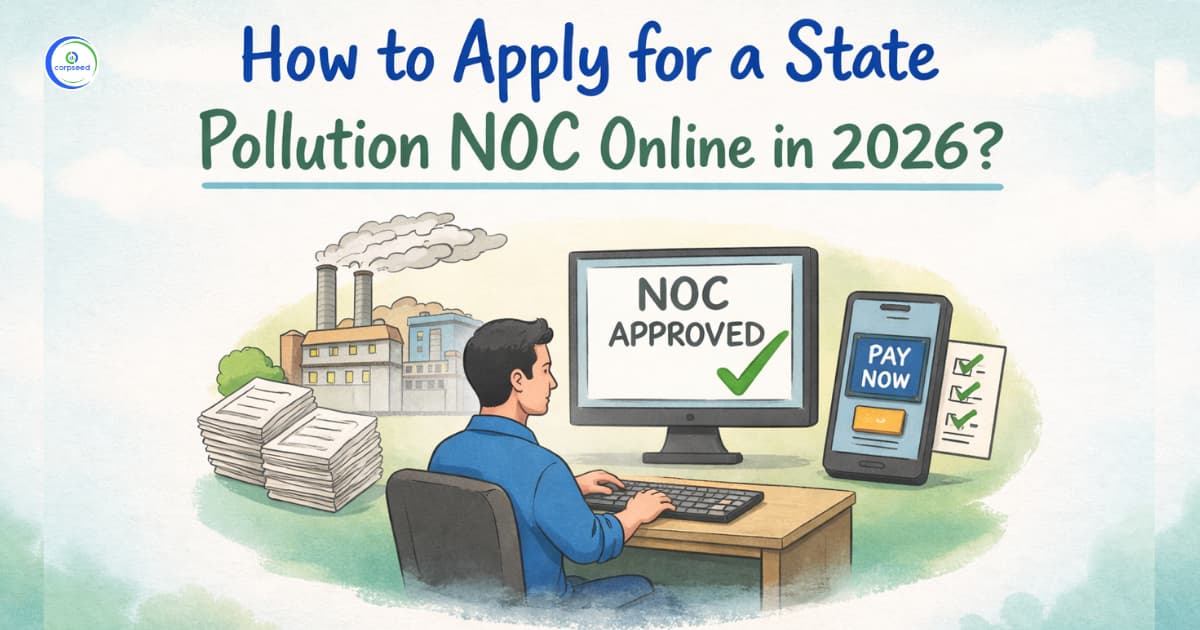
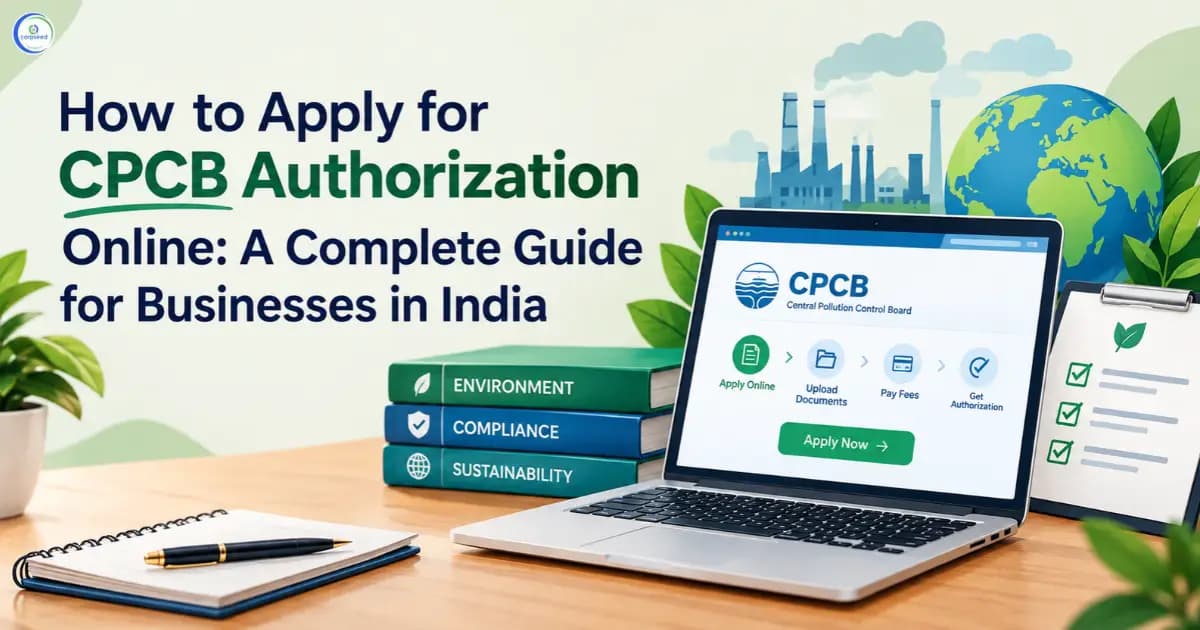
- Online Portal for Consent Management: A unified portal will handle all applications for CTE and CTO, inspections, cancellations, and fees digitally.
- Single-Step Consent for Waste Management: Consent under section 25 of the Water Act and authorizations under hazardous and other waste rules are now granted in a consolidated single procedure.
- Fee and Validity Structure: Industries can pay a one-time fee for CTO validity ranging from 5 to 25 years. Extension requires a fresh fee.
- Deemed Approval for Micro and Small Units: Micro and small units in notified industrial estates receive automatic consent upon self-certification through Form I.
- Simplified Application Forms: Form II has been updated to simplify renewal and expansion. Mandatory documents are clearly specified.
- Inspection Flexibility: SPCB officers or Registered Environment Auditors can inspect industrial premises for emissions, effluent treatment plants, and pollution control systems.
Procedure for Making Enquiry on Application for Consent
The amendment clarifies inspection and enquiry procedures for industrial units:
- Upon receiving an application, the State Board can depute an officer, or the applicant can engage a Registered Environment Auditor for verification.
- Inspection covers all solid, liquid, and gaseous emissions from chimneys, process units, and other areas of the premises.
- The officer or auditor may request plans, specifications, or data related to pollution control systems.
- Applicants must provide all required information and facilities for inspection.
- For micro and small units in industrial estates, the consent is deemed granted upon submission of a self-certified application in Form I.
Changes in Consent Validity, Fee Structure, and Deemed Approval
The 2026 MOEFCC amendments have introduced major reforms to make the consent process under the Water Act more efficient and predictable for industries.
1. Consent Validity:
- Earlier, Consent to Operate (CTO) required periodic renewal, causing delays and repeated inspections.
- Now, CTO remains valid until the State Pollution Control Board (SPCB) formally cancels it, reducing administrative burden.
- Industries no longer need to apply repeatedly for extensions within the approved validity period.
2. Fee Structure:
- SPCBs or Union Territory administrations can fix a one-time fee for CTO valid for 5 to 25 years, depending on the project’s choice.
- If an industry wants to extend beyond the chosen period, a fresh fee must be paid.
- Additionally, 5% of the collected fee goes to the Central Pollution Control Board as a service charge for portal maintenance and administration.
3. Deemed Approval for Micro and Small Units:
- Micro and small units located in notified industrial estates or areas now receive automatic consent upon submission of a self-certified Form-I.
- This reduces delays, encourages ease of doing business, and supports faster industrial growth while maintaining environmental compliance.
Role of Registered Environment Auditors in the Consent Process
Registered Environment Auditors (REAs) play a key role in ensuring transparency, compliance, and efficiency in the water pollution consent process. Their responsibilities include:
- Verification of Application Data: REAs inspect industrial premises to confirm the accuracy of information submitted in the consent application.
- Inspection of Emission Sources: They examine all solid, liquid, and gaseous emissions, including effluent treatment systems, chimneys, and fugitive emissions.
- Compliance Assessment: REAs ensure that industrial units comply with the Water Act, environmental safeguards, and pollution control requirements.
- Documentation Review: They verify plans, specifications, and reports of pollution control equipment or systems submitted by industries.
- Reporting to Authorities: REAs prepare audit reports for SPCBs or CPCB, supporting faster decision-making for granting or refusing consent.
- Advisory Role: They guide industries on corrective measures and improvements to meet environmental compliance standards.
Online Portal and Single-Window System for Water Act Consent Implementation
The 2026 amendment introduces a centralized online portal for all consent processes:
- Acts as a single-point data repository.
- Handles applications for CTE and CTO, verification, site inspection, and cancellation.
- Offers real-time tracking of application status.
- Ensures uniform implementation across all states and union territories.
- Till the portal is operational, existing processes continue, but will eventually migrate to the digital system.
- The single-window system reduces delays, enhances transparency, and promotes ease of doing business for industries.
Impact on Industries and Compliance Roadmap
The 2026 amendments impact industries in multiple ways:
Positive Impacts
- Simplified compliance with reduced paperwork.
- Faster approvals through the online portal and deemed consent.
- Clear fee and validity structures reduce financial uncertainty.
- Use of Registered Environment Auditors improves accuracy and reduces inspection conflicts.
- Integration of hazardous waste authorizations saves time and effort.
Challenges
- Industries must maintain up-to-date digital records for audit and compliance purposes.
- Regular engagement with Registered Environment Auditors is required.
- Initial training for portal usage may be necessary.
Compliance Roadmap
- Submit self-certified Form I for micro and small units or Form II for larger units.
- Pay the applicable one-time fee as per the chosen duration.
- Arrange site inspection by an SPCB officer or Registered Environment Auditor.
- Maintain proper records of emissions, treatment plants, and compliance reports.
- Use the online portal for all future submissions, renewals, or amendments.
Conclusion
The Control of Water Pollution Amendment Guidelines 2026 is a landmark step toward streamlined, transparent, and digitalized consent management under the Water (Prevention and Control of Pollution) Act, 1974. By introducing Registered Environment Auditors, an online portal, single-step consent, and deemed approval for small units, MOEFCC aims to balance industrial growth with environmental protection.
Industries now have a clear, structured, and predictable process for obtaining consent while complying with water pollution norms. Proper adoption of these guidelines ensures legal compliance, sustainability, and enhanced efficiency in industrial operations across India.
These amendments represent a significant shift toward digital governance, improved industrial accountability, and proactive environmental management. Industries that adopt these practices early will benefit from faster approvals, lower compliance risk, and improved corporate responsibility.
This portion of the site is for informational purposes only. The content is not legal advice. The statements and opinions are the expression of author, not corpseed, and have not been evaluated by corpseed for accuracy, completeness, or changes in the law.
BOOK A FREE CONSULTATION
Get help from an experienced legal adviser. Schedule your consultation at a time that works for you and it's absolutely FREE.