
Aluminium and Aluminium Alloy Products Quality Control Order, 2026
The Aluminium and Aluminium Alloy Products (Quality Control) Order, 2026 has been issued by the Government of India under the Bureau of Indian Standards (BIS) Act, 2016, with the motive, i.e., to regulate the quality of aluminium products across the country.
Schedule a Call Back
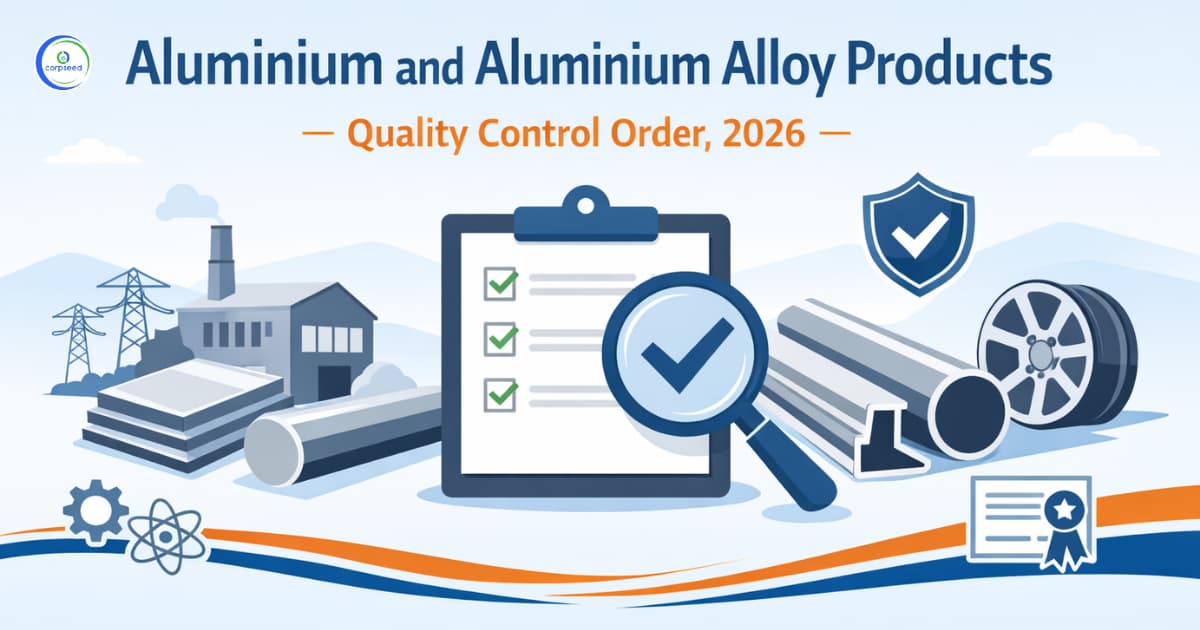
The Aluminium and Aluminium Alloy Products (Quality Control) Order, 2026 has been issued by the Government of India under the Bureau of Indian Standards (BIS) Act, 2016, with the motive, i.e., to regulate the quality of aluminium products across the country. This order replaces the earlier 2025 notification and reflects the government’s commitment to strengthening product quality, safety, and standardisation in the aluminium sector.
By making BIS certification mandatory, the order ensures that only products meeting prescribed Indian Standards are manufactured, imported, and sold in the Indian market. The main purpose of this move is to enhance consumer trust and improve the overall quality of the ecosystem.
Schedule a Call Back
Objective of the Order
The primary aim of the QCO 2026 is to establish a uniform framework for quality compliance in aluminium and aluminium alloy products. It aims to eliminate substandard products from the market and ensure that manufacturers adhere to strict quality benchmarks.
Additionally, the order promotes fair trade practices and supports the growth of domestic industries by aligning them with globally accepted standards. It also helps in boosting exports by improving the credibility of Indian aluminium products in international markets.
Mandatory BIS Certification and Standard Mark
One of the most important provisions of the order is the compulsory use of the BIS Standard Mark (ISI Mark) on specified products. Manufacturers must obtain a valid BIS license under Scheme-I of the BIS Conformity Assessment Regulations, 2018, before selling their products.
This certification confirms that the product complies with the relevant Indian Standard, i.e., the IS code listed in the official table. It also requires manufacturers to follow consistent quality control measures, testing procedures, and documentation practices to maintain compliance.
Products Covered Under QCO 2026
The order covers a wide range of aluminium and aluminium alloy products used in different industries.
Major categories include:
1. Industrial and Engineering Products
- Aluminium rods, bars, and sections
- Aluminium plates, sheets, and strips
- Wires and rivet stock
- Forgings and extrusion products
2. Application-Specific Products
- Aluminium tubes for irrigation (welded and extruded)
- EC grade aluminium rods
- Aerospace-grade aluminium alloys
- Aluminium composite panels
3. Consumer and Packaging Products
- Aluminium foil for use in pharmaceutical packaging
- Corrugated aluminium sheets
- Aluminium used in utensil manufacturing
Implementation Timeline
To guarantee that the new standards are adopted smoothly, the government has established a staggered implementation plan. For certain products, compliance is required with immediate effect from the date of notification.
However, for several general engineering products, the implementation timeline varies based on the size of the enterprise. Large enterprises must comply by 1 December 2026, while small and micro enterprises are given extended deadlines of 1 March 2027 and 1 June 2027, respectively. This phased approach helps to reduce the compliance burden on MSMEs.
Exemptions and Special Provisions
To guarantee flexibility for some business-related operations, the decree provides specific exclusions. This rule does not apply to goods made solely for export, which promotes international trade.
Additionally, manufacturers are allowed to import up to 200 kilograms of aluminium products annually for research and development purposes without compliance requirements. However, such products cannot be sold commercially and must be disposed of as scrap. Proper records of these imports must also be maintained and submitted to the government when required.
Role of BIS as Certification Authority
This order designates the Bureau of Indian Standards (BIS) as the certification and enforcement authority. It is responsible for issuing permits, conducting inspections, and ensuring that producers adhere to the established guidelines.
Additionally, BIS is essential to the periodic upgrading and revision of standards. Manufacturers must follow the updated versions of the Indian Standards, including any modifications made by the BIS.
Compliance Requirements for Manufacturers
Manufacturers of aluminium products must comply with strict guidelines to meet QCO 2026 requirements. This also entails obtaining BIS certification, testing products in accordance with applicable standards, and implementing robust quality control procedures within the business.
Additionally, they must maintain thorough compliance records, including production data, certification records, and test reports. To ensure continued compliance, frequent updates based on evolving standards and ongoing monitoring are crucial.
Penalties for Non-Compliance
Non-compliance with the provisions of the QCO 2026 can result in severe penalties under the BIS Act, 2016. This may include
- Monetary fines,
- Legal Action, and
- Even the prohibition on manufacturing or selling non-compliant products in the market.
These fines emphasise the importance of adhering to legal requirements and maintaining product quality throughout manufacturing and delivery.
Conclusion
An important regulatory step toward quality assurance and standardisation in the aluminium industry of India is the Aluminium and Aluminium Alloy Products (Quality Control) Order, 2026. The government hopes to establish a strong and dependable industrial ecosystem by requiring BIS certification and enforcing stringent compliance standards.
The long-term advantages in terms of quality improvement, customer safety, and global competitiveness make this order extremely significant, even though the implementation may necessitate modifications from manufacturers, particularly MSMEs.
About the Author

Anshika Jindal
Content WriterAnshika Jindal, a Legal Content Writer with strong expertise in legal research and a solid academic background in BA LLB and LLM (Criminal Law). I specialize in researching statutes, case laws, and legal developments and presenting them in clear, accurate, and engaging written content. With strong analytical skills and attention to detail, I create reliable, well-structured legal content while maintaining professional and ethical standards.
I specialize in conducting in-depth legal research using credible sources and presenting legal information in a structured, reader-friendly manner while maintaining precision and authenticity. My work focuses on simplifying legal language without compromising its meaning, making legal content accessible to a wider audience.
Related articles
BIS Hallmarking Centre Setup Scheme 2026-31
2026-11-02
BIS Establishes Three New Indian Standards for Electric Cycles, Therapeutic Footwear and EV Charging Cables
2026-10-19
Importing Toys into India: BIS Toy Certification & Battery EPR Requirements
2026-10-19
BIS Notifies 33 New and Revised Indian Standards in October 2026: Compliance Guide
2026-10-16
BIS Certification for Electrical Appliances: 2026 Guide for Manufacturers & Importers
2026-10-14
BIS Solar PV Module Model Number Update: New MNRE SOP and Registration Requirements
2026-10-09