The Government of India has made new rules called the Sustainable Harnessing of Fisheries in the Exclusive Economic Zone Rules, 2025. These rules guide how fishing and related work should happen in India’s sea area. They clearly explain how vessels can get permission, how fishing is checked, and how sea life can be used and protected in a safe and fair way. The rules aim to ensure that marine living resources are harvested in a responsible manner, in line with global norms, so that future generations benefit from a vibrant ocean economy and coastal livelihoods remain protected.
Table of Contents
- What Are the Sustainable Harnessing of Fisheries in the Exclusive Economic Zone Rules 2025?
- Importance of the Sustainable Fisheries Rules 2025
- Key Provisions under the Sustainable Harnessing of Fisheries Rules 2025
- Process for Issuing Access Pass for Fishing Vessels
- Validity and Renewal of Access Pass for EEZ Operations
- Prohibited and Destructive Fishing Methods under EEZ Rules
- Violations and Penalties under the Sustainable Fisheries Rules 2025
- Conclusion
--------------Blog Contact Form-------------
What Are the Sustainable Harnessing of Fisheries in the Exclusive Economic Zone Rules 2025?
The Sustainable Harnessing of Fisheries Rules 2025 were notified by the Ministry of Fisheries, Animal Husbandry and Dairying under the Territorial Waters, Continental Shelf, Exclusive Economic Zone and Other Maritime Zones Act, 1976.
These rules apply to all Indian vessels operating in the EEZ and regulate fishing, fish processing, and related marine activities. They ensure that fishing is carried out in a legal, safe, and sustainable manner.
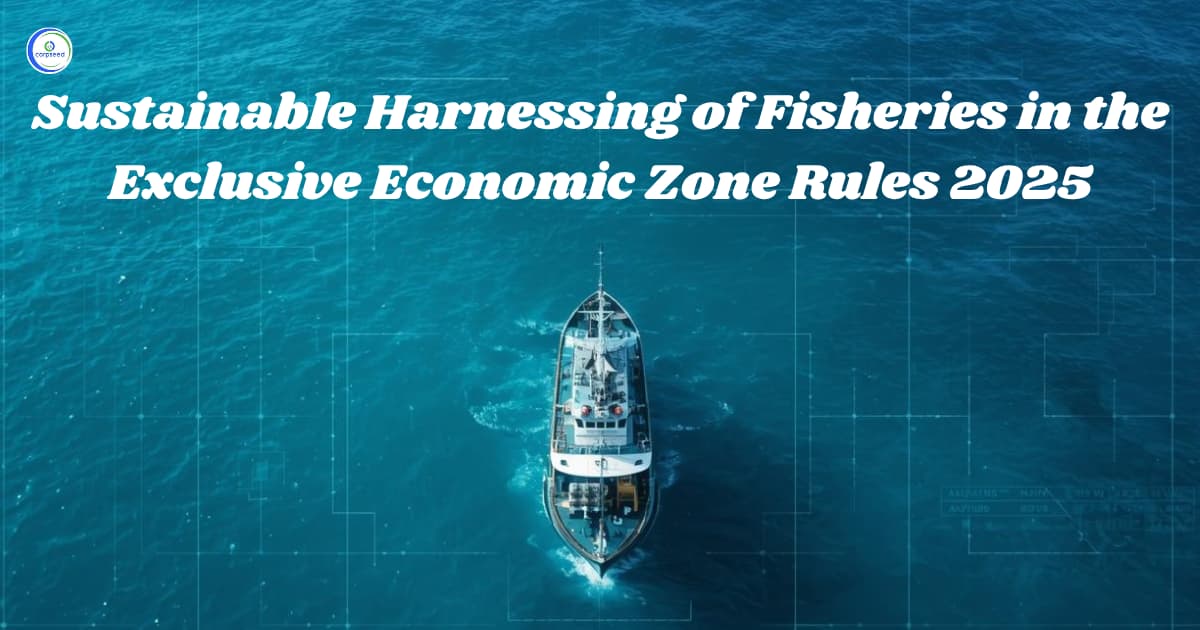
Every motorised or mechanised fishing vessel must follow these rules to operate in deep-sea waters. The framework sets clear directions for obtaining fishing permission, monitoring vessel movements, preventing destructive practices, and protecting marine biodiversity.
Importance of the Sustainable Fisheries Rules 2025
The introduction of the 2025 Rules marks an important shift in India's ocean governance. These rules are important for several reasons:
- These rules give clear laws to manage fishing in deep-sea areas outside coastal waters. They help control big fishing vessels and deep-sea fishing in India's sea zone safely and fairly.
- The Rules support sustainable resource use, aiming to prevent over-exploitation of fish stocks and protect marine ecosystems. This aligns with India's Blue Economy ambitions.
- They help strengthen monitoring, control, and surveillance (MCS) of fishing vessels, thereby preventing illegal, unreported, and unregulated (IUU) fishing.
- They provide a mechanism for managing access, imposing penalties, and enforcing rules, which can improve transparency and ensure fair play in fisheries.
- They help secure India's interests in the EEZ, support fishers and maritime stakeholders, and integrate conservation with livelihood enhancement.
Key Provisions under the Sustainable Harnessing of Fisheries Rules 2025
The Rules outline several key provisions to ensure proper management of fisheries in India's EEZ. Each provision is designed to maintain a healthy balance between economic activity and marine conservation.
1. Access Pass
All mechanised and motorised vessels (24m or longer) need an access pass to fish in the EEZ. Applications are made through the ReALCRaft portal. The pass is vessel-specific, non-transferable, and must be approved before fishing starts.
2. Monitoring of Fishing Vessels
Each vessel must have an approved tracking device that shares real-time data on location and activity with authorities. This prevents illegal, unreported, and unregulated (IUU) fishing.
3. Inspection and Enforcement
Officers can check vessels and tools at sea or ports. If any rule is broken, the vessels may be fined or lose their pass.
4. Fisheries Management Plans (FMPs)
The government and States make plans to protect fish. These plans set fishing limits and safe seasons.
5. Origin of Catch
Fish caught in India's sea area are called Indian fish. They don't pay import tax when brought to Indian ports.
6. Catch and Health Certificates
Each fish load needs papers showing it was caught legally and is safe to eat. This builds trust in trade.
7. Mid-Sea Transhipment
Moving fish between vessels in the sea is allowed only with permission. Details of the transfer must be shared.
8. Catch Reporting
Vessels must send reports online about fish caught, weight, and place. This helps manage fishing better.
9. Compliance with RFMO
Indian vessels must follow the rules of Regional Fisheries Management Organisations (RFMOs) for tuna and other migratory species, ensuring global compliance.
10. Appeals
Anyone affected by an order can appeal within 30 days. The Appellate Authority reviews and decides the case, ensuring transparency and fairness.
Process for Issuing Access Pass for Fishing Vessels
Obtaining an access pass is a key step for any vessel wishing to operate in India's EEZ. The process ensures that only verified and compliant vessels are allowed to fish.
- Application Submission: The vessel owner or operator submits an application on the ReALCRaft portal in the prescribed format (Form I).
- Document Verification: The verifying officer checks the vessel registration, ownership, and compliance documents within two weeks.
- Decision by Issuing Authority: Based on the report, the Issuing Authority decides to approve or reject the application within five to ten working days.
- Issuance of Access Pass: Once approved, the pass is issued electronically in Form II and must be displayed clearly on the vessel.
- Non-Transferable Nature: The access pass is specific to each vessel, non-transferable, and non-assignable.
- Suspension or Cancellation: If the pass is obtained by fraud or false information, it can be cancelled after giving the owner a chance to explain.
Validity and Renewal of Access Pass for EEZ Operations
An access pass works for three years from the date it is given. To keep fishing without a break, renewal must be done at least 30 days before it ends through the same online portal.
Before renewal, officials check if the vessels followed all safety rules, had no rule breaks, and are still in good working condition. If the renewal is not allowed, the reason must be given in writing. After the pass expires, the vessel cannot fish until renewal is approved. This process makes sure every vessel stays safe, active, and follows all environmental rules.
Prohibited and Destructive Fishing Methods under EEZ Rules
The Rules ban harmful and illegal fishing activities to protect marine life. The following are strictly prohibited:
- Use of explosives, poisons, or chemicals in fishing.
- Pair trawling or bull trawling that harms marine species.
- Use of LED lights or light attractors for catching fish.
- Catching juvenile fish below the legal size limit.
- Fishing in No-Fishing Zones or during government-declared ban periods.
Violations and Penalties under the Sustainable Fisheries Rules 2025
Strict penalties are imposed to prevent misuse and violations of the Rules. The fine structure varies according to the vessel size and nature of the offence.
- Vessels under 15 metres: Fine up to ₹5,000, repeat offences up to ₹15,000.
- Vessels between 15 and 24 metres: Fine up to ₹10,000, repeat offences up to ₹25,000.
- Vessels 24 metres and above: Fine up to ₹30,000, repeat offences up to ₹50,000.
In addition to fines, authorities may:
- Suspend the access pass for up to six months.
- Cancel or revoke the pass permanently in case of repeated or serious offences.
Suspension or cancellation prevents the vessel from operating in the EEZ until the issue is resolved. All penalty details are recorded on the ReALCRaft portal for transparency. These penalties stop people from fishing in illegal ways, keep sea animals safe, and make sure fishing is done responsibly.
Conclusion
The Sustainable Harnessing of Fisheries in the Exclusive Economic Zone Rules, 2025, are an important move for the oceans of India. These rules use modern tools, good science, and fair systems to manage fishing the right way.
By setting clear steps for fishing, safety, and penalties, the rules make fishing honest and well-organized. They help protect sea life, support safe fishing, and build a strong and healthy Blue Economy for the future. By enforcing these Rules, India moves closer to achieving long-term marine sustainability, protecting livelihoods, and conserving the ocean for generations to come.
This portion of the site is for informational purposes only. The content is not legal advice. The statements and opinions are the expression of author, not corpseed, and have not been evaluated by corpseed for accuracy, completeness, or changes in the law.
BOOK A FREE CONSULTATION
Get help from an experienced legal adviser. Schedule your consultation at a time that works for you and it's absolutely FREE.