Industries planning to operate in India are required to comply with environmental standards before starting their operations. A vital legal requirement is getting the Consent to Operate (CTO) under the Water Act, 1974 from the State Pollution Control Board or Pollution Control Committee. This authorization ensures that the plant’s wastewater treatment and discharge systems fulfill environmental norms. Understanding the CTO application process helps industries confirm compliance, prevent fines, and maintain sustainable, lawful operations.
Table of Contents
What Is Consent to Operate (CTO) Under the Water Act?
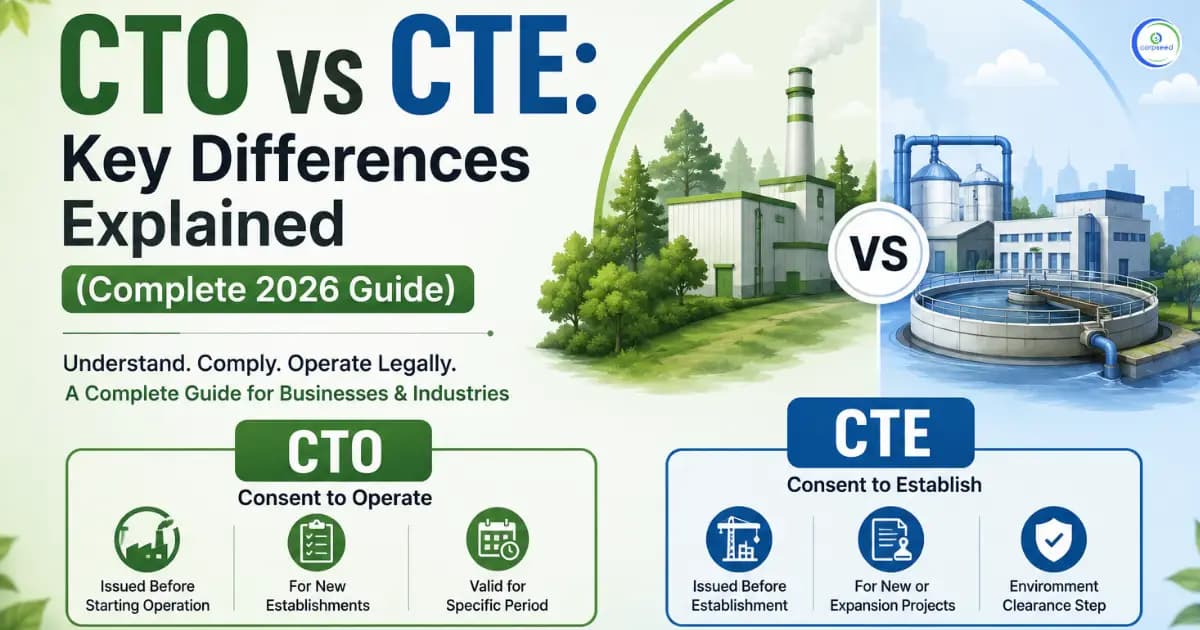
The Consent to Operate under Water Act is a legal approval granted by the State Pollution Control Board that allows an industry to discharge or treat wastewater produced from its activities. It acts as an official clearance that the industry is functioning within the approved limit and complying with the set environmental norms.
Industries that manage water-intensive processes or discharge effluents into the environment must obtain this consent to ensure their operations don’t affect local water bodies or groundwater sources.
Who Needs CTO Under the Water Act?
Any industry or establishment that consumes water and generates wastewater is required to get a CTO under Water Act. This applies to manufacturing, processing, and service-oriented businesses.
Industries that usually need CTO include manufacturing plants, textile and dyeing units, food processing industries, chemical and pharmaceutical producers, hospitals, hotels, and large residential or commercial complexes.
--------------Blog Contact Form-------------
Benefits of Obtaining a CTO for Industries
Having a CTO under the Water Act offers numerous direct and indirect advantages to industries. It legally approves operations, helps prevent fines or shutdowns, and improves credibility with clients and authorities.
It also ensures accountable wastewater management, boosts environmental sustainability, and reflects a company’s commitment to corporate responsibility. Several investors and partners also prefer dealing with industries that obtain valid CTO approvals.
Role of Pollution Control Boards in CTO Approval
Pollution Control Boards play a crucial role in ensuring industries comply with environmental laws before granting the Consent to Operate (CTO) under the Water Act. Their responsibilities extend beyond just issuing consent.
- Application Evaluation: Boards examine CTO applications to check technical details, pollution load, and proposed treatment systems, ensuring industries work within the set discharge principles and regulatory framework.
- Site Inspection: The Pollution Board officials conduct physical examination of the industrial plants to ensure that effluent treatment plants, discharge outlets, and other pollution control mechanisms are correctly installed and functioning as declared.
- Monitoring and Sampling: Pollution Control Boards timely gather water and effluent samples from working industries to evaluate compliance with permitted parameters and ensure constant environmental performance.
- Renewal and Compliance Tracking: They examine CTO renewal applications by reviewing annual reports, test results, and previous compliance history to ensure that the industry continues to adhere to prescribed standards.
- Enforcement and Penalties: In cases of non-compliance, the Boards issue directions, impose penalties, or revoke CTO approvals to protect public health and maintain water quality standards.
Documents Required for CTO Application
The application process needs numerous technical and administrative documents to signify compliance with environmental standards. Typical documents include:
- Copy of Consent to Establish (CTE) issued by the SPCB or PCC
- Layout plan and site map of the industrial premises
- Detailed process flow diagram of manufacturing activities
- Water balance chart and wastewater generation details
- Design and operational details of Effluent Treatment Plant (ETP) or Sewage Treatment Plant (STP)
- Laboratory analysis reports of effluent and treated water samples
- An authorization letter and the identity proof of the applicant
- Previous CTO, if the application is for renewal
Step-by-Step CTO Application Process
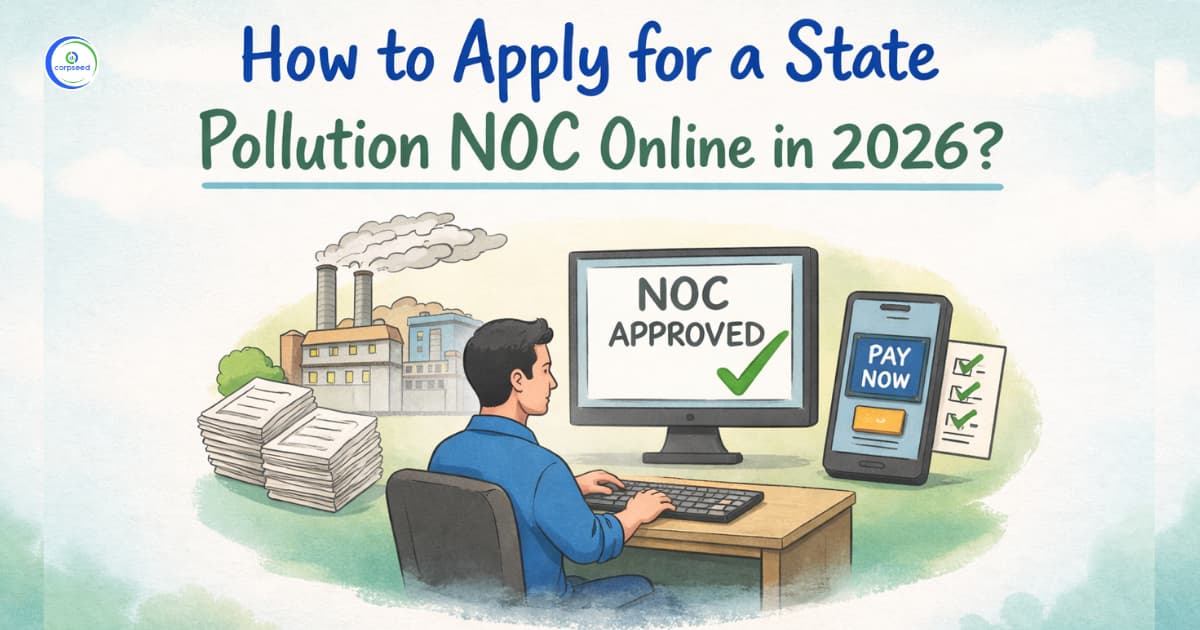
The CTO application process is completely managed through the online portal of the respective State Pollution Control Board.
Step 1: Registration and Form Submission: The applicant must register on the consent management system. After logging in, the applicant chooses “Consent to Operate under Water Act” and fills in the required operational details, including water consumption, manufacturing capacity, and discharge points.
Step 2: Uploading Documents and Payment: All supporting documents are uploaded to the portal in the particular formats. The applicant also pays the prescribed fee, which differs depending on the category of industry: Red, Orange, Green, or White.
Step 3: Inspection by SPCB Officials: Once the application is submitted, officials from the Pollution Control Board conduct a site inspection. They examine whether the pollution control systems, such as ETP or STP, are properly installed and functional.
Step 4: Evaluation and Grant of Consent: Based on the inspection report and documentation, the SPCB evaluates whether the unit complies with prescribed environmental standards. If all conditions are fulfilled, the Pollution Control Board CTO is issued online through the portal.
Also Read: What is CTE and CTO a Complete Guide for Businesses
Validity and Renewal of CTO
The Consent to Operate under Water Act is issued for a set period depending on the category of the industry. Generally, Red category industries receive CTO for up to five years, while Green category units may get it for up to ten years.
Industries must apply for renewal before the existing CTO expires. The renewal process is similar to the initial application, requiring updated compliance data and recent test results of treated water. Late applications may attract penalties or even lead to suspension of operations.
Conclusion
Obtaining the Consent to Operate (CTO) under the Water Act is essential for industries that generate or discharge wastewater. It not only ensures compliance with environmental laws but also promotes sustainable and responsible industrial growth. The approval process can often feel complex due to state-specific rules and technical requirements. Working with professional environmental consultants can simplify the journey helping prepare documents, manage inspections, and maintain compliance. Their guidance minimizes delays, prevents rejections, and allows businesses to operate smoothly while protecting water resources and supporting a cleaner environment.
This portion of the site is for informational purposes only. The content is not legal advice. The statements and opinions are the expression of author, not corpseed, and have not been evaluated by corpseed for accuracy, completeness, or changes in the law.
BOOK A FREE CONSULTATION
Get help from an experienced legal adviser. Schedule your consultation at a time that works for you and it's absolutely FREE.