
Pharmacovigilance Obligations After CDSCO Approval
Getting a drug approved by the Central Drugs Standard Control Organisation (CDSCO), is an important regulatory milestone but it does not mark the end of a company's responsibilities.
Schedule a Call Back
2,100+ CDSCO medical device assignments since 2018
Clients include Endolite India, Mankind Pharma, Ossur India, ADK Health Care, Credence Prosthetic India, V2U Physio Asia, International Electro Medical Company, Radimage Healthcare India, Istok New Hearing AID, Simpladent Implant Solutions, Starkey Laboratories India, Gentec Medical (12 of 1,100+ served since 2018).
A few more clients we've served in this industryHide the list
- Pharma and healthcare
- Endolite India · Mankind Pharma · Ossur India · ADK Health Care · Credence Prosthetic India · V2U Physio Asia · International Electro Medical Company · Radimage Healthcare India · Istok New Hearing AID · Simpladent Implant Solutions · Starkey Laboratories India · Gentec Medical · Cureesse Pharma · Hygiene Medicus · Nexus Surgical and Medicare
- More clients
- Meditronix Corporation · Nilkamal · Haesi GHL · GHL · Servotech Power Systems · Elektrocraft India · Happy Medicare · Anantaa Gsk Innovations · Cogmac Technologies · Aficionados Tech · Superceuticals · Truevis Technologies · 1008 Digital Health · BDS Services · Evoq Imaging Technologies · Premier Medical Systems and Devices · Riransa · Vitrag Infra Projects · Insta Biotech · Digital Acoustics · Artificial Learning Systems India · Nfilade Security Solutions · Humors Tech · K2O Consulting

Introduction
Once an approved drug is used in the wider population, new safety information can emerge that may not have been identified during clinical development.
This is where pharmacovigilance obligations after CDSCO approval become important. Companies need to maintain a pharmacovigilance system, collect and evaluate adverse drug reaction information, follow applicable reporting requirements and submit periodic safety information to the regulatory authority.
The New Drugs and Clinical Trials Rules, 2019 provide for post-marketing assessment of new drugs. The framework recognises that real-world use involves a much broader patient population than clinical trials and may reveal adverse events or safety concerns that were not apparent earlier.
Understanding these ongoing obligations can help businesses who have finished CDSCO registration, or received the necessary approval to commercialise a product effectively handle safety information, and regulatory submissions.
What Is Pharmacovigilance After CDSCO Approval?
Pharmacovigilance refers to the activities involved in detecting, assessing, understanding, and preventing adverse effects or any other issues regarding drug.
Before approval, safety information is mainly generated through controlled clinical studies. After marketing, a drug is used by a much larger, and more varied population. Patients may have different ages, medical conditions, treatment histories and combinations of medicines. As a result, new safety information can appear during routine use.
The Fifth Schedule of the New Drugs and Clinical Trials Rules, 2019 requires post-marketing assessment of applicable new drugs. It states that, after approval, the drug should be closely monitored and its benefit-risk profile assessed after it is marketed.
Pharmacovigilance Obligations After CDSCO Approval
CDSCO approval does not end safety monitoring. Companies must track adverse events, and review new safety information throughout the product’s post-approval period. Depending on the product and approval conditions this may include ADR reporting, PSURs and post-marketing safety monitoring.
- Maintaining a Pharmacovigilance System
An applicant needs to have a pharmacovigilance system capable of collecting, processing and forwarding information about adverse drug reactions associated with the drug.
The system should provide a defined process for receiving safety information, reviewing individual cases, assessing the information and communicating relevant reports to the licensing authority.
CDSCO's Post Marketing DSM division states that the applicant should have a pharmacovigilance system for collecting, processing and forwarding reports of adverse drug reactions arising from the use of drugs imported, manufactured or marketed by the applicant, as applicable.
A company should therefore have appropriate responsibilities, procedures and records in place rather than treating pharmacovigilance as a one-time submission.
- Collection and Assessment of Adverse Drug Reactions
Safety information may come from healthcare professionals, patients, clinical or post-marketing studies, literature, and other relevant sources.
The company needs a process for receiving these reports, and assessing the information. This includes reviewing the available details of the case and determining whether further investigation or regulatory reporting is required.
The purpose is not simply to collect a large number of reports. The information needs to be reviewed in a way that can help identify possible safety signals, and changes in the product's benefit-risk profile.
- Reporting Serious Safety Information
Serious adverse reactions must be reported within the applicable timelines. If a serious, and unexpected adverse reaction is reported, the applicant must submit the required information to the licensing authority within the prescribed period from the date it is first received.
Companies should therefore have an internal procedure for identifying potentially serious cases and escalating them without waiting for the next periodic report.
ADR Reporting Requirements in India
ADR reporting helps companies identify safety concerns that may become visible only after a drug is used by a wider patient population. The process involves collecting reports, assessing the available information and taking the required regulatory action.
Key activities generally include:
- Collecting ADR Reports: Safety information can come from healthcare professionals, patients, clinical studies, literature and other relevant sources.
- Assessing Individual Cases: Reported cases should be reviewed to determine their seriousness, completeness and relevance to the product.
- Following up on Cases: If important information is missing from an ADR report the company may contact the reporter to collect the remaining details.
- Reporting Serious Cases: Serious adverse reactions that meet the applicable reporting criteria must be reported within the prescribed regulatory timelines.
- Monitoring Safety Signals: Companies check safety reports for unusual, or repeated problems. This can help find a new safety signal or a change in an existing one.
- Maintaining Records: Businesses keep records of case details, safety checks, follow-up information, and communication with regulatory authorities.
The pharmacovigilance requirements in India therefore, extend beyond submitting individual ADR reports. Companies need an ongoing process for reviewing safety information as well as determining whether further regulatory or risk management action is required.
PSUR Requirements for Approved Drugs
A Periodic Safety Update Report (PSUR), brings together relevant safety information collected during a defined reporting period. It helps assess whether the product's known benefit-risk profile remains appropriate as more post-marketing information becomes available.
For applicable new drugs the Fifth Schedule of the New Drugs, and Clinical Trials Rules, 2019, provides for periodic safety reporting after approval. The reporting schedule includes:
- First two years: PSURs are submitted every 6 months
- Following two years: PSURs are submitted annually
- Submission timeline: The PSUR is to be submitted within 30 calendar days from the end of the reporting period, as prescribed
A PSUR is not merely a compilation of ADR cases. It involves an overall review of relevant safety information, and an assessment of whether new evidence affects the product's benefit-risk profile.
A typical PSUR assessment may consider:
- New adverse drug reaction information
- Serious and unexpected adverse reactions
- Changes in the frequency, or nature of known reactions
- Newly identified safety signals
- Relevant literature and safety findings
- Changes that may be required in product information
- Other information relevant to the safety and benefit-risk assessment
CDSCO also provides an online mechanism for PSUR submission through the SUGAM portal. Its Post Marketing DSM division describes screening and further review of PSUR submissions where safety concerns require additional regulatory assessment.
Post-Marketing Surveillance Requirements
Post-marketing surveillance helps companies understand how a drug performs when used under normal clinical conditions.
Real-world use can reveal information that was difficult to identify during clinical development. This may include uncommon adverse reactions, safety concerns in specific patient groups, medication-related problems or information that changes the understanding of the product's benefit-risk balance.
Depending on the product and regulatory requirements, post-marketing activities may include safety monitoring, specific studies or other commitments attached to the approval.
CDSCO's New Drugs division specifically includes active post-marketing surveillance studies among the activities handled under the New Drugs and Clinical Trials Rules, 2019.
Companies should also keep track of safety information that may require an update to prescribing or product information. CDSCO's Subsequent New Drugs division notes that safety updates to prescribing information may be based on PSURs, serious adverse events and other relevant information.
Pharmacovigilance Records and Documentation
Companies need to keep a record of their pharmacovigilance work after approval. This covers the safety information received, actions taken, and reports submitted to the authorities.
The records can include:
- ADR Case Records: Details of the adverse drug reaction, the case and any follow-up.
- Safety Rreports: Reports of serious adverse reactions, and other safety cases.
- PSUR Documentation: Data, assessments and supporting information used for preparing and submitting Periodic Safety Update Reports.
- Pharmacovigilance Procedures: Written procedures covering the collection, assessment, reporting and follow-up of safety information.
- Pharmacovigilance System Master File (PSMF): Documentation describing the pharmacovigilance system maintained for the product or organisation, where applicable.
- Safety Assessments: Records of safety checks, benefit-risk reviews and any action taken after a safety concern is found.
- Regulatory Communications: Copies of submissions, letters and replies sent to or received from the regulatory authority.
- Audit and Inspection Records: Documentation relating to pharmacovigilance audits, inspections, findings and corrective actions.
CDSCO's pharmacovigilance guidance for Marketing Authorization Holders covers areas such as the pharmacovigilance system, PSMF, post-marketing surveillance, PSUR preparation and submission, quality management, audits and inspections, and risk management.
Keeping these records properly also helps during regulatory reviews, or inspections.
What Happens If Pharmacovigilance Obligations Are Not Met?
Failure to manage pharmacovigilance responsibilities, can create regulatory problems, particularly where important safety information is missed, delayed, or inadequately documented.
The concern is not limited to an individual reporting deadline. Gaps in safety monitoring can affect the company's ability to identify emerging risks and respond appropriately.
A company may also need to respond to regulatory queries, provide additional safety information or address concerns identified during review. CDSCO's current PSUR process provides for further expert review of submissions categorised as high risk and communication of recommendations to the concerned Marketing Authorization Holder for compliance and closure.
Also Read: CDSCO Approval for Combination Products
How a Pharmacovigilance Consultant in India Can Help
Pharmacovigilance does not end with drug approval. Companies still need to track adverse reactions, prepare safety reports and keep their records updated.
At Corpseed, we provide end-to-end pharmacovigilance support, from setting up the required processes to ongoing reporting, and regulatory support.
Our services include:
- Setting up and reviewing pharmacovigilance systems
- ADR case processing and reporting,
- PSUR preparation and submission support,
- Post-marketing safety monitoring,
- Safety signal assessment,
- Pharmacovigilance documentation and record management,
- Regulatory submissions and query support,
- Compliance review and inspection preparation
If you have recently received drug approval, or completed the applicable CDSCO registration process our team can help you manage the pharmacovigilance requirements that follow.
With Corpseed, you get support across the post-approval process instead of managing each pharmacovigilance requirement separately. Our pharmacovigilance consultant India team can help keep your safety reporting and regulatory work on track.
For pharmacovigilance services India, connect with Corpseed’s experts for practical support with your post-approval requirements.
Conclusion
CDSCO approval is an important step in bringing a drug to the Indian market, but safety monitoring continues after approval. Pharmacovigilance obligations after CDSCO approval include maintaining an appropriate pharmacovigilance system, collecting, and assessing adverse drug reaction information, meeting applicable reporting timelines and preparing periodic safety information.
PSURs and post-marketing surveillance provide regulators with continuing information about the safety and benefit-risk profile of approved products. Companies therefore need practical systems for collecting safety information, reviewing it and taking appropriate regulatory action when required.
Need help managing post-approval pharmacovigilance requirements? Connect with Corpseed’s pharmacovigilance experts for support with ADR reporting, PSUR preparation, post-marketing surveillance and regulatory compliance.
About the Author

Parul Bohral
Legal Content WriterParul Bohral, a BALLB graduate and experienced legal researcher and content writer with expertise in various legal areas, including corporate law and intellectual property. I have gained valuable experience in esteemed legal environments, where I have strengthened my research skills, allowing me to approach legal writing with precision and depth.
As a legal content writer, I am committed to delivering work that not only informs but also engages readers. By staying informed about the latest trends in content marketing and regulatory developments, I ensure that my writing remains sophisticated and meets industry standards. My dedication to thorough research enables me to craft content that is both insightful and impactful.
Related articles
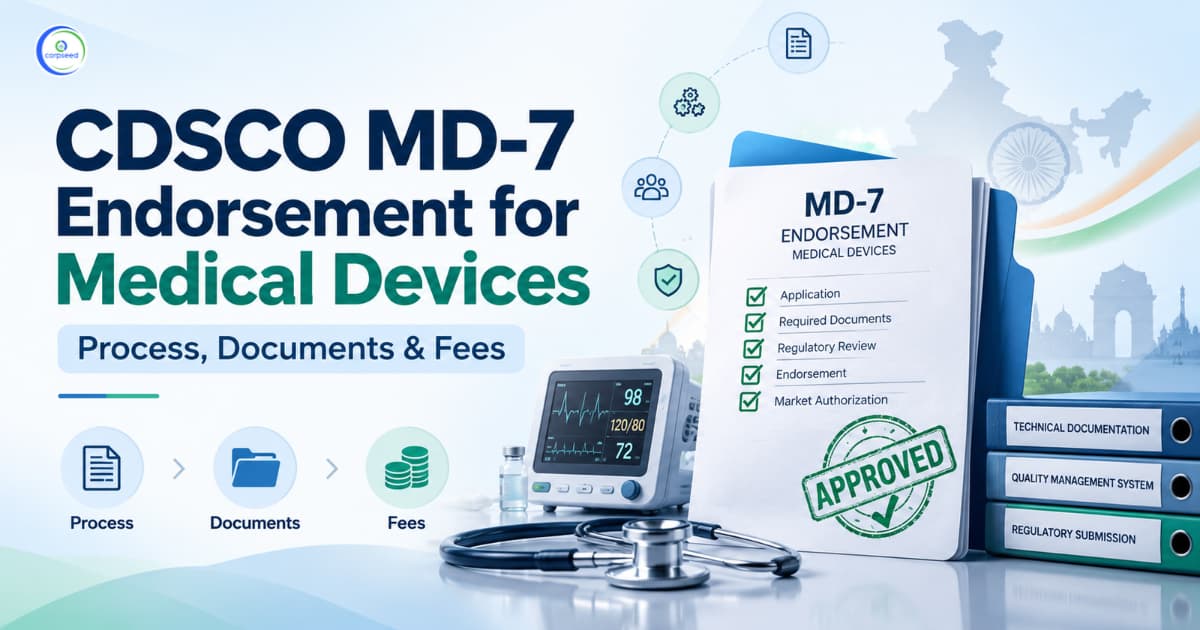
CDSCO MD-7 Endorsement for Medical Devices: A Practical Guide for Manufacturers
2026-10-23

CDSCO Export NOC for r-DNA Products: Who Needs It?
2026-10-21
CDSCO Registration: A Simple Guide to Getting Your License in India 2026
2026-10-21

Importing Cosmetic Gift Sets into India? CDSCO, LMPC & Labelling Checklist
2026-10-14
CDSCO Medical Device Registration Consultant
2026-09-23
CDSCO Registration for Lab Equipment and Diagnostic Devices
2026-09-22