
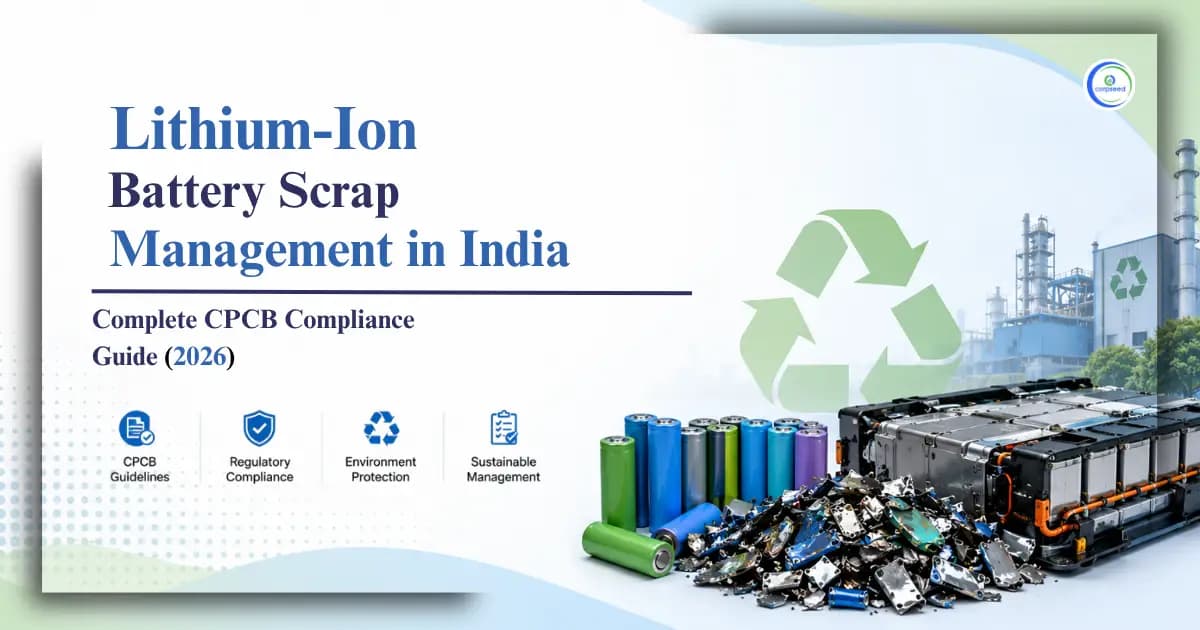
Lithium-Ion Battery Scrap Management in India: Complete CPCB Compliance Guide (2026)
India's lithium-ion battery waste management framework is primarily governed by the Battery Waste Management Rules, 2022, which establish an Extended Producer Responsibility (EPR) framework and require environmentally sound management of waste batteries.
Schedule a Call Back
Introduction
Lithium-Ion Battery Scrap Management refers to the regulation, technology, and ecology of the collection, storage, transport, recycling, and disposal of used or defective lithium-ion batteries in accordance with the laws specified in India's Battery Waste Management Rules, 2022. With the rise of electric automobiles, portable devices, computers, and energy storage facilities, there is an increasing number of used lithium-ion batteries produced each year, and with it comes increasingly close monitoring of scrap management practices by companies.
Proper storage and handling of scrap lithium-ion batteries is not optional for manufacturers, importers, recyclers, and consumers of lithium-ion batteries in bulk. If battery scrap is not handled properly, it is considered hazardous waste. This poses various dangers: thermal runaway, fire hazards, pollution of soil and groundwater, and costly environmental compensation by the CPCB.
At the same time, lithium-ion battery scrap is valuable. It contains recoverable lithium, cobalt, nickel, copper, and other critical minerals that India is trying to reduce its dependence on imports. That's why the government has built an entire compliance ecosystem around Extended Producer Responsibility (EPR) registration, recovery targets, digital traceability, and authorized recycling for this exact issue.
This guide explains everything a business needs to know about managing Lithium-Ion Battery Waste in India, including regulations, who must comply, the registration and disposal process, documentation requirements, charges and fines, and the updated 2025-2026 regulations.
Schedule a Call Back
What is Lithium-Ion Battery Scrap Management?
Lithium-ion battery scrap management refers to the systematic collection, sorting, safe storage, transportation, recycling, and disposal of end-of-life or defective lithium-ion batteries, carried out in line with India's environmental laws and CPCB authorization requirements.
Lithium-ion batteries power electric cars, mobile phones, laptops, power banks, inverters, and energy storage systems. After reaching their service life limit or being damaged, lithium-ion batteries do not cease to be chemical agents; they remain dangerous until they are recycled into raw materials or neutralized.
Battery Waste Management Rules, 2022 for Lithium-Ion Battery Scrap
The Battery Waste Management (BWM) Rules, 2022, notified by the Ministry of Environment, Forest and Climate Change (MoEFCC), form the core legal framework governing lithium-ion battery scrap in India. These rules were published on 24th August 2022 to ensure environmentally sound management of waste batteries, replacing the earlier Batteries (Management and Handling) Rules, 2001
Scope of the Rules
The BWM Rules also extend coverage to all battery technologies, including lithium-ion, lead-acid, and redox flow batteries, and apply to portable, automotive, industrial, and electric-vehicle battery categories.
The EPR Foundation
The central concept behind the rules is Extended Producer Responsibility (EPR). Under EPR, manufacturers and producers are made accountable for the collection, storage, transportation, recycling, and disposal of the batteries they place in the market. In simple terms, if you manufacture, assemble, or import lithium-ion batteries (or products containing them) and sell them in India, you are responsible for what happens to those batteries after they die.
Recovery Targets
The rules set minimum yearly recovery targets under EPR: 70% for 2024-25, 80% for 2025-26, and 90% from 2026-27 onward. These targets increase progressively, pushing producers to build stronger reverse-logistics and recycling partnerships every year.
Prohibition on Landfilling
Producers are also prohibited from sending collected batteries to landfills or for incineration the only legally permitted pathways are recycling and refurbishment through authorized entities.
Who Needs to Comply with Lithium-Ion Battery Scrap Management in India?
Featured Snippet Answer: Any business that manufactures, imports, sells, refurbishes, or recycles lithium-ion batteries in India, including EV makers, electronics brands, battery importers, and bulk consumers, must comply with the lithium-ion battery scrap management rules under CPCB's EPR framework.
The following categories of businesses fall directly within the compliance net:
- Battery Producers/Manufacturers: companies assembling or manufacturing lithium-ion cells or battery packs in India
- Importers: businesses importing lithium-ion batteries or battery-containing equipment (EVs, power banks, laptops, drones, e-rickshaws)
- Brand Owners: companies selling batteries or battery-powered products under their own brand, even if manufactured elsewhere
- Recyclers and Refurbishers: entities that dismantle, process, or refurbish waste batteries
- Bulk Consumers: telecom companies, EV fleet operators, data centers, and industrial units generating large volumes of used batteries
- E-commerce and Online Marketplaces: platforms facilitating the sale of batteries and battery-powered devices
Comparison Table: Applicability by Business Type
| Business Type | Registration Required | Primary Obligation |
| Battery Manufacturer | Yes, Producer Registration | Meet EPR recovery targets |
| Battery Importer | Yes, Producer Registration | Register imported volumes, meet EPR |
| EV / Electronics Brand | Yes, Producer Registration | EPR for battery-fitted products |
| Recycler | Yes, Producer Registration | Process scrap, issue EPR certificates |
| Refurbishers | Yes, Refurbishers Authorization | Extend battery life, report data |
| Bulk Consumer | Deposit & channelization compliance | Handover to authorized recyclers |
Lithium-Ion Battery Scrap Management Process in India
The lithium-ion battery scrap management process in India involves five broad stages: CPCB EPR registration, submission of sales/import data, drafting an EPR action plan, safe collection and channelization of scrap batteries, and annual return filing with proof of recovery.
Step-by-Step Process
- Determine Applicability: Identify whether your business is a producer, importer, recycler, refurbishers, or bulk consumer under the BWM Rules.
- Prepare Documentation: Collect company incorporation documents, product/battery details, and sales or import data.
- Online CPCB Registration: Submit the application on the official portal, along with the required documents.
- Draft an EPR Action Plan: outline how your business will collect, store, transport, and channel batteries to authorized recyclers.
- Pay the Registration Fee: Registration fee depends on the company's annual turnover.
- Receive EPR Registration Certificate: Once approved, this certificate is valid for five years.
- Set Up Collection & Channelization: Establish collection points or tie-ups with authorized recyclers to gather scrap batteries from consumers and dealers.
- Apply Digital Labeling: Add QR codes or barcodes that carry the EPR registration number on the product, packaging, or accompanying materials, as per the 2025 amendment.
- Track Recovery via EPR Certificates: Recyclers issue EPR certificates for the quantity of battery material recovered, which producers use to demonstrate target fulfilment.
- File Annual Returns: Submit annual returns by 30th June for the preceding financial year.
- Renew Registration: Submit renewal applications at least 60 days before expiry; pending annual returns can block renewal.
Documents Required for Compliance
| Document | Applicable To |
| Certificate of Incorporation / Business Registration | All applicants |
| PAN and GST Registration | All applicants |
| Authorized signatory ID and authorization letter | All applicants |
| Product/battery technical specification sheet | Producers, Importers |
| CA-certified annual turnover statement | <cite index="14-1">All producers (turnover declaration) |
| Import Export Code (IEC) | Importers |
| Sales/import data (SKU-wise, chemistry-wise) | Producers, Importers |
| Consent to Establish/Operate (CTE/CTO) | Recyclers, Refurbishers |
| Hazardous Waste Authorization | Recyclers, Refurbishers |
| EPR Action Plan document | Producers |
| Bank details for fee payment | All applicants |
Benefits of Proper Lithium-Ion Battery Scrap Management
- Legal Protection: Avoids environmental compensation, penalties, and possible prosecution under the Environment (Protection) Act, 1986
- Business Continuity: Uninterrupted market access many OEM and government tenders now require valid EPR registration.
- Resource Recovery: Recovered lithium, cobalt, and nickel reduce dependence on raw material imports.
- Environmental Protection: Prevents soil, groundwater, and air contamination from hazardous battery components.
- Fire and Safety Risk Reduction: Proper discharge and handling reduce thermal runaway and fire incidents.
- Brand Reputation: Demonstrates ESG commitment to investors, partners, and consumers.
- Access to Circular Economy Incentives: Positions businesses to benefit from government-backed recycling incentives and subsidies
Responsibilities of Producers, Importers, Recyclers, and Bulk Consumers
Comparison Table: Stakeholder Responsibilities
| Stakeholder | Consumers (end users) |
| Producers | Register with CPCB, meet EPR targets, fund collection infrastructure, apply digital labeling, file annual returns |
| Importers | Register as producers, declare import volumes, meet the same recovery obligations as domestic manufacturers |
| Recyclers | Obtain hazardous waste authorization, process scrap using approved methods, issue EPR certificates, report recovery data |
| Refurbishers | Register with CPCB, extend battery life safely, report refurbished quantities |
| Bulk Consumers | Store used batteries safely, hand over only to authorized recyclers, maintain disposal records |
| Consumers (end users) | Hand over used batteries to registered collection centers or recyclers rather than discarding them in household waste |
Timeline for Registration and Compliance
| Activity | Typical Timeline |
| Document preparation & application drafting | 3–5 working days |
| CPCB portal registration submission | 1–2 working days |
| CPCB review and clarification (if any) | 15–30 working days |
| EPR Registration Certificate issuance | 30–45 working days (average) |
| Registration validity | 5 years |
| Annual return filing deadline | 30th June every year |
| Renewal application window | At least 60 days before expiry |
Cost of Lithium-Ion Battery Scrap Management Compliance in India
The costs involved in complying with lithium-ion battery waste management in India include the registration fee with the CPCB (depending on the company's annual turnover), professional/consultant fees, and the annual filing of returns.
It should be noted that there is no fixed registration fee with the CPCB since it depends on the annual turnover of the company applying.
Beyond the statutory fee, businesses typically budget for:
- Professional consulting and documentation charges
- Setting up or partnering for collection/channelization infrastructure
- Recurring costs of annual return filing and record maintenance
- Costs for digital labeling (QR/barcode integration) on products and packaging
- Charges paid to authorized recyclers for processing and EPR certificates
Challenges Businesses Face
- Complex Documentation- Turnover certification, sales data, and technical specifications require coordination across finance, legal, and operations teams.
- Fragmented Collection Networks- Building a pan-India reverse logistics network for scrap collection is operationally difficult, especially for smaller producers.
- Frequent Regulatory Updates- Amendments in 2024 and 2025 have changed labeling and traceability requirements, catching many businesses off guard.
- EPR Certificate Shortages- Limited authorized recycling capacity can make it hard to buy sufficient EPR certificates near deadlines
- Multi-State Compliance- Coordinating with different State Pollution Control Boards for hazardous waste authorizations adds complexity.
- Technical Ambiguity- Determining correct battery chemistry classification and applicable targets requires regulatory expertise.
Penalties for Non-Compliance
Non-compliance with lithium-ion battery scrap management rules in India can lead to environmental compensation of up to ₹1 lakh per day, suspension of CPCB registration, and prosecution under the Environment (Protection) Act, 1986.
Non-compliance by business firms with their EPR responsibilities results in environmental liability of up to ₹1 lakh per day, deregistration from the CPCB, and punishment under the Environment Protection Act of 1986. The non-compliance by business enterprises will lead to:
- Loss of eligibility for government/OEM tenders.
- Non-renewal of registration because of pending annual returns.
- Reputational losses due to non-compliance with the publication of the list in the public domain.
- Disruptions in operations if State Pollution Control Boards suspend authorization of recyclers for hazardous waste.
- Early compliance isn't just about avoiding fines businesses that start compliance early gain a first-mover advantage, which matters when bidding for OEM or export contracts.
Latest Updates on Lithium-Ion Battery Scrap Management (2025-2026)
Battery Waste Management (Amendment) Rules, 2025: Introduced stricter enforcement, clearer EPR accountability, and improved digital tracking mechanisms.
- Digital Labeling & Traceability: Producers can now use QR codes or barcodes that carry the EPR registration number, placed on the product, its packaging, or accompanying documentation, to improve end-to-end traceability.
- Progressive Recovery Targets: Material recovery targets have been set at 70% for 2024-25, rising to 80% by 2026 and 90% from 2027 onward.
- Budget 2025 Support for Recycling: Import duties on battery scrap were removed, and a ₹1,500 crore subsidy package was announced to support recycling projects.
- National Circular Economy Mission: Continues to promote local recycling of critical minerals, aiming to reduce India's dependence on imports of lithium, cobalt, and nickel.
- Related EPR Ecosystem Expansion: India also notified the Environment (Protection) (End-of-Life Vehicles) Rules, 2025, effective 1st April 2025, which interacts closely with battery scrap management for EV producers.
Conclusion
Management of Lithium-Ion Battery Scrap is no longer an environmental niche issue but a fundamental compliance requirement for any business involved in managing batteries in India. The rules on Battery Waste Management 2022, supported by the CPCB EPR portal and amended in 2025, provide an explicit yet complex framework for producers, importers, recyclers, refurbishers, and bulk consumers.
Compliance with the above requirements will safeguard your business against environmental penalties, suspension of registration, and reputational damage. It will also enable you to capitalize on the growing emphasis on critical mineral recovery in India's economy. Given the frequent amendments to the rules regarding labeling, recovery rates, and processes in the EPR portal over only two years, compliance without proper guidance is risky.
This is exactly where working with experienced compliance professionals makes the difference between a smooth registration and a stalled one. Corpseed's team of environmental compliance experts can manage your entire lithium-ion battery scrap management journey from CPCB EPR registration and documentation to annual filings and post-approval support.
About the Author

Anshika Jindal
Content WriterAnshika Jindal, a Legal Content Writer with strong expertise in legal research and a solid academic background in BA LLB and LLM (Criminal Law). I specialize in researching statutes, case laws, and legal developments and presenting them in clear, accurate, and engaging written content. With strong analytical skills and attention to detail, I create reliable, well-structured legal content while maintaining professional and ethical standards.
I specialize in conducting in-depth legal research using credible sources and presenting legal information in a structured, reader-friendly manner while maintaining precision and authenticity. My work focuses on simplifying legal language without compromising its meaning, making legal content accessible to a wider audience.
Related articles
CPCB SOP 2026 for CTE and CTO Approvals - Timelines, Inspections and Key Directions
2026-10-30
E-Waste EPR for Electronics Brands: Registration, Targets & Annual Compliance
2026-10-26
Battery EPR Registration: Who Needs It Under the Battery Waste Management Rules?
2026-10-26
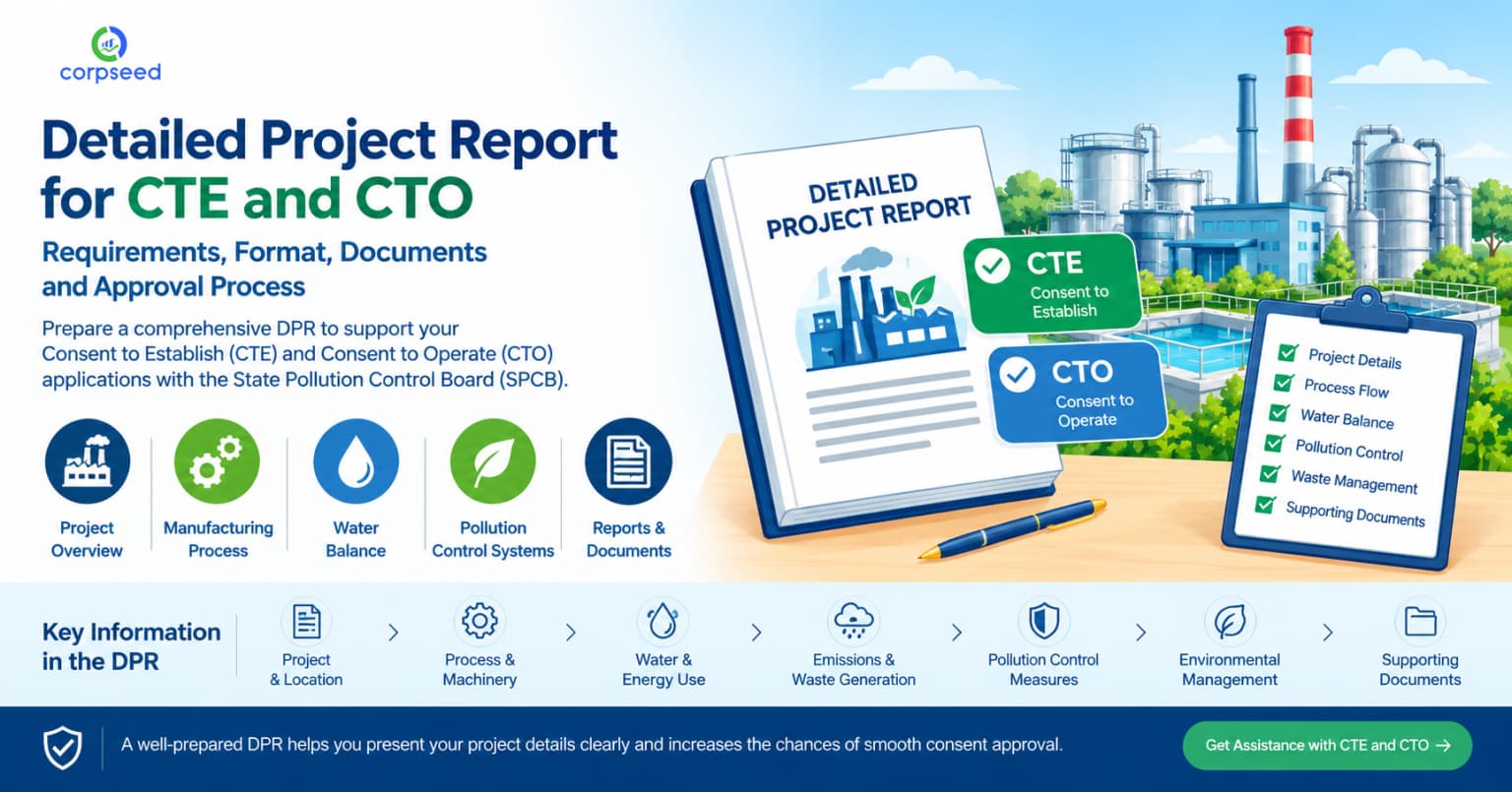
Detailed Project Report for CTE and CTO: Requirements, Format, Documents and Approval Process
2026-10-22
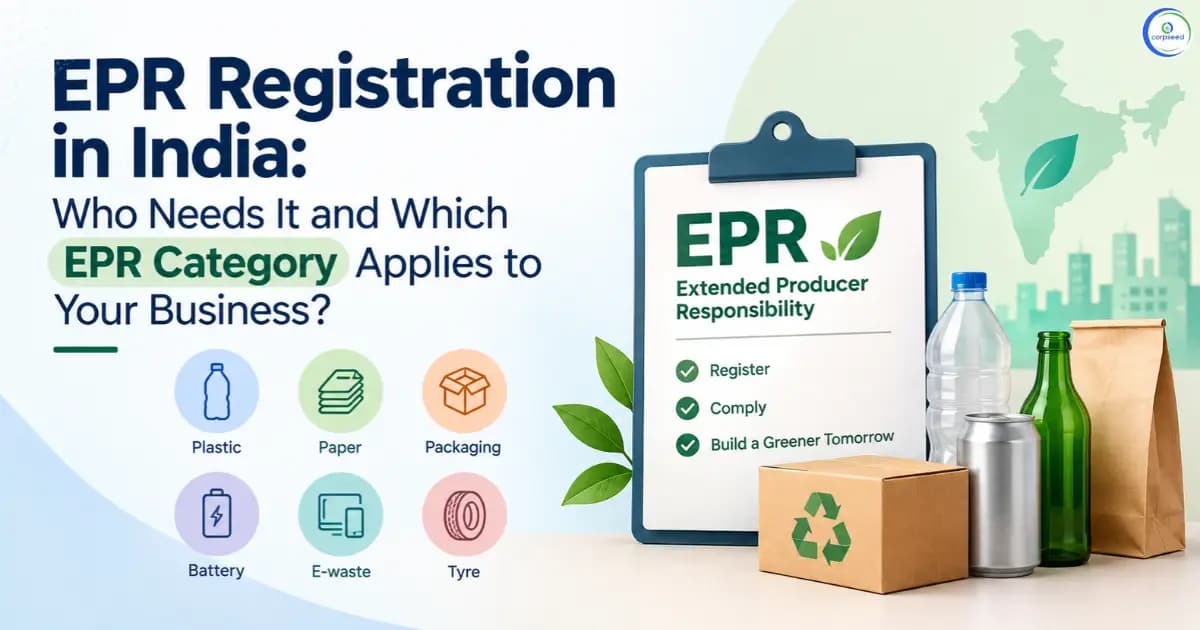
EPR Registration in India: Who Needs It and Which EPR Category Applies to Your Business?
2026-10-21
CPCB Guidelines on Levy of Fees Under the Solid Waste Management Rules, 2026
2026-10-07