9311255283
×

Welcome to Corpseed. Please type your query, and we shall provide immediate assistance.

×

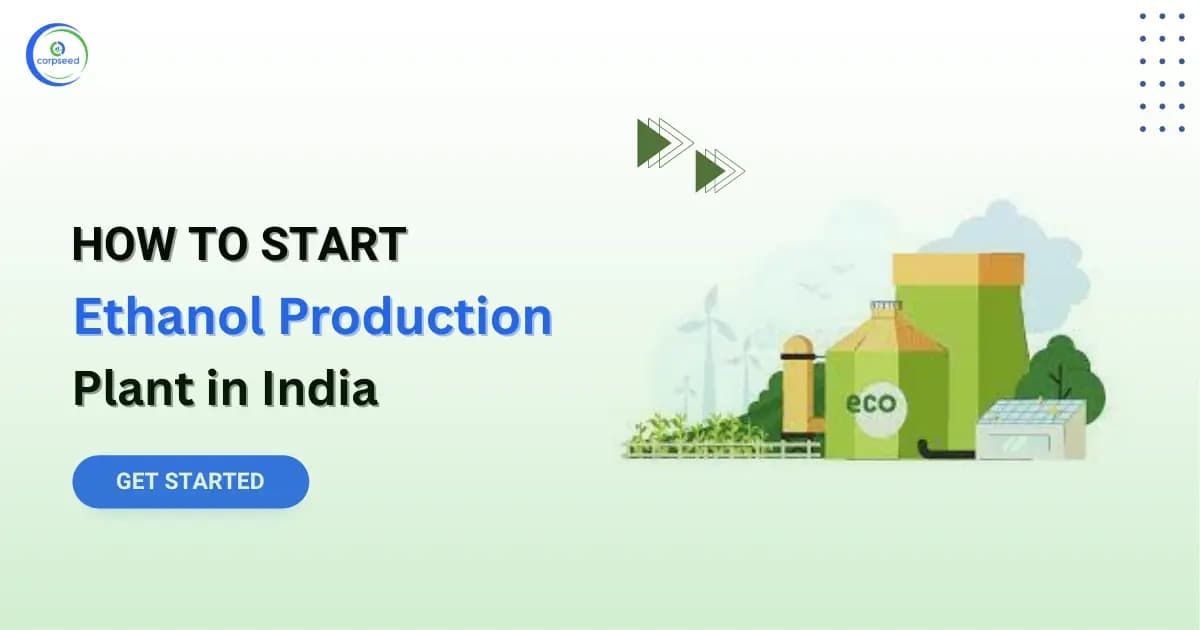
How to Start Ethanol Production plant in India

How_to_Start_Ethanol_Production_plant_in_India.webp
Last updated : 2025-11-18

Ethanol production is becoming very important in India. Pollution is rising every day, and this affects the health of people and the environment. Vehicles on roads mostly use petrol made from fossil fuels. These fuels create smoke and harmful gases. Ethanol is a clean fuel that comes from natural sources like sugarcane, grains, or molasses. It helps in reducing air pollution and saves foreign money spent on oil. The Government of India also wants more green fuel use. A big goal is to mix 20% ethanol with petrol by the year 2025. This is why new ethanol plants play a strong role in clean energy and farm growth. These plants also give jobs to many workers and support farmers by buying their crops.
--------------Blog Contact Form-------------

Why is there a need for an Ethanol Production Plant in India?

India's pollution levels are rising, and energy demand is growing because the economy is expanding, the population is increasing, and cities are spreading. Around 98 % of the fuel used by road transport comes from fossil fuels and only about 2 % from biofuels. Ethanol is one of the key biofuels. Starting an ethanol production model helps reduce pollution, provide cleaner fuel, support farmers, and contribute to energy security.

The government of India set a goal to blend 20 % ethanol with petrol by 2025 in the Ethanol Blended Petrol (EBP) programme, which makes starting an ethanol production plant a strong business idea today in India.

Infrastructure and Machinery Required for Ethanol Production

An ethanol plant needs several sections and machinery to run smoothly. The major ones are:

  • Grain storage and cleaning plant to receive and clean raw materials.
  • Grain grading and milling plant to grind the raw material.
  • A liquefaction plant to convert the starch or sugar solution into a fermentable form.
  • Fermenting unit to ferment the prepared solution with yeast and water.
  • A distillation plant to separate the alcohol (ethanol) from the fermented wash.
  • Spent filtration plant to remove solid residue after distillation.
  • Spent wash evaporator to reduce wastewater and concentrate effluent.
  • Cooling system to manage heat in the process.

Raw Materials Required to Start Ethanol Manufacturing

Different feedstocks (raw materials) are used in India for ethanol production. Each feedstock gives a different yield. Examples:

  • C-heavy molasses:  250 to 275 litres of rectified spirit per ton of raw material.
  • B-heavy molasses:  300 to 325 litres per ton.
  • Sugarcane juice:  70 to 80 litres per ton.
  • Cereals (such as maize or broken rice):  300 litres per ton.

These are approximate yields. Actual production will vary depending on raw material quality, equipment efficiency, fermentation technology, and plant design.

The Manufacturing Process of Ethanol

The ethanol production process in India follows these main stages:

  1. Fermentation: Raw material (molasses, sugarcane juice, cereal mash) is mixed with water and yeast. After about 24 hours of fermentation, alcohol (ethanol) is produced in the fermented wash.
  2. Distillation: The fermented wash passes through a sludge remover, then into the distillation column. Heat is applied, alcohol vapour rises, condenses, and is collected as ethanol.
  3. Treatment/Cleanup: The ethanol may be purified or rectified, spent wash is treated, waste is handled, and water treatment may be required.
  4. Storage & Dispatch: The final ethanol product is stored in tanks and then supplied for blending with petrol or for other uses.

Government Support in Ethanol Production

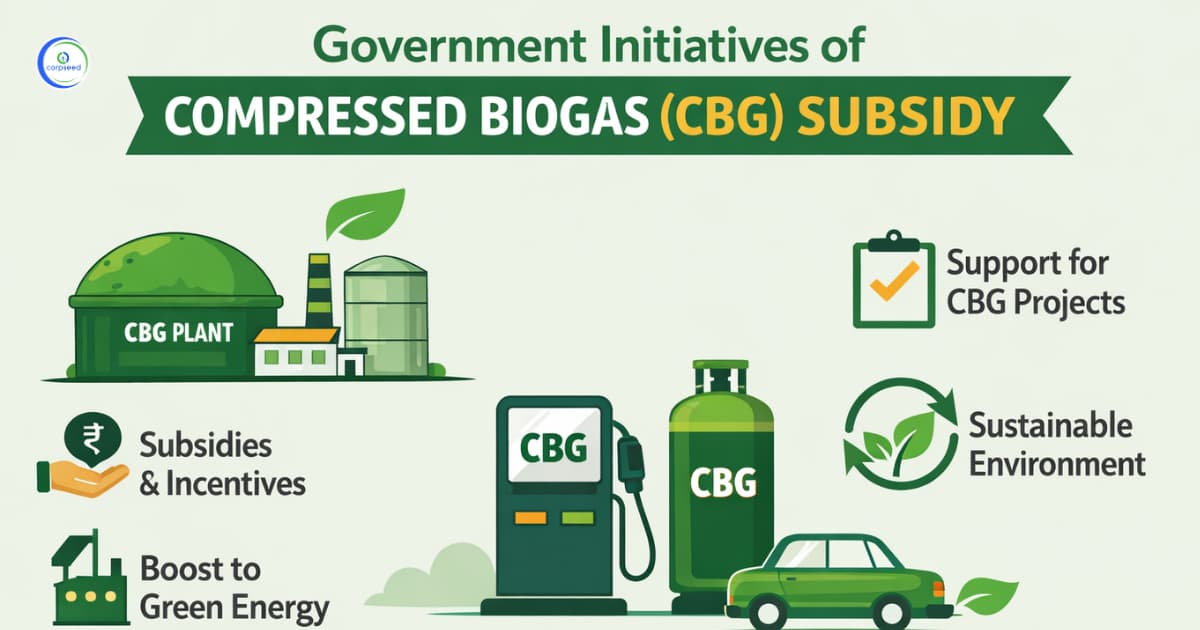
The Government of India provides several supports to promote ethanol production. Key supports include:

  • Fixed the minimum procurement price of ethanol made from different raw materials. For example: ethanol from C-heavy molasses: Rs 46.66 per litre, from B-heavy molasses:  Rs 59.08, from sugarcane juice:  Rs 63.45.
  • GST reduction, the GST rate on ethanol was reduced (from 18 % to 5 %) to promote investment in ethanol production.
  • Free movement of ethanol under the Industries Act for the ethanol-blended programme.
  • Bank loan moratoriums/interest subvention schemes for new ethanol plants (depending on timeline and policy).Schemes to encourage the blending programme and increase the target to 20 % by 2025.

Advantages in the Production of Ethanol Fuel

There are many advantages to producing ethanol fuel in India:

  • Ethanol costs less compared to petrol in some cases and burns cleaner. Carbon monoxide and other harmful emissions are lower.
  • Ethanol-blended vehicles emit less carbon dioxide, thus contributing to environmental goals and cleaner air.
  • Production uses crops (sugarcane, cereals), so this supports farmers, generates rural employment, and improves incomes.
  • It reduces dependence on imported fossil fuels and supports energy security.
  • In India's tropical climate, sugarcane grows well, so feedstock is available in many parts of the country.

What Documentation is Required for Ethanol Production?

Starting an ethanol production plant in India requires several documents. These include:

  1. Declaration by the EIA (Environmental Impact Assessment) Consultant & its Authorisation.
  2. Land documents, along with a diversion order for industrial use (if the land was agricultural).
  3. Memorandum & Articles of Association for the company.
  4. A letter of Intent was received from Oil Marketing Companies (OMCs) for the supply of ethanol.
  5. Application for surface water, steam, condensate, fuel & power balances.
  6. Plant layout drawings.
  7. Raw material storage and product storage plans.

Is the Ethanol Production Plant Business Profitable in India?

Yes, the ethanol production plant business in India shows good potential for profit. Here are pointers:

  • India's ethanol blending programme is expanding, raising demand for ethanol production.
  • As blending levels increase (target 20 % by 2025), demand for ethanol will grow.
  • Profit margins depend on feedstock cost, yield of ethanol, plant efficiency, CAPEX (capital investment), and OPEX (operating cost).
  • One approximate figure, a 10 KLPD (kilolitres per day) capacity automatic ethanol plant may cost starting from  Rs 20 crore (depending on equipment, technology, raw material, and location).
  • Investment risks exist, including feedstock price volatility, regulatory changes, technology efficiency, and waste treatment cost.

Government Guidelines on Ethanol Production Plant in India

Key guidelines and policy directions include:

  • On 5 June 2021 (World Environment Day), the report of the expert committee on the "Roadmap for Ethanol Blending in India 2020-25" was released. The target of 20 % blending (E20) in petrol was set for 2025.
  • State governments (such as in Haryana) are focusing on boosting ethanol production, encouraging the use of crop stubble, and partnering with sugar mills.
  • The central government promotes ethanol production, for instance, by allowing production from sugarcane juice, molasses, and grains under notified feedstocks.

Conclusion

Ethanol is a clean fuel that helps keep the air fresh and safe to breathe. When vehicles use ethanol, they make less smoke, which protects people from harmful gases. Farmers also get a good income because sugarcane, corn, and other grains can be used to make ethanol. This means more work and more money in villages.

India does not have to buy too much fuel from other countries if it makes more ethanol at home. The government is also helping by giving support such as fixed buying prices, easier permissions, and lower taxes for new ethanol plants.

A plant that has good machines, enough raw materials, and all the right licences can earn a profit for a long time. Ethanol factories create jobs in both small towns and big cities. The demand for clean fuel is growing every year. That is why ethanol production is becoming a smart and strong business for India's future and clean energy goals.

This portion of the site is for informational purposes only. The content is not legal advice. The statements and opinions are the expression of author, not corpseed, and have not been evaluated by corpseed for accuracy, completeness, or changes in the law.

BOOK A FREE CONSULTATION

Get help from an experienced legal adviser. Schedule your consultation at a time that works for you and it's absolutely FREE.

Author

Mahek Sancheti, BAJMC graduate with a deep passion for writing. As a content writer, video content creator, creative content creator, and scriptwriter, I bring stories to life through words and visuals. I honed my skills by working with a promi...

Learn More >>