
How to Register a Startup in India (2026): A Step-by-Step Legal & Compliance Guide
Startup registration in India means giving a business a legal identity under Indian law. It is the first step toward building a real, recognized company.
Schedule a Call Back
Businesses we've worked with on Startup India
Clients include Pontus Pack, Cmp Security Services, Rays Global Energypower, Kapemai Lifestyle, Mobi Tech, Quantara Battery Recycling, Escarl Jewels, Goldquest Global HR Services, Milton Elevator, Mayfair Events, RMJ Fresh Hypermart24 by 7, StoreHouse Export Services (12 of 40+ served since 2018).
A few more clients we've served in this industryHide the list
- Clients include
- Pontus Pack · Cmp Security Services · Rays Global Energypower · Kapemai Lifestyle · Mobi Tech · Quantara Battery Recycling · Escarl Jewels · Goldquest Global HR Services · Milton Elevator · Mayfair Events · RMJ Fresh Hypermart24 by 7 · StoreHouse Export Services · Zoyo Learning
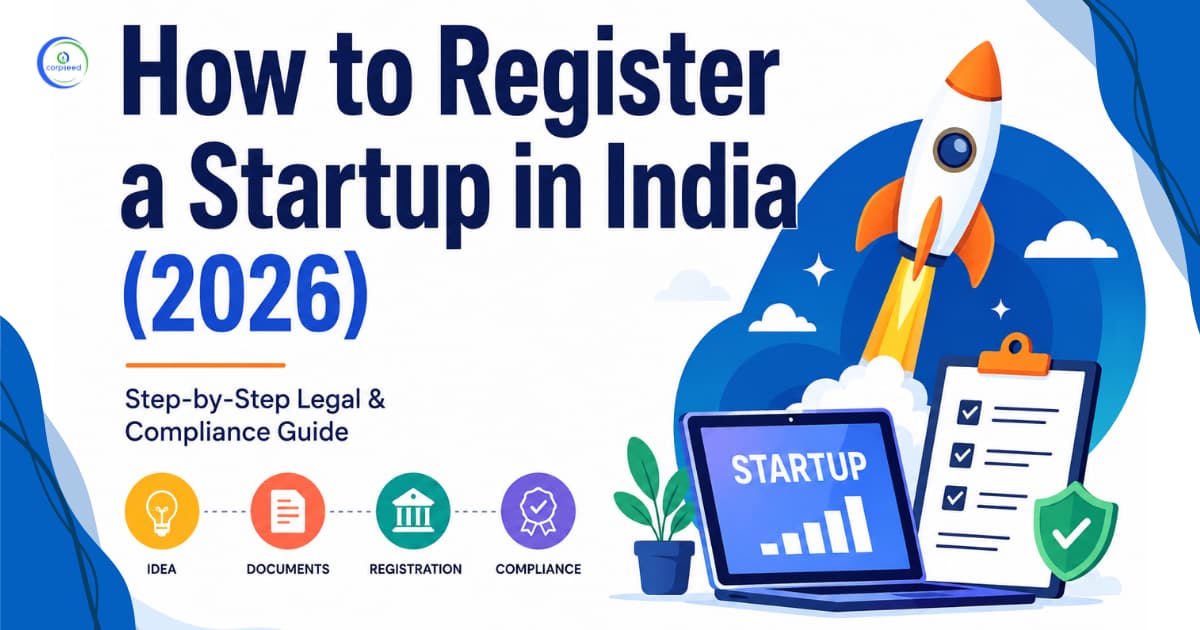
India is now moving in a world full of startups. Thousands of new businesses launch every year. The startup ecosystem is growing at a fast pace, which is introducing new entrepreneurs every year. More entrepreneurs are building companies across the tech, health, and finance sectors.
But starting a business without proper legal registration is risky. Startup registration in India gives a business a legal identity. It helps attract funding, claim tax benefits, and build trust.
Schedule a Call Back
What is Startup Registration in India?
Startup registration in India means giving a business a legal identity under Indian law. It is the first step toward building a real, recognized company.
There are two important terms here. The first is company registration. This is the process of forming a legal entity, such as a private limited company or an LLP, under the Ministry of Corporate Affairs (MCA). The second is Startup India recognition. This is a separate recognition given by DPIIT (Department for Promotion of Industry and Internal Trade) to eligible startups.
DPIIT startup registration gives access to special government benefits, tax exemptions, and funding support. A startup must first register as a company, and then apply for DPIIT recognition separately.
The startup or business is legally acknowledged in the marketplace. This allows it to make deals, open bank accounts, hire employees, and earn money. Non-registration results in the inability of the company to prosper and grow.
Benefits of Startup Registration in India
Registering a startup opens the door to many legal, financial, and business advantages. A registered startup gains trust and credibility in the market. Here are the major benefits.
- Tax Exemption: Startups having DPIIT certification are eligible to avail of tax exemption benefits for three consecutive years under Section 80-IAC of the Income Tax Act.
- Funding Support: It becomes easier for registered startups to attract funding that helps them grow.
- Government Schemes: Startups are now helped by the government with the help of schemes & benefits, which are helping them to grow.
- Brand Credibility: A registered company builds trust with customers, partners, and investors. It shows the business is serious and legal.
- Legal Protection: By registering their business, the entrepreneurs can be protected from any legal issues, as well as protect their brand identity.
- Easy Compliance Access: Registered startups get simplified compliance under the Startup India Scheme, including fast-track patent filing and self-certification.
Types of Business Structures for Startups in India
Before registering a startup in India, it is important to choose the right business structure. Each structure has different rules, liability, and compliance needs. Here are the common business structures.
- Private Limited Company: A Private Limited Company is one of the best options for startup registration in India. It helps businesses raise funds, grow fast, and protect owner liability. MCA registration is required for this business structure.
- LLP (Limited Liability Partnership): LLP registration provides good legal protection to the partners. It suits smaller businesses and services-oriented enterprises, and there are no stringent compliance procedures for registering as an LLP.
- OPC (One Person Company): OPC registration is best for a single business owner. One person can start and manage the business easily with limited liability protection.
- Partnership Firm: A Partnership Firm is suitable for small businesses with two or more partners. It is simple to start, but partners have more personal liability risk.
- Sole Proprietorship: The simplest form. No formal registration needed. But the owner is personally liable for all business debts.
Step-by-Step Process to Register a Startup in India (2026)
The startup registration process in 2026 is mostly online and government-driven. Here are the basic registration steps.
1. Choose Business Structure: Select the most suitable legal structure based on team size, funding plans, and business goals.
2. Apply for DSC and DIN: Get a Digital Signature Certificate (DSC) and Director Identification Number (DIN) for all proposed directors.
3. Reserve Company Name: Use the MCA portal to check and reserve a unique company name through the RUN (Reserve Unique Name) form.
4. File Incorporation Application: Submit the SPICe+ form on the MCA portal along with the Memorandum of Association (MoA) and Articles of Association (AoA).
5. Obtain Certificate of Incorporation: After approval, the MCA issues a Certificate of Incorporation (CoI), which confirms that the company is legally formed.
6. Apply for PAN and TAN: Apply for the company's Permanent Account Number (PAN) and Tax Deduction Account Number (TAN) for tax purposes.
7. Register under Startup India: Apply on the Startup India portal for DPIIT startup registration to access government benefits and recognition.
8. Open Current Bank Account: Open a business bank account in the company name using the Certificate of Incorporation and PAN.
9. Apply for GST and MSME (if required): If annual turnover exceeds the GST threshold, register for GST. MSME registration helps access additional government support and schemes.
Legal Compliance Required After Startup Registration
Registering a startup is just the starting process. Legal compliance matters, and looking into compliance after startup registration is the main part. Here is what is required after registering a startup in India:
- GST Compliance
- ROC Filing
- Income Tax Filing
- Accounting Records
- Annual Compliance
- Labour Law Compliance
- Trademark Protection
Government Schemes and Benefits for Indian Startups
The government is now supporting startups until the end through the schemes & benefits it provides.
Key Government Schemes & Benefits for Startups:
- Startup India Seed Fund Scheme (SISFS
- Fund of Funds for Startups (FFS)
- Credit Guarantee Scheme for Startups (CGSS)
- Atal Innovation Mission (AIM)
- SAMRIDH Scheme
- Stand-Up India Scheme
- MSME Innovative Scheme
Key Benefits & Exemptions:
- Income Tax Exemption
- Easy Compliance
- Fast-Track Patent Filing
- Public Procurement
Cost and Timeline for Startup Registration in India
Many variables can influence the cost of registering a startup in India. There is no uniform price applicable to all startups. Some of these include:
- Business Structure
- Government Fees
- Professional Charges
- State-Wise Requirements
In general, a startup can be incorporated in 7 to 15 working days if all documents are in order. DPIIT recognition can take an additional 2 to 4 weeks after company formation. GST and MSME registration each take a few working days. Starting early and having documents ready helps speed up the process.
Conclusion
Startup registration in India is a critical step for any new business. This ensures that the startup gets legal status and receives funding and various government incentives. Startup registration involves the selection of a suitable business model, completion of MCA registration, and registration with the DPIIT as a startup.
Following the completion of the startup registration, compliance with legal regulations is as important. Tax filing, record keeping, and adherence to labor regulations will make sure everything runs as smoothly as possible.
Working with professionals will help make the entire process easier. Contact a startup legal professional now and start your journey towards building a great startup.
About the Author

Mahek Sancheti
Content WriterMahek Sancheti, BAJMC graduate with a deep passion for writing. As a content writer, video content creator, creative content creator, and scriptwriter, I bring stories to life through words and visuals. I honed my skills by working with a prominent news agency, where I excelled in crafting compelling narratives and engaging content. Coming from a journalism and mass communication background I have skills to craft engaging narratives that captivate audiences. With a keen interest in writing and creativity, I aim to deliver impactful and meaningful content that resonates with diverse audiences.
https://www.linkedin.com/in/mahek-sancheti-837196212
Related articles
Pvt Ltd vs LLP vs OPC: Which Is the Best Business Structure in India?
2026-10-08
MCA Introduces New CSR Funding Route Through Zero-Coupon Zero-Principal Instruments
2026-05-30
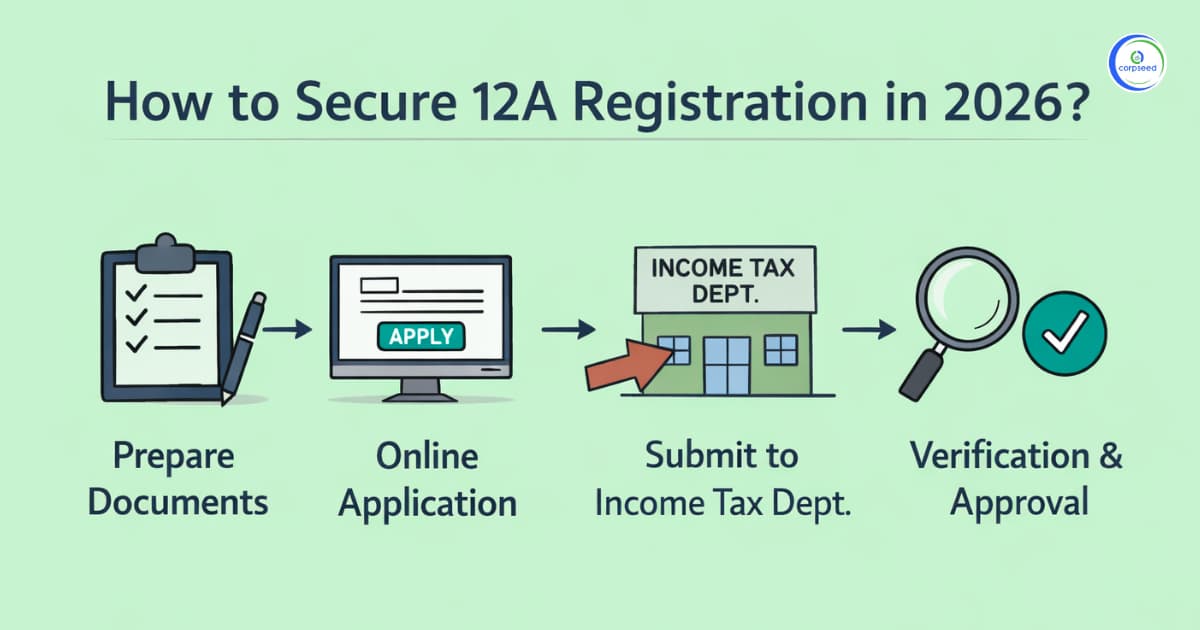
How to Secure 12A Registration in 2026?
2026-04-18
MCA Invites Stakeholders' Feedback to Simplify SPICe+ Part B Resubmission and Linked Forms
2026-01-03

Annual Compliance Checklist For Private Limited Companies And LLPs In India
2026-12-31

Step-by-step Guide to Registering a Company Online in 2026 (in India)
2026-12-29