Climate change no longer feels obscure. Hotter days, less water, dirty air, and the loss of plants and animals now affect daily life and the economy. Factories, transport systems, and cities feel this pressure every day. Business activities also add to the problem through high energy use, heavy use of natural resources, pollution, and waste.
Businesses also play a key role in solving these challenges. Better planning, smart investments, and long-term thinking now include care for the environment. Protecting nature helps build trust, reduce future risks, and support steady and responsible growth.
Green credits help turn this effort into action. These credits are earned when real work is done to protect forests, save water, and repair damaged land. This system supports strong corporate sustainability and helps climate action create a safer and more secure future.

Table of Contents
--------------Blog Contact Form-------------
What are Green Credits?
Green credits prove that real care has been given to nature. These credits come from simple actions that help the environment stay healthy. Planting trees, saving water, making soil richer, protecting animals and plants, and handling waste safely are common examples. Each green credit is earned only after proper checking. Skilled professionals study the work and confirm that it truly helps the environment.
The Green Credit Program cares about real work, not just promises. It supports projects that repair damaged land, keep water sources clean, and restore nature to balance.
Why Green Credits Matter Today?
Here are the points that explain why green credits matter today:
- Environmental problems are growing. Dirty air, water shortages, poor soil, and loss of plants and animals affect health, farming, and climate.
- Governments have made stricter rules. Businesses must clearly report their environmental impact to avoid consequences.
- Investors check environmental performance before funding. Responsible practices reduce long-term financial risk.
- Banks and lenders consider sustainability. Companies that harm the environment may face difficulties obtaining loans or insurance.
- Customers trust brands that take real action. Honest efforts build a reputation that surpasses marketing claims.
- Green credits prove real work for nature. Each credit shows that actions such as planting trees, conserving water, or protecting wildlife have a real, positive impact on the environment and help ensure a sustainable future.
- Many countries, including India, support green credit programs. These programs guide companies to repair ecosystems, protect natural resources, and reliably contribute to climate goals.
Green Credits vs Carbon Credits
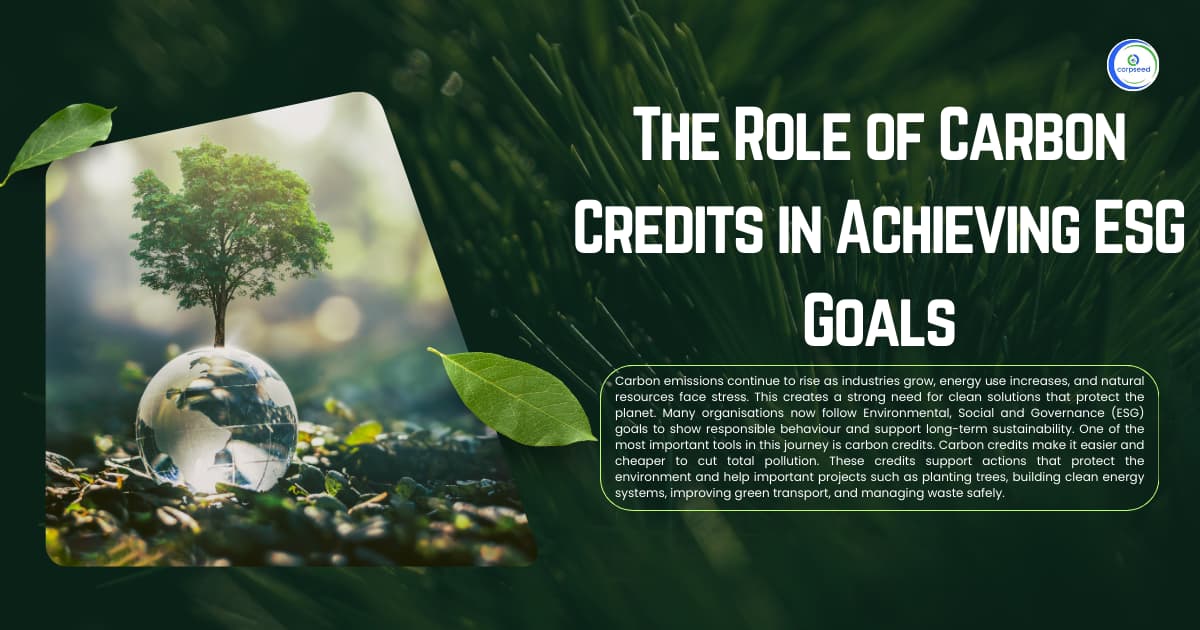
Carbon credits focus on reducing harmful gases in the air. They help balance emissions through projects such as renewable energy, switching to cleaner fuels, and capturing methane from waste. Green credits go further than carbon. They support forest growth, save water, improve soil, protect wildlife, and reduce waste.
Core difference:
- Carbon credits focus on emissions
- Green credits focus on overall ecosystem health
Both carbon and green credits help fight climate change. Green credits provide broader benefits for nature and help restore ecosystems, making the environment stronger and more stable over the long term.
How Green Credits Support Corporate Sustainability?
Corporate sustainability needs real proof, not just promises. Green credits provide clear, verified results that demonstrate real environmental impact.
- Supports ESG Compliance: Green credits help improve environmental performance in line with ESG standards. Verified projects ensure accurate and transparent reporting. Strong ESG performance attracts investors and lowers business risks.
- Builds Climate Action Strategy: Green credits add nature-based solutions to climate plans. They help companies adapt to climate challenges, strengthen resilience, and support net-zero goals.
- Improves Environmental Performance: Green credit projects enhance air quality, water availability, soil health, and overall ecosystem balance. These improvements reduce operational risks and make supply chains more reliable.
- Strengthens Brand Trust: Visible and verified environmental actions build credibility. Stakeholders and customers respond positively to companies that take real steps. Green credits show real commitment, not just words.
Types of Activities That Generate Green Credits
Green credits originate from carefully monitored environmental activities that follow approved standards.
- Afforestation and Tree Plantation: Tree plantation improves air quality, supports carbon absorption, and restores degraded land. Forest-based initiatives generate substantial environmental value.
- Water Conservation Projects: Rainwater harvesting, watershed development, and groundwater recharge improve water availability. These projects support communities and earn green credits.
- Soil and Land Restoration: Healthy soil supports food systems and biodiversity. Land restoration improves productivity and ecosystem balance over time.
- Biodiversity Protection: Habitat restoration and wildlife conservation protect natural diversity. Biodiversity-focused projects form a critical category of green credits.
- Waste Management and Recycling: Waste reduction and recycling lower pollution and resource loss. These activities support circular economy practices and material efficiency.
Role of Green Credits in Climate Action
Climate action requires more than emission control. Ecosystem restoration plays a vital role. Green credits support both mitigation and adaptation. Forests regulate temperature and rainfall. Wetlands reduce flood risk. Healthy soil stores carbon and supports agriculture. Green credits strengthen these natural climate solutions. Green credit programs also promote local participation. Community-led projects create employment, support rural income, and improve living conditions. This approach links climate action with social development.
Government Support for Green Credit Programs
Governments are supporting green credit programs more than ever to meet climate and nature protection goals. These programs align with national sustainability goals and global environmental targets to save the environment. Clear rules make the system transparent and trustworthy. Standard checks make sure credits are real and prevent misuse or false claims.
Good governance helps protect ecosystems and builds investor confidence. Partnerships between governments, businesses, and communities speed up green credit adoption. Working together creates solutions that can grow and last. This teamwork strengthens the overall sustainability system.
Conclusion
Green credits offer a clear and trustworthy way to support a greener future and sustainability in India. They connect corporate sustainability (CSR) with climate action through real, measurable results.
By protecting the environment and the whole ecosystem, green credits help strengthen ecosystems and make economies more stable. These actions reduce long-term climate risks while encouraging responsible and steady growth in the long term.
Investing in green credits creates lasting value not only for the business but also for the environment. Environmental protection, social benefits, and economic progress happen together. A sustainable future depends on actions that are real, measurable, and trustworthy. Green credits make this possible.
This portion of the site is for informational purposes only. The content is not legal advice. The statements and opinions are the expression of author, not corpseed, and have not been evaluated by corpseed for accuracy, completeness, or changes in the law.
BOOK A FREE CONSULTATION
Get help from an experienced legal adviser. Schedule your consultation at a time that works for you and it's absolutely FREE.