The business world in India is changing fast. Every business today wants to grow cleanly and safely. Companies now think more about protecting the environment, keeping people safe, and working fairly. This change is happening because of ESG, which means Environmental, Social, and Governance.
In 2026, ESG will guide how companies work, how investors pick strong businesses, and how customers decide which brands to trust. Good ESG actions will not be something extra. There will be a basic rule for any company that wants to stay strong, stable, and successful in the future.
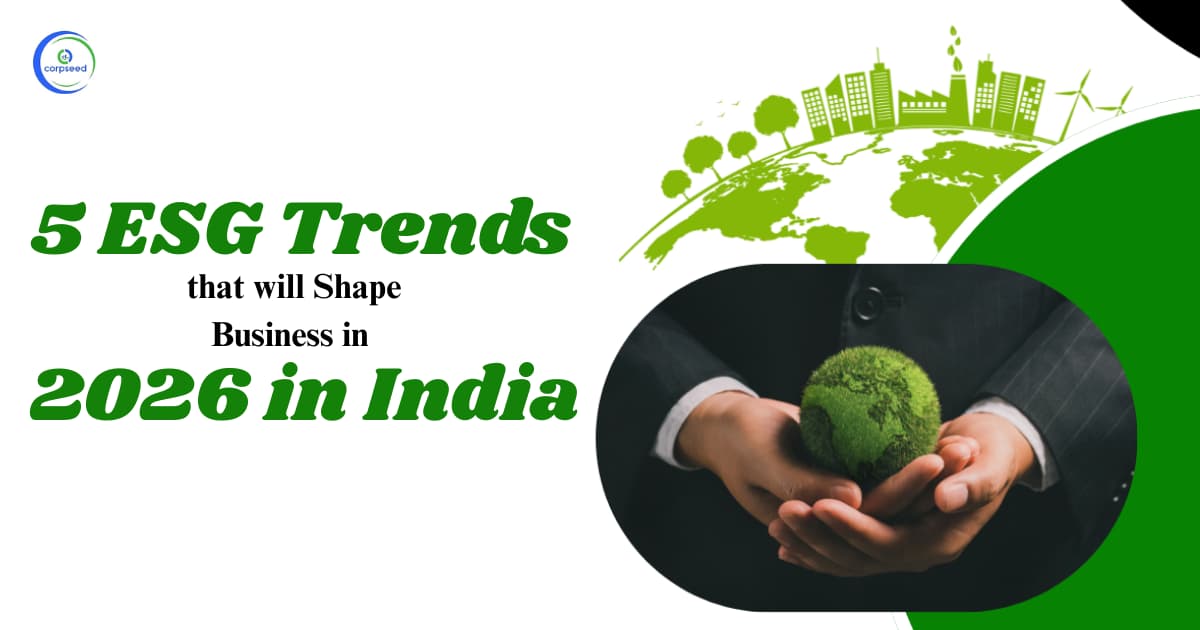
Companies across India are preparing for new rules, stricter reporting, and higher expectations from regulators and stakeholders. As the economy grows, sustainable development is becoming the center of decision-making. The rise of ESG in India shows a clear message: future-ready businesses must stay responsible, transparent, and climate-aware.
Table of Contents
--------------Blog Contact Form-------------
What is ESG?
ESG is a simple framework that checks how responsibly a business works. It has three parts:
- Environmental (E): It looks at how a business affects nature. It covers carbon emissions, pollution control, waste management, renewable energy use, water conservation, and climate-risk action.
- Social (S): It focuses on people. It checks employee safety, fair work culture, diversity, community support, data protection, and customer rights.
- Governance (G): It observes how a business is run. It checks ethics, board structure, transparency, audits, anti-corruption steps, and compliance with laws.
ESG in India is no longer a corporate trend. It has become a strong requirement driven by SEBI, BRSR, and global investors. Firms with high ESG scores gain trust, lower risks, and stronger market value.
Also Read: ESG Regulatory Landscape in India 2025: SEBI BRSR, BRSR Core & Compliance Guide for Companies
What are the ESG Trends that will Shape Business in 2026 in India?
India will see a major shift in ESG compliance in 2026. New rules, stronger reporting, and higher global expectations will push companies to adopt cleaner and more responsible business models. These five ESG trends will strongly shape Indian industries and their long-term growth.
1. Stronger SEBI Rules and Mandatory BRSR Core
SEBI already asks the biggest listed companies in India to follow BRSR reporting rules. By 2026, these rules under BRSR Core will reach many more sectors like factories, technology firms, energy companies, and consumer goods brands.
This change will bring stricter checks on how companies manage their supply chains, control waste, reduce pollution, protect workers, and follow fair human rights practices.
Stricter governance rules will encourage companies to improve transparency and disclose accurate sustainability data. Clear and verified ESG information will become essential for investor trust, market stability, and global partnerships. Companies that adhere to strong BRSR Core standards will remain ahead in terms of compliance, brand value, and long-term growth.
2. Rise of Climate-Risk Management
Climate change is now causing stronger problems in India. Heatwaves, floods, droughts, and sudden storms are becoming more common. Because of this, climate-risk management will become a key rule for every business in 2026.
Companies will start checking climate dangers by using simple tools like climate maps, basic models, and easy sustainability reviews. Many businesses will shift to clean energy, save more water, and use low-carbon methods to protect the environment.
Regular climate audits will help companies avoid big losses, keep their equipment safe, and stop work delays. Climate-risk management in India will also matter for investors. Investors will choose companies that stay strong during climate change and show long-term care for the environment.
3. Green Finance and ESG-Linked Investments
Finance in India is changing fast. Banks, lenders, and investors now consider ESG scores before giving funds. In 2026, green loans, ESG-linked loans, sustainability-linked bonds, and climate-focused investments will rise across sectors. Companies with strong ESG performance will enjoy easier credit access, lower interest rates, and better funding opportunities.
Weak ESG performance may reduce access to global capital markets. This change will push many industries to use cleaner technologies, cut down their carbon pollution, and follow better ethical and social standards. Green finance will grow fast and act like a strong support system for India’s sustainable future.
4. Supply Chain Due Diligence
Global buyers are now putting more pressure on Indian suppliers to follow proper ESG rules. They want suppliers to work safely, protect the environment, and follow fair practices at every step. In 2026, strict supply-chain checks will become normal for large industries and MSMEs. Companies will need to show data on waste reduction, labour safety, pollution control, and ethical sourcing.
Supplier audits, ESG scorecards, and transparent documentation will grow across sectors. Global brands will work only with suppliers that meet high ESG standards. This trend will push small and medium businesses to upgrade processes, adopt clean systems, and follow sustainable sourcing.
5. Digital ESG Reporting Tools and AI-Driven Monitoring
Technology will reshape ESG reporting in India. AI-powered tools will track emissions, water use, energy consumption, waste levels, and governance compliance in real time.
Digital dashboards will simplify reporting for SEBI, stock exchanges, regulators, and investors. Automated systems will reduce errors, cut reporting costs, and improve accuracy.
AI-based ESG tracking will help companies make quick decisions, choose climate-friendly steps, and stay compliant at all times. This digital change will make ESG a smooth, steady, and future-ready process.
Benefits of ESG in India
ESG brings many important benefits for businesses across India. Some of the key advantages include:
- Higher Investor Trust: Investors feel more confident in companies that follow strong ESG rules. Clear and honest reporting improves brand value and helps attract stable, long-term investment.
- Lower Business Risks: ESG helps reduce legal trouble, climate-related damage, and everyday work risks. Clean production, safe work conditions, and fair practices protect companies from fines and major losses.
- Better Brand Image: Companies that follow ESG standards earn more trust from customers, investors, and other people in the market. People today choose brands that care for the environment and treat workers fairly and safely.
- Easier Global Market Access: ESG compliance helps Indian companies match international standards. This makes global trade easier and builds stronger partnerships with buyers around the world.
- Improved Employee Retention: A safe, clean, and ethical workplace attracts skilled workers. Companies that have strong ESG values often look for higher employee happiness and better work performance.
- Cost Savings: Simple steps like saving energy, reducing waste, and using clean technology can lower costs over time. These sustainable methods also make the supply chain stronger and steadier.
Conclusion
ESG is shaping the future of business not only in other countries but also in India. In 2026, ESG compliance will become a key part of long-term growth, global trust, and financial strength. New ESG trends, stronger SEBI rules, better climate-risk planning, green finance, safer supply chains, and digital tracking will change the way companies work. Strong ESG efforts help build trust, reduce risks, increase profits, and improve brand value.
As India moves toward a cleaner and more responsible future, companies that follow strong ESG practices will stay ahead. ESG will not just be a rule, it will act as a clear path for growth, stability, and sustainability in 2026 and in the years to come.
This portion of the site is for informational purposes only. The content is not legal advice. The statements and opinions are the expression of author, not corpseed, and have not been evaluated by corpseed for accuracy, completeness, or changes in the law.
BOOK A FREE CONSULTATION
Get help from an experienced legal adviser. Schedule your consultation at a time that works for you and it's absolutely FREE.