Introduction
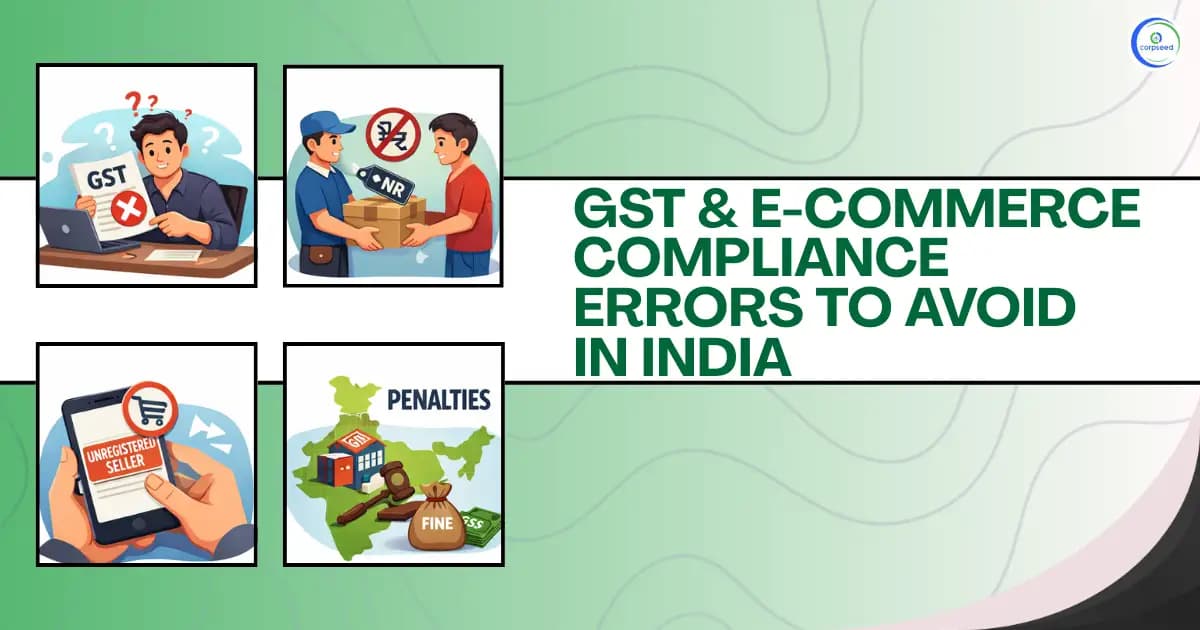
E-Commerce's Explosive Rise In India Has Changed How Companies Run, Market, And Grow. But Potential Also Entails Regulatory Accountability. E-Commerce Operators (Ecos) And Sellers Are Subject To Particular Compliance Requirements Under The Goods And Services Tax (GST) Laws, And Even Small Inaccuracies May Result In Fines, Interest, The Suspension Of Input Tax Credits, Or Legal Action. Due To Complex Regulations, Frequent Revisions, And Limited Awareness, Many Online Retailers And Platforms Unintentionally Fail To Comply With GST Requirements.
Understanding GST Applicability For E-Commerce Businesses
Sections 24 And 52 Of The CGST Act, 2017, Regulate E-Commerce Transactions Under The GST Statute. Regardless Of Turnover Limits Sellers That Distribute Items Through E-Commerce Operators (Ecos) Are Typically Required To Register Under GST (With Limited Exclusions). E-Commerce Operators And Sellers Have Different Compliance Obligations, And Misunderstandings Between The Two Often Lead To Errors. In Most Of The Cases, Non-Compliance With These Provisions Leads To Discrepancies, Tax Authorities' Notifications, And Credit Denials.
Table of Contents
--------------Blog Contact Form-------------
What Is The Importance Of GST Compliance For E-Commerce Businesses?
Strong GST Compliance Ensures:
- Smooth Platform Operations
- Avoidance Of Penalties And Litigation
- Improved Cash Flow Through Proper Itc Utilization
- Enhanced Credibility With Tax Authorities And Partners
With The Rise Of Data Analytics And System-Driven Scrutiny By GST Departments, Manual Errors Are No Longer Ignored.
Common GST & E-Commerce Compliance Errors To Avoid
Below Are The Key Highlights Of Explaining The Common GST And E-Commerce Compliance Errors To Avoid-
- Failure To Obtain Mandatory GST Registration
One Of The Most Common Compliance Errors Made By E-Commerce Sellers Is Operating Without GST Registration. Under The GST Law, Sellers Are Required To Supply Goods Or Services Through E-Commerce Platforms And Register Themselves Under GST Regardless Of Their Turnover, Except In Limited Cases Involving Exempt Supplies. Many Small Sellers Wrongly Assume That The Basic Exemption Limit Applies To Them. This Misunderstanding Leads To Unregistered Selling, Which Is A Serious Violation Of GST Provisions And Can Attract Heavy Penalties And Backdated Tax Liabilities.
- Non-Compliance With Tax Collected At Source (Tcs) Provisions
GST Mandates That E-Commerce Operators Collect Tax Collected At Source (Tcs) On Taxable Supplies Made Through Their Platforms. Frequent Error Arises When Sellers Fail To Understand How The Tcs Impacts Their Cash Flow And Return Filings. Also, Sellers Often Neglect To Reconcile The Tcs Credits Reflected In Their E-Cash Ledger With The Platform Reports. The Mismatching Of Results In Incorrect Tax Payments, Blocked Funds, And Discrepancies In GST Returns Are Leading To Notices From Tax Authorities.
- Delayed Or Incorrect GST Return Filing
E-Commerce Businesses Are Also Required To File Multiple GST Returns Which Includes GSTr-1, GSTr-3b, And, For Operators, GSTr-8. Many Sellers And Operators Commit Errors By Filing Returns Late, Entering Incorrect Sales Data, Or Missing Return Deadlines Altogether. Delayed Filings Lead To Late Fees And Interest, While Incorrect Data Increases The Risk Of Scrutiny And Audits. Regular Non-Compliance Also Affects The Seller’s Compliance Rating And Credibility On E-Commerce Platforms.
- Input Tax Credit (Itc) Errors And Mismatches
Incorrect Claiming Of Input Tax Credit Is A Critical Compliance Issue For E-Commerce Sellers. Businesses Often Claim Itc Without Verifying Whether Supplier Invoices Are Reflected In GSTr-2b Or Checking The Supplier's Compliance Status, Resulting In Reversals, Interest, And Penalties During Assessments. With Automated Data Matching Under GST, Itc Mismatches Are Easily Detected And Making Reconciliation A Crucial Compliance Requirement.
- Incorrect Determination Of Place Of Supply
Determining The Correct Place Of Supply Is Essential For Applying The Correct Type Of GST Whether It Was CGST And SGST Or IGST. E-Commerce Sellers Often Make Mistakes In Determining Whether A Transaction Is Interstate Or Intrastate, Especially When Multiple Warehouses, Drop Shipping, Or Third-Party Logistics Providers Are Involved. Incorrect Tax Classification Results In Incorrect Tax Payments, Compliance Disputes, And Potential Tax Demands From Authorities.
- Issuance Of Non-Compliant GST Invoices
GST Law Prescribes Specific Details That Must Be Included In A Tax Invoice, Such As GSTin, Hsn Codes, Place Of Supply, Tax Rate, And Tax Amount. Many E-Commerce Sellers Rely Entirely On Invoices Generated By Marketplaces Without Verifying Their Compliance. If Invoices Are Incomplete Or Incorrect, They Can Be Rejected During Audits, And Buyers May Be Denied Itc. Issuing Non-Compliant Invoices Is A Serious Lapse That Can Result In Penalties And Legal Complications.
- Mismatch Between Platform Sales Data And GST Returns
Mismatches Between The Sales Data Given By E-Commerce Platforms And The Figures Recorded In GST Returns Result In Yet Another Common Compliance Issue. Product Returns, Order Cancellations, Promotional Discounts, And Scheduling Discrepancies In Reporting Are Frequently The Source Of Discrepancies. If These Numbers Are Not Reconciled, There Will Be Either Too Much Or Too Little. When Turnover Is Reported, Automated GST Notices And Tax Demands Are Generated. Maintaining Accuracy And Compliance Requires Regular Reconciliation.
- Improper Treatment Of Returns, Refunds, And Discounts
E-Commerce Transactions Involve A High Volume Of Returns, Refunds, And Discounts, Which Directly Impact GST Liability. Many Sellers Fail To Issue Credit Notes Or Adjust Their Tax Liability Correctly For Returned Goods Or Refunded Orders. Discounts Offered Through Platforms Are Also Often Incorrectly Taxed. Such Errors Result In Excess Tax Payment Or Incorrect Reporting, Increasing The Risk Of Disputes And Financial Losses.
- Errors In GSTr-8 Filing By E-Commerce Operators
E-Commerce Operators Are Also Required To File GSTr-8, Reporting Tcs Collected And Supplies Made Through Their Platform. Errors In The Return Such As Incorrect Seller GSTins Or Turnover Details, Directly Affect GST Records And Itc Claims Of Teh Seller. Delayed Or Inaccurate GSTr-8 Filing Leads To Mismatches In Returns Of Sellers, Creating Compliance Issues Across The Supply Chain And Attracting Regulatory Scrutiny.
- Ignoring GST Amendments And Regulatory Updates
Laws Related To GST Governing E-Commerce Are Subject To Frequent Amendments Or Changes Through Notifications, Circulars, And Clarifications Issued By Tax Authorities. Many Businesses Also Fail To Keep Themselves Updated With These Amendments Which Leads To Outdated Compliance Practices. Ignorance Of Amended Tcs Rates, Reporting Requirements, Or Exemptions Can Result In Unintentional Violations. Staying Informed Is Essential To Ensure Continuous Compliance In A Rapidly Evolving Regulatory Environment.
How To Avoid GST & E-Commerce Compliance Errors
To Stay Compliant And Penalty-Free, Businesses Should:
- Obtain Mandatory GST Registration Before Onboarding On Platforms
- Understand Seller Vs Operator Compliance Obligations
- Regularly Reconcile Sales, Tcs, And Itc Data
- Use Correct Hsn Codes And GST Rates
- Maintain State-Wise Registrations For Warehouses
- File GST Returns Accurately And On Time
- Maintain Proper Books, Invoices, And Digital Records
- Seek Professional GST Advisory For Complex Transactions
Conclusion
GST Compliance Is Difficult For Indian E-Commerce Companies, But It Is Doable With The Correct Tools, Information, And Expert Assistance. The Majority Of GST And E-Commerce Compliance Problems Are Caused By Incomplete Reconciliation, Late Submissions, Or Misinterpretations Of The Law. Businesses Can Prevent Fines Protect Their Input Tax Credit, And Create A Scalable, Compliant E-Commerce Firm By Taking Proactive Measures To Address These Problems. Maintaining GST Compliance Is Important For Long-Term Viability And Trust In India's Rapidly Changing Digital Economy, Not Only To Avoid Notices.
This portion of the site is for informational purposes only. The content is not legal advice. The statements and opinions are the expression of author, not corpseed, and have not been evaluated by corpseed for accuracy, completeness, or changes in the law.
BOOK A FREE CONSULTATION
Get help from an experienced legal adviser. Schedule your consultation at a time that works for you and it's absolutely FREE.