
CDSCO Registration for Orthopaedic and Implantable Devices
CDSCO registration for orthopaedic and implantable devices involves identifying the device correctly, determining its risk class, preparing the required technical and regulatory documents, and following the applicable import or manufacturing licensing route under India’s Medical Devices Rules, 2017.
Schedule a Call Back
2,100+ CDSCO medical device assignments since 2018
Clients include Endolite India, Mankind Pharma, Ossur India, ADK Health Care, Credence Prosthetic India, V2U Physio Asia, International Electro Medical Company, Radimage Healthcare India, Istok New Hearing AID, Simpladent Implant Solutions, Starkey Laboratories India, Gentec Medical (12 of 1,100+ served since 2018).
A few more clients we've served in this industryHide the list
- Pharma and healthcare
- Endolite India · Mankind Pharma · Ossur India · ADK Health Care · Credence Prosthetic India · V2U Physio Asia · International Electro Medical Company · Radimage Healthcare India · Istok New Hearing AID · Simpladent Implant Solutions · Starkey Laboratories India · Gentec Medical · Cureesse Pharma · Hygiene Medicus · Nexus Surgical and Medicare
- More clients
- Meditronix Corporation · Nilkamal · Haesi GHL · GHL · Servotech Power Systems · Elektrocraft India · Happy Medicare · Anantaa Gsk Innovations · Cogmac Technologies · Aficionados Tech · Superceuticals · Truevis Technologies · 1008 Digital Health · BDS Services · Evoq Imaging Technologies · Premier Medical Systems and Devices · Riransa · Vitrag Infra Projects · Insta Biotech · Digital Acoustics · Artificial Learning Systems India · Nfilade Security Solutions · Humors Tech · K2O Consulting
Introduction
Orthopaedic implants and other implantable devices can fall into different risk classes depending on their intended use and characteristics, so the regulatory route is not identical for every product. CDSCO’s framework covers the import, manufacture and other regulatory aspects of medical devices in India.
This guide explains the classification, registration process, documents, testing and licensing requirements that manufacturers and importers need to consider before placing these devices on the Indian market.
Which Orthopaedic and Implantable Devices Require CDSCO Registration?
Orthopaedic and implantable products cover a wide range of devices used to replace, support, repair or modify parts of the human body. The applicable requirements depend on the device's intended purpose and risk profile rather than simply its product name.
Orthopaedic devices may include:
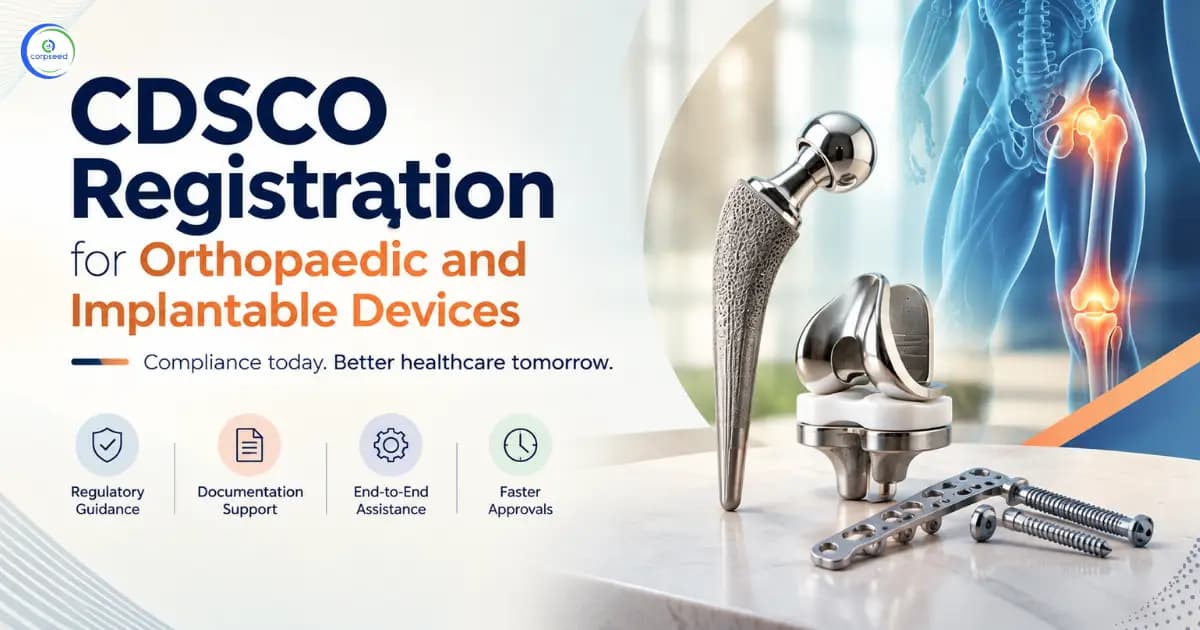
- Hip and knee joint prostheses
- Spinal implants
- Bone fixation devices
- Orthopaedic screws and plates
- Intervertebral fusion devices
- Other devices intended for orthopaedic reconstruction or support
Implantable medical devices can include products designed to remain inside the body for a specified period or to replace or support a body structure or physiological function.
CDSCO's classification list contains specific orthopaedic implants with different classifications. For example, certain hip joint prostheses in the published list are classified as Class C, while some other hip prostheses are classified as Class D. This shows why an applicant should not assume the class from the broad category of "orthopaedic implant" alone.
The device's intended use, duration of contact or implantation, invasiveness and other characteristics can affect the applicable classification. The Central Licensing Authority maintains the risk-based classification framework and the published classification list can be revised over time.
How Are Orthopaedic and Implantable Devices Classified Under CDSCO?
CDSCO medical device classification follows a risk-based system under the Medical Devices Rules, 2017. Medical devices are placed into four classes:
| Class | Risk Level |
| Class A | Low risk |
| Class B | Low-moderate risk |
| Class C | Moderate-high risk |
| Class D | High risk |
The classification is based on the parameters prescribed in Part I of the First Schedule to the Medical Devices Rules, 2017. CDSCO also states that classification is connected to the intended use of the device and other prescribed parameters.
For orthopaedic implants, classification can differ even between products that appear similar. CDSCO's published classification records include examples of hip and knee implants placed in different classes. Therefore, using the product description alone to decide the regulatory category can lead to an incorrect application route.
Before beginning a medical device registration in India, the manufacturer or importer should establish the exact device description, intended use, technological characteristics and applicable classification. This information then forms the basis for deciding which regulatory requirements apply.
What Is the CDSCO Registration Process for Orthopaedic and Implantable Devices?
The CDSCO registration process starts with understanding the product rather than immediately filing an application. The regulatory route depends on whether the product is being imported or manufactured in India and on its classification.
- Identify the device and intended use
The applicant should first define what the device does, who it is intended for and how it will be used. Product descriptions, intended use statements and technical specifications should remain consistent throughout the application documents.
- Determine the applicable classification
The next step is to identify the applicable risk class under the Medical Devices Rules, 2017. CDSCO publishes classification information and states that the classification framework is dynamic.
- Select the applicable regulatory route
Importers and manufacturers follow different licensing pathways. For importing medical devices, CDSCO states that an application is made in CDSCO Form MD-14 through the SUGAM portal for grant of an import licence in Form MD-15.
For manufacturing Class C or Class D medical devices for sale, or distribution, applications are made through the prescribed forms, including MD-7, and MD-8, with licences issued in MD-9 or MD-10, as applicable.
- Prepare the regulatory documentation
The applicant then prepares the technical, manufacturing, quality, and product information required for the applicable application. The exact documentation depends on the device, and regulatory route.
- Submit the application and respond to queries
After submission, the application may be reviewed by the relevant licensing authority. Where deficiencies, or queries are raised, the applicant needs to provide the required clarification, or supporting information.
This is why CDSCO registration for orthopaedic implants in India should be approached as a product-specific regulatory exercise rather than a standard form-filling process.
What Documents Are Required for CDSCO Medical Device Registration?
The documents required for CDSCO medical device registration depend on the product, classification and whether the application concerns import or manufacture. A typical submission can involve several categories of information.
These may include:
- Details of the manufacturer and applicant
- Device name and model information
- Intended use and indications
- Device description and specifications
- Manufacturing-site information
- Quality-management information
- Risk-management documentation
- Product testing and performance information
- Clinical evaluation or clinical evidence, where applicable
- Labelling and packaging information
- Sterilisation information, where applicable
- Existing approvals or regulatory information from other jurisdictions, where relevant to the application
- Other documents specified under the applicable CDSCO checklist, or regulatory pathway
The exact document list should be checked against the current application requirements instead of relying on a generic checklist. CDSCO maintains application forms and guidance material for medical-device licensing and related regulatory processes.
For implantable products, technical documentation deserves particular attention because the nature of the device, its intended use and the risks associated with implantation can affect the evidence required.
What Are the CDSCO Requirements for Imported and Manufactured Devices?
The regulatory pathway differs depending on whether the device enters India as an imported product or is manufactured domestically.
For an imported device, the applicant needs to follow the CDSCO import licensing route. CDSCO identifies Form MD-14 as the application route for an import licence and CDSCO Form MD-15 as the corresponding licence.
For domestic manufacturing the applicable manufacturing licence depends on the device's class and the relevant regulatory provisions. CDSCO specifically identifies the MD-7/MD-8 application route, and MD-9/MD-10, licensing route for manufacturing Class C, and Class D medical devices for sale or distribution.
The distinction matters because an importer cannot simply use the same documentation and application approach intended for an Indian manufacturing facility. Similarly, a domestic manufacturer needs to address the requirements applicable to its manufacturing operation, and device category.
What Testing and Clinical Evaluation Requirements Apply to Orthopaedic and Implantable Devices?
Testing and clinical evaluation requirements depend on the device and its regulatory characteristics. A manufacturer should be able to demonstrate that the device meets the applicable safety and performance requirements.
Depending on the product, the technical package may involve evidence relating to:
- Material and product characteristics
- Mechanical or functional performance
- Biocompatibility
- Sterility, where applicable
- Packaging and shelf life
- Risk management
- Clinical evaluation
- Clinical investigation, where required
- Performance and safety data
Implantable devices require particular attention to the interaction between the device and the body. The evidence needed for an orthopaedic implant can differ from that required for a non-implantable product.
CDSCO also provides a regulatory framework for testing and evaluation of medical devices, including provisions relating to medical device testing laboratories.
The right approach is to identify the evidence required for the specific device before submitting the application. Preparing reports that do not match the intended use, product specifications or regulatory requirements can create avoidable questions during review.
What Are the Common Challenges in CDSCO Registration for Orthopaedic Devices?
Applications for orthopaedic and implantable devices can face problems when the product information and regulatory documents do not match.
Common issues include:
- Choosing an incorrect device classification
- Using a product description that does not clearly reflect the intended use
- Inconsistent information across technical documents and application forms
- Incomplete testing or performance evidence
- Gaps in clinical evaluation documentation
- Labelling information that does not match the submitted product details
- Selecting the wrong import or manufacturing pathway
- Failing to address regulatory queries with sufficient supporting information
Classification is particularly important because CDSCO's classification system is risk-based and its published classification list is subject to revision.
A careful review before filing can help identify these issues before they become application queries.
Also Read: CDSCO Test License and Product Testing Window
Why Work with a CDSCO Medical Device Consultant?
A CDSCO medical device consultant can assist manufacturers and importers with the regulatory work involved in bringing orthopaedic and implantable devices to the Indian market.
Depending on the product and scope of work, a CDSCO registration consultant India can support areas such as:
- Reviewing the device and intended use
- Assessing the applicable classification
- Identifying the appropriate import or manufacturing pathway
- Preparing, and reviewing regulatory documents
- Supporting application preparation
- Reviewing technical documentation for consistency
- Assisting with responses to regulatory queries
- Providing guidance on applicable medical device requirements
For companies entering the Indian market for the first time, a medical device regulatory consultant India can also help connect the product's technical information with the regulatory requirements applicable to its classification and route.
The value of professional support is mainly in getting the regulatory pathway and documentation aligned with the actual product. It does not replace the requirements imposed by CDSCO or the applicable licensing authority.
Conclusion
CDSCO registration for implantable medical devices in India requires more than submitting a standard application. The manufacturer or importer first needs to understand the device, its intended use and its risk classification, then identify the applicable import or manufacturing route and prepare the required technical and regulatory documentation.
Orthopaedic implants do not all fall into the same risk class and the regulatory requirements can vary from one product to another. CDSCO's published classification records demonstrate this difference across specific orthopaedic implant categories.
Getting the classification, documentation and licensing pathway right at the beginning can make the application process easier to manage. Companies that need assistance can work with a CDSCO medical device consultant for product-specific regulatory guidance, documentation and application support.
Need Help with CDSCO Registration for Orthopaedic or Implantable Devices?
Getting the classification, documents and licensing route right can make the regulatory process easier to manage. Corpseed can assist with CDSCO registration, documentation, classification review and regulatory guidance for medical devices.
Talk to our CDSCO experts today.
About the Author

Parul Bohral
Legal Content WriterParul Bohral, a BALLB graduate and experienced legal researcher and content writer with expertise in various legal areas, including corporate law and intellectual property. I have gained valuable experience in esteemed legal environments, where I have strengthened my research skills, allowing me to approach legal writing with precision and depth.
As a legal content writer, I am committed to delivering work that not only informs but also engages readers. By staying informed about the latest trends in content marketing and regulatory developments, I ensure that my writing remains sophisticated and meets industry standards. My dedication to thorough research enables me to craft content that is both insightful and impactful.
Related articles
CDSCO MD-7 Endorsement for Medical Devices: A Practical Guide for Manufacturers
2026-10-23
CDSCO Export NOC for r-DNA Products: Who Needs It?
2026-10-21
CDSCO Registration: A Simple Guide to Getting Your License in India 2026
2026-10-21

Importing Cosmetic Gift Sets into India? CDSCO, LMPC & Labelling Checklist
2026-10-14
CDSCO Medical Device Registration Consultant
2026-09-23
CDSCO Registration for Lab Equipment and Diagnostic Devices
2026-09-22