
CDSCO Gap Assessment before Filing an Application
A CDSCO gap assessment is a systematic review conducted before submitting an application to identify deficiencies that may affect regulatory approval.
Schedule a Call Back
2,100+ CDSCO medical device assignments since 2018
Clients include Endolite India, Mankind Pharma, Ossur India, ADK Health Care, Credence Prosthetic India, V2U Physio Asia, International Electro Medical Company, Radimage Healthcare India, Istok New Hearing AID, Simpladent Implant Solutions, Starkey Laboratories India, Gentec Medical (12 of 1,100+ served since 2018).
A few more clients we've served in this industryHide the list
- Pharma and healthcare
- Endolite India · Mankind Pharma · Ossur India · ADK Health Care · Credence Prosthetic India · V2U Physio Asia · International Electro Medical Company · Radimage Healthcare India · Istok New Hearing AID · Simpladent Implant Solutions · Starkey Laboratories India · Gentec Medical · Cureesse Pharma · Hygiene Medicus · Nexus Surgical and Medicare
- More clients
- Meditronix Corporation · Nilkamal · Haesi GHL · GHL · Servotech Power Systems · Elektrocraft India · Happy Medicare · Anantaa Gsk Innovations · Cogmac Technologies · Aficionados Tech · Superceuticals · Truevis Technologies · 1008 Digital Health · BDS Services · Evoq Imaging Technologies · Premier Medical Systems and Devices · Riransa · Vitrag Infra Projects · Insta Biotech · Digital Acoustics · Artificial Learning Systems India · Nfilade Security Solutions · Humors Tech · K2O Consulting
Introduction
CDSCO gap assessment before filing an application can make the difference between a smooth approval process and months of avoidable delays. Imagine investing significant time preparing for CDSCO registration application only to get queries due to missing documents, product classification or missing compliance requirements. These challenges can lead to reduced productivity, higher operational expenses and regulatory uncertainty, thereby delaying market entry.
These issues can be identified in advance by conducting a pre-submission CDSCO gap assessment. Technical documentation, quality management systems and regulatory readiness, evaluations can be done to identify areas of potential deficiencies proactively. This will enhance the quality of submissions, lessen the risk of objections and increase the likelihood of receiving approvals in time. In an increasingly regulated environment, assessing compliance readiness before filing is no longer just a precaution it is a strategic business decision.
What Is a CDSCO Gap Assessment?
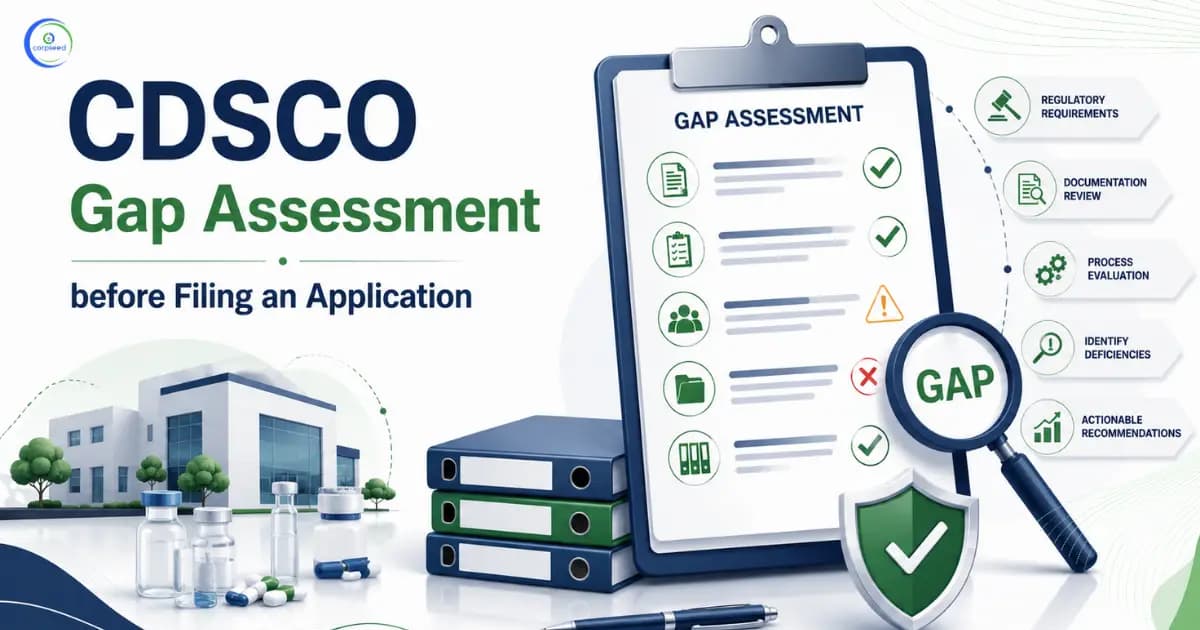
A CDSCO gap assessment is a systematic review conducted before submitting an application to identify deficiencies that may affect regulatory approval. The assessment compares the existing documentation, processes and quality systems against the requirements applicable to the intended Central Drugs Standard Control Organisation (CDSCO) application.
The objective is to determine whether all regulatory expectations have been met and whether corrective actions are required before filing.
A CDSCO gap assessment may include reviewing:
- Product classification and regulatory pathway
- Technical documentation, and supporting records
- Quality management system documentation
- Manufacturing site readiness
- Labelling and packaging compliance
- Application forms and declarations
- Previous observations, if applicable
Why Is a CDSCO Gap Assessment Important Before Filing an Application?
Regulatory applications require accuracy, consistency and complete supporting evidence. Even minor errors can result in delays. A pre-filing gap assessment helps organisations:• Detect compliance deficiencies early
- Reduce the risk of application rejection
- Improve the quality of submissions
- Avoid unnecessary regulatory queries
- Minimise time and costs associated with rework
- Enhance confidence during inspections and reviews
Applications are submitted online through the 'SUGAM portal' Responding to queries often expands approval timelines. The portal allows applicants to amend their data in case any clarifications needed by the CDSCO officials.
Key Areas Reviewed During a CDSCO Gap Assessment
The scope of a gap assessment depends on the nature of the application. However, certain areas are commonly reviewed.
- Regulatory Classification: Medical devices in India are regulated under the Medical Devices Rules, 2017 and are classified based on risk into Class A, B, C, and D categories. The regulatory pathway varies depending on the classification. Incorrect classification can lead to filing under the wrong route and unnecessary delays.
- Technical Documentation Review: The assessment verifies whether all technical records are complete, updated and consistent with regulatory expectations.
This may include reviewing:
- Device specifications
- Intended use statements
- Performance data
- Risk management records
- Product testing reports
- Quality Management System Assessment: The current quality system is assessed to determine gaps which could affect compliance. Common areas that are inspected include:
- Standard operating procedures
- Change control mechanisms
- Training records
- Internal audit findings
- Corrective and preventive action processes
- Documentation Readiness: Applications supported by incomplete documents frequently attract regulatory queries. The assessment verifies the availability, and adequacy of required documents, declarations, certificates and supporting evidence.
Common Compliance Gaps That Delay CDSCO Applications
Many CDSCO registration application-related concerns do not become apparent until the final stages of preparation. In practice, businesses often discover that certain records are incomplete, details provided across documents do not align or important supporting evidence has not been compiled. These seemingly small oversights can lead to additional clarification requests and prolong the review process.
Some of the issues frequently observed during a gap assessment include:
- Missing or partially prepared supporting documents.
- Differences in information mentioned across application records.
- Incorrect classification of the medical device.s
- Technical files that have not been updated to reflect the current product details.
- Quality-related records that require further documentation.
- Declarations and undertakings that need revision before submission.
- Pending observations from previous reviews that remain unresolved.
How the CDSCO Gap Assessment Process Works
A structured approach ensures that all relevant compliance areas are evaluated effectively.
Step 1: Preliminary Information Review: The assessment begins with understanding the proposed application type and regulatory requirements.
Step 2: Documentation Evaluation: Technical records, quality documents, certificates, and application materials are reviewed against applicable provisions.
Step 3: Gap Identification: Any missing information, incomplete records, or compliance issues found during the review are noted for further action.
Step 4: Closing the Gaps: The identified issues are addressed by updating documents, providing additional information or making the required improvements before submission.
Step 5: Final Readiness Verification: A final review confirms that all critical gaps have been resolved and the application package is ready for filing.
CDSCO registration applications relating to manufacturing, imports, and other regulated activities are submitted online through the SUGAM portal.
Benefits of Conducting a Gap Assessment before Submission
Before filing an application, it is important to determine whether the supporting documents and compliance records are complete. A gap assessment helps bring attention to areas that may require correction or additional information.
- Early Identification of Gaps: Reviewing documents, and processes beforehand helps uncover missing information, and compliance concerns before they affect the application.
- Stronger Documentation Standards: A detailed assessment improves the consistency, accuracy, and completeness of records submitted to regulatory authorities.
- Reduced Chances of Regulatory Queries: Addressing potential deficiencies in advance can minimise back-and-forth communication during the review process.
- Improved Coordination across Teams: The assessment process encourages better alignment between regulatory, quality and operational functions involved in filing.
- More Efficient Application Preparation: With clear visibility into required improvements, businesses can organise submissions more effectively and avoid last-minute disruptions.
Also Read: Why Businesses Need CDSCO Consultants in India
Get Expert Support for CDSCO Gap Assessment and Application Filing
The regulatory environment continues to evolve, making application preparation increasingly detailed. A professional CDSCO gap assessment service helps organisations evaluate their current level of compliance, and identify potential obstacles before filing.
Expert guidance can assist with:
- Regulatory pathway determination
- Documentation review and validation
- Compliance gap identification
- Corrective action planning
- Application readiness assessment
- End-to-end filing support
For businesses seeking timely approvals and reduced regulatory uncertainty, professional guidance during the pre-submission stage can add significant value. Corpseed assists businesses with CDSCO gap assessments to strengthen compliance and improve application readiness before filing.
Conclusion
CDSCO gap assessment prior to submission of an application is a proactive compliance exercise, which assists the organisation in identifying the gaps before they turn into regulatory problems. Preparing technical documents, quality systems and application records ahead of time helps to ensure that submissions are robust and delays are minimised.
With regulatory expectations growing, companies that focus on application readiness stand a better chance of navigating the regulatory process efficiently. A thorough gap assessment prior to submission is not only good practice it is also a practical way to ensure better and smoother regulatory outcomes.
About the Author

Parul Bohral
Legal Content WriterParul Bohral, a BALLB graduate and experienced legal researcher and content writer with expertise in various legal areas, including corporate law and intellectual property. I have gained valuable experience in esteemed legal environments, where I have strengthened my research skills, allowing me to approach legal writing with precision and depth.
As a legal content writer, I am committed to delivering work that not only informs but also engages readers. By staying informed about the latest trends in content marketing and regulatory developments, I ensure that my writing remains sophisticated and meets industry standards. My dedication to thorough research enables me to craft content that is both insightful and impactful.
Related articles
CDSCO MD-7 Endorsement for Medical Devices: A Practical Guide for Manufacturers
2026-10-23

CDSCO Export NOC for r-DNA Products: Who Needs It?
2026-10-21
CDSCO Registration: A Simple Guide to Getting Your License in India 2026
2026-10-21

Importing Cosmetic Gift Sets into India? CDSCO, LMPC & Labelling Checklist
2026-10-14
CDSCO Medical Device Registration Consultant
2026-09-23
CDSCO Registration for Lab Equipment and Diagnostic Devices
2026-09-22