
Top India-Oman CEPA Benefits Every Business and Exporter Should Know
India-Oman CEPA is a proposed bilateral trade agreement aimed at strengthening economic cooperation between India and Oman.
Schedule a Call Back
Introduction
India-Oman CEPA could create valuable opportunities for businesses planning to expand trade with Oman. Whether you're looking to enter the Omani market, grow your exports or explore new business partnerships, understanding the agreement's benefits is the first step. From improved market access and preferential tariffs to stronger investment opportunities, the proposed CEPA has the potential to support long-term business growth.
This article explains the key benefits of the India-Oman CEPA, who can benefit from it, and how businesses can prepare to make the most of the agreement.
What Is the India-Oman CEPA?
The India-Oman Comprehensive Economic Partnership Agreement (CEPA) is a proposed bilateral trade agreement aimed at strengthening economic cooperation between India and Oman. Once finalized, it is expected to facilitate smoother trade in goods/services, improve investment opportunities, reduce or eliminate tariffs on selected products, and simplify trade-related procedures.
Unlike a standard Free Trade Agreement (FTA), a CEPA generally covers a broader range of areas, including trade in services, investment, intellectual property, customs cooperation and economic collaboration. The objective is not only to increase trade volumes but also to create a more transparent and predictable business environment for companies operating in both countries.
For Indian exporters, the agreement could improve access to Oman's growing market while also creating opportunities to use Oman as a strategic gateway to other Gulf Cooperation Council (GCC) countries.
Top India-Oman CEPA Benefits Every Business and Exporter Should Know
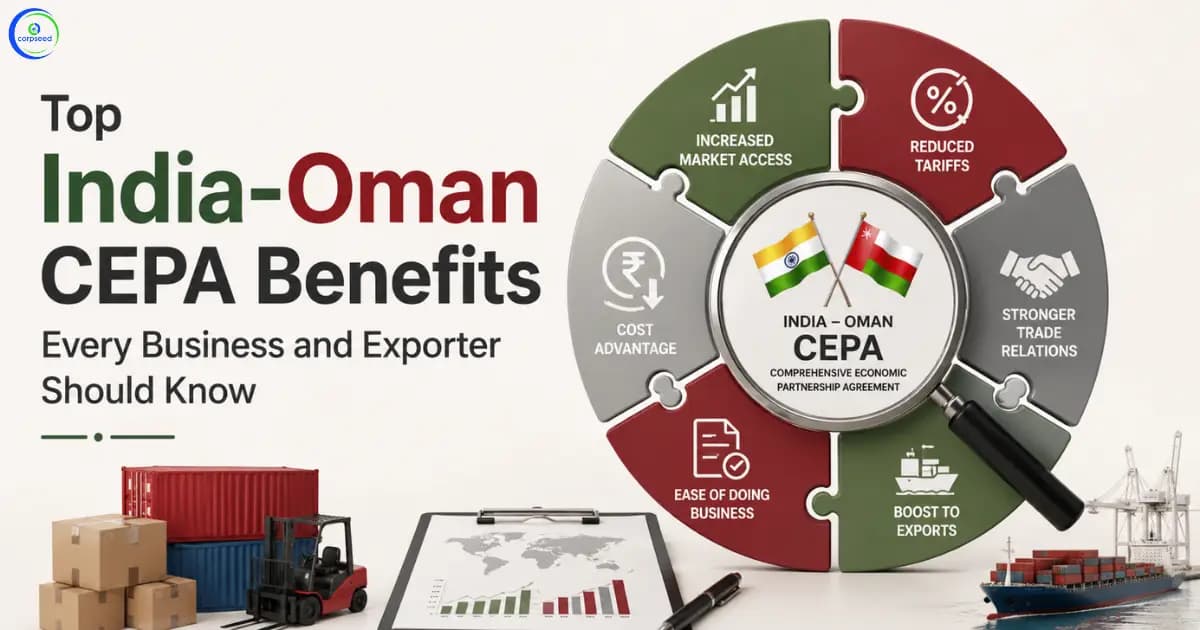
Understanding the India-Oman CEPA benefits can help businesses identify new growth opportunities, improve export competitiveness, and make informed decisions before expanding into the Omani market.
-
Lowering or Elimination of Tariffs
One of the most anticipated benefits of the India-Oman CEPA is the reduction, or elimination of import duties on eligible products. Lower tariffs can help Indian exporters offer more competitive prices in the Omani market while improving profit margins.
Businesses exporting products such as engineering goods, food products, textiles, pharmaceuticals, chemicals, plastics, and consumer goods may benefit from preferential tariff treatment, depending on the final agreement.
-
Better Market Access
The agreement is expected to improve market access for businesses in both countries by reducing trade barriers and creating a more predictable trading environment.
For exporters, easier access to the Omani market means the opportunity to reach new buyers, diversify export destinations, and reduce dependence on a limited number of international markets.
-
Increased Export Competitiveness
Reduced duties and simplified trade procedures can improve the competitiveness of Indian products in Oman. Businesses may be able to offer better pricing while maintaining quality standards making it easier to compete with suppliers from other countries.
This can be particularly valuable for small and medium-sized enterprises (MSMEs) looking to expand internationally without significantly increasing operational costs.
-
Stronger Investment Opportunities
Beyond merchandise trade, the India-Oman CEPA is expected to encourage greater bilateral investment. Companies may find new opportunities for joint ventures, manufacturing partnerships, logistics, warehousing, and service-based businesses.
Improved investment cooperation can also strengthen supply chains, and support long-term business expansion in the Gulf region.
-
Simplified Trade Procedures
International trade often involves complex documentation and customs formalities. The proposed agreement is expected to improve customs cooperation and streamline certain trade procedures, helping businesses reduce delays and improve operational efficiency.
Faster clearance processes can reduce logistics costs and make exports more predictable.
Which Businesses Can Benefit the Most from the India-Oman CEPA?
The India-Oman CEPA is expected to benefit businesses across several export-oriented industries. Companies operating in the following sectors are likely to benefit the most from improved market access and preferential tariff benefits.
- Engineering goods manufacturers exporting machinery, industrial equipment, and auto components.
- Food and agricultural products businesses supplying processed foods, spices, rice, and other commodities.
- Textile and apparel exporters looking to expand their presence in the Omani market.
- Chemical and plastic manufacturers seeking greater export opportunities with reduced trade barriers.
- Pharmaceutical companies exporting medicines, medical devices, and healthcare products.
- Gems and jewellery exporters targeting increased demand and improved market access.
- MSMEs aiming to grow internationally through reduced tariffs and simplified trade procedures.
Who Is Eligible to Claim Benefits Under the India-Oman CEPA?
Although the final eligibility requirements will depend on the signed agreement, businesses generally need to satisfy specific conditions before claiming preferential benefits under a CEPA.
Some of the key requirements typically include:
- Ensure your product meets the applicable Rules of Origin to qualify for CEPA benefits.
- Obtain a valid Certificate of Origin (eCoO) before claiming preferential tariff benefits.
- Keep complete and accurate export documents ready to support your eligibility claim.
- Goods must comply with customs and regulatory requirements of both countries.
Simply exporting goods to Oman does not automatically qualify a business for preferential tariff benefits. Proper documentation and compliance play an equally important role.
What Documents Are Required to Claim India-Oman CEPA Benefits?
Preparing the correct export documentation is essential for businesses planning to utilize the benefits of the agreement.
Common documents may include:
- Certificate of Origin
- Commercial Invoice
- Packing List
- Bill of Lading or Airway Bill
- Shipping Bill
- Import and export declarations
- Product-specific compliance documents, where applicable
Maintaining complete as well as accurate documentation helps avoid customs disputes and supports smooth clearance at the destination.
Why Are Rules of Origin Important Under the India-Oman CEPA?
The Rules of Origin (RoO) determine whether a product qualifies for preferential tariff benefits under the India-Oman CEPA. They establish the economic nationality of a product based on factors such as where it was manufactured, the level of value addition, or the origin of its raw materials. Products that are only repackaged or undergo minimal processing may not meet these requirements and, therefore, may not be eligible for CEPA benefits.
Complying with the applicable Rules of Origin is essential to claim preferential tariffs. Incorrect origin declarations can result in delayed shipments, denial of tariff benefits, customs scrutiny or financial penalties. Before exporting businesses should assess whether their products meet the prescribed origin criteria, and maintain the necessary documentation to support their claims.
How Can Businesses Maximize Benefits under the India-Oman CEPA?
Businesses should start preparing well before the agreement comes into force. Early preparation allows businesses to respond quickly once preferential tariff benefits become available.
Some practical steps include:
- Assess whether products are likely to qualify under the applicable Rules of Origin.
- Review product classifications and applicable tariff schedules.
- Maintain complete and accurate export documentation.
- Obtain the required Certificate of Origin through the appropriate authorities.
- Regularly monitor updates related to the implementation of the agreement.
- Seek professional guidance when evaluating product eligibility or trade compliance requirements.
Conclusion
The proposed India-Oman CEPA has the potential to strengthen trade relations, improve market access, encourage investment and create new export opportunities for businesses in both countries. However, realizing these benefits will depend not only on tariff concessions but also on proper compliance with eligibility requirements, Rules of Origin, and documentation obligations.
Businesses that begin preparing in advance will be better positioned to take advantage of the agreement once it is implemented. Reviewing product eligibility, maintaining accurate documentation and understanding the compliance framework can help exporters maximize available benefits while avoiding unnecessary delays or disputes.
About the Author

Parul Bohral
Legal Content WriterParul Bohral, a BALLB graduate and experienced legal researcher and content writer with expertise in various legal areas, including corporate law and intellectual property. I have gained valuable experience in esteemed legal environments, where I have strengthened my research skills, allowing me to approach legal writing with precision and depth.
As a legal content writer, I am committed to delivering work that not only informs but also engages readers. By staying informed about the latest trends in content marketing and regulatory developments, I ensure that my writing remains sophisticated and meets industry standards. My dedication to thorough research enables me to craft content that is both insightful and impactful.
Related articles

India-New Zealand FTA: How Startups Can Export Duty-Free and Enter the New Zealand Market
2026-10-23

Exporting Handicrafts & Home Decor from India: IEC, DGFT & Customs Compliance Checklist
2026-10-14

How to Export Through Amazon Global & Etsy From India: Complete MSME Export Guide
2026-10-13

Textile & Apparel Testing in India: Export Compliance with REACH, Azo Dyes & ISO 105 Guide 2026
2026-09-02
India's Engineering Exports Rise 21% to 11.48 Billion US Dollar: Opportunities for Indian Exporters
2026-07-31
Export Compliance Checklist for Oman: A Complete Guide for Indian Exporters to Avoid Customs Delays
2026-07-29