
India-UK FTA: Rules of Origin to Boost India's E-Commerce Exports to the UK
The India UK FTA sets a new benchmark for digital-friendly and inclusive trade partnerships. By simplifying rules of origin, allowing self-certification for exporters, enabling UK importers certification, and introducing an origin documentation waiver, the agreement directly addresses the challenges of cross-border trade.
Schedule a Call Back
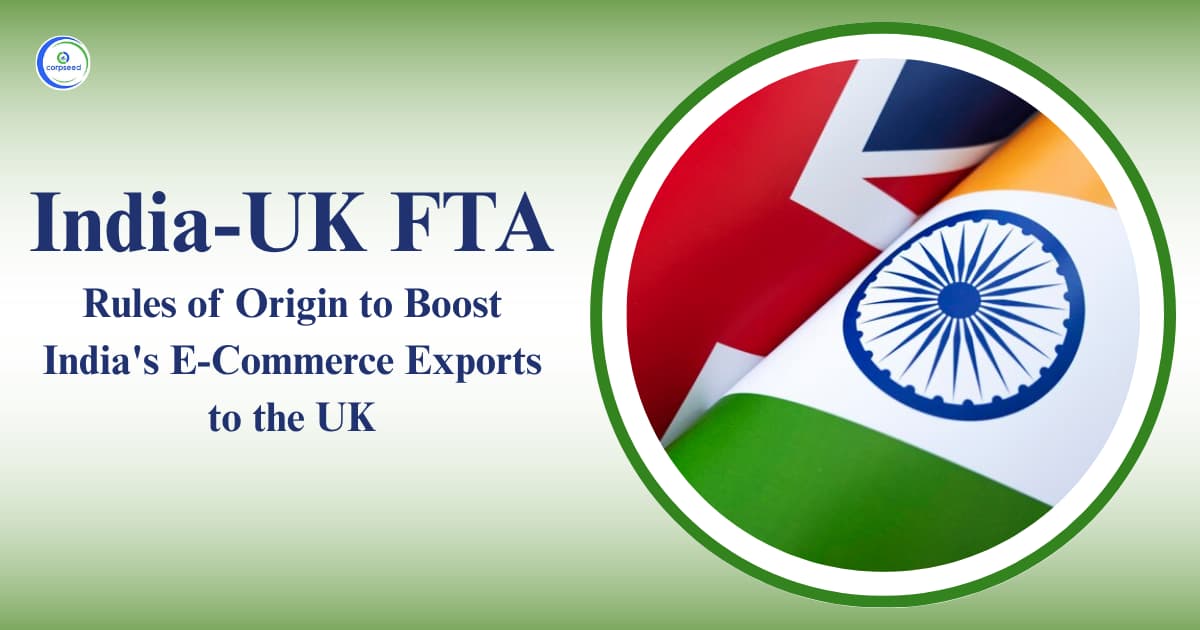
The India–UK Free Trade Agreement (FTA), recently signed in London, marks a major step toward strengthening bilateral trade. A key highlight of this agreement is the rules of origin provision, aimed at facilitating India e-commerce exports UK. With reduced documentation and simplified procedures, this FTA will create new growth avenues for exporters, especially small businesses and digital-first brands. India’s fast-growing e-commerce sector, coupled with improved access to the UK market, will help increase exports, lower trade costs, and enhance trade compliance. The free trade agreement UK not only removes trade barriers but also ensures transparency, ease of doing business, and protection of legitimate Indian exports.
Schedule a Call Back
Understanding Rules of Origin under the FTA
Rules of origin are a set of criteria used to determine the national source of a product. Under the India UK FTA, goods must undergo a specific level of processing or value addition in India to be considered Indian in origin. This system helps to:
- Ensure eligibility for tariff concessions
- Prevent dumping of goods regulations violations
- Stop third-country circumvention using India as a pass-through hub
For example, merely labelling or repackaging goods in India will not qualify them as Indian-origin. These provisions maintain trade integrity and protect domestic industries.
Origin Documentation Waiver for Low-Value Shipments
A significant measure under the FTA is the origin documentation waiver for consignments valued below Rs. 1,17,143 (approx. US$ 1,354). Exporters shipping low-value goods to the UK no longer need to submit extensive origin certificates.
This reform benefits thousands of small exporters and boosts India e-commerce exports UK. E-commerce sellers dealing in handicrafts, home décor, wellness products, textiles, toys, and electronics can now export small packages easily without facing unnecessary compliance burdens.
The e-commerce export regulations under this FTA are tailored to encourage high frequency, low-value shipments, which are common in cross-border online trade.
Self-Certification for Exporters and UK Importers Certification
Another impactful change is the introduction of self-certification for exporters. Indian businesses can now declare the origin of goods on their own without third-party verification. This measure speeds up the documentation process and lowers export costs.
On the UK side, the agreement allows importers to rely on ‘UK importers certification’ using the ‘importer’s knowledge’ clause. This enables UK buyers to certify the origin themselves, reducing delays and increasing trust between trading partners.
These measures create a seamless export-import flow, enhancing the efficiency of India e-commerce exports UK.
Boosting India’s E-Commerce Export Ecosystem
India’s e-commerce industry has experienced exponential growth, with thousands of sellers leveraging global platforms to reach customers abroad. The India UK FTA creates a favourable regulatory environment that supports this growth. The FTA benefits India e-commerce exports UK by:
- Providing origin documentation waivers for low-value shipments.
- Allowing self-certification for exporters.
- Enabling UK importers certification for origin verification.
- Lowering compliance and administrative costs for MSMEs.
- Supporting Make in India by promoting indigenous manufacturing.
- Preventing dumping of goods by ensuring genuine origin compliance.
Free Trade Agreement UK - FTA
The free trade agreement UK is not just about physical goods, it also encourages digital exports. The agreement aligns e-commerce export regulations with international best practices, ensuring Indian sellers can meet UK standards without difficulty.
This alignment helps in expanding India e-commerce exports UK across categories such as:
- Software products
- Wellness and organic goods
- Digital devices and accessories
- Fashion and lifestyle items
- Home furnishings
Indian exporters now have an easy framework that supports end-to-end digital commerce with lower trade barriers.
Rules of Origin to Prevent Dumping of Goods
The agreement also strengthens safeguards against the dumping of goods regulations. Dumping occurs when a country exports products at unfairly low prices, often harming local industries.
The FTA’s rules of origin require a minimum threshold of transformation or local input. This eliminates the risk of third countries using India to route non-qualifying goods to the UK and claim benefits under the FTA.
Such safeguards protect Indian manufacturers from unfair competition and ensure that India e-commerce exports UK remain authentic, competitive, and globally trusted.
Indian Market Trade Policies Aligned with FTA
The India UK FTA aligns closely with current Indian market trade policies, such as:
- Make in India
- Atmanirbhar Bharat
- Production-Linked Incentive (PLI) Schemes
These initiatives aim to strengthen local value chains, encourage domestic production, and build export resilience.
The FTA supports these goals by:
- Incentivising value addition in India
- Encouraging high-quality, origin-compliant manufacturing
- Opening global markets for small businesses
By adhering to rules of origin, exporters not only gain tariff-free access but also strengthen India's global reputation as a reliable source of quality products.
Also Read: India-UK Vision 2035: A New Era of Strategic Cooperation
Key Sectors in India’s E-Commerce Exports to the UK
Several industries are set to benefit immediately from the India UK FTA and related reforms in e-commerce export regulations:
- Textiles and Apparel: Duty-free access under clear rules of origin boosts shipments of garments, home linens, and ethnic wear.
- Leather and Footwear: Zero duties and origin flexibility make Indian leather products more competitive.
- Toys and Handicrafts: Self-certification and origin documentation waiver favour small artisans and handmade product exporters.
- Electronics and Accessories: Improved standards recognition and faster processing ease exports of gadgets, chargers, and peripherals.
- Wellness and Ayurveda: India’s natural health sector gains traction with simpler e-commerce export regulations and duty-free trade.
How MSMEs Will Benefit from Easier Doing Business?
The FTA provisions make it easier for MSMEs to access the UK market. With over 6 crore MSMEs in India, this framework allows smaller firms to scale internationally without heavy regulatory or cost burdens.
Self-certification and UK importers’ flexibility eliminate redundant layers of verification. These provisions promote wider participation in global trade, especially from non-metro cities and rural clusters.
As a result, India e-commerce exports UK will see greater regional diversity and grassroots economic upliftment.
Cross-Sector Impact on Export Efficiency
The India UK FTA improves export efficiency by:
- Supply Chain Boost: The simplified rules of origin reduce port clearance times and improve supply chain reliability for e-commerce.
- Customs Simplification: Exporters can pre-declare origin and enjoy smoother customs processes, reducing last-mile delivery issues.
- Transparency and Predictability: Standardized documentation practices reduce unpredictability, improving buyer confidence in Indian goods.
Conclusion
The India UK FTA sets a new benchmark for digital-friendly and inclusive trade partnerships. By simplifying rules of origin, allowing self-certification for exporters, enabling UK importers certification, and introducing an origin documentation waiver, the agreement directly addresses the challenges of cross-border trade. These changes will significantly boost India e-commerce exports UK, particularly for MSMEs, start-ups, and digital entrepreneurs. The new system supports fair trade, reduces administrative burdens, aligns with Indian market trade policies, and protects against dumping of goods. By lowering trade barriers and supporting innovation, the free trade agreement UK strengthens the foundation for India’s long-term global trade success.
About the Author

Mahek Sancheti
Content WriterMahek Sancheti, BAJMC graduate with a deep passion for writing. As a content writer, video content creator, creative content creator, and scriptwriter, I bring stories to life through words and visuals. I honed my skills by working with a prominent news agency, where I excelled in crafting compelling narratives and engaging content. Coming from a journalism and mass communication background I have skills to craft engaging narratives that captivate audiences. With a keen interest in writing and creativity, I aim to deliver impactful and meaningful content that resonates with diverse audiences.
https://www.linkedin.com/in/mahek-sancheti-837196212
Related articles

Merchant Shipping (Seafarers Welfare Board and Levy of Fees) Rules, 2026: Key Compliance Updates
2026-06-02

Offshore Areas Mineral Rules, 2026: Key Compliance Requirements
2026-02-19

Union Budget 2026-27: Complete List of Government Schemes Announced in the New Budget
2026-02-13
What Gets Cheaper and Costlier in the Union Budget 2026-27?
2026-02-13
How the Union Budget 2026-27 Shapes Growth Across All Key Sectors of India?
2026-02-13

Top 10 Announcements from the Union Budget 2026
2026-02-12