9311255283
×

Welcome to Corpseed. Please type your query, and we shall provide immediate assistance.

×

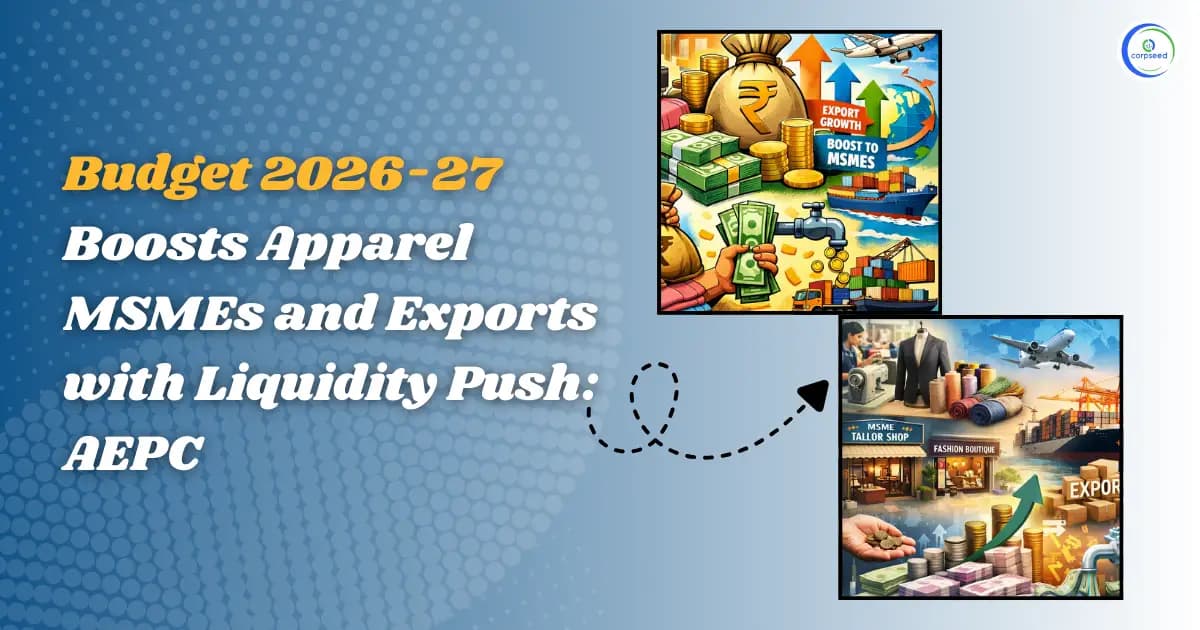
Budget 2026-27 Boosts Apparel MSMEs and Exports with Liquidity Push: AEPC

Budget_2026-27_Boosts_Apparel_MSMEs_and_Exports_with_Liquidity_Push_AEPC_corpseed.webp

India’s apparel and textile sector has welcomed the Union Budget 2026-27, with the Apparel Export Promotion Council (AEPC) saying it provides timely support to MSMEs and exporters. The budget emphases on liquidity, export ease and employment-driven growth.

AEPC Chairman Dr. A. Sakthivel said the budget is balanced and growth-oriented. He mentioned that the measures signify the government’s intent to build a competitive, resilient and globally connected apparel industry. The focus, he added, is on long-term strength rather than temporary relief.

Liquidity Support for Apparel MSMEs

For apparel MSMEs, delayed payments and limited access to credit remain key challenges. The Budget 2026-27 addresses this by reinforcing liquidity channels and enhancing access to affordable finance.

The compulsory onboarding of Central Public Sector Enterprises on the Trade Receivables Discounting System is expected to speed up payments and ease working capital pressure. Enhanced credit guarantee support through CGTMSE and the securitisation of TReDS receivables are also likely to mitigate borrowing costs for small exporters.

Connecting MSMEs with the Government e-Marketplace opens new procurement opportunities and supports steady order flow. Together, these steps focuses on reducing dependence on informal credit and form a more stable financial environment for apparel exporters.

Export Reforms to Improve Ease of Doing Business

Export-focused measures announced in the budget are expected to enhance efficiency across the apparel value chain. Streamlined customs procedures and minimized documentation will help lower transaction costs and shorten clearance timelines.

Faster cargo verification and factory-to-port clearance are particularly crucial for apparel exporters working with tight delivery schedules and seasonal demand. AEPC believes these reforms will boost India’s export competitiveness and improve buyer confidence in global markets.

The proposal to establish mega textile parks in challenge mode, with an aim on technical textiles, was also welcomed. Beside this, the Textile Expansion and Employment Scheme aims to modernise traditional textile clusters through technology upgrades and shared testing facilities.

Skilling, Sustainability and Raw Material Security

The launch of Samarth 2.0 is expected to reinforce textile skilling and support employment, especially for youth and women. Better skills are likely to expand productivity and product quality across MSMEs.

The National Fibre Scheme emphasis on strengthening domestic availability of natural, man-made and new-age fibres. Initiatives such as the Mahatma Gandhi Gram Swaraj Initiative and the Tex-Eco Initiative further support khadi, handloom, handicrafts and sustainable textiles.

Conclusion

AEPC believes the Union Budget 2026-27 delivers meaningful support to apparel MSMEs and exporters. With liquidity, export reforms and skilling initiatives aligned, the sector is better positioned for sustainable growth and a resilient global presence.

This portion of the site is for informational purposes only. The content is not legal advice. The statements and opinions are the expression of author, not corpseed, and have not been evaluated by corpseed for accuracy, completeness, or changes in the law.

5431804048Parul_Bohral_Corpseed.jpg

Parul Bohral, a BALLB graduate and experienced legal researcher and content writer with expertise in various legal areas, including corporate law and intellectual property. I have gained valuable experience in esteemed legal environments, where...

Learn More >>