In the fashion industry, a strong brand requires more than appealing designs, it demands legal protection. Trademark Class 25 is critical for safeguarding clothing, footwear, and headgear. Whether launching a new label or expanding an existing business, understanding and registering under this class ensures your brand identity and long-term growth are fully protected.
Table of Contents
- What Is Trademark Class 25?
- Scope of Trademark Class-25
- Who Should File Under Trademark Class 25?
- List of Goods Covered under Trademark Class 25
- Clothing
- Footwear
- Headgear
- Niche & Specialty Apparel
- Items Excluded from Class 25 of Trademark
- Importance of Trademark Registration in Class 25
- How to File a Trademark under Class 25
- Trademark Registration Timeline and Renewal
- Key Takeaways
- Conclusion
What Is Trademark Class 25?
Trademark Class 25 is the specific Nice Classification category that covers clothing, footwear, and headgear for daily wear, fashion use, or sports activities. When a business wants to protect its brand name, logo, or label for products like shirts, shoes, jackets, or caps, it must register its trademark under Class 25. This ensures no other business can use a confusingly similar identity for similar products.
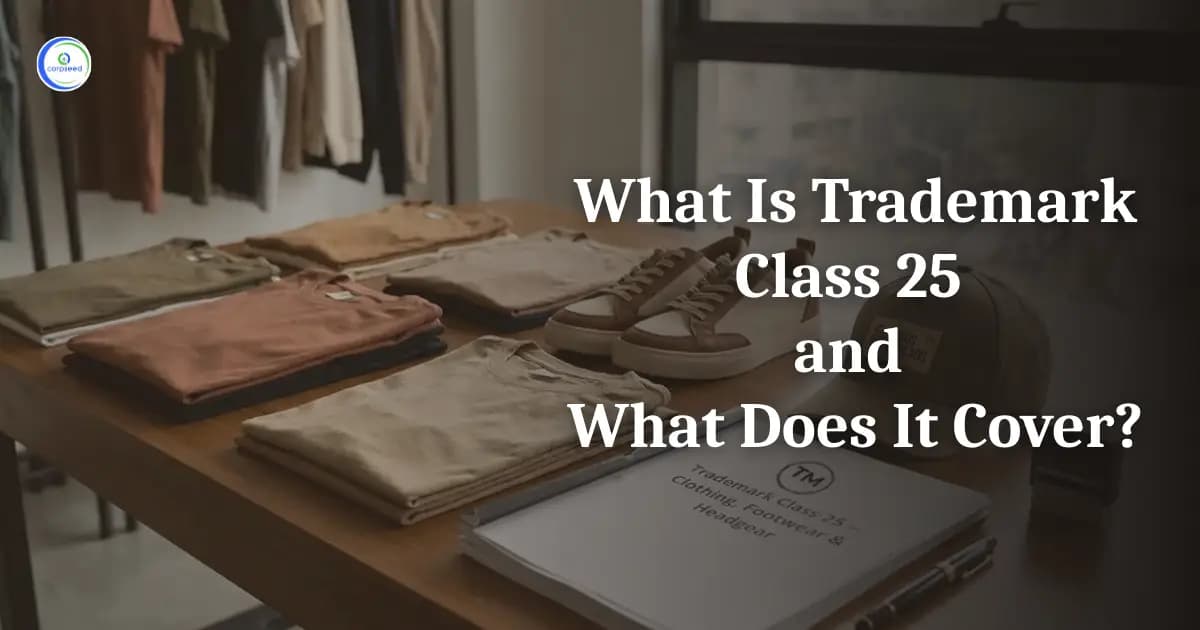
Class 25 applies only to finished, wearable goods, not raw fabrics, textile materials, or protective clothing used for industrial purposes. For example, shirts, trousers, jeans, sneakers, sandals, hoodies, and hats fall under Class 25, whereas safety helmets or medical footwear fall under different classes.
For anyone building a fashion or apparel brand, this class acts as a foundation for legal protection. It prevents competitors from copying brand designs, labels, or names, ensuring the uniqueness of your products in the market.
Scope of Trademark Class-25
Trademark Class 25 covers wearable items used for daily, casual, fashion, or sports purposes. It includes a wide range of ready-made garments, footwear, and headgear used by men, women, and children.
- Clothing such as ready-made garments and fashion wear.
- Footwear including casual, sports, and formal shoes.
- Headgear such as caps, hats, turbans, and fashion headwear.
Who Should File Under Trademark Class 25?
Businesses dealing with any form of wearable products must consider registering under Class 25 to protect their brand identity. This class is ideal for manufacturers, retailers, designers, and private-label brands working in the apparel or footwear industry.
- Clothing Brands: Anyone making or selling shirts, trousers, dresses, jackets, kids wear, or ethnic wear should register their brand under Class 25 to safeguard their identity and prevent imitation by competitors.
- Footwear Manufacturers: Brands selling shoes, sandals, sneakers, heels, boots, or sports footwear must file under this class to protect their label on all types of footwear sold in the market.
- Headgear Sellers: Businesses producing caps, hats, scarves, turbans, and beanies should register under Class 25 to ensure exclusive ownership of their brand name or logo in this category.
- Sportswear or Active wear Makers: Those manufacturing gym wear, track pants, swimwear, yoga wear, or sports uniforms must file here to defend their brand from lookalike designs or similar-sounding brand names.
List of Goods Covered under Trademark Class 25
Trademark Class 25 protects clothing, footwear, and headgear used daily, for sports, or special occasions. If you sell or make wearable products, this class safeguards your brand and designs, helping you stay secure in the competitive fashion market. Below is a clear and easy-to-understand list of items covered under Class 25:
Clothing
Class 25 includes almost every type of apparel worn by people. Whether it is everyday wear, festive outfits, seasonal clothing, or specialized garments, it is covered here. Trademark Class for Clothing includes:
- T-shirts, shirts, blouses, tops
- Jeans, trousers, shorts, skirts
- Sarees, suits, kurta sets, and indo-western wear
- Hoodies, jackets, sweaters, cardigans
- Innerwear, lingerie, nightwear, shapewear
- Sportswear, swimwear, gym wear, active wear
- Stockings, gloves, socks, leggings
- Raincoats, robes, performance costumes
- Leather apparel, premium designer pieces
- Baby wear, rompers, kids’ outfits
- Shawls, stoles, mufflers, winter accessories
- Ties, scarves, bow ties
- Fabric bibs, detachable sleeves, ready-made linings
Clothing labels such as Max Fashion, Campus Sutra, W, Global Desi, and Roadster typically secure their apparel lines through Class 25 registrations.
Footwear
Trademark Class 25 is also the main category for footwear of all kinds, from basic slippers to performance-oriented athletic shoes. It covers:
- Sneakers, training shoes, running shoes
- Flip-flops, sandals, slippers
- Boots, loafers, formal shoes
- Work shoes and protective footwear (non-safety)
- Trekking shoes, hiking boots
- Shoe soles, heels, inner soles
- Spikes, fittings, heel pieces
- Non-electric footmuffs
Footwear brands like Campus, Liberty, Red Tape, Metro, and Woodland use Class 25 registrations to protect their footwear collections.
Headgear
Headgear under Class 25 includes fashionable and cultural headwear worn for comfort, style, or traditional use. It does not include protective helmets. Covered items include:
- Caps, hats, beanies
- Turbans, bandanas, head wraps
- Head shawls, scarves, berets
- Fashion helmets (non-protective)
- Paper hats made as garments
- Headbands and hoods attached to clothing
Headgear labels such as Urban Monkey, HRX, Wildcraft, Levi’s Accessories, and Superdry Accessories typically secure their headwear designs under Class 25.
Note: Industrial or sports protective helmets fall under Class 9, not Class 25.
Niche & Specialty Apparel
Class 25 also covers clothing designed for specific professions, events, or activities. These include:
- Dancewear, yoga outfits, performance costumes
- School uniforms, factory uniforms, company attire
- Martial arts uniforms like karate or judo suits
- Fashion, designer outfits, limited editions
- Fancy dress costumes and themed festival wear
Specialty brands such as FirstCry Costumes, Van Heusen Uniforms, Performax, House of Masaba, and many independent designers file under Class 25 to protect these unique categories.
--------------Blog Contact Form-------------
Items Excluded from Class 25 of Trademark
Not all items related to clothing or footwear fall under Class 25. Some products are classified differently based on their material, purpose, or usage. These items are placed in other classes because they are not considered normal wearable goods. Excluded items include:
- Raw fabrics, textile rolls, and unfinished cloth materials
- Protective clothing, safety jackets, fire-resistant suits
- Safety helmets and industrial headgear
- Medical footwear, orthopaedic shoes
- Shoe components sold separately (soles, heels, insoles)
- Clothing accessories like zippers, buttons, ribbons, buckles
- Pet clothing and animal wear
- Doll clothes and toy garments
- Paper party hats or costumes not intended as actual clothing
Importance of Trademark Registration in Class 25
Trademark registration in Class 25 is essential for any business dealing with wearable goods. It helps secure legal rights, strengthens your brand identity, prevents misuse, and offers protection as your business grows in the clothing or footwear sector.
- Exclusive Brand Rights: Registration ensures only you can use your brand name or logo for the listed products, reducing the risk of others launching similar-sounding brands in the apparel or footwear market.
- Builds Customer Trust: People feel more confident buying from a legally protected brand. Registration signals authenticity, which is especially important on online platforms where shoppers look for verified and trustworthy labels.
- Helps You Grow Your Product Line: Once your trademark is registered, expanding into related items like footwear, caps, active wear, or accessories becomes easier. Your brand already has a solid legal foundation under Class 25.
- Gives Strong Legal Support: If someone misuses your brand name or sells look-alike products, your trademark allows you to take firm legal action. It protects your reputation and helps you stop counterfeiters or unauthorized sellers.
- Strengthens Market Presence: A registered trademark adds professionalism to your brand. It improves your standing with customers, retailers, and business partners, making it easier to enter new markets or secure collaborations.
How to File a Trademark under Class 25
Filing a trademark under Class 25 involves a structured process. It includes selecting the correct goods, checking for conflicts, preparing documents, and completing legal filings. Each step ensures your brand is protected under the right category.
- Identify Your Product List: Identify all clothing, footwear, and headgear items your brand will sell and make a clear, detailed list before filing.
- Conduct a Trademark Search: Conduct a detailed trademark search to confirm your chosen brand name or logo is not already in use by another Class 25 brand.
- Prepare and File the Application: Draft and file the trademark application with accurate descriptions of your goods under Class 25 to ensure complete legal protection.
- Respond to Registry Examination: Respond to examination reports or objections raised by the Trademark Registry to move your application toward approval without unnecessary delays.
- Publication for Public Opposition: After acceptance, your mark is published in the Trademark Journal for public objection before it moves to the final registration stage.
- Monitor Your Trademark After Registration: Once registered, you receive exclusive rights and must actively monitor the market to prevent unauthorized use of your brand identity.
Also Read: Register Trademark Class 30 Food Products
Trademark Registration Timeline and Renewal
The time taken to register a trademark under Class 25 generally ranges from six months to a year. The exact duration depends on how quickly the application is examined and whether any objections or oppositions come up during the process. If no issues are raised, the approval can move much faster. After registration, the trademark stays valid for ten years, and you can apply for the trademark renewal as many times as needed to keep your brand protected. Timely renewals keep your clothing, footwear, or headgear brand securely protected at all times.
Key Takeaways
Trademark Class 25 matters for any business involved in clothing, footwear, or headwear. It helps you keep control over your brand name and reduces the chances of others copying or misusing your identity. The following are the main points to remember:
- Gives solid protection to apparel and footwear brandss
- Applies only to finished wearable items, not raw materials
- Excludes safety helmets and industrial gear
- Helps maintain long-term rights over your brand
Conclusion
Trademark Class 25 is one of the most crucial categories for businesses in the clothing, footwear, and headwear sector. Registering under this class helps you protect your brand name, logo, and identity from competitors, ensuring no one misuses your reputation or confuses customers. It builds trust, adds professionalism, and supports long-term brand growth. Whether you’re an emerging designer, a manufacturer, or an online seller, filing under Class 25 gives your business a secure foundation. By understanding what Class 25 covers and excludes, you can strengthen your brand and operate with confidence.
This portion of the site is for informational purposes only. The content is not legal advice. The statements and opinions are the expression of author, not corpseed, and have not been evaluated by corpseed for accuracy, completeness, or changes in the law.
BOOK A FREE CONSULTATION
Get help from an experienced legal adviser. Schedule your consultation at a time that works for you and it's absolutely FREE.