
Maharashtra Unveils Ambitious Renewable Energy & Storage Policy 2025-36
To mark a recalibration of the Maharashtra State’s energy transition strategy, the Government of Maharashtra vide Government resolution dated March 18, 2026, has notified the Maharashtra Renewable Energy and Energy Storage Policy 2025-26 to 2035-36 (“MRE Policy”).
Schedule a Call Back
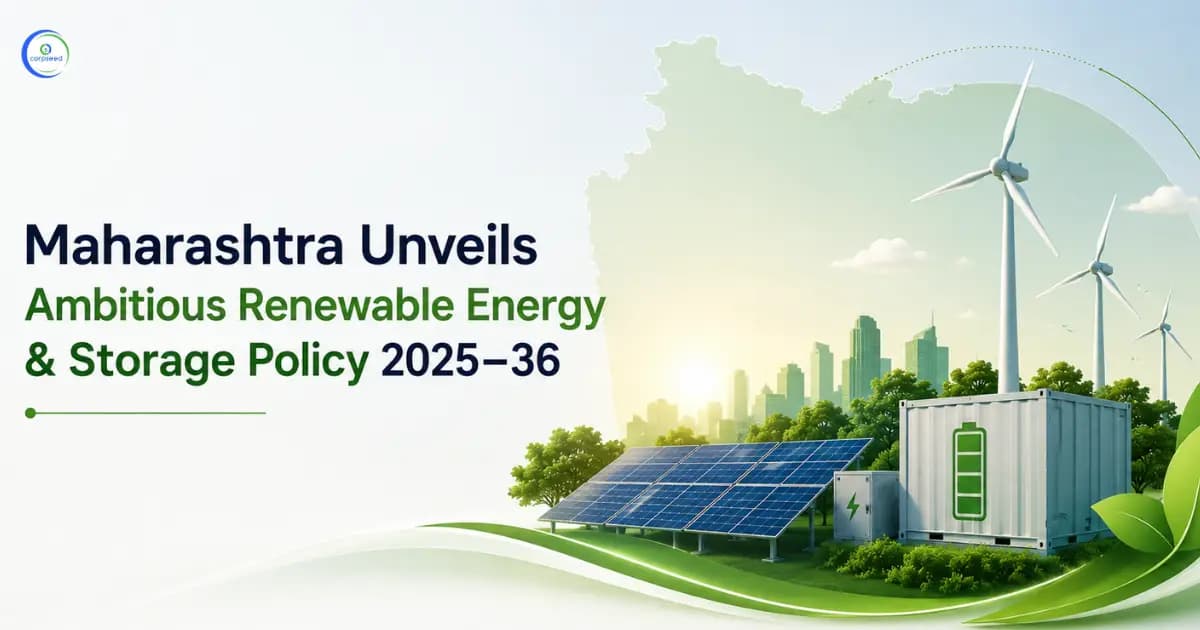
To mark a recalibration of the Maharashtra State’s energy transition strategy, the Government of Maharashtra vide Government resolution dated March 18, 2026, has notified the Maharashtra Renewable Energy and Energy Storage Policy 2025-26 to 2035-36 (“MRE Policy”). The MRE Policy supersedes the earlier 2020 renewable energy framework, while continuing to govern projects already operational or under development under the prior policies.
The MRE Policy sets out a comprehensive framework for grid-connected renewable energy and energy storage projects in Maharashtra. It combines procurement targets with measures on hybridization, land access, transmission planning, green open access, distributed energy, consumer choice, institutional reform, and implementation monitoring. Notably, the MRE Policy clarifies that non-implementation will not, by itself, constitute a ‘change in law’ under private agreements.
Schedule a Call Back
Vision 2035: Powering “Viksit Maharashtra 2047”
The policy is designed to align with India’s national goal of achieving 500 GW of non-fossil fuel capacity by 2030 and net-zero emissions by 2070. Maharashtra’s specific vision is to achieve a 65% share of renewable energy in its total electricity demand by FY 2035-36.
To realize this, the state targets an installed renewable capacity of approximately 100 GW. A critical mandate of this policy is that the entire incremental growth in electricity demand between 2025 and 2035 must be met through additional renewable energy procurement. This ensures that as the state industrializes, its carbon footprint remains decoupled from its economic growth.
Salient Features of MRE Policy
Below are the following salient features of the MRE policy which are as follows:
- Long-term renewable energy and storage trajectory: The MRE Policy targets 50% renewable energy in electricity consumption by Financial Year (“FY”) 2029-30 and 65% by FY 2035-36. The Distribution Companies (“DISCOMS”) must procure storage capacity equivalent to at least 10% of demand by FY 2035-36, with compliance contingent on at least 85% of the total energy stored is sourced from renewable energy annually.
- Scale of capacity envisaged: The MRE Policy estimates a requirement of approx. 228 (two hundred and twenty- eight) billion unit of renewable generation, translating into approx. 100 (one hundred) gigawatt capacity (assuming 26% capacity utilisation factor), along with approx. 35 (thirty-five) billion-unit storage (approx. 100 (one hundred) gigawatt per hour per day) or 20 (twenty) gigawatt at an assumed 5 (five) hour duration).
- Storage as a distinct grid asset and charging exemptions: Energy Storage Systems (“ESS”) are recognised as a distinct asset class. Where storage draws power for intermediate use and such energy is consumed within Maharashtra, it is exempt from transmission charges, distribution demand or wheeling charges, electricity duty or cross-subsidy surcharge.
- Co-located storage, hybridisation and retrofit of existing projects: The MRE Policy promotes solar, wind and hybrid projects with co-located storage, targeting 10 (ten) gigawatt by FY 2029-30 and 25 (twenty-five) gigawatt by FY 2035-36. Existing projects may retrofit storage or additional renewable energy without reopening tariffs, subject to connectivity and regulatory compliance.
- Stand-alone and distributed storage: Stand-alone storage (pumped storage project/Battery ESS (“BESS”)) is permitted, including through technology-agnostic procurement and storage-as-a-service models. DISCOMs must evaluate distributed storage within 1 (one) year, with approx. 10% of the overall storage target is expected through decentralised ESS. Storage is also proposed for rooftop projects above 100 (one hundred) kilowatts (minimum storage requirement of 50% of renewable capacity for 2 (two) hours), subject to biennial review.
- Land access and non-agricultural use reforms: The MRE Policy categorises the Government land into 3 (three) types. It provides different routes to make land available for renewable and BESS projects through lease, revenue-sharing, or nominal-rent structures. The revenue department land may be made available, including at a nominal rent of INR 1 (Indian Rupee one) per annum for a 30 (thirty) year lease in specified cases. For private land, the base annual lease is to be the mutually agreed rate or the higher of 6% of land value determined by the registration and stamps department or INR 1,25,000 (Indian Rupees one lakh twenty-five thousand) per hectare, with a flat 3% annual escalation. Non-agricultural tax and premium for renewable energy and storage projects are to be waived, subject to a revenue department notification within 3 (three) months.
- Renewable energy industrial zones and transmission-led planning: The MRE Policy envisages at least 10 (ten) renewable energy industrial zones by FY 2029-30 and 15 (fifteen) by FY 2035-36, each of at least 100 (one hundred) megawatt, with aggregate budgetary support of INR 500,00,00,000 (Indian Rupees five hundred crore). Transmission planning is to be aligned with the renewable energy and storage targets, including storage integration, grid modernisation and optimisation measures.
- Transmission-linked storage and grid reliability: Storage is positioned as a grid-planning tool, with targets of 4 (four) gigawatt per hour by FY 2029-30 and 10 (ten) gigawatt per hour by FY 2035-36. Within 1 (one) year of the MRE Policy, the Maharashtra State Electricity Transmission Company Limited/State Transmission Utility, are to develop a plan for a 500-1000-megawatt grid-connected BESS or energy storage plant specifically for grid stability and ancillary services.
- Consumer choice, rooftop framework and green open access: The MRE Policy introduces a layered framework for direct renewable procurement by consumers, including net metering, net billing and green open access. It targets 5 (five) gigawatt/10 (ten) billion units of long-term green open access by FY 2029-30 and 10 (ten) gigawatt/20 (twenty) billion units by FY 2035-36. Captive projects integrating storage of at least 4 (four) hours for 50% of contracted renewable capacity are to receive an electricity duty exemption for 10 (ten) years from commissioning. DISCOMs are also encouraged to offer a 24*7 renewable power supply.
- Ease of doing business, institutional strengthening and implementation governance: The MRE Policy expands Maharashtra Energy Development Agency’s single-window system and mandates process digitisation. It also introduces institutional reforms, including training mandates, a research and development centre, wind repowering targets, and the restructuring of key state entities, supported by defined implementation timelines.
Investor Benefits & Incentives Under Maharashtra RE Policy 2025–36
Below are the following advantages investors will get in the form of direct subsidies and incentives:
- Waiver of Non-Agricultural Tax & Premium: The Renewable energy and storage projects will be exempt from non-agricultural tax and premium charges, reducing initial project costs.
- Government Land at Concessional Lease: In certain cases, government land may be provided on long-term lease at nominal rent for renewable energy projects.
- 10-Year Electricity Duty Exemption: Green Open Access projects integrated with energy storage systems can receive an electricity duty exemption for 10 years from commissioning.
- ₹500 Crore Support for REIZ Development: The government has proposed budgetary support for Renewable Energy Industrial Zones to encourage infrastructure development.
- Simplified Land & Approval Process: The policy introduces streamlined land conversion procedures, faster approvals, and single-window clearance for investors.
A Blueprint for the Future
The Maharashtra Renewable Energy and Energy Storage Policy 2025-35 is a comprehensive roadmap that places the state at the forefront of the global energy transition. By committing to 100 GW of capacity and integrating a 10% storage mandate, Maharashtra is ensuring that its future industrial growth is not just rapid, but sustainable and resilient. For investors, developers, and consumers, the next decade in Maharashtra represents the most significant green energy opportunity in India.
Conclusion
The MRE Policy seeks to bring about structural reforms within the renewable energy framework in Maharashtra. It links Maharashtra’s next decade of renewable energy growth to mandatory storage integration, land and transmission readiness, consumer-side market development and institutional restructuring. For developers, utilities, storage participants, and open access consumers, the commercial implications will turn materially on the follow-on regulations, procedures, portal changes, and agency-specific implementation actions contemplated by the MRE Policy. For detailed information, contact Corpseed. We will assist you in every step of the MRE Policy.
About the Author

Anshika Jindal
Content WriterAnshika Jindal, a Legal Content Writer with strong expertise in legal research and a solid academic background in BA LLB and LLM (Criminal Law). I specialize in researching statutes, case laws, and legal developments and presenting them in clear, accurate, and engaging written content. With strong analytical skills and attention to detail, I create reliable, well-structured legal content while maintaining professional and ethical standards.
I specialize in conducting in-depth legal research using credible sources and presenting legal information in a structured, reader-friendly manner while maintaining precision and authenticity. My work focuses on simplifying legal language without compromising its meaning, making legal content accessible to a wider audience.
Related articles
What Are the Best Government Funding Schemes for Startups in India in 2026?
2026-08-27

GOBARdhan Scheme 2026: Complete Guide to India’s National CBG Plan
2026-08-10

Gujarat Biotechnology Policy 2022-27: Incentives, Eligibility, Benefits & Complete Guide
2026-05-01

Government Has Introduced Startup India Fund of Funds 2.0: What Does this ₹10,000 Crore Boost Mean for You?
2026-04-16
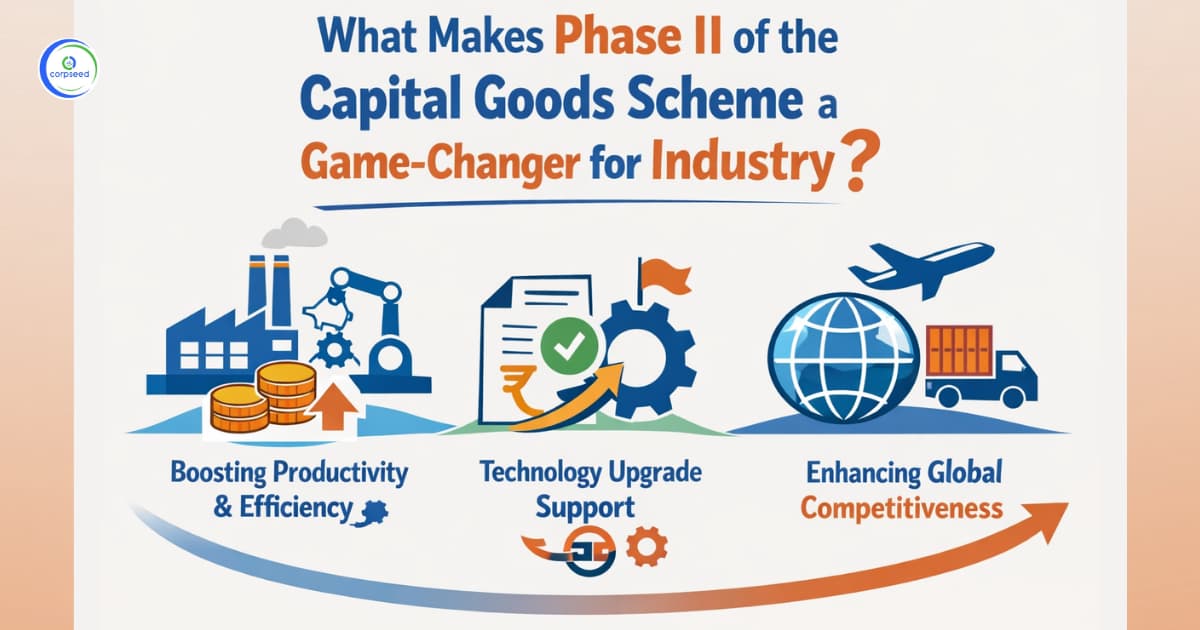
What Makes Phase II of the Capital Goods Scheme a Game-Changer for Industry?
2026-03-25
Aadhaar made Mandatory for Price Stabilisation Fund (PSF) Scheme Beneficiaries
2025-10-31